
Review: 2026 Mitsubishi Outlander PHEV
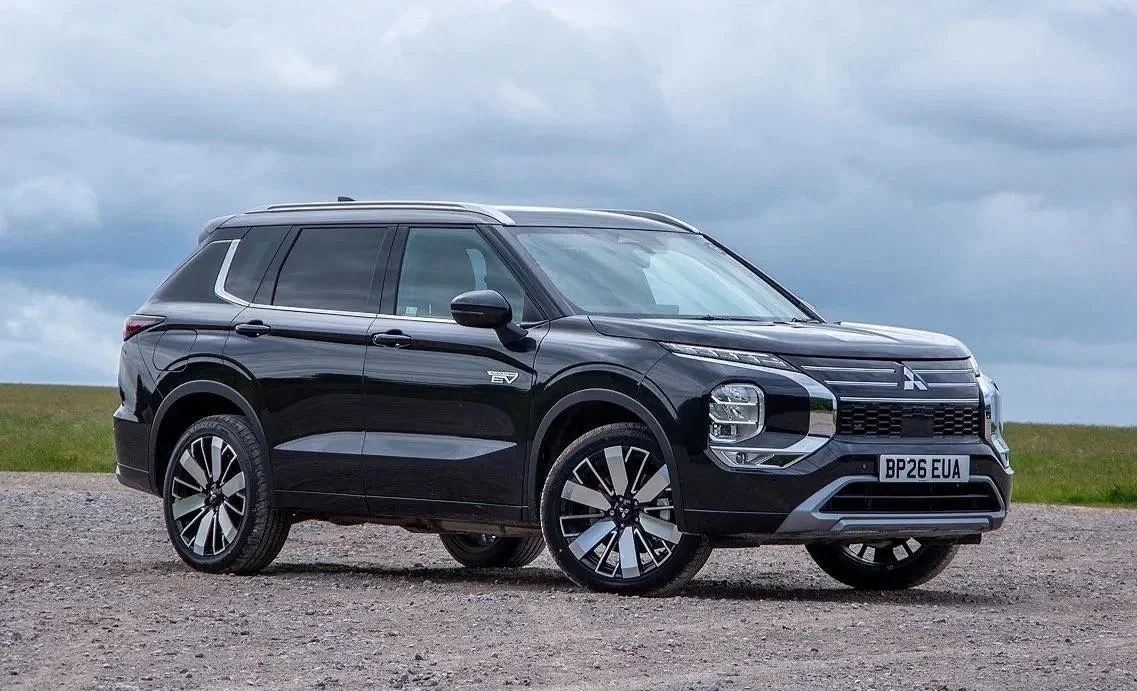
The UK has a habit of saying “see you later” to cars and then quietly inviting them back when nobody’s looking. And so it is with the return of the Mitsubishi Outlander PHEV, a car that once defined the early PHEV boom, vanished from the UK spotlight for a while, and now arrives back into a market that has moved on, grown up a bit, and - crucially - got rather more competitive.
This isn’t just a facelift-and-a-wave-back scenario either. The Outlander’s return lands in a very different landscape: BMW is leaning heavily into electrified SUVs, Kia and Hyundai have rewritten the value proposition, and even the once-dull fleet segment is now full of tech-laden plug-in hybrids that can genuinely do 40–70 miles on electric power without breaking a sweat. So Mitsubishi hasn’t just brought the Outlander back; it’s had to make a case for why it deserves space on UK driveways again.
And to its credit, it does at least turn up looking like it means business.
A proper reintroduction, not a nostalgia tour
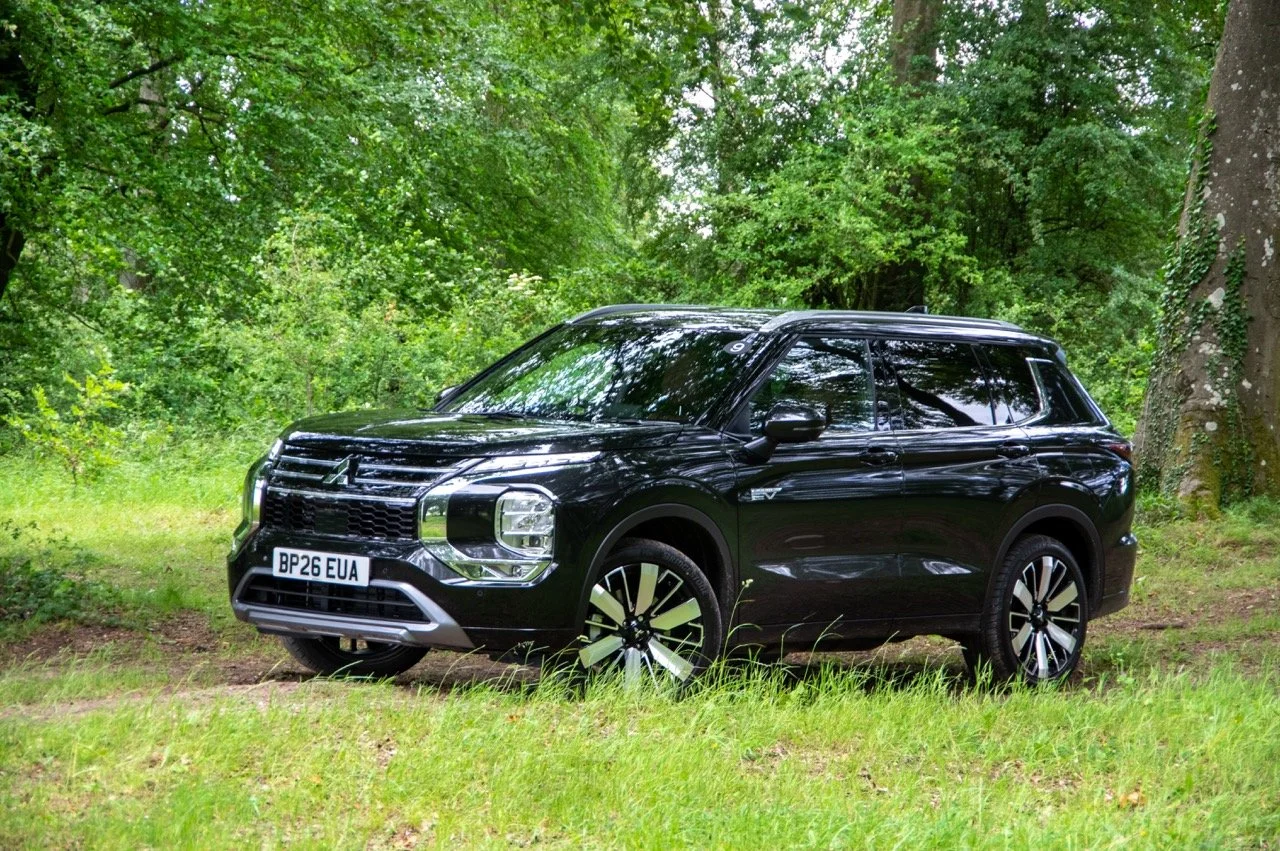
The new Outlander PHEV is built on Mitsubishi’s alliance platform sharing DNA with Nissan and Renault, but it’s been tuned with a fairly clear brief: keep the rugged SUV feel, add meaningful EV capability, and make it feel like a proper step up from the old car that quietly built a cult following among company car drivers and caravan enthusiasts alike.
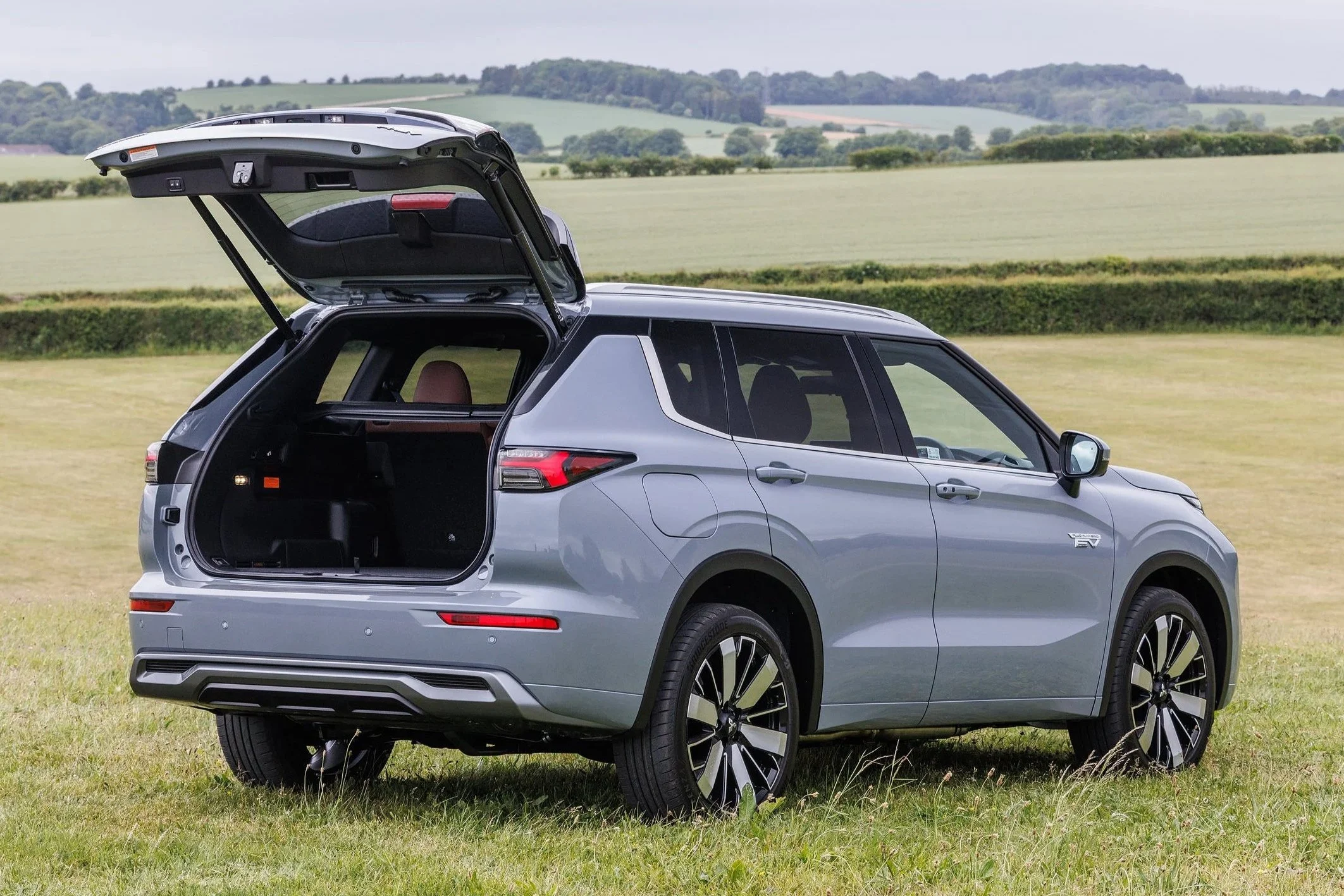
Visually, it’s all sharp creases, squared-off proportions, and that slightly over-confident front end that looks like it might argue with you about right of way at a roundabout in Bolton. It’s still recognisably an Outlander, but now it sits more comfortably in the modern SUV world rather than the slightly awkward “soft-roader trying its best” category it used to inhabit.
But the real story is under the skin.
Powertrain and on-road manners: smoother, quieter, and actually quite grown up
The headline remains the plug-in hybrid setup, pairing a 2.4-litre petrol engine to a 22.7kWh battery with twin electric motors (85kw front & 100kw rear). Mitsubishi’s focus is clearly on electric-first driving, and in typical UK commuting conditions - school runs, A-roads, and the occasional “why is everyone doing 42mph on the dual carriageway?” - it behaves like an EV most of the time.
Around town, it’s genuinely easy to live with. It pulls away in near silence, rides on electric torque, and does that smooth, slightly detached thing that makes traffic feel less like punishment. The transition between electric and hybrid modes is noticeably more refined than the old system too. Where earlier Outlander PHEVs sometimes felt like they were clearing their throat before waking the engine up, this one is far more discreet about it.
On battery alone expect to 53-miles, but you can also play around with its battery usage modes from normal, EV priority, save and charge mode which allows the engine to charge the battery whilst on the move. WLTP figures suggest 313mpg combined with an overall driving range of +500 miles.
Once the petrol engine does join in, it’s not exactly stirring stuff - but it’s also not trying to be. It’s there to support, not entertain. Think dependable generator rather than performance partner. Acceleration is perfectly adequate rather than exciting, but the electric motors do most of the heavy lifting in everyday driving, which suits the character of the car. Though with 299ps and 199Nm of torque it will get you to 62mph in 7.9 seconds.
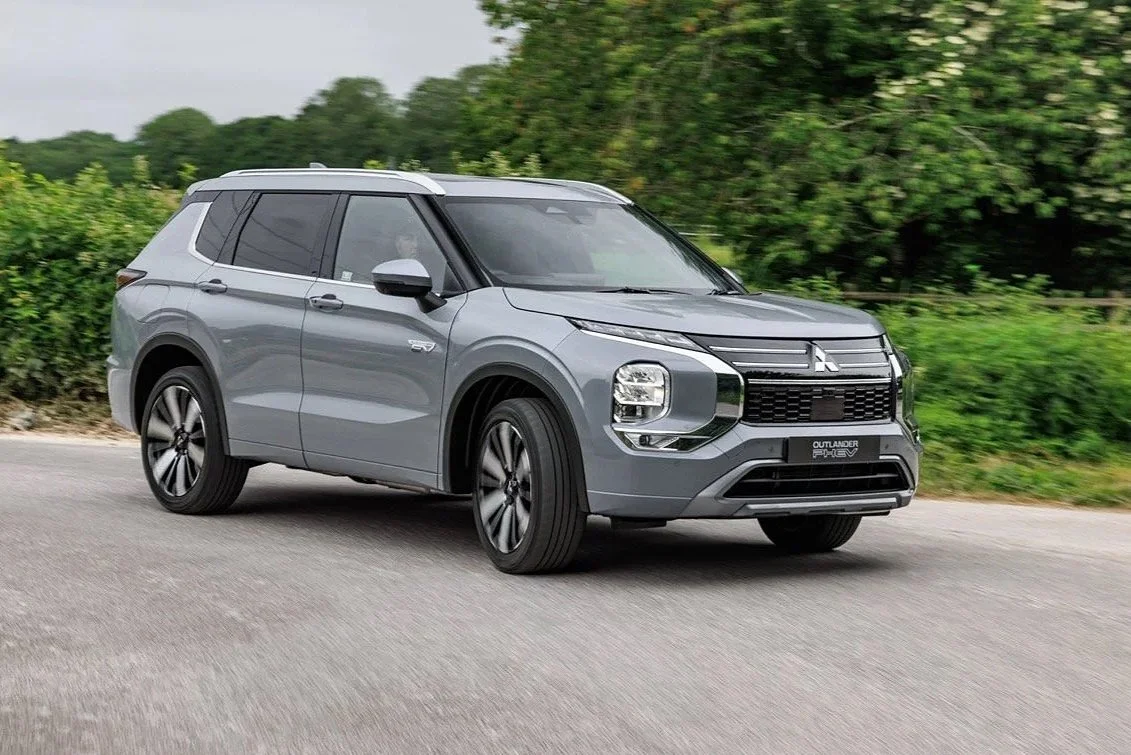
On the motorway, it settles into a comfortable cruise. There’s a bit of wind noise around the mirrors at higher speeds, and the engine can occasionally hover in the background when battery charge is low, but overall refinement is a significant step up from its predecessor. It feels less like a converted idea and more like a properly engineered hybrid system.
Ride quality is where Mitsubishi has clearly done its homework. The suspension tuning leans towards comfort rather than sportiness, and it works well on UK roads, which, let’s be honest, are not exactly billiard-table smooth. It absorbs broken surfaces, potholes, and those charmingly unexpected mid-corner dips with calm composure. There’s still a bit of body movement over bigger undulations, but nothing that feels uncontrolled.
Steering I found to be on the heavy side, but that’s not a criticism, it’s nice to actually feel that you’re driving something for a change.
Tech and interior: finally catching up with the segment
Inside, the Outlander’s biggest leap forward is how much it now feels like it belongs in 2026 rather than 2016.
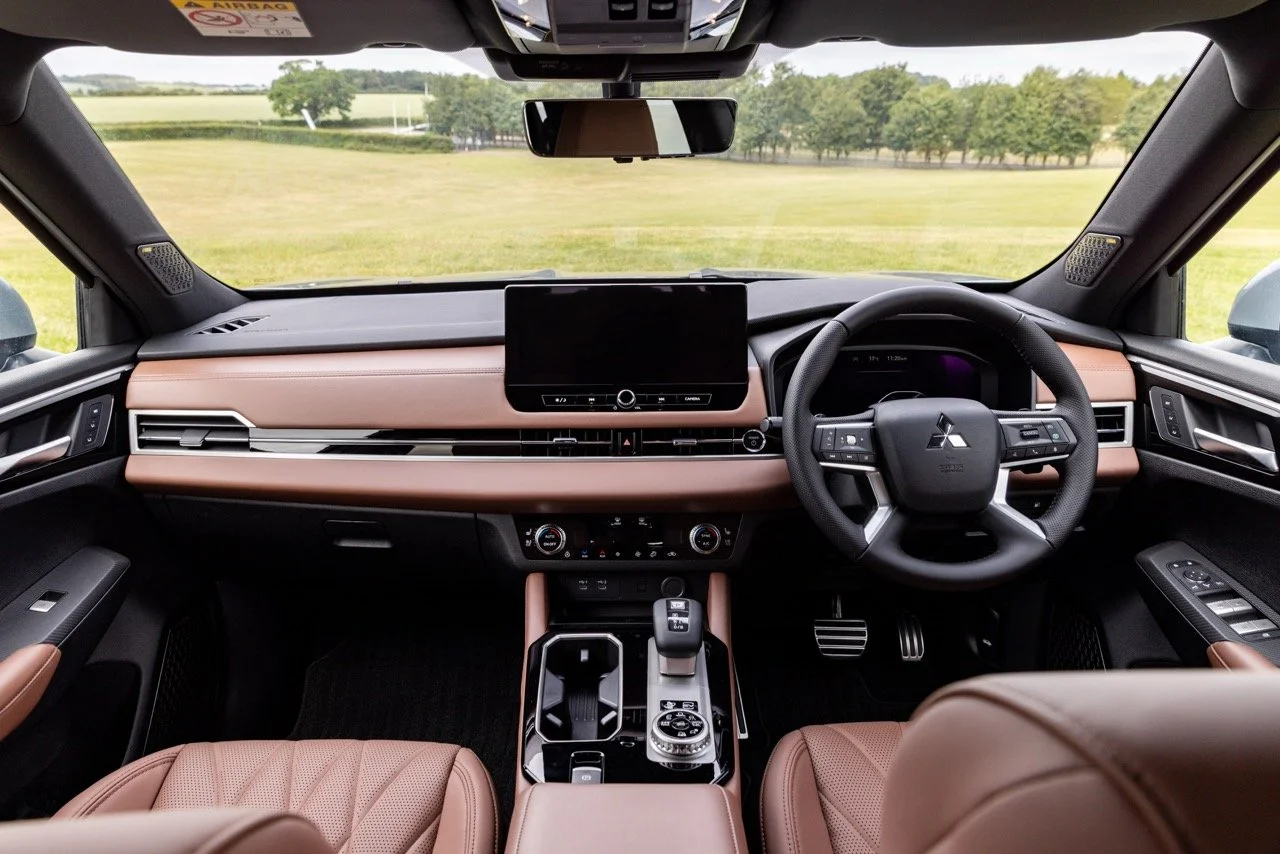
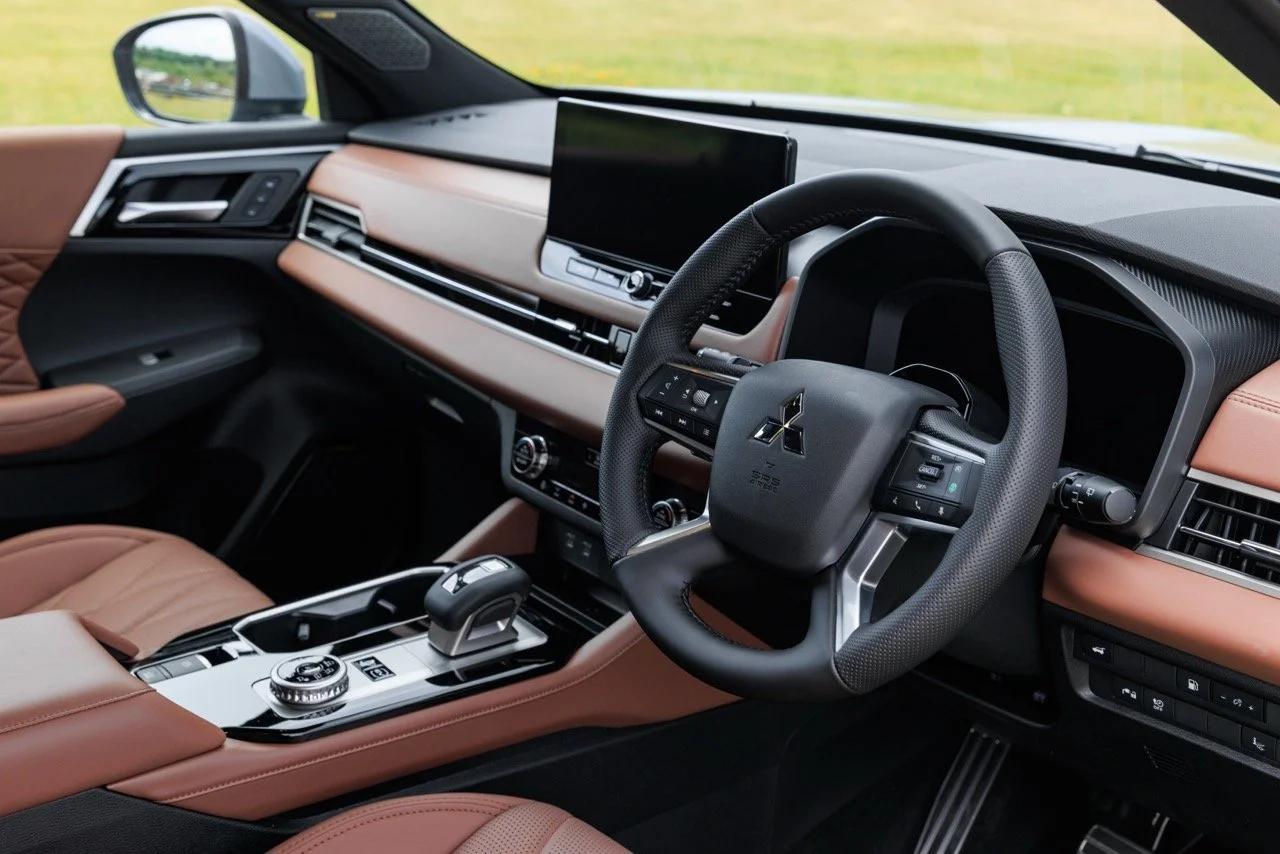
The infotainment system has been completely modernised, with a large central touchscreen that responds quickly enough not to make you want to shout at it in frustration. It supports the usual smartphone integration, and while it won’t win awards for design flair, it is logically laid out and refreshingly free from unnecessary complexity.
There’s still a physicality to the cabin that will appeal to UK drivers who have had enough of everything being buried in glass screens and submenus. Climate controls remain sensibly separate in many trims, which is a small but meaningful victory in a world where some rivals expect you to adjust the air conditioning through a touchscreen menu like you’re configuring a space station.
Material quality is solid rather than luxurious. Soft-touch surfaces where you want them, hard-wearing plastics where you expect them, and a general sense that this is built to survive family life rather than win Instagram awards. Seats are supportive on long drives, and visibility is strong thanks to the upright SUV stance.
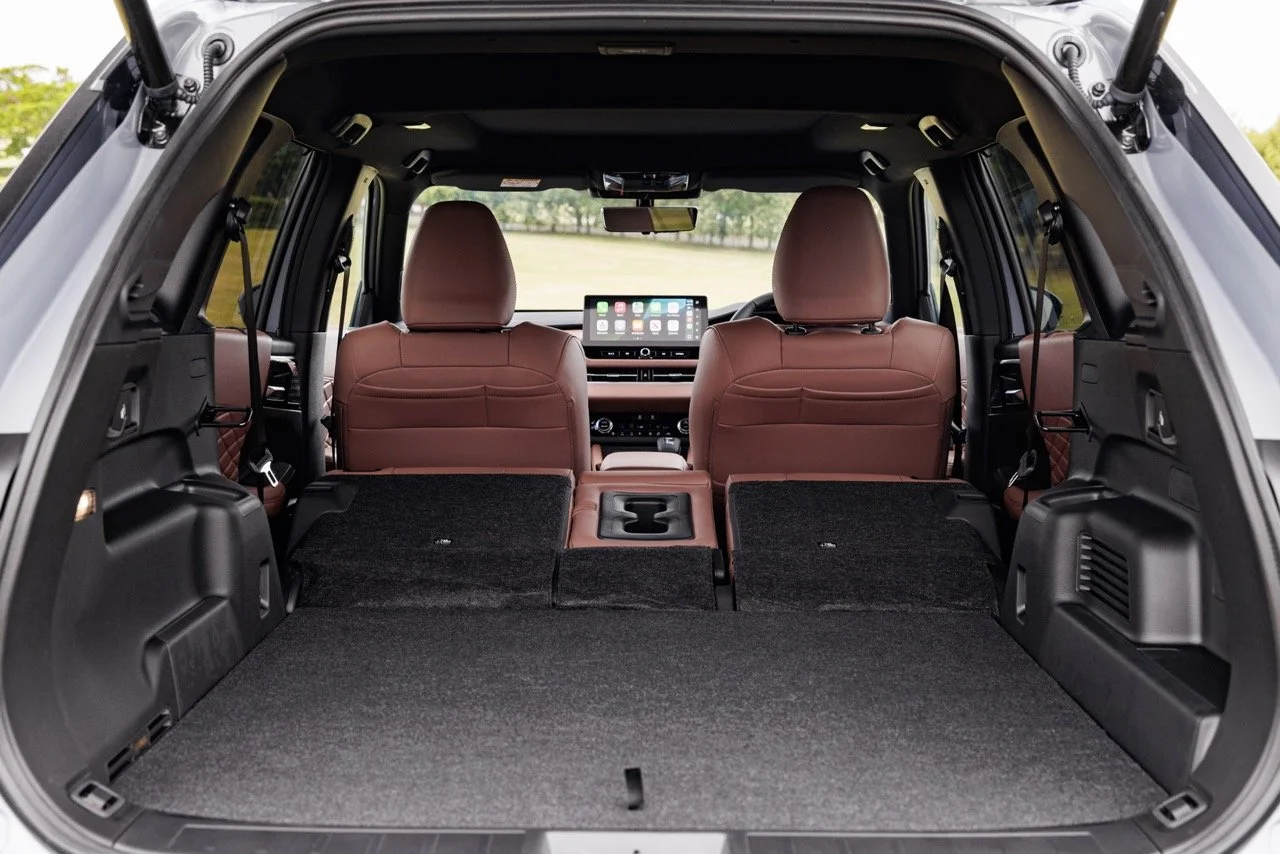
Practicality is still one of its strongest arguments. The rear seats offer generous space, even for taller passengers, and the boot is suitably large for the kind of life this car is aimed at—dogs, camping gear, muddy boots, and the inevitable “we’ll just take everything just in case” approach to weekends away.
Driver assistance and usability: helpful, mostly well-behaved
Driver assistance systems are present in full modern SUV fashion - lane keeping, adaptive cruise, emergency braking, and all the usual acronyms that sound like they belong in aviation manuals.
The good news is that calibration is generally sensible. Lane assist isn’t overly aggressive, and adaptive cruise control works smoothly in stop-start traffic without behaving like it’s learning to drive for the first time. There are still the usual reminders and alerts that will have some drivers diving into the settings menu within 10 minutes of ownership, but nothing feels unnecessarily intrusive. And besides, there’s a button on the steering wheel that can switch most of the annoying things off.
Mitsubishi has clearly taken a more “assist, don’t annoy” approach here, which is appreciated in real-world UK driving conditions where you’re more likely to be dealing with a tractor on a blind bend than a perfectly marked autobahn.
Off-road capability: still part of the DNA
While many plug-in hybrids quietly pretend they’ve never seen a muddy field, the Mitsubishi Outlander PHEV still carries a bit of the brand’s off-road heritage, even if most owners will never test it beyond a wet grass car park at a National Trust site.
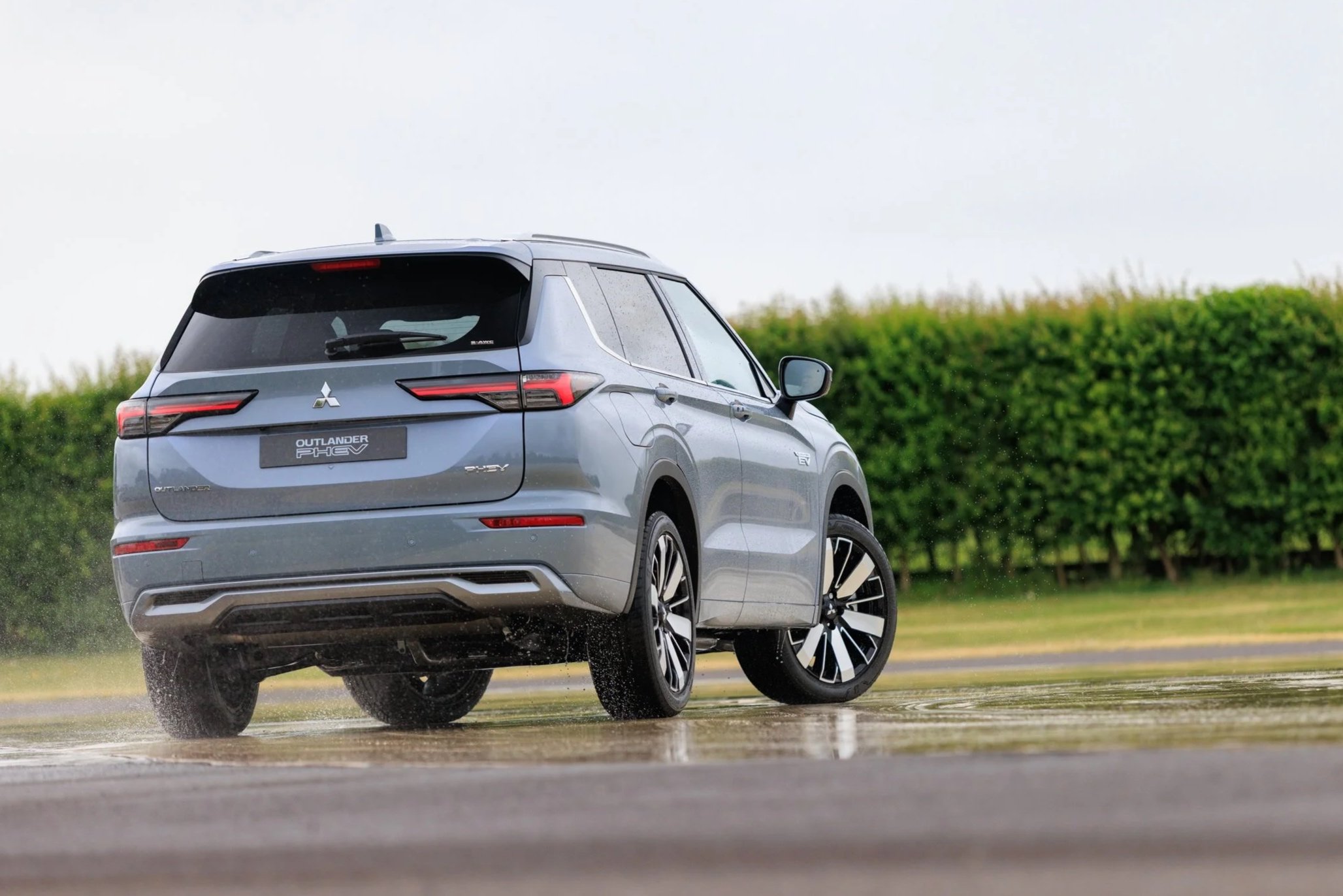
It comes with Mitsubishi’s familiar all-wheel drive system, supported by multiple drive modes tailored for different surfaces—snow, gravel, mud, and tarmac. The system can shuffle torque between axles and individual wheels, giving it a level of traction control that inspires confidence on slippery UK backroads.
A key part of that capability is Mitsubishi's latest Super All Wheel Control (S-AWC) system. Rather than being a traditional mechanical four-wheel-drive setup, S-AWC intelligently manages the twin electric motors, braking and stability systems to maximise grip and stability. It constantly shuffles torque between the front and rear axles, while selectively braking individual wheels when needed to keep the vehicle tracking true on loose, slippery or uneven surfaces. The result is an SUV that feels reassuringly sure-footed, whether you're negotiating a muddy campsite, a snow-covered lane or a gravel track, even if most owners are unlikely to explore the full extent of its capabilities.
Ground clearance is respectable for the class, and approach and departure angles are more than adequate for green-lane-lite driving or tackling poorly maintained farm tracks. It’s not a hardcore off-roader in the traditional sense, but it is far more capable than the average family SUV that panics at the sight of a damp field.
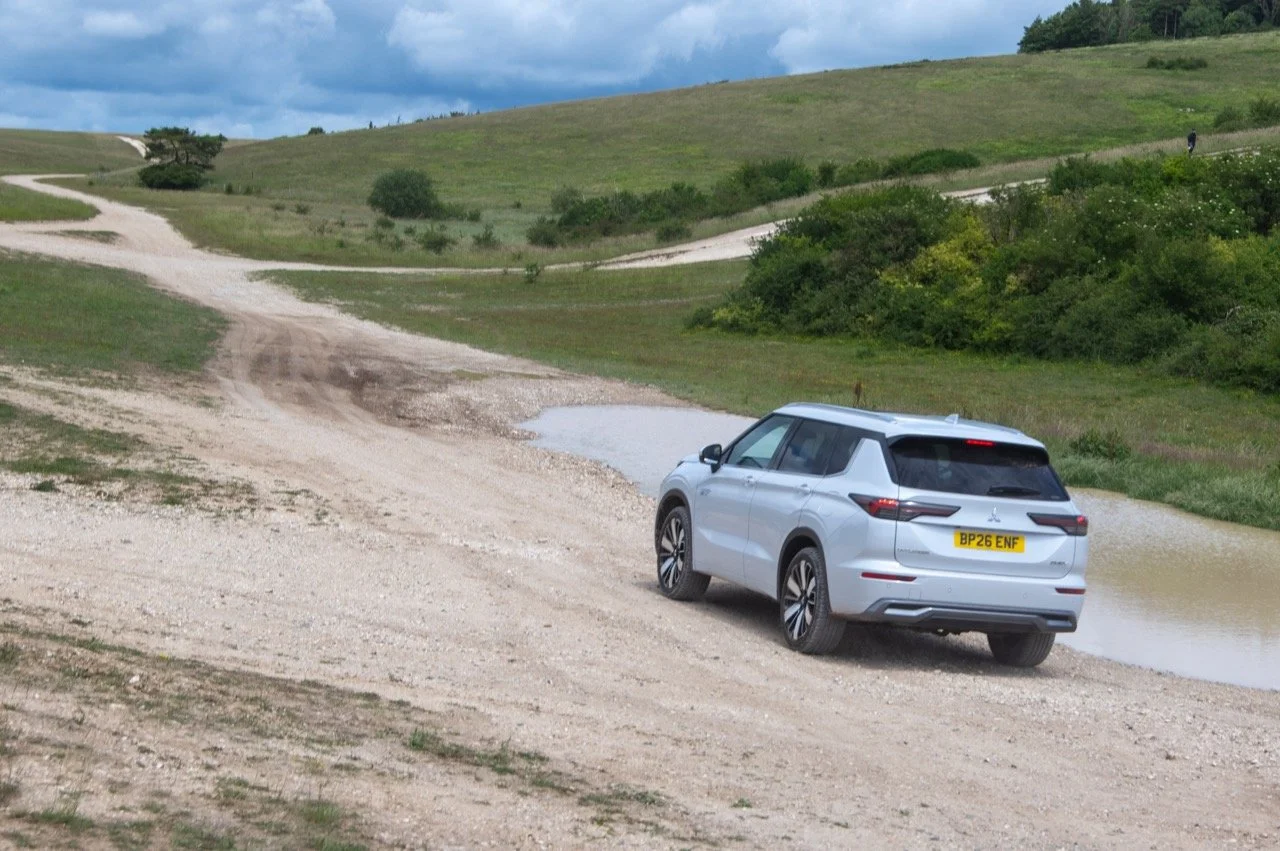
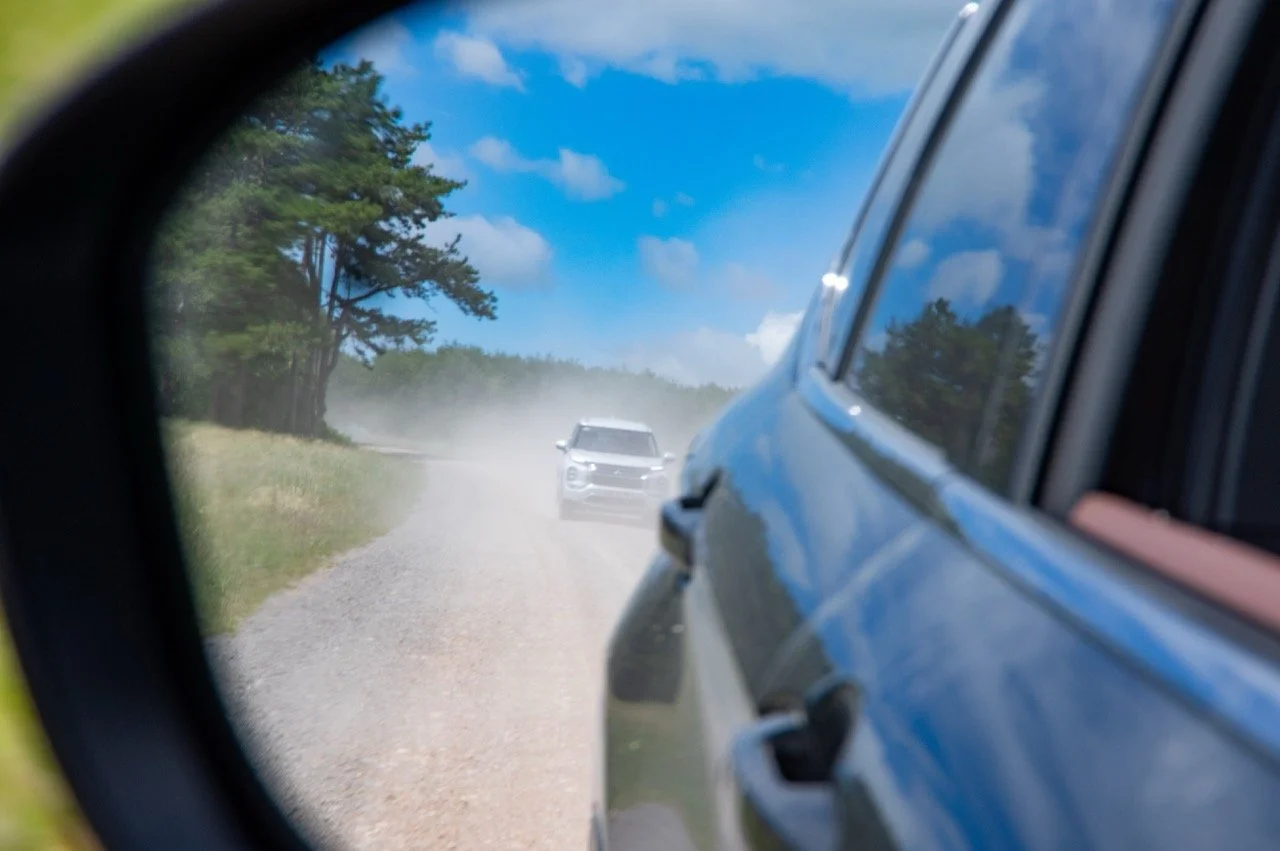
Like a kid in a chocolate shop, I got all excited when I was told we’d be exploring Salisbury Plain, as its one of the UK's largest areas of open chalk downland and, perhaps more famously, the home of the British Army's principal training estate. Criss-crossed by military tracks, deep ruts, steep climbs and challenging terrain, it's a place that has long been associated with proper off-road testing.
In reality, we were left slightly disappointed. Our off-road 'experience' amounted to little more than a dusty incline used to demonstrate the Outlander's traction control and hill descent control - both of which it tackled with complete ease. It certainly proved the systems worked, but it also felt like a missed opportunity. Given the variety of terrain Salisbury Plain has to offer, the Outlander looked more than capable of being pushed much harder, leaving us wondering just how much more it could have shown if Mitsubishi had been prepared to let it stretch its legs.
That said, on loose surfaces, it felt stable and controlled, with the electric motors providing immediate low-speed torque that helps it crawl confidently when conditions deteriorate. Hill descent control and off-road modes add reassurance, even if most drivers will only ever activate them out of curiosity.
Just wait till I get one on loan, you know I’ll give it a proper test!
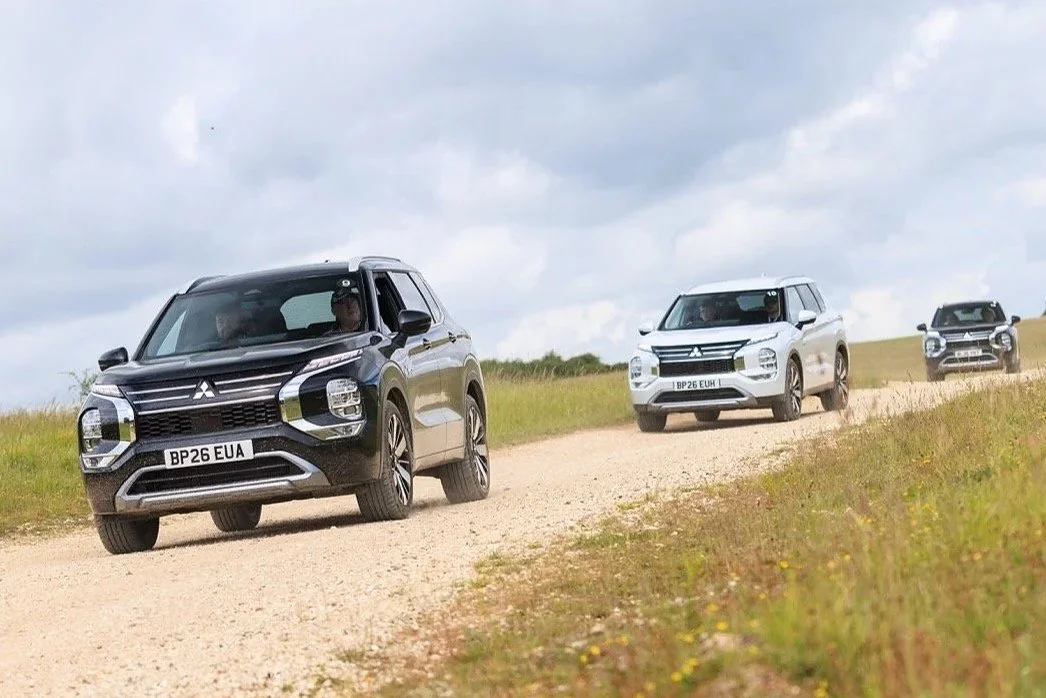
The bigger picture: where does it fit now?
The Outlander PHEV’s return isn’t about reinventing the segment - it’s about reclaiming relevance. And that’s a tougher job than it sounds.
It doesn’t feel as premium as German rivals, nor as flashy as some Korean alternatives. But what it does offer is a very complete, very usable package that leans heavily into comfort, practicality, and real-world efficiency when charged regularly.
In short, it knows its audience. Families, commuters, and caravan towers who want electric driving for daily use but don’t want to plan their lives around charging networks or range anxiety.
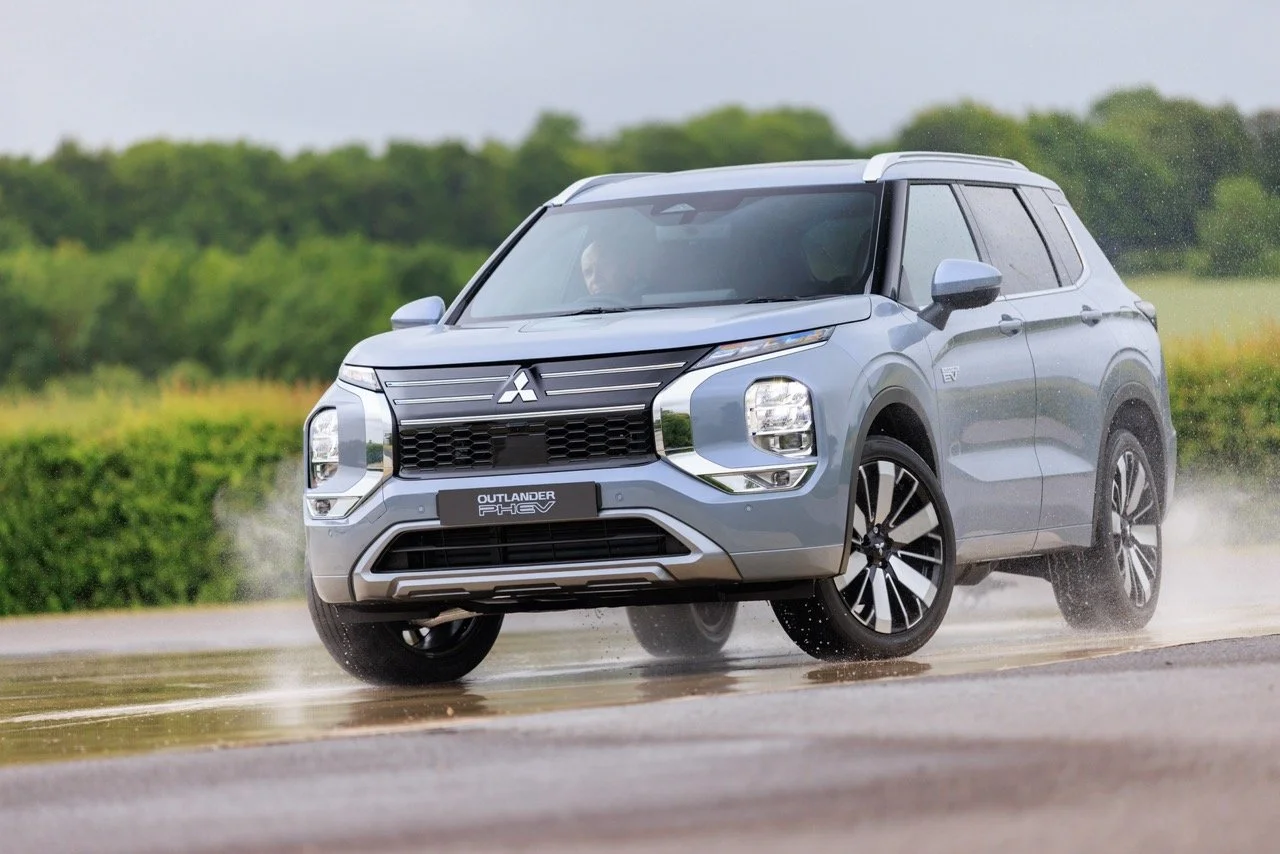
Final thoughts
The return of the Mitsubishi Outlander PHEV to the UK is less a comeback tour and more a reminder that sensible cars still have a place in a world obsessed with screens, speed, and spec-sheet one-upmanship.
It’s not the most exciting SUV on sale, and it won’t pretend to be. But it is comfortable, capable, and far more polished than the old version many will remember. The tech is finally where it needs to be, you get buttons a dials, the ride suits UK roads well, and the hybrid system does its job without fuss.
If the original Outlander PHEV was the pioneer that opened the door, this new version walks back through it with a bit more confidence, wipes its feet, and asks where it should plug in.
And in today’s crowded SUV market, that might just be enough.