Review: 2026 Jeep Wrangler Sahara
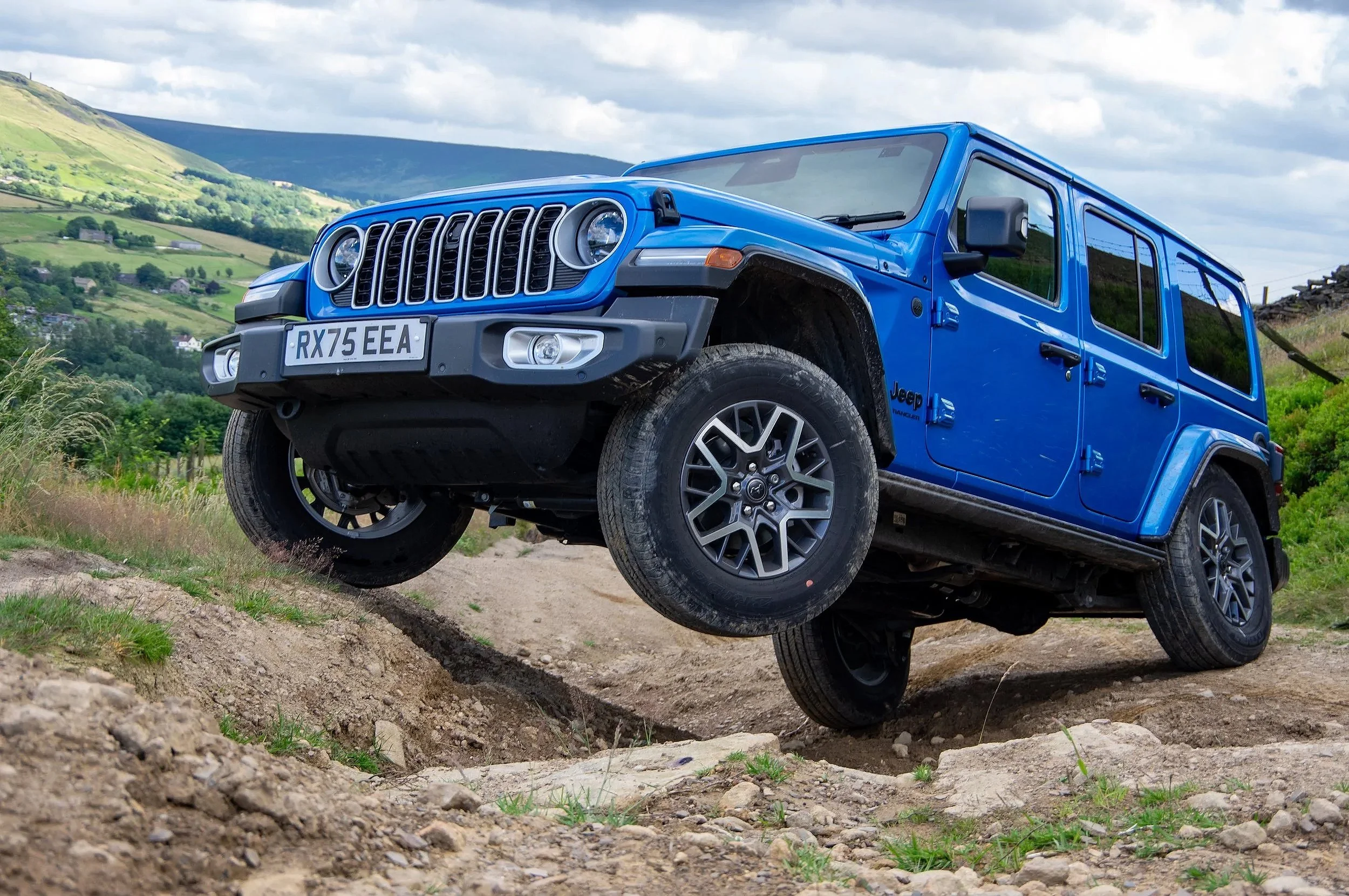
The last of the proper ones?
There are few vehicles left that can make me grin before I’ve even started the engine, and the Jeep Wrangler is one of them.
Pull up in a Wrangler and people don’t ask whether it has Apple CarPlay, what the boot capacity is, or how many airbags it has. They ask where you’re going in it. It’s a vehicle that looks like it should be parked down a gnarly green-lane somewhere rather than squeezed between a white van and a Nissan Qashqai outside the local supermarket.
The Wrangler has always marched to the beat of its own drum. While most manufacturers have turned their SUVs into increasingly anonymous family transport with raised seating positions, plastic cladding and the occasional “adventure” badge, Jeep has kept the Wrangler’s roots firmly planted in military heritage and proper off-road ability.
You have two options in currently in the UK, the more extreme Rubicon, which is aimed squarely at those who believe every green lane is merely a warm-up before attacking a rock crawling trail in Utah. This, the Sahara which takes a slightly softer approach: still hugely capable, but with more emphasis on everyday usability, comfort and looking good while parked outside a campsite.
And that’s probably why it appeals to so many people. The Rubicon is the specialist tool. The Sahara is the one you could realistically live with.
First impressions: built for adventures, not spreadsheets
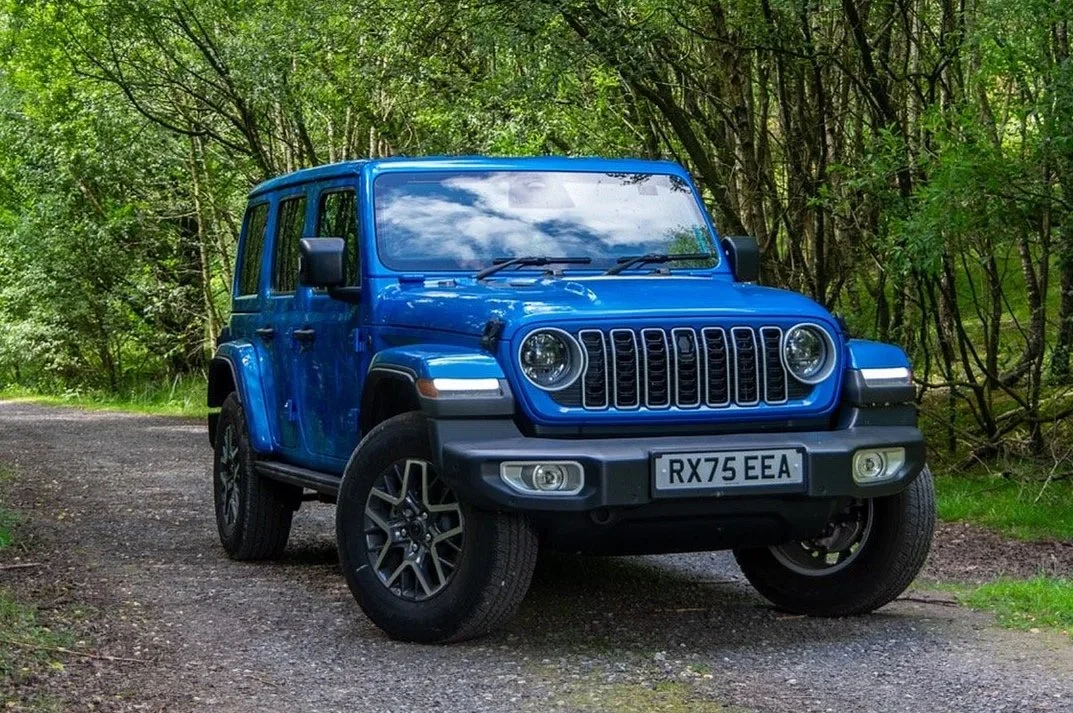
The first thing you notice is that the Wrangler looks exactly like what it is.
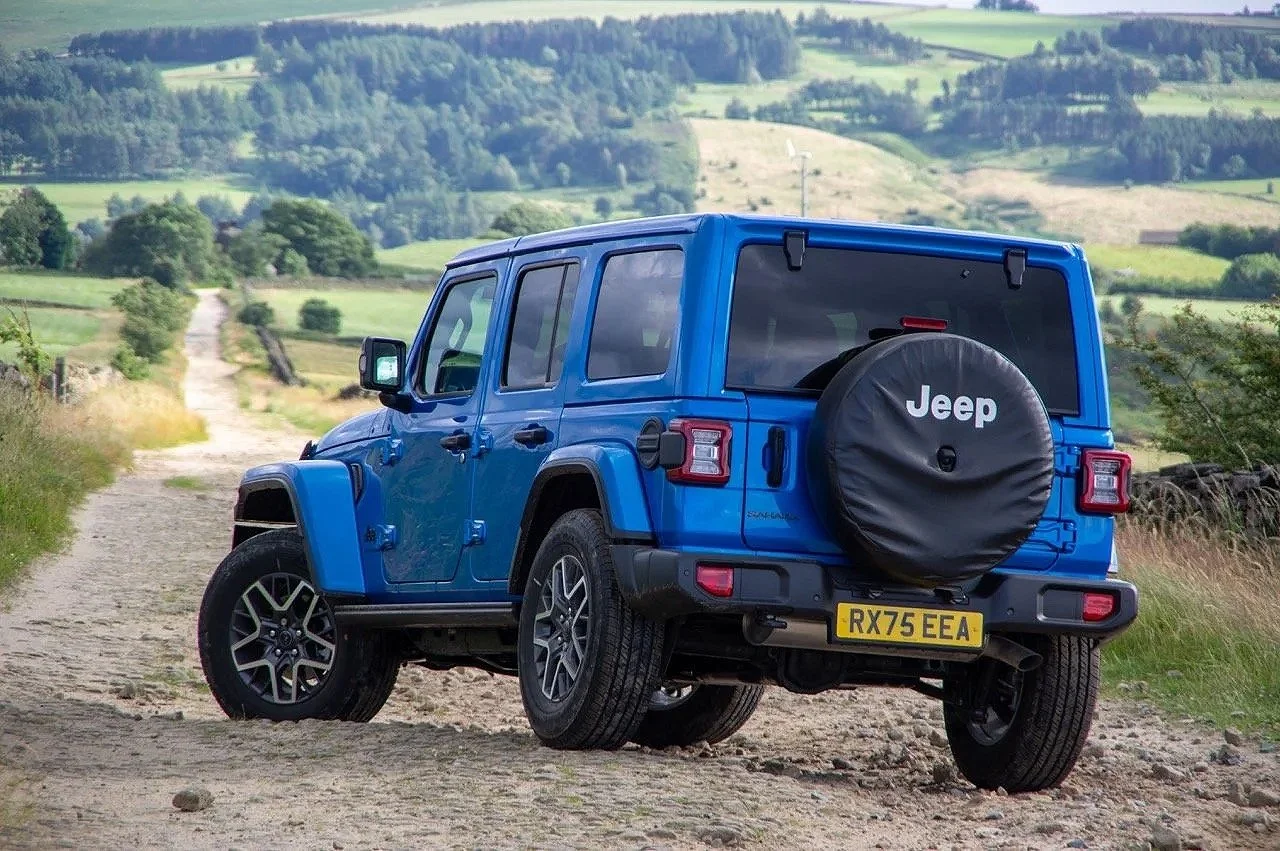
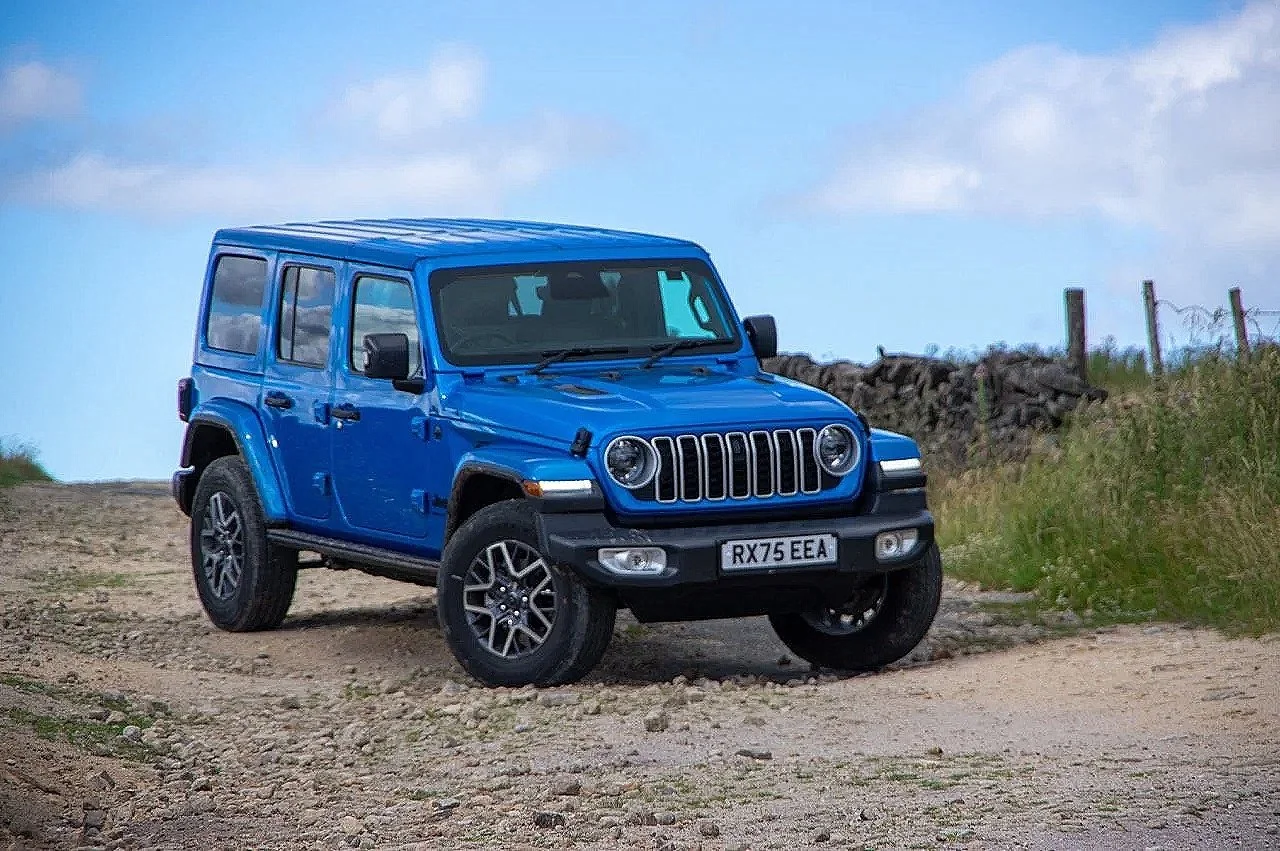
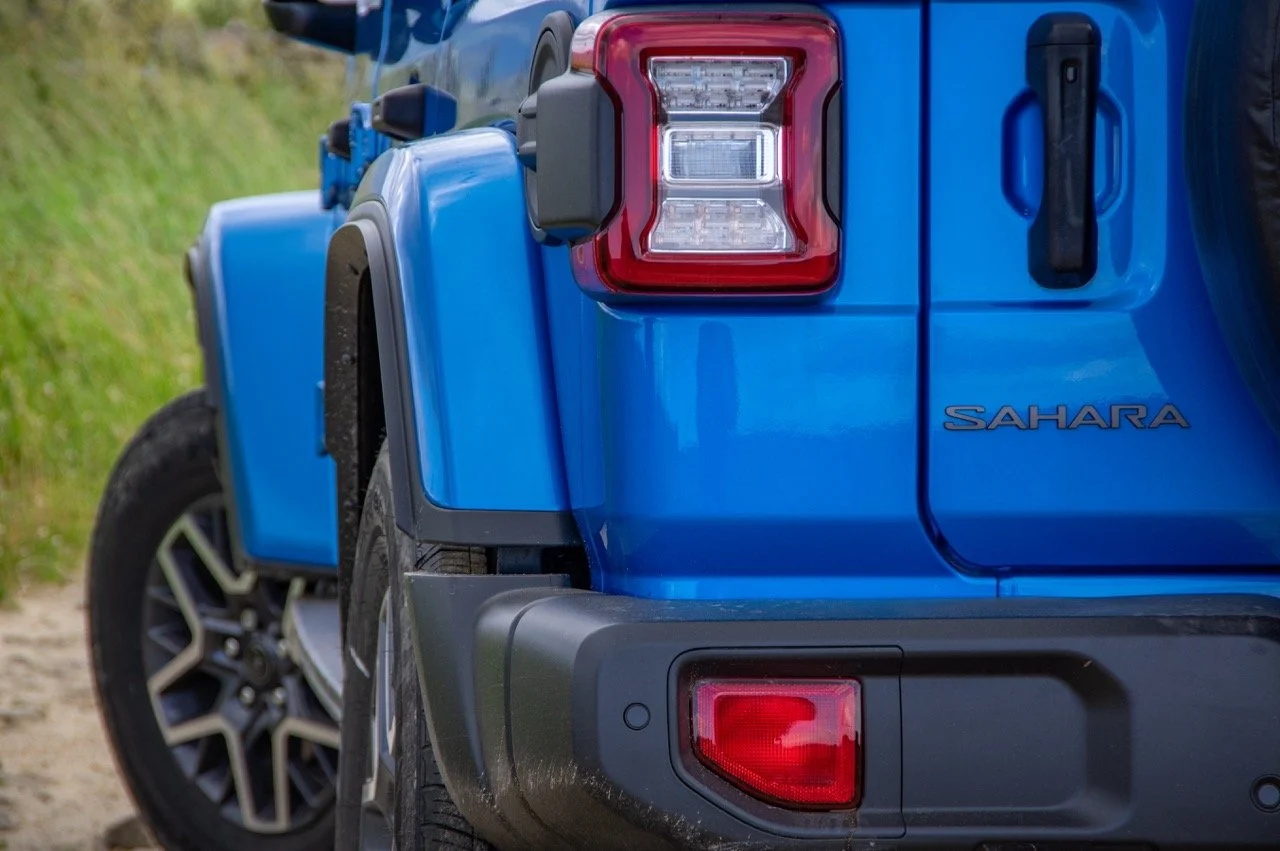
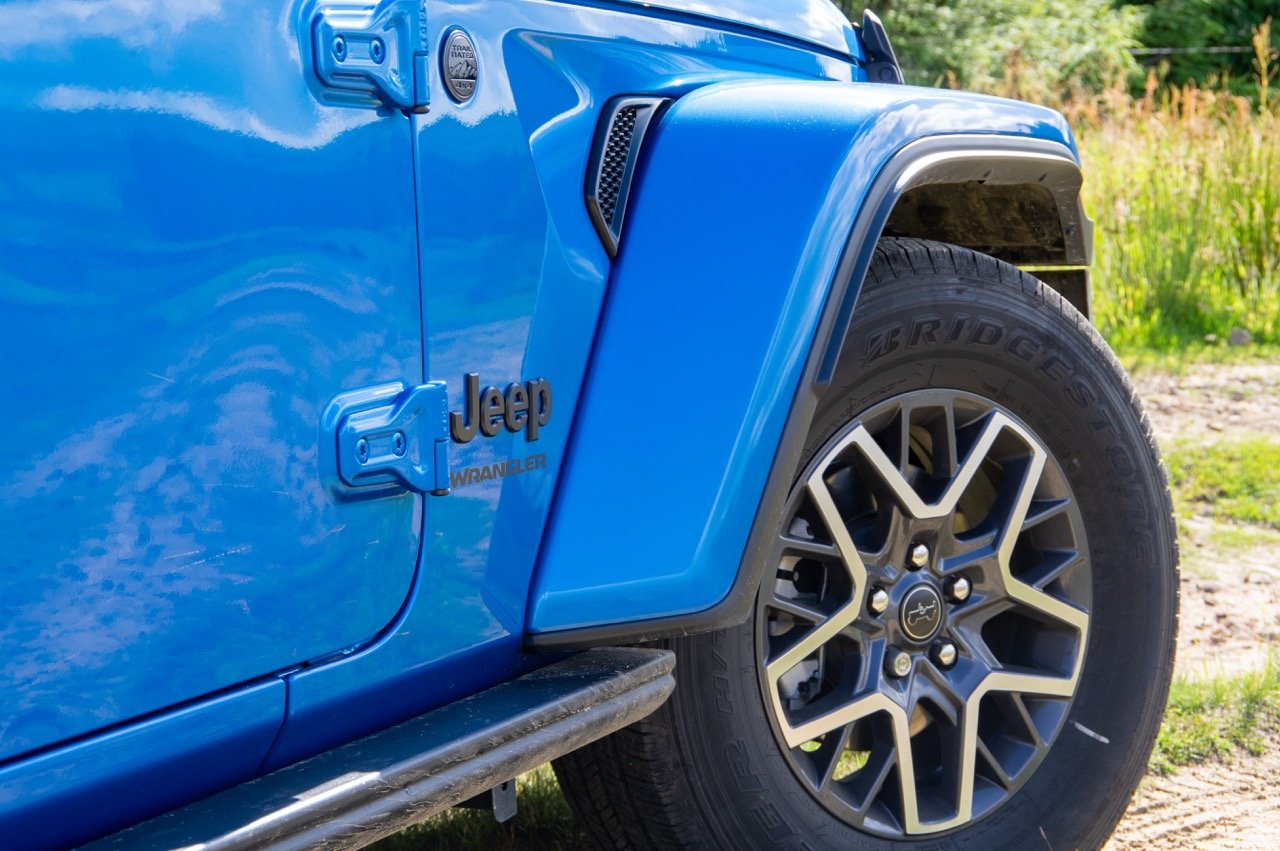
There’s no pretending here. The upright windscreen, exposed hinges, seven-slot grille, chunky arches and removable roof are all there because Jeep owners actually like this stuff.
It’s a refreshing change from vehicles designed by a committee who decided that a slightly larger touchscreen counts as personality.
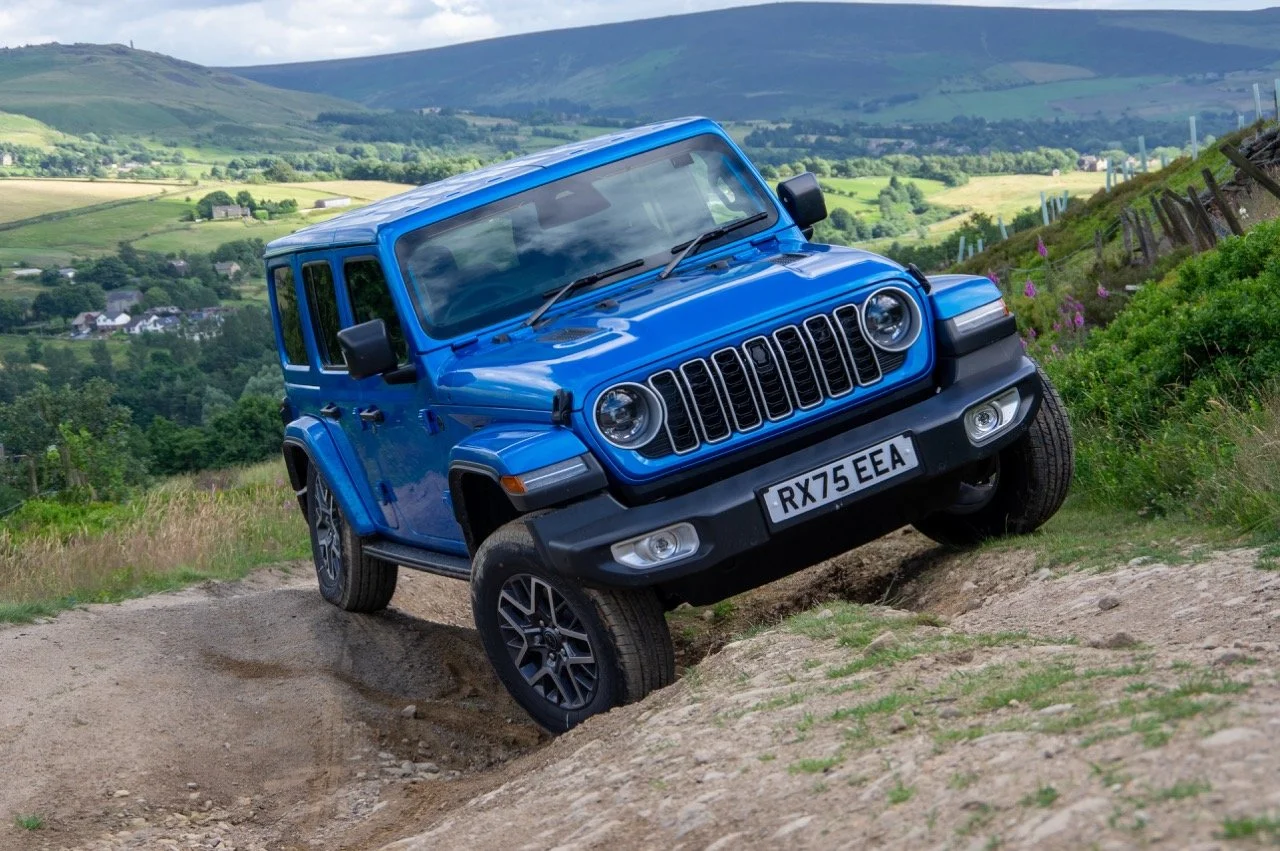
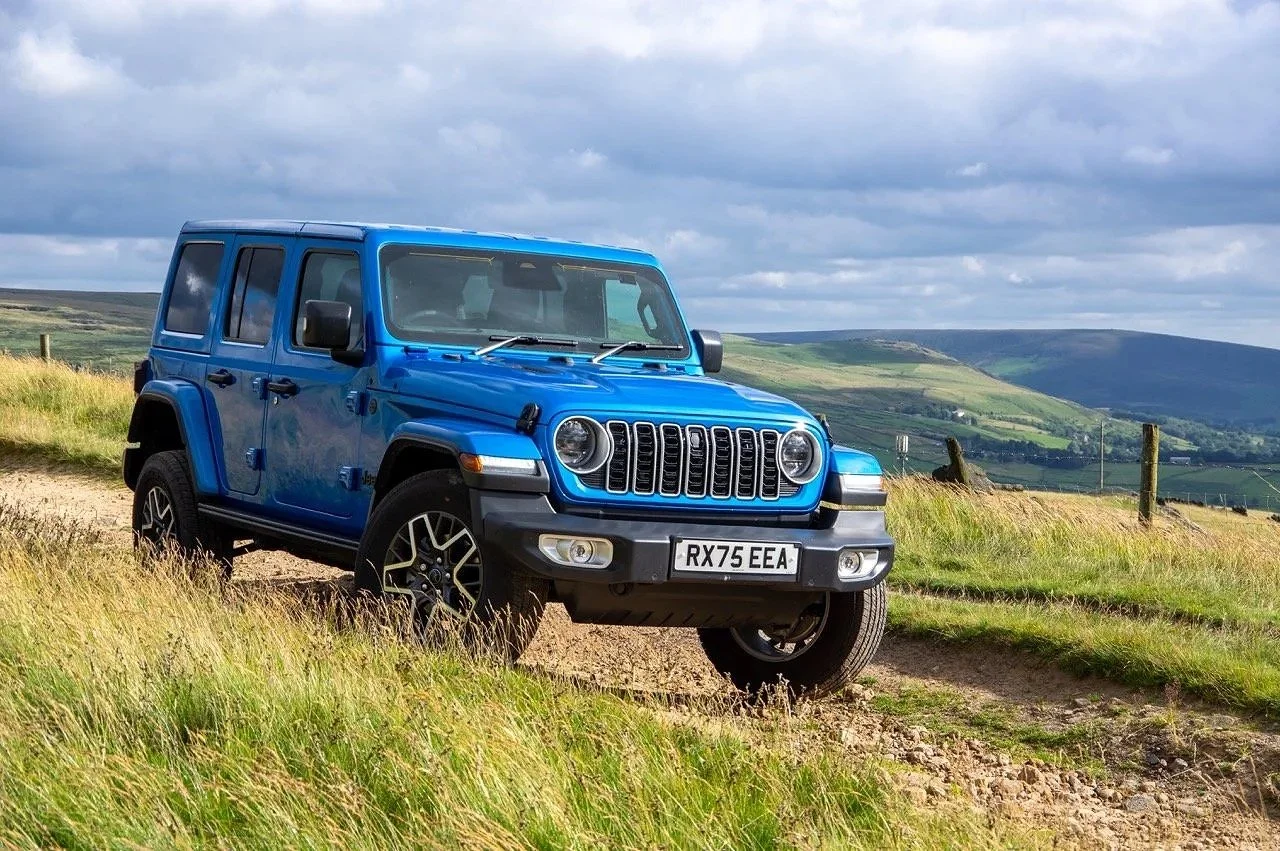
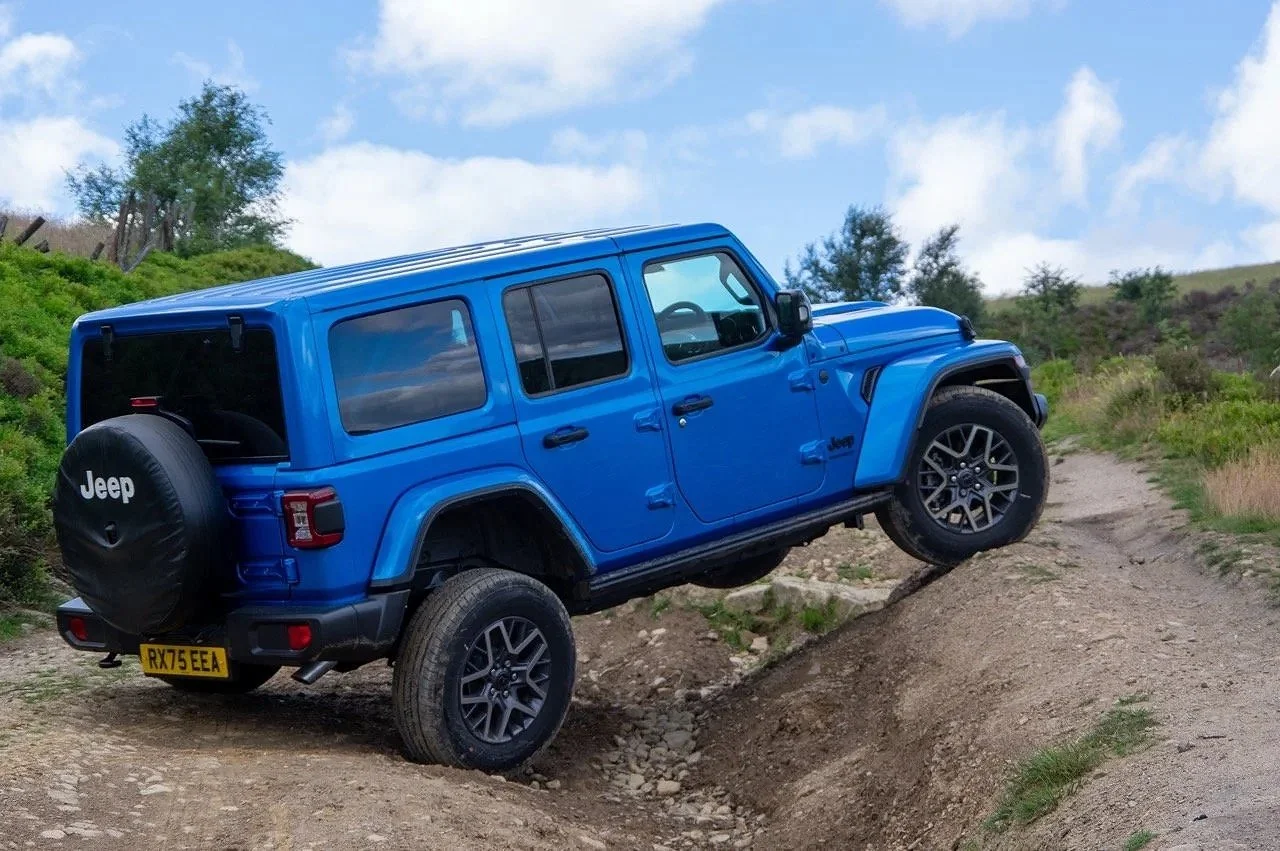
The Hydro Blue Sahara tested here had the familiar Wrangler stance: tall, purposeful and ready to disappear down a muddy lane at the first opportunity.
It’s also surprisingly approachable. Yes, it’s big. Yes, it looks like it could survive being dropped from a helicopter. But unlike some serious off-road machines, it didn’t feel intimidating.
The driving position is excellent - despite there being nowhere for your left foot. You sit high, visibility is superb and you get that commanding view that makes modern SUVs popular. The difference is the Wrangler actually deserves the image.
On-road comfort: better than expected, but still a Wrangler
Let’s get one thing clear: if you want the ultimate motorway cruiser, buy something else and sit back in a massaging leather chair and enjoy the silence.
The Wrangler is not that. But it’s far more civilised than you would imagine..
The 2.0-litre turbo petrol engine provides plenty of performance, with 272hp available, and the eight-speed automatic gearbox suits the character of the vehicle well. It’s smooth, responsive and gets a move on when you ask it to.
Acceleration is surprisingly brisk. The Wrangler isn’t a sports car, obviously, but there’s enough shove to make joining a motorway or overtaking slower traffic effortless.
Where it differs from a conventional SUV is the feel.
You are always aware you’re driving something designed to cope with far more than simply transporting people between supermarkets. There’s some wind noise, especially at higher speeds, and the upright shape means it’s never going to slice through the air like a Kia EV6.
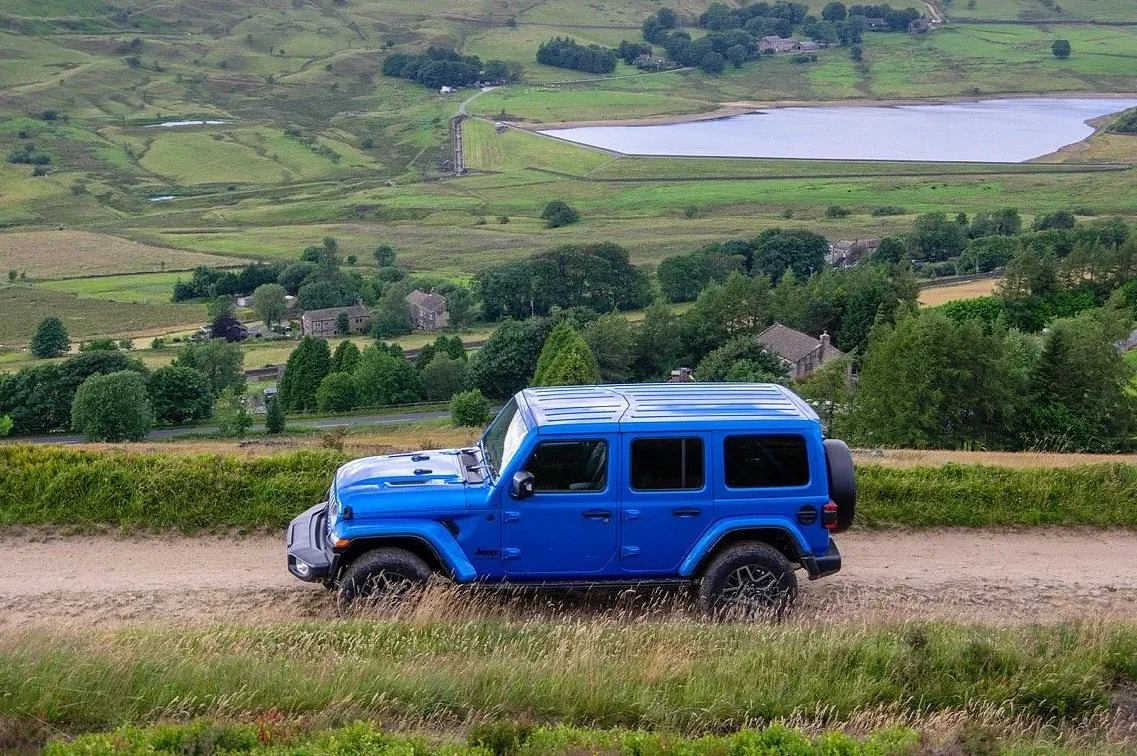
The steering is light but slightly vague around the straight-ahead position. You make small corrections on faster roads, especially in strong winds. It’s not unpleasant; it’s just part of the Wrangler experience.
The ride is actually impressive. The suspension absorbs potholes and broken surfaces extremely well, helped by the Wrangler’s off-road-focused setup and generous sidewall tyres.
On rough lanes and poorly surfaced rural roads, it genuinely feels better than many supposedly more sophisticated SUVs. It reminded me why I love a solid axle, could sprung 4×4, it handles everything with ease.
The downside? Body movement.
Corner enthusiastically and the Wrangler reminds you that physics still exists. There’s body roll, weight transfer and a slight sense that the vehicle would rather be exploring a forest track than attacking a roundabout.
Which, frankly, is exactly how it should be. That said, it handled certain tight corners far better than the latest 250 Land Cruiser.
Fuel economy: bring a flask and a sense of humour
The Wrangler Sahara is not economical.
Official figures suggest around 25mpg, but real-world driving will depend massively on how you use it.
Drive gently on a steady run and you might see respectable figures. Use the power, spend your weekends crawling through mud, or drive around like you’re auditioning for a Jurassic Park remake and the fuel gauge drops faster than enthusiasm for another rainy dog walk.
The best I got was around 18.7mpg.
But nobody buys a Wrangler because they’re obsessed with saving three pence per mile.
It’s like buying hiking boots and complaining they’re heavier than trainers.
Off-road ability: Sahara without the swagger of the Rubicon
This is where things get interesting.
The Sahara doesn’t have the Rubicon’s locking differentials, more aggressive hardware or ultimate rock-crawling credentials. And yet, for the vast majority of UK owners, it is still massively capable.
The Wrangler comes with proper four-wheel-drive hardware, low range gearing and the kind of articulation and ground clearance that makes many modern SUVs look like they’ve wandered onto the wrong campsite.
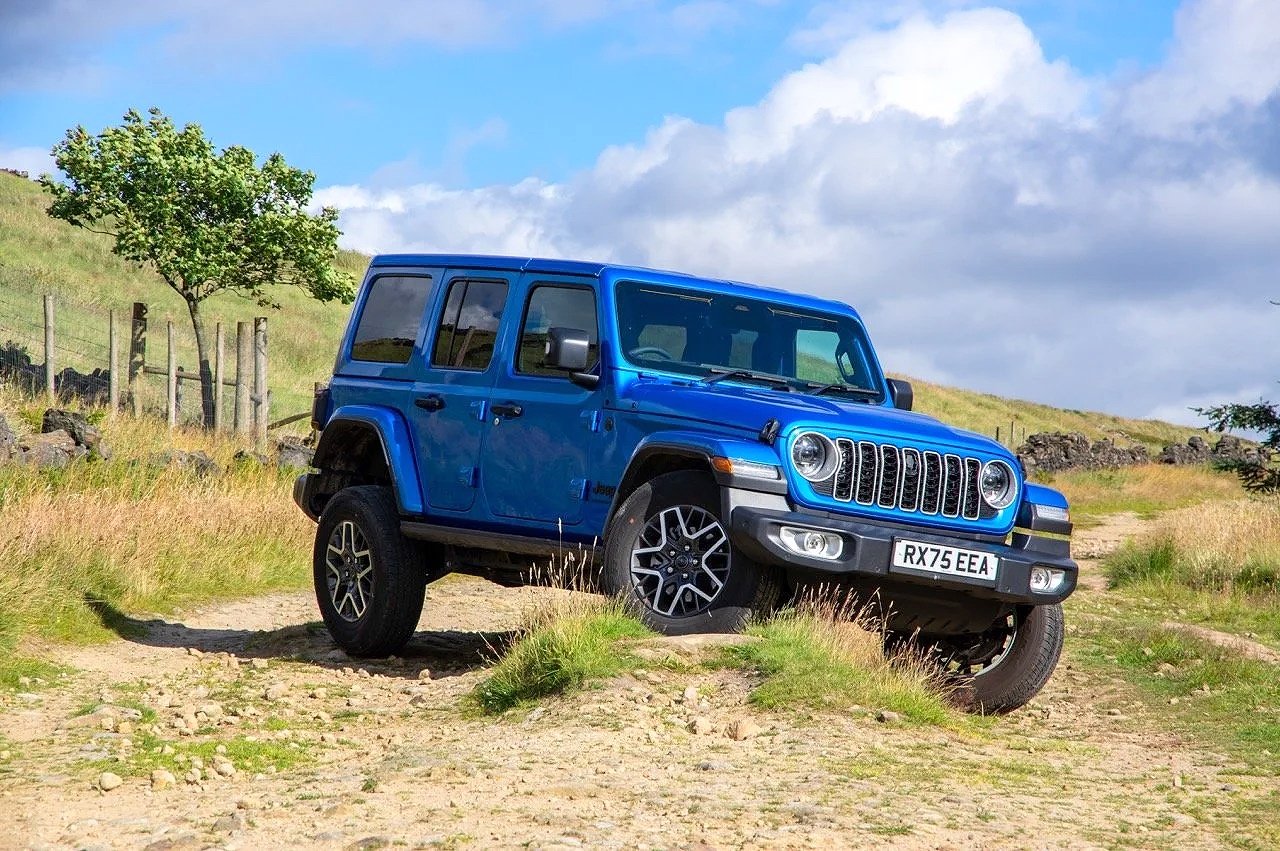
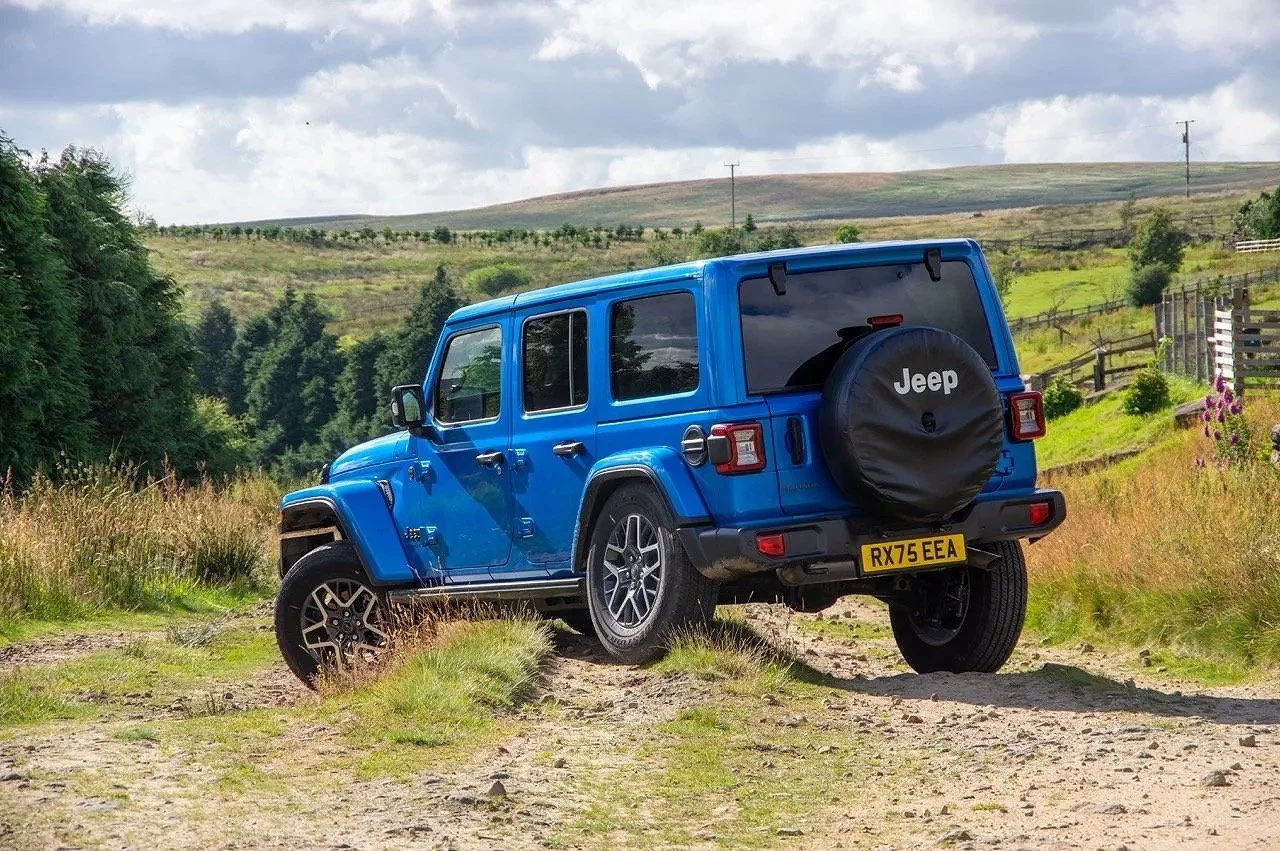
Muddy tracks? Easy.
Wet grass? No problem.
Deep ruts? More than capable.
Loose gravel and steep climbs? The Sahara simply gets on with it.
The biggest limiting factor is usually the driver rather than the vehicle.
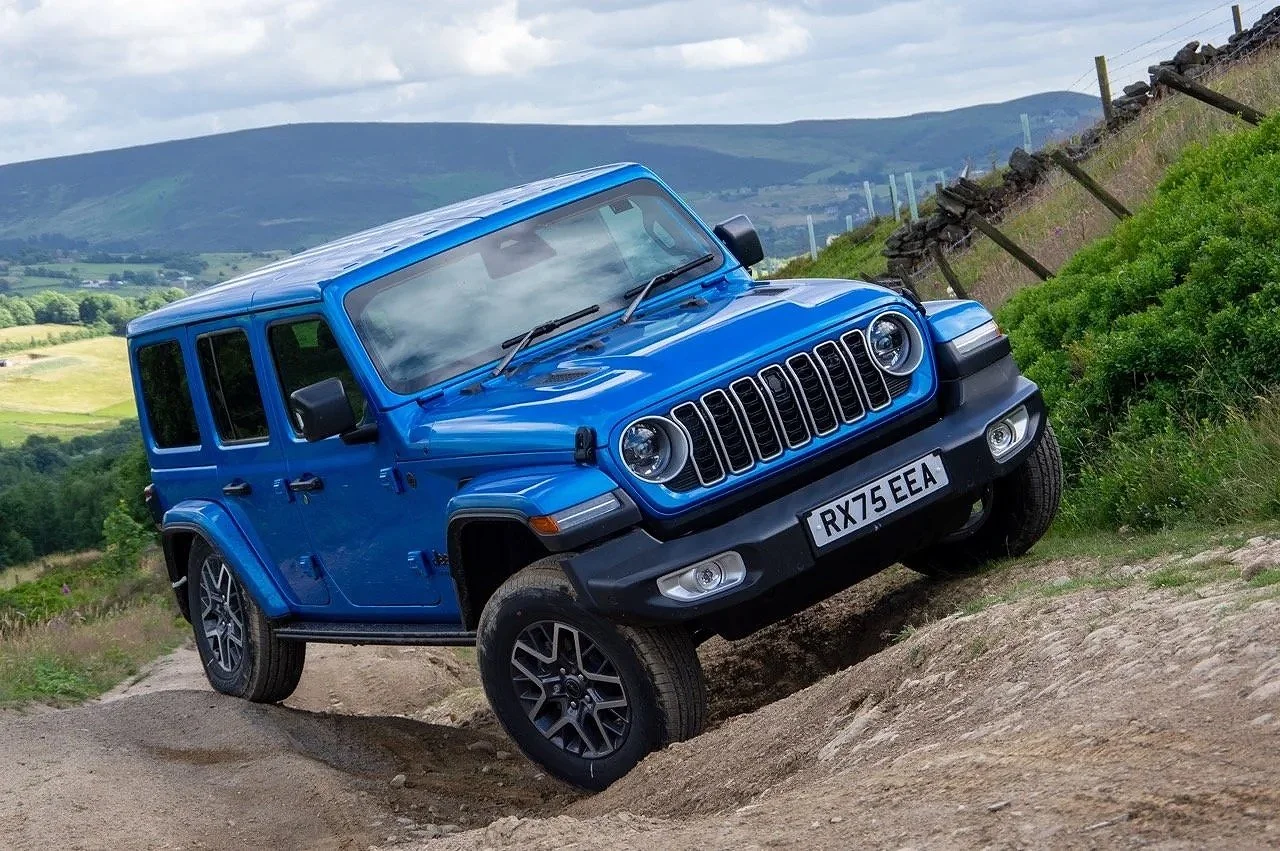
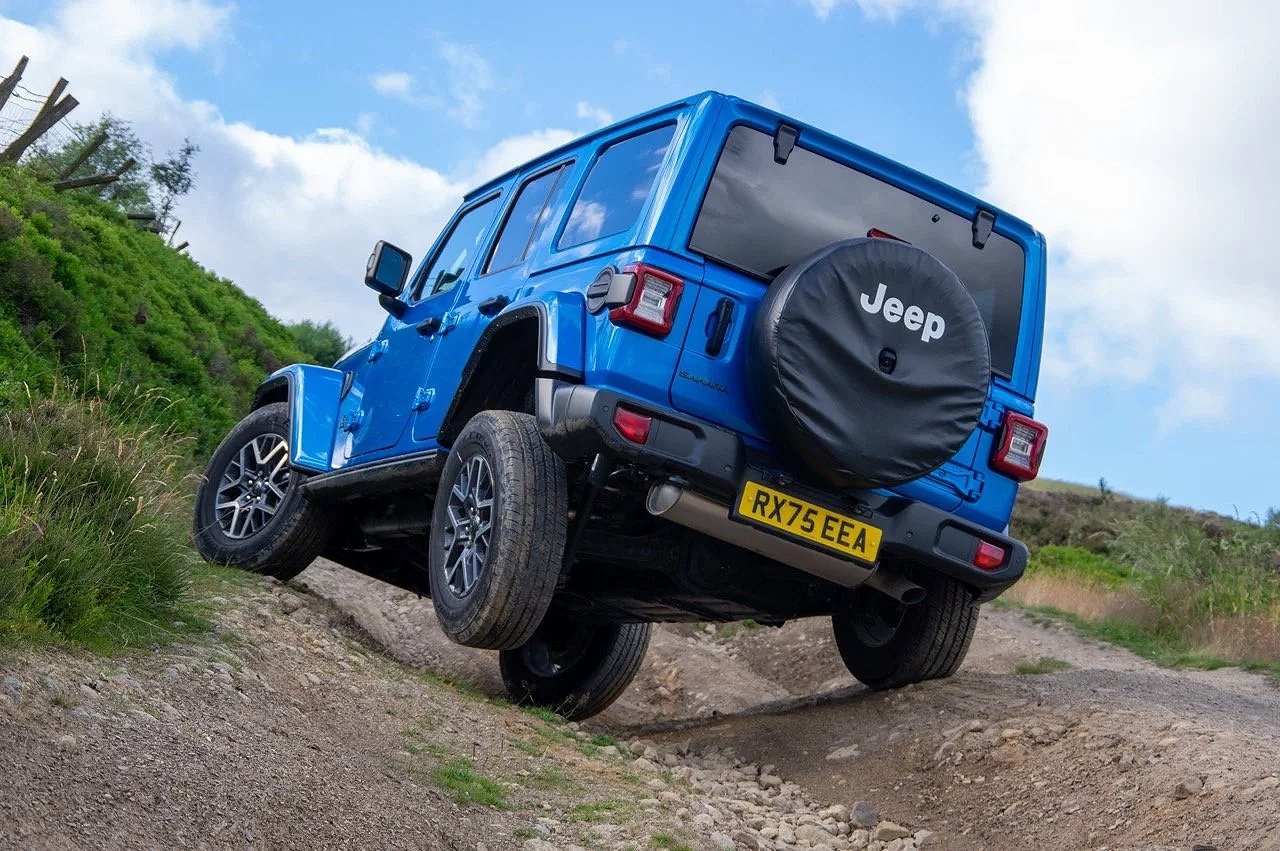
That’s the beauty of a Wrangler. It gives confidence because you know there is engineering underneath you rather than just clever electronics desperately trying to disguise the fact you’re driving a family hatchback wearing hiking boots.
For green lanes, camping trips and genuine outdoor adventures, the Sahara is more than enough.
Unless your weekend plans involve climbing mountains made from boulders, you probably don’t need a Rubicon.
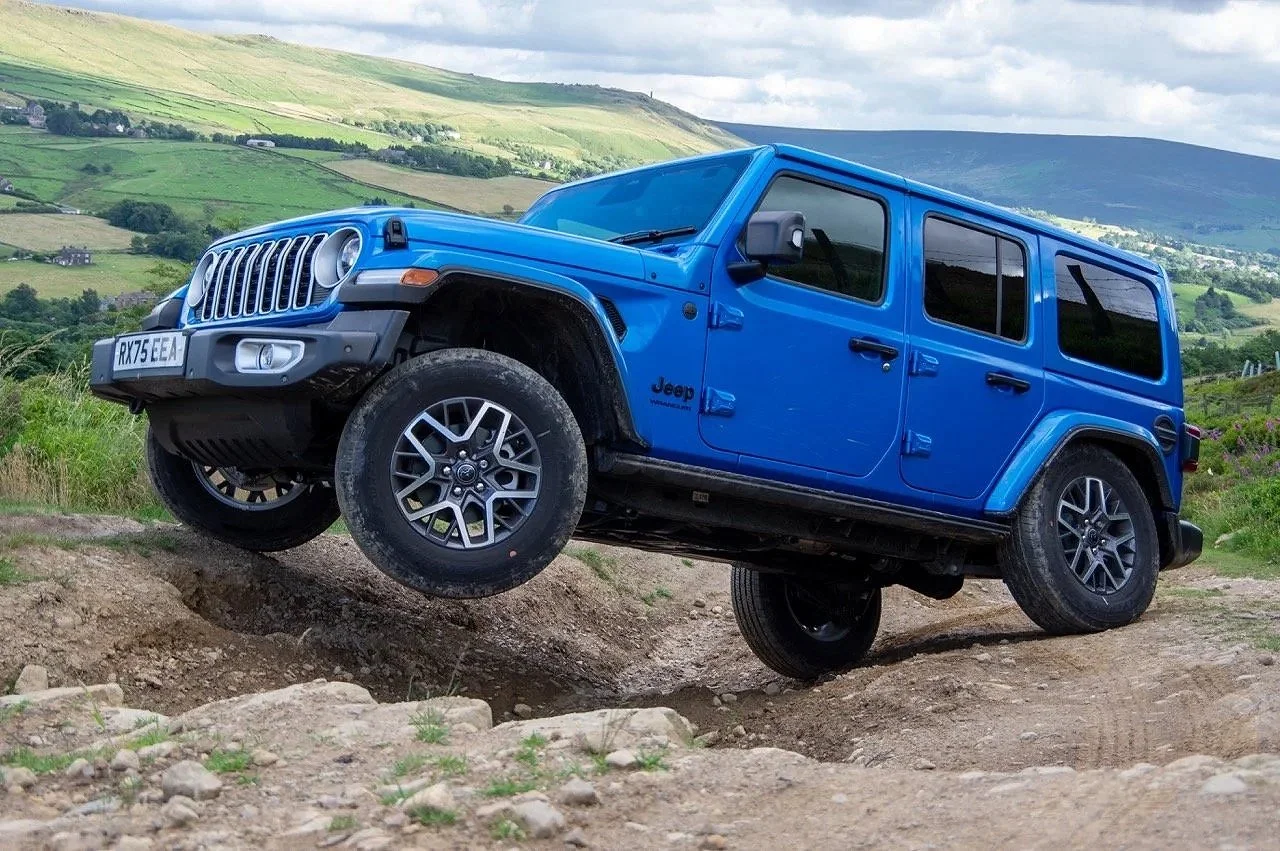
Interior: functional rather than fancy
Inside, the Wrangler continues the theme.
This isn’t a luxury lounge. It’s practical, durable and designed to be wiped clean after adventures.
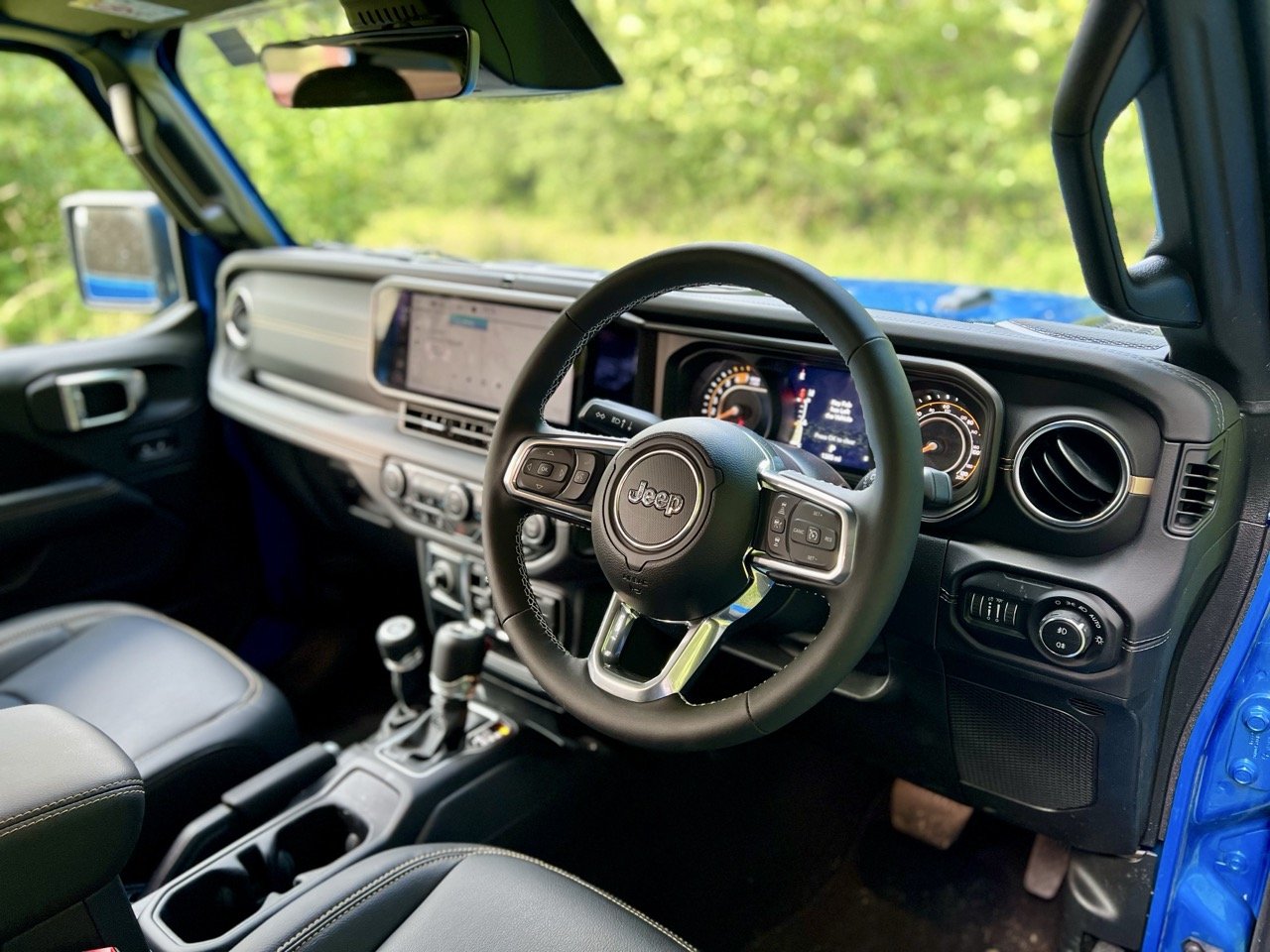
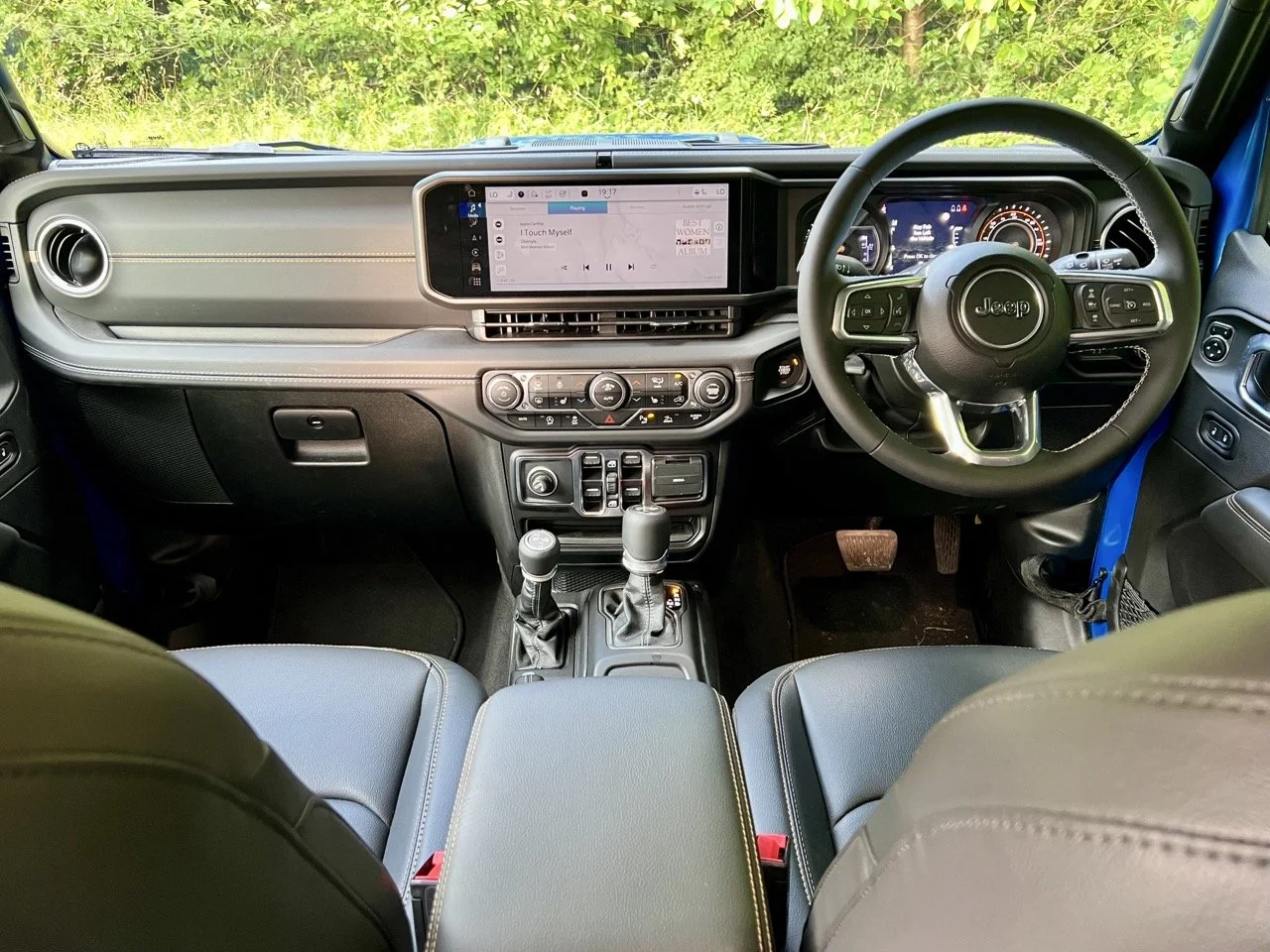
The upright dashboard gives excellent visibility and there’s a chunky, tactile feel to everything. The grab handles remind passengers that this is a vehicle designed to bounce around off-road.
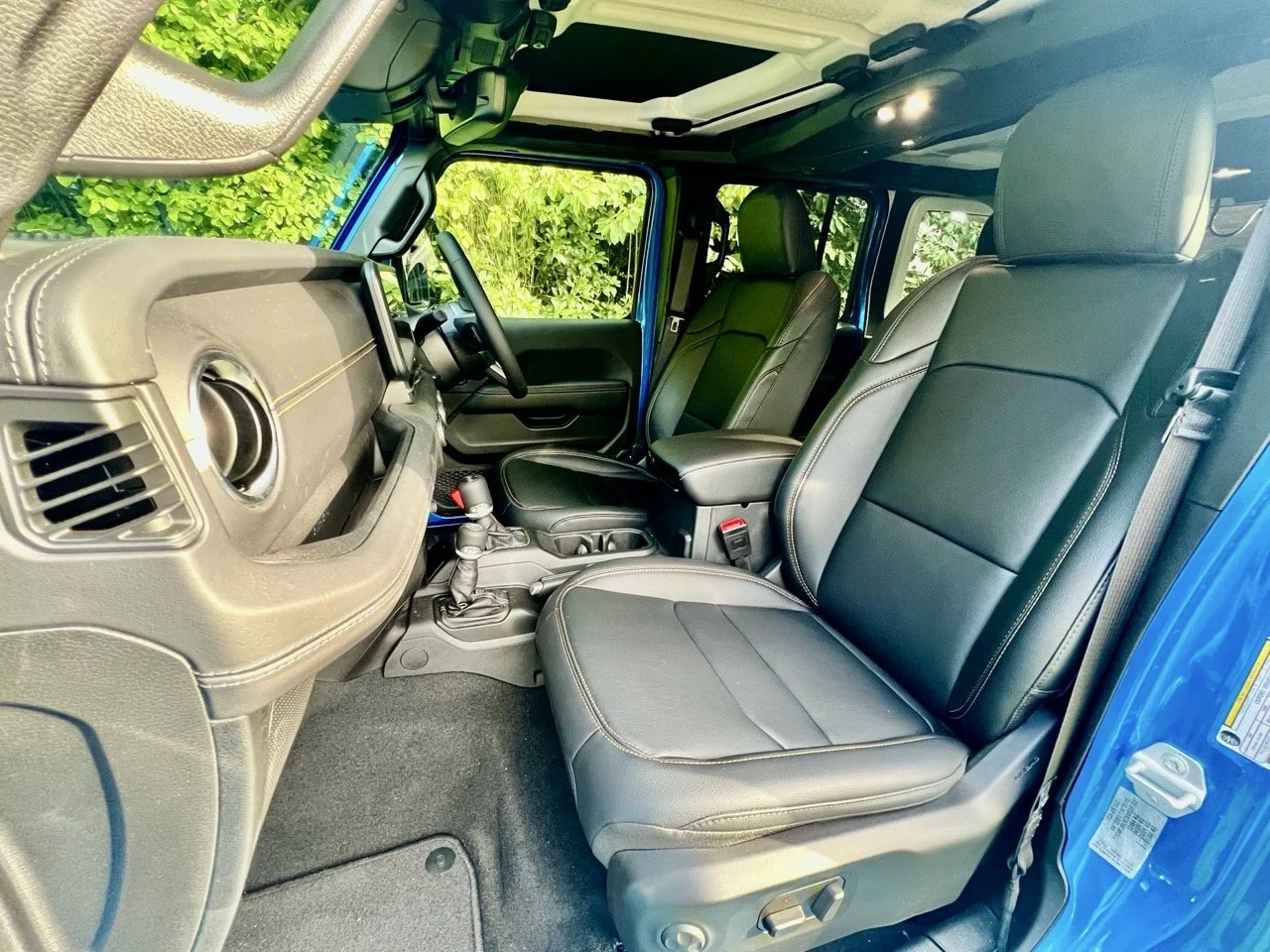
The seats are comfortable and supportive, with plenty of adjustment. Long journeys are surprisingly easy, although the cabin doesn’t have the hushed refinement of a premium SUV.
Rear passenger space is good. The Unlimited’s four-door layout makes it a realistic family vehicle rather than something only suitable for people who don’t mind climbing into the back like a contortionist.
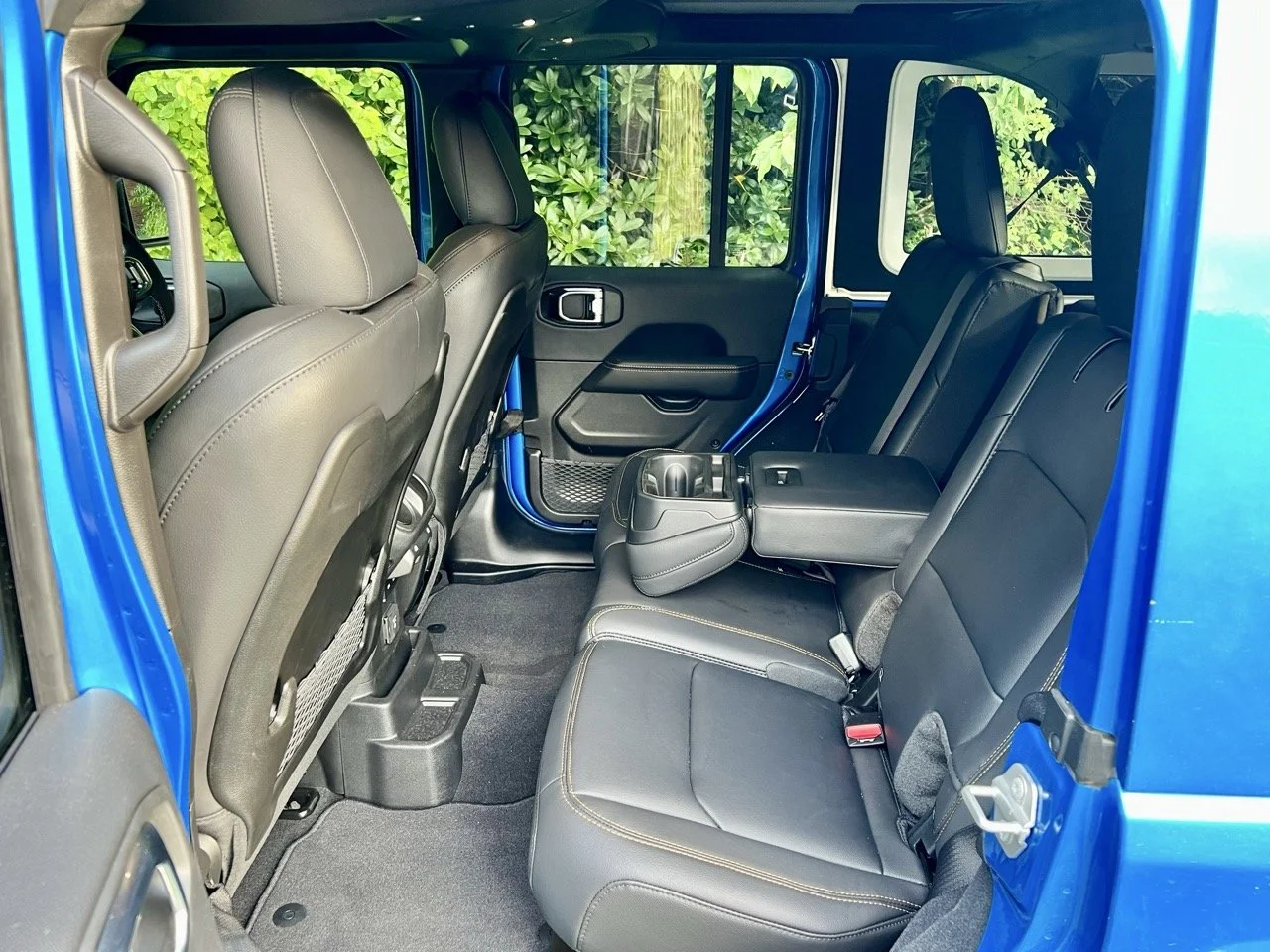
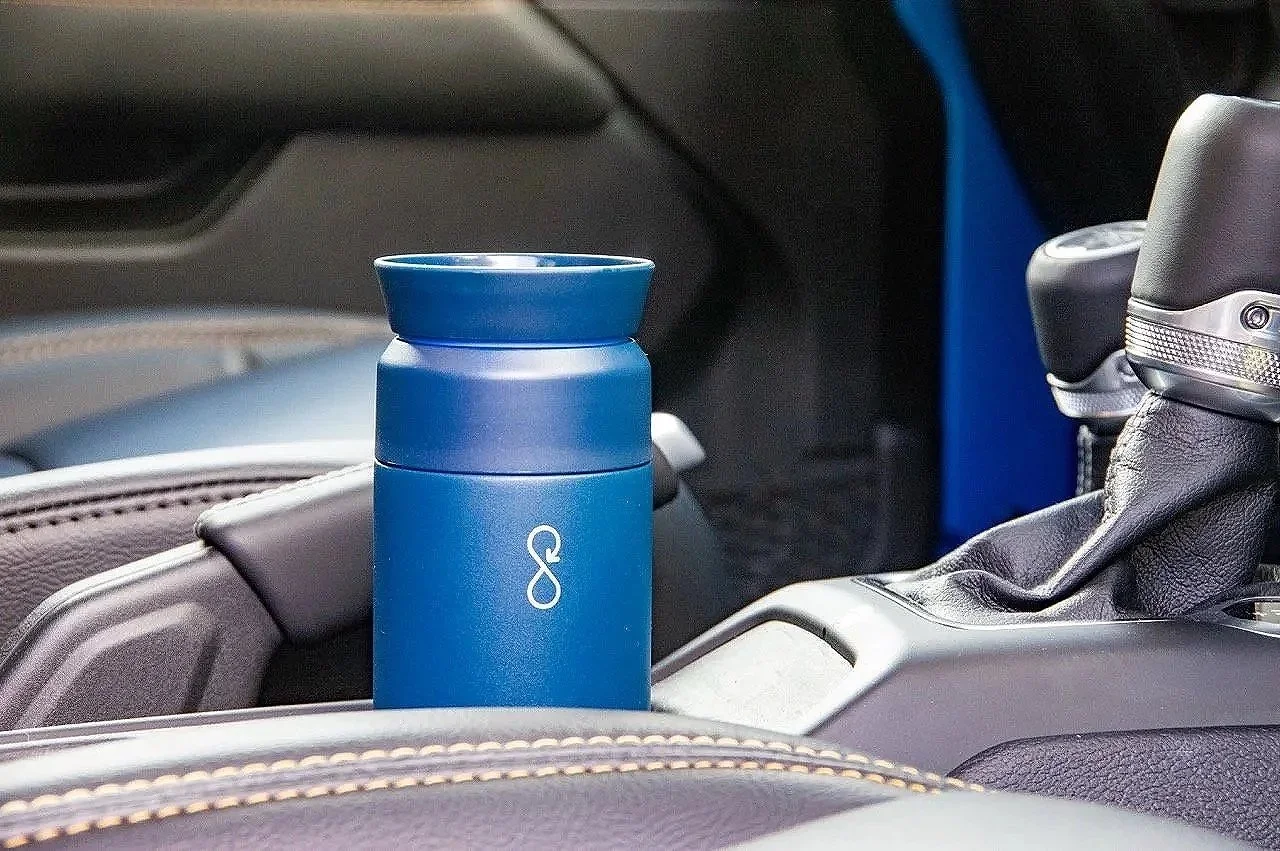
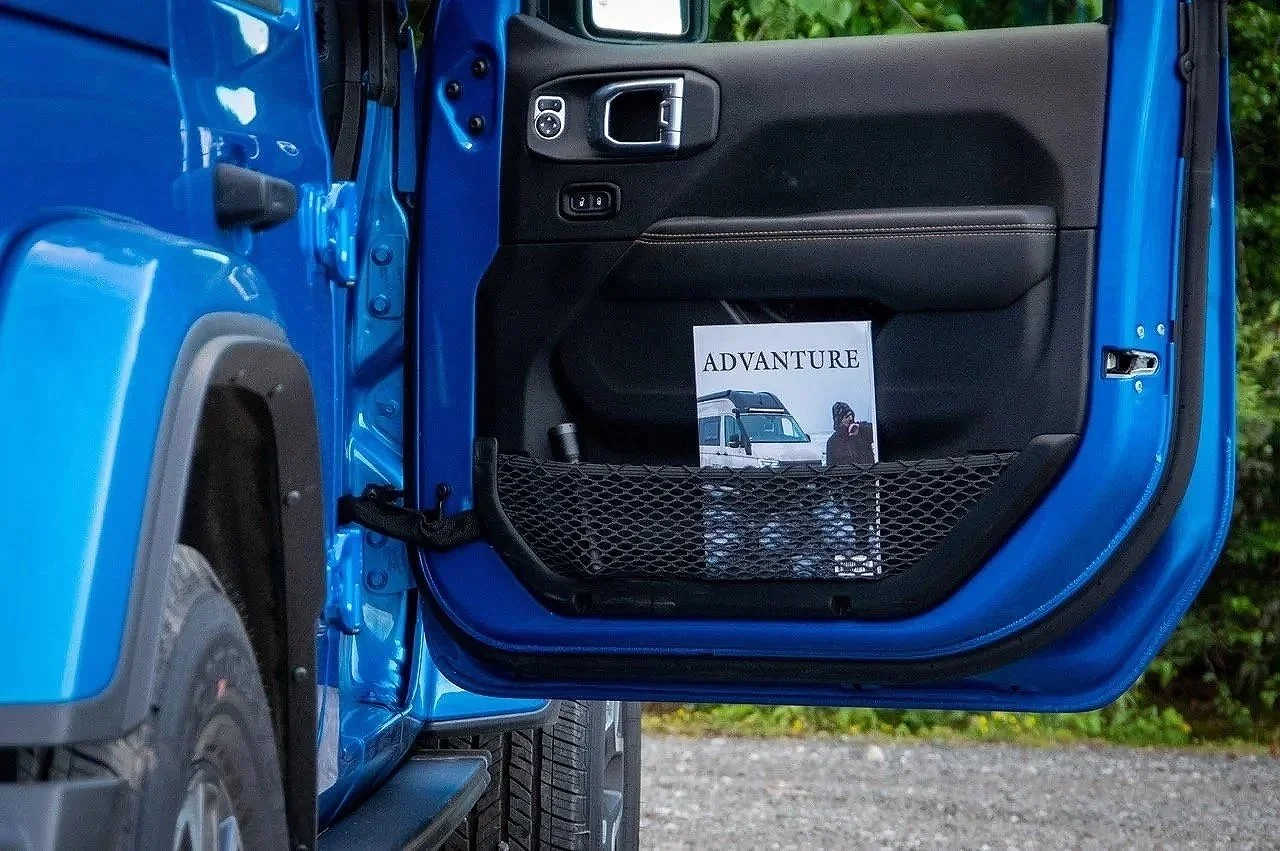
Storage is reasonable rather than class-leading. Door pockets, centre storage and cup holders are all useful, but this isn’t a cavernous estate car.
Then again, nobody buys a Wrangler because they need to transport flat-pack furniture every weekend.
Dogs, camping gear and general outdoor tat
This is where the Wrangler makes sense.
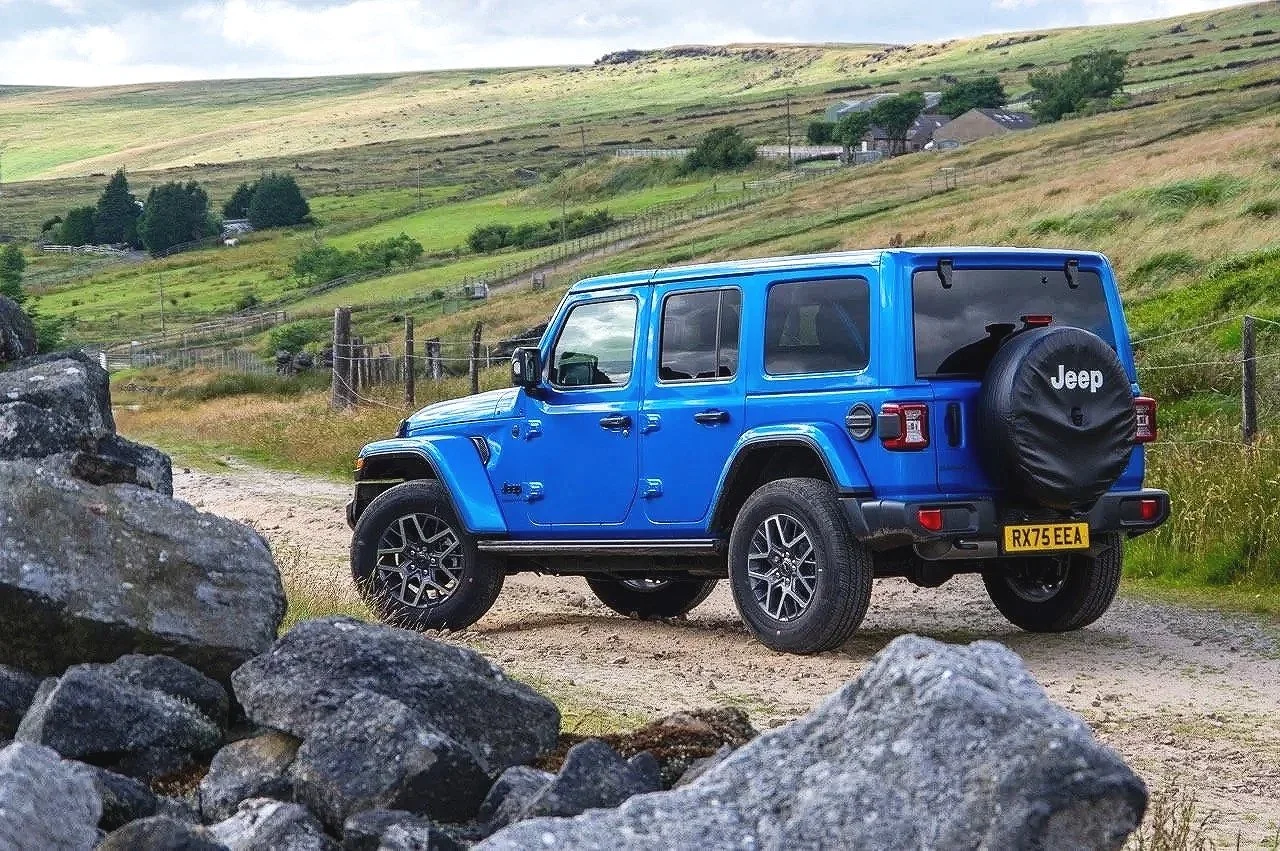
The boot is a good size and the square shape makes loading easy. There’s no awkward sloping roofline stealing space, and the rear seats fold to create a useful load area.
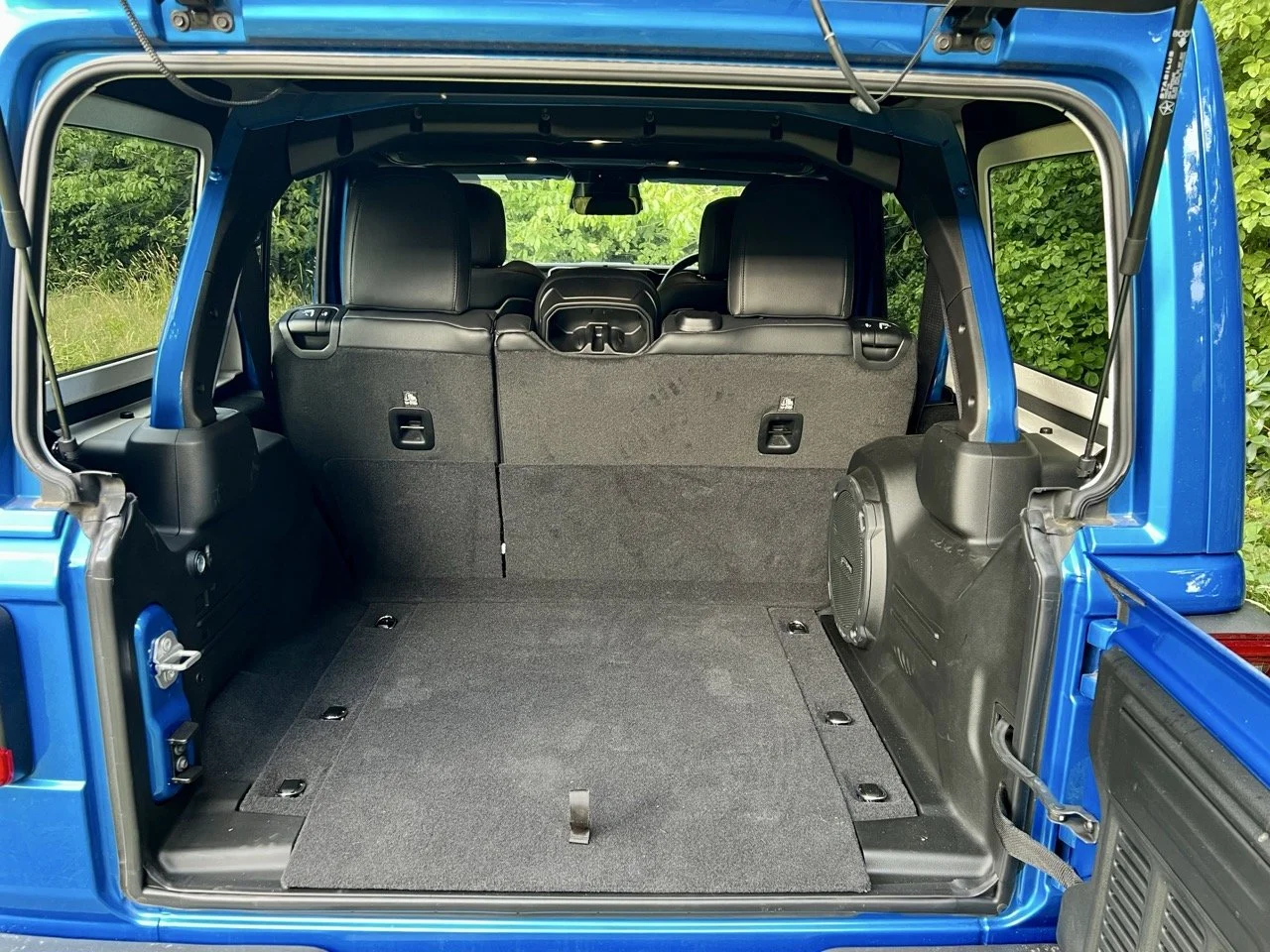
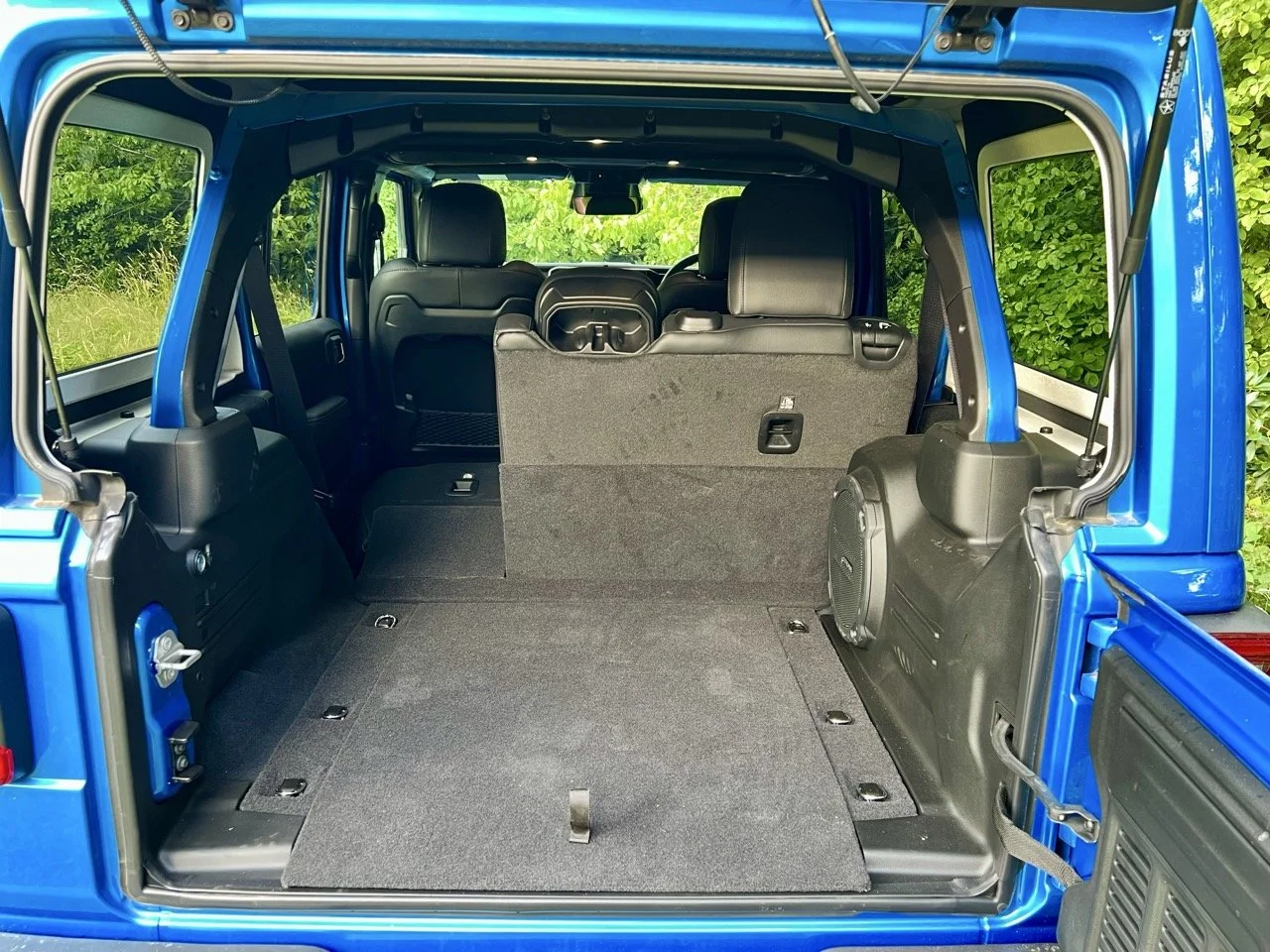
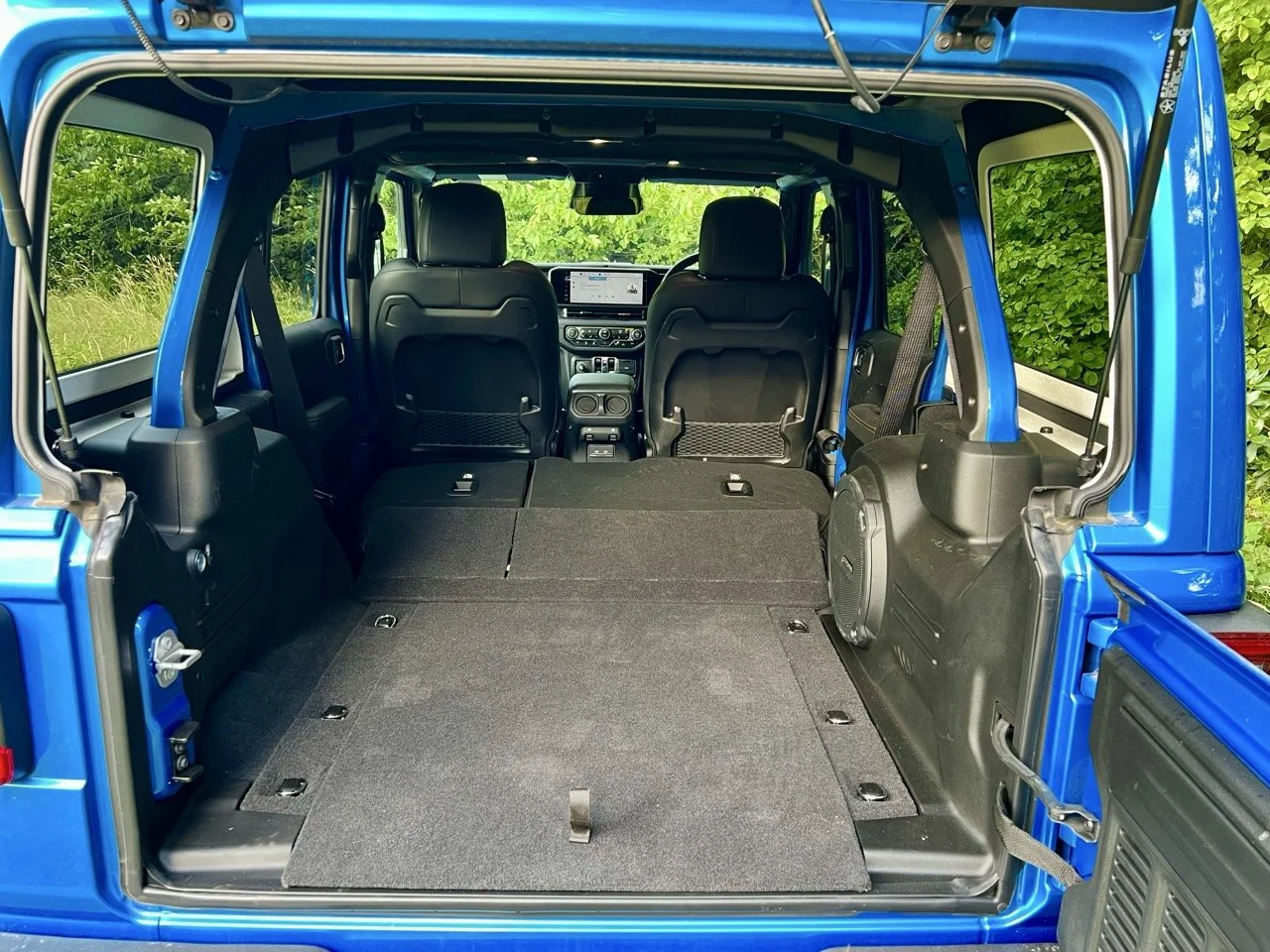
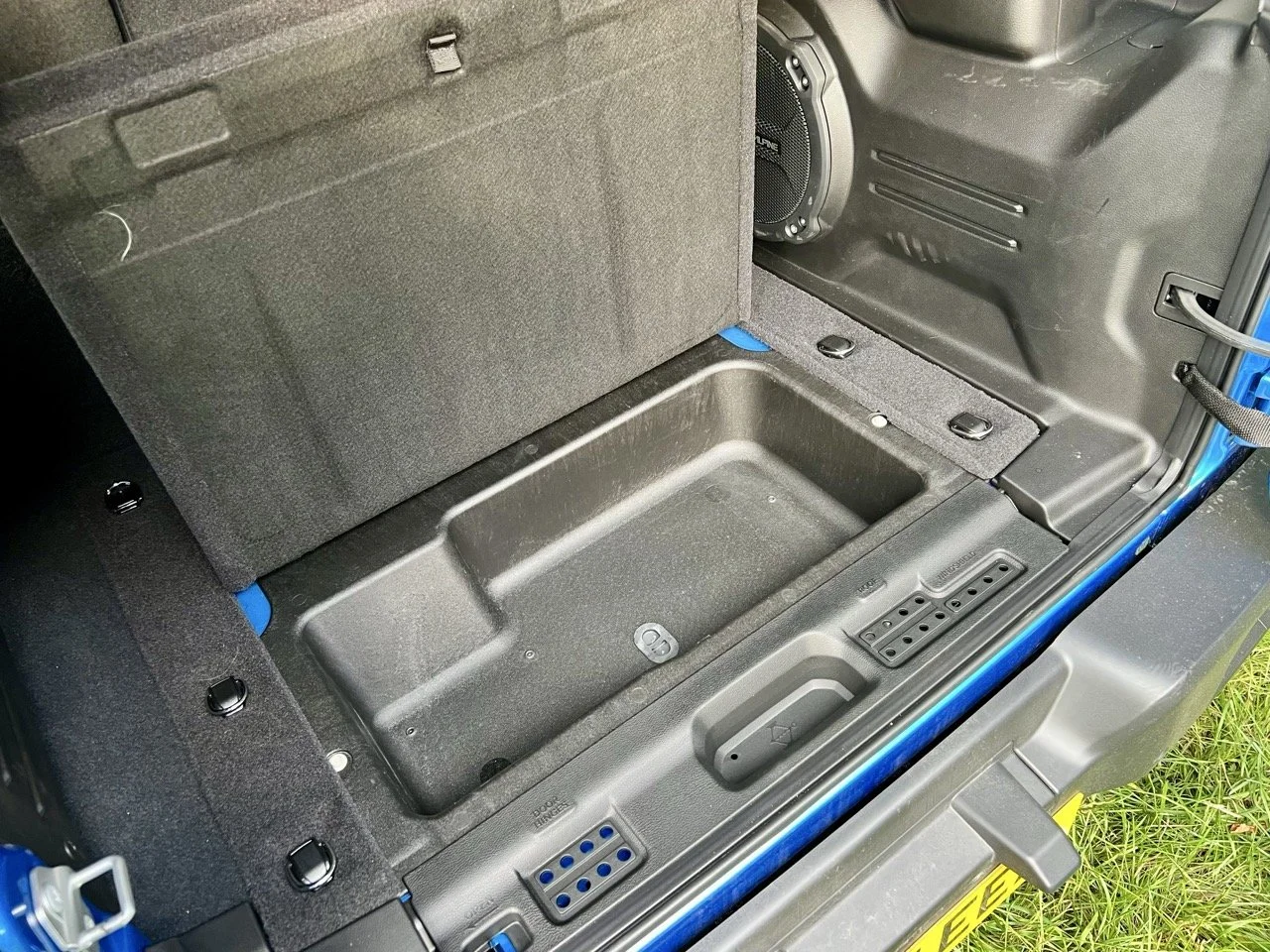
A muddy dog? Absolutely.
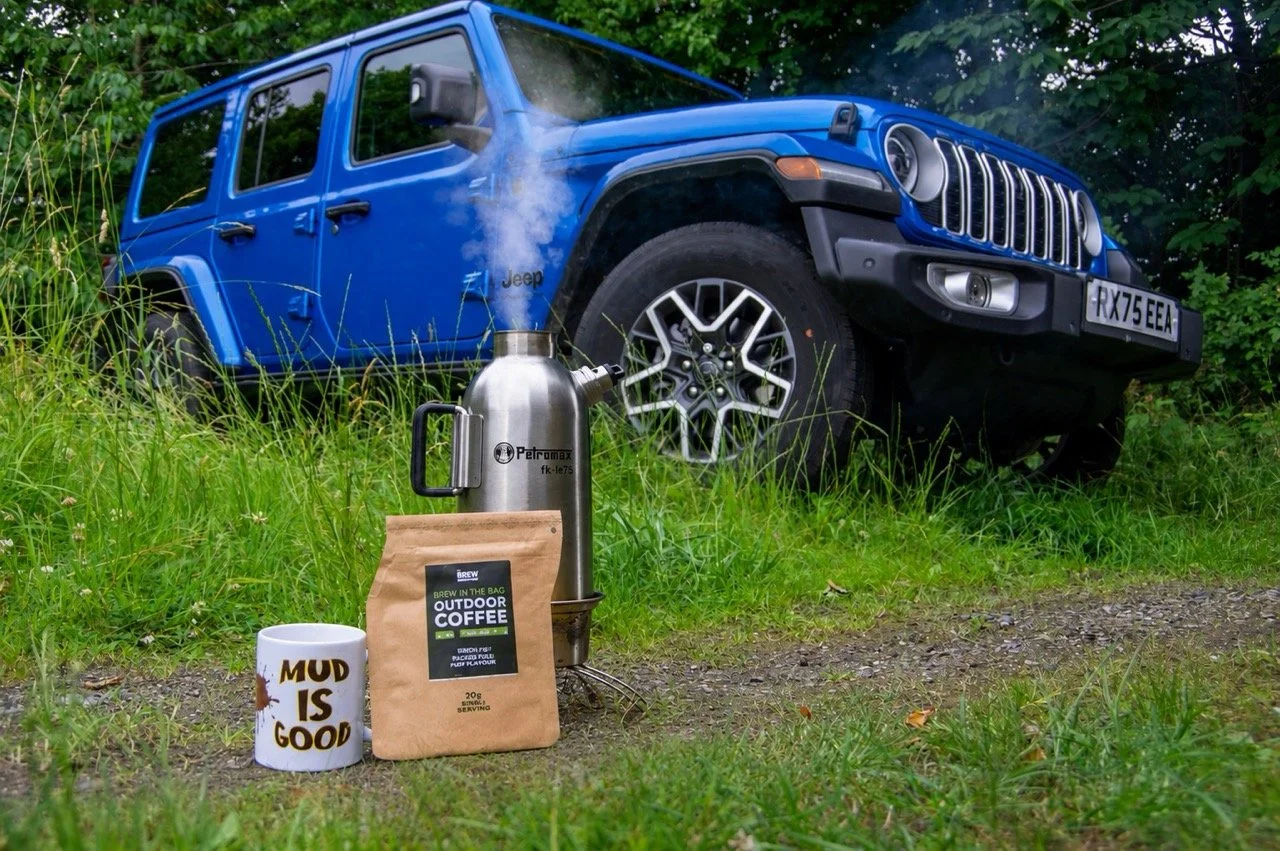
Camping chairs, stove, recovery gear, muddy boots, waterproof jackets, camera bags, a bag full of things you might need but probably won’t? No problem.
The rear door opening is practical, although the side-hinged tailgate means you need a bit of space behind you when loading.
The glass opening separately is useful, especially when loading smaller items. Don’t forget, if the mood fits, or the load is tall, you can always remove the roof completely!
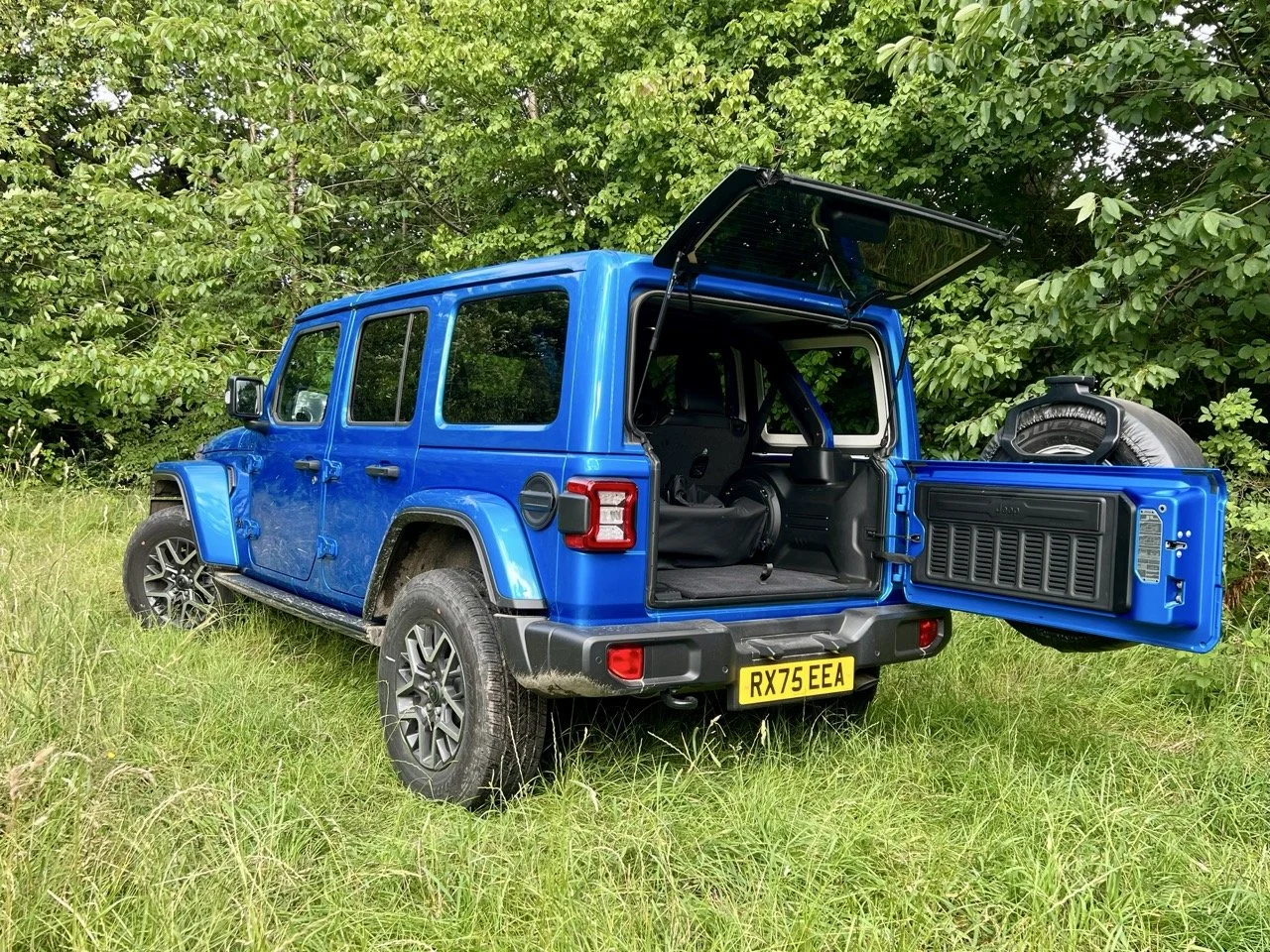
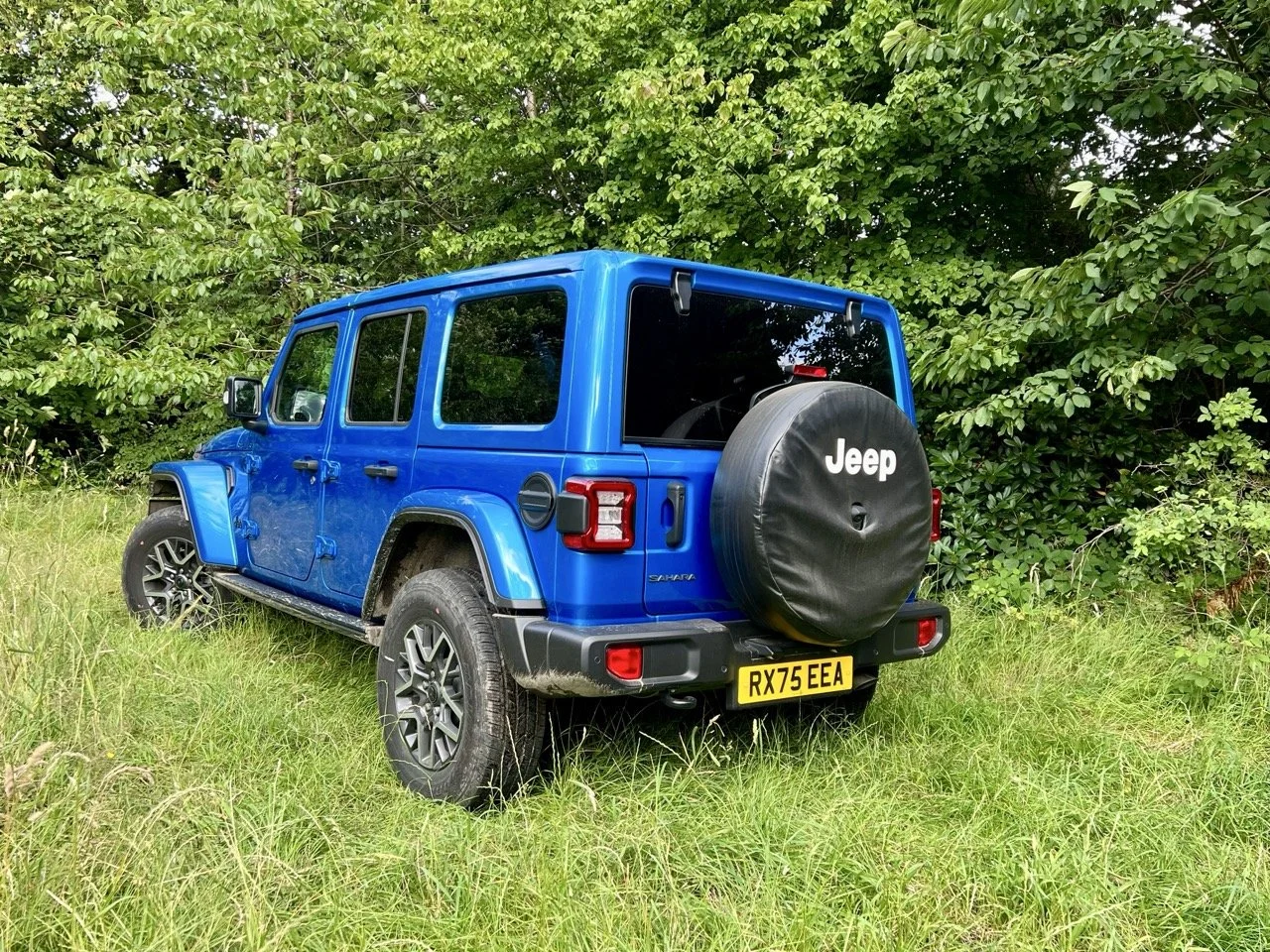
One small criticism: the load height is higher than some SUVs, so elderly dogs or those with shorter legs may appreciate a ramp.
Technology and the things that annoy me
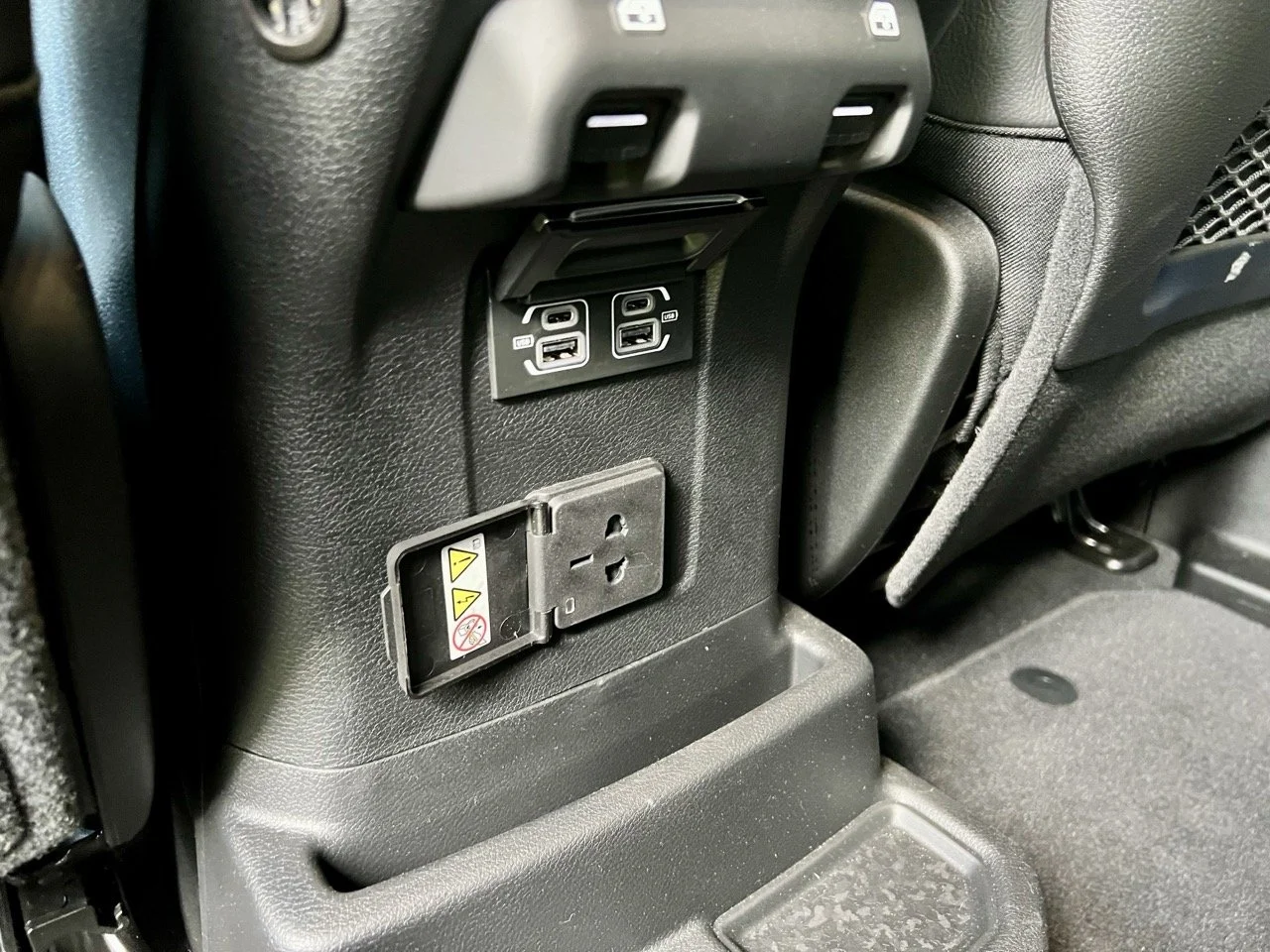
Modern Wranglers come with plenty of equipment, including a large infotainment system, smartphone connectivity and numerous driver assistance systems.
The screen itself works well and is relatively intuitive.
And, thankfully, the Wrangler does retain some useful physical switches, especially for the heater controls - yippee ki yay…
What about the lane departure warning system, etc? The Wrangler’s system can be switched off, but like many vehicles, it requires diving through menus rather than simply pressing a button.
When you’re driving a proper 4x4 down a narrow lane with grass brushing both mirrors, the last thing you want is the vehicle giving you a telling off because you haven’t perfectly followed painted road markings.
Verdict: A flawed genius
The Jeep Wrangler Sahara is one of those rare vehicles that makes very little sense on paper but enormous sense in the real world.
It’s thirsty. It’s not the quietest. It rolls around corners. It has the aerodynamic qualities of a garden shed.
And yet…
Few vehicles encourage adventure quite like it. It makes ordinary journeys feel like the start of something. A trip to the shops feels like a potential expedition. A wet Sunday afternoon becomes an excuse to find a muddy lane.
The Sahara is the sensible Wrangler. It’s capable enough for almost every UK off-road adventure, comfortable enough for daily use and practical enough for families, dogs and camping equipment.
Should you buy one instead of a sensible SUV?
Probably not.
Would you smile every time I climbed into one?
Absolutely.
And sometimes that matters more.
The Jeep Wrangler Sahara: because life is too short to spend it driving something beige.
Unfortunately, UK sales have effectively stopped because of emissions and upcoming regulatory requirements rather than because Jeep suddenly decided nobody in the UK wanted Wranglers anymore. so what’s left at you local dealership will be the last, so if you want one, you’d better hurry up!