
The Curious Case of the Switched-Off Winter Warm-Up
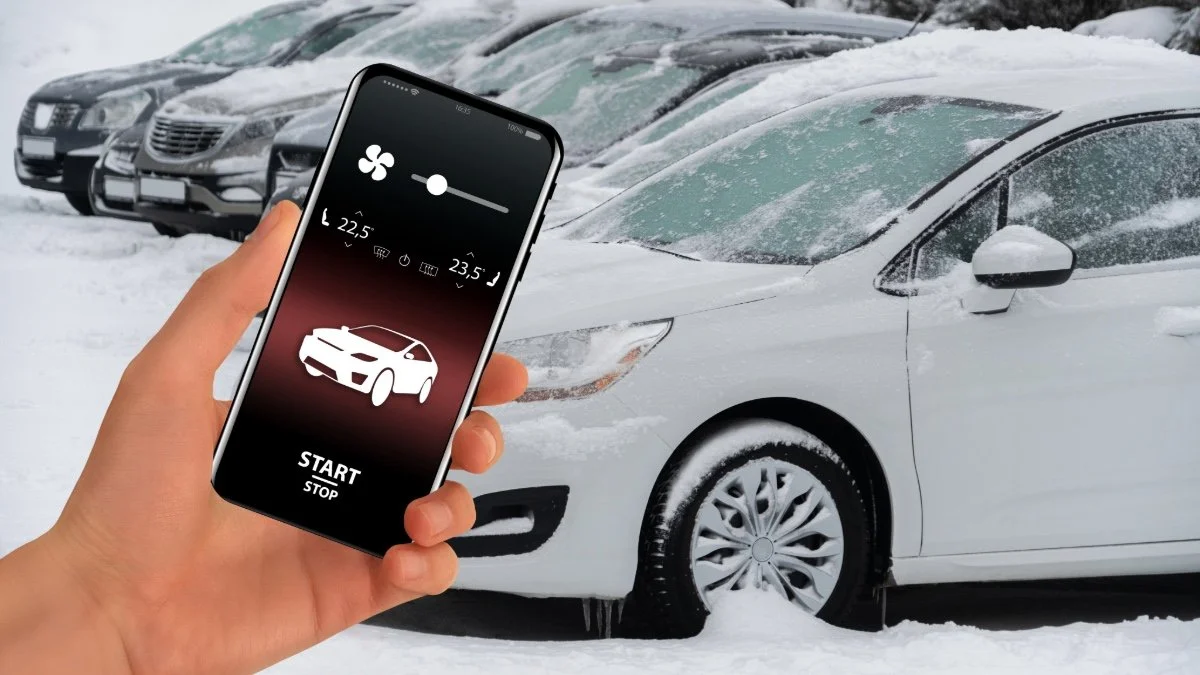
There are few small modern luxuries quite as satisfying as climbing into a warm, defrosted car on a freezing winter morning. No scraping ice like a Victorian chimney sweep. No fogged-up windscreen turning the school run into a game of Guess That Junction. Just press a button on your phone, finish your brew, and wander out to a civilised vehicle.
Or at least… that was the idea.
Recently, headlines started doing the rounds claiming that a government had ordered a manufacturer to switch off owners’ remote warm-up functions, and that only EVs were now allowed to use it — hybrids included.

Cue predictable outrage:
“They’re controlling our cars!”
“Next they’ll turn the heating off in your house!”
“This is why I’m keeping my old Defender until I die.”
What Actually Happened and should we all be worried that our cars are about to dob us in for warming our seats?
The story centres on Germany, Toyota/Lexus, and a feature that allows certain cars to remotely start or warm up while parked.
German regulators took issue with this on internal combustion engine vehicles because, and this is the key bit, it involves the engine running while stationary. In Germany, that falls foul of long-standing anti-idling and emissions laws, which are taken far more seriously than they are in the UK (where idling rules technically exist, but are enforced about as often as speed limits in Tesco car parks).
Rather than risk customers being fined for using a factory-fitted feature, Toyota/Lexus disabled the function via an over-the-air update on affected ICE (Internal Combustion Engine) models sold in Germany.
No cars were “remotely seized”. No engines were bricked. No black vans turned up. Just… feature off. Job done.
But why are EVs still allowed to do it?
This is where the “only EVs are allowed to warm up” narrative comes from, and it’s half-true, but not in the sinister way Facebook comments suggest.
EVs (and many plug-in hybrids) can pre-heat the cabin electrically, without firing up an engine and producing exhaust emissions. From a regulatory point of view, that’s basically the same as switching on a fan heater.
No fumes, no local pollution, no idling engine, so no legal problem.
Traditional hybrids can be trickier. Some can heat electrically, some still rely on the engine, and some do a bit of both depending on temperature and battery state. Regulators don’t like “depending”, so the blunt instrument comes out.
Is it clumsy? A bit.
Is it targeted at pollution rather than drivers? Also yes.
Is this the thin end of the wedge?
Here’s where things get interesting, and where this does matter beyond one German regulation.
This is a clear example of software-defined vehicles meeting hard-line regulation. The car didn’t physically change. The laws didn’t suddenly appear, but a feature owners assumed they ‘had’ was quietly removed because it didn’t fit the rulebook in one market.
That understandably makes people twitchy, because if a manufacturer can switch this off what else can be tweaked, limited or removed later?
To be clear: this wasn’t about surveillance, rationing, or social control, but it is a reminder that modern cars are no longer just machines, they’re platforms, governed by software, legislation and geography.
Your car might technically be capable of something, but that doesn’t mean it’ll always be allowed to do it.
What About the UK?
Right now, this specific situation doesn’t apply in the UK.
Remote warm-up is still legal here, anti-idling rules are far looser, and enforcement is mostly limited to councils occasionally telling taxi drivers to turn their engines off outside schools.
But, and it’s a big but, EU regulations have a habit of influencing UK manufacturers, even post-Brexit. Cars are designed for markets, not countries, and if a feature becomes awkward to justify in one major territory, it often quietly disappears everywhere else a few model years later.
We’ve seen it before:
Physical buttons replaced by screens (cheaper, not better)
Lane-keeping systems that default to ON every single time
Speed limit warnings that bong like a microwave having a meltdown
So it’s not unreasonable to wonder whether remote engine warm-up on ICE cars might slowly fade away, replaced by EV-only convenience features instead.
The Real Irony - Cold Engines Don’t Like This Either
There’s also a mechanical elephant in the room. Most modern engines don’t actually benefit from long idle warm-ups. They warm faster, and more efficiently, when driven gently. Sitting ticking over for ten minutes might feel comforting, but it’s not doing your DPF(Diesel Particulate Filter), fuel economy, or neighbours’ lungs any favours.
So from an engineering and environmental point of view, the regulators aren’t completely barking. From a human point of view, though, climbing into a frozen car at 6am still feels like punishment for sins you don’t remember committing.

So… Should We Be Worried?
Not panicking-in-the-streets worried, but maybe quietly paying attention worried.
This wasn’t about banning features for fun. It was about emissions law clashing with convenience tech, but it does highlight how ownership is becoming more conditional, more software-dependent, and more region-specific than ever before.
EVs will increasingly get the nice toys, ICE cars will increasingly be told to behave themselves. Hybrids will sit awkwardly in the middle, as usual, and the rest of us will keep scraping windscreens, muttering about “the old days”, while secretly enjoying heated seats that could fry an egg.