
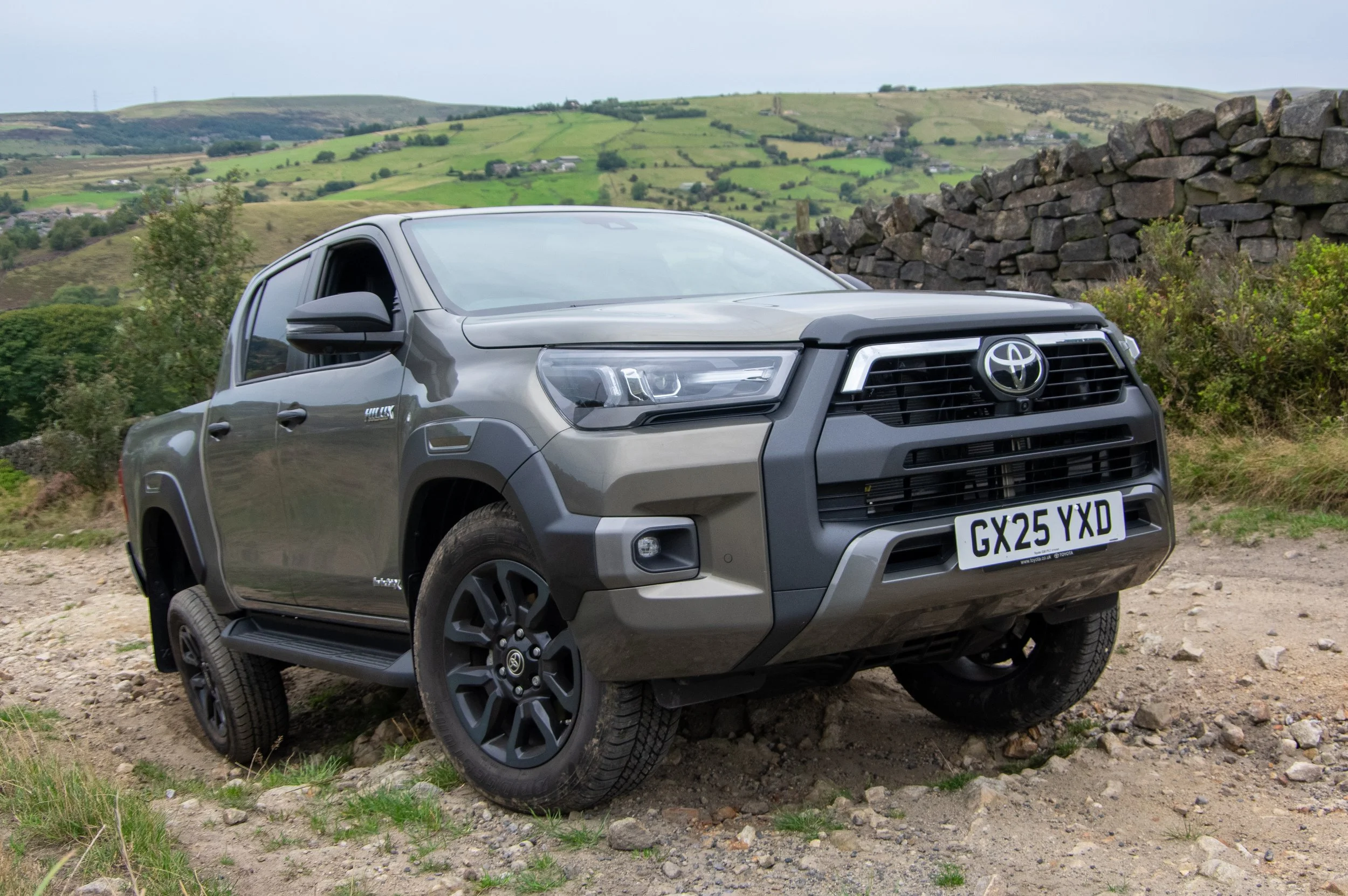
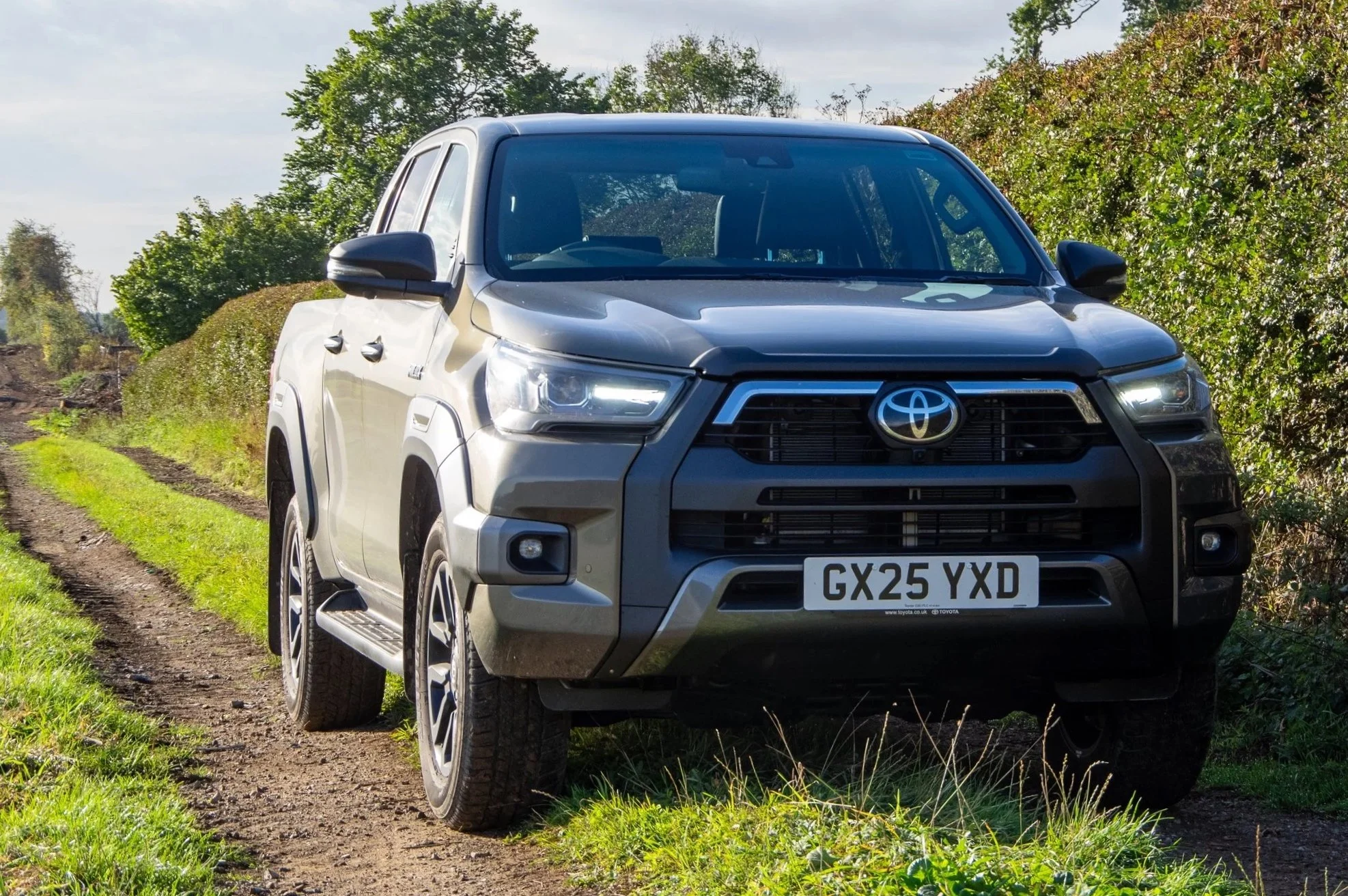
Right then. The Toyota Hilux. A name that’s been clattering around farms, building sites, green lanes and war zones for longer than most of us have been paying tax. If you’re the sort of person who measures a vehicle’s worth by how many times it’s been abused and still come back for more, the Hilux is basically motoring royalty. This one, though, is the 2025 Toyota Hilux Invincible X, which sounds like Toyota trying very hard to look modern while wearing steel toe-caps.
First impressions – old dog, new tricks (sort of)
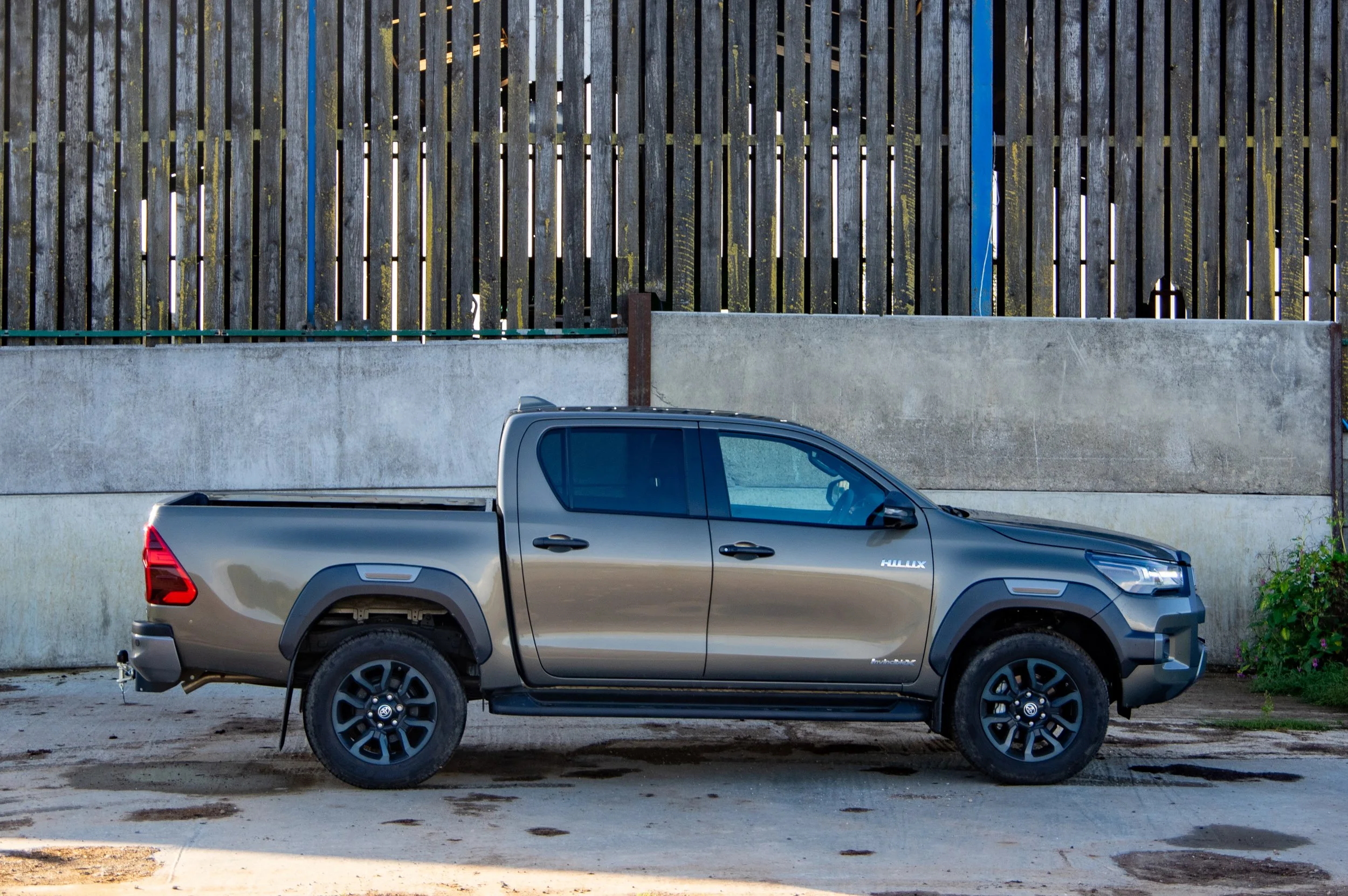
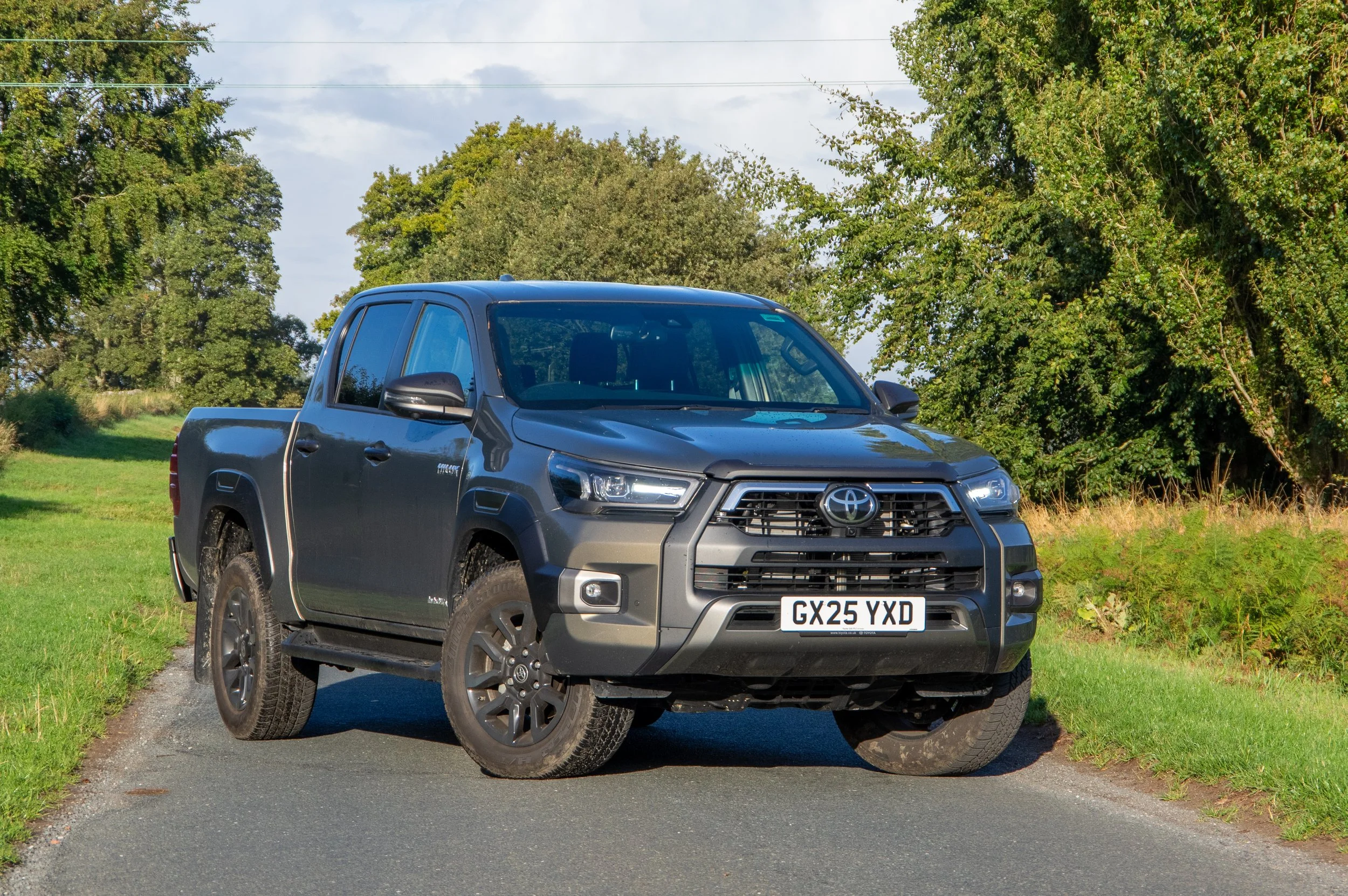
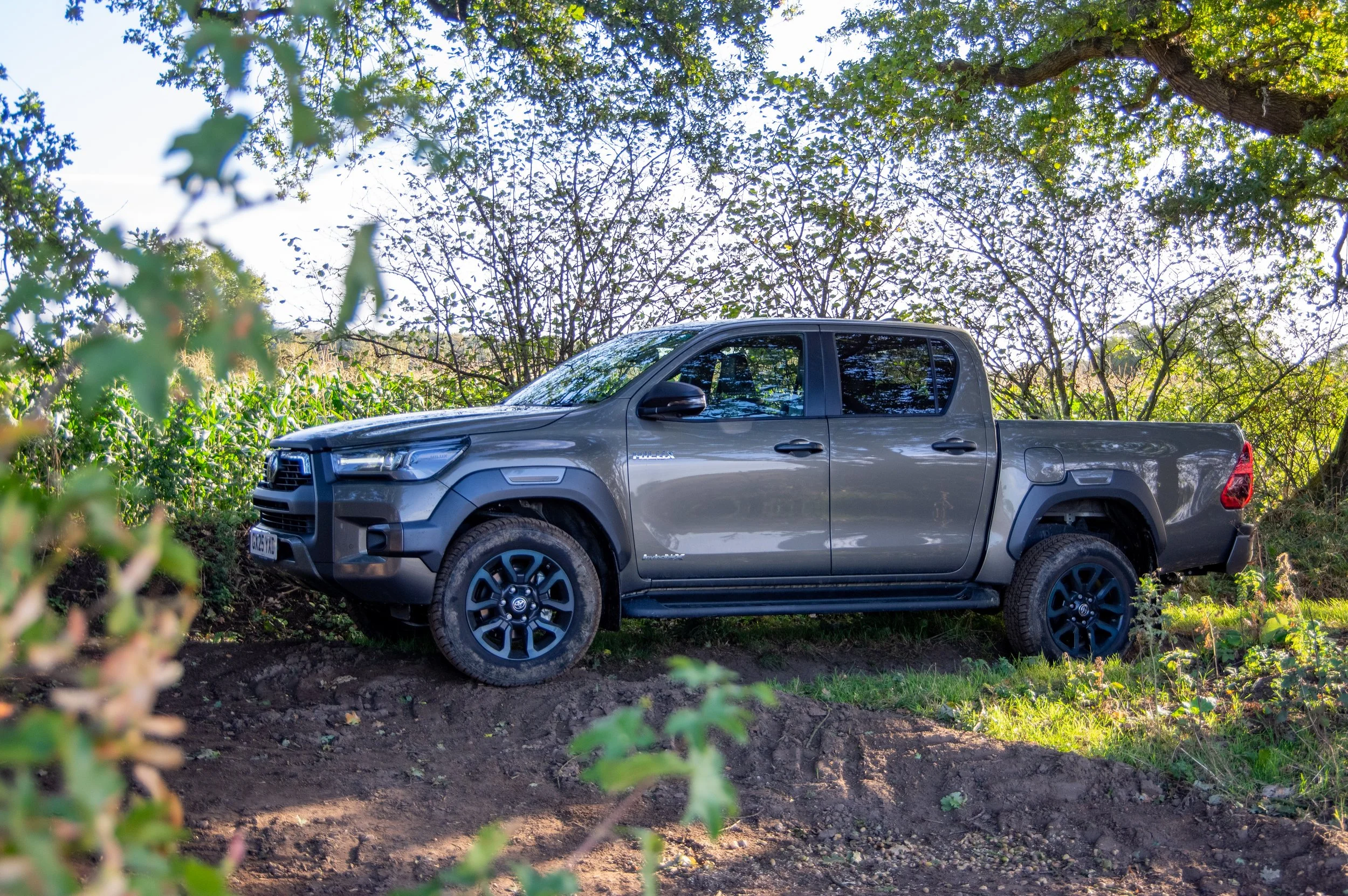
At first glance, the Invincible X looks every inch the top-spec Hilux. Big grille, chunky bumper, dark trim, side steps you’ll bark your shins on at least once, and enough visual bulk to make lesser pickups shuffle nervously in Tesco car parks. It sits right at the top of the Hilux range, above the Icon and Invincible trims, and is aimed squarely at buyers who want their pickup to double as daily transport without looking like it’s just clocked off a quarry shift.
Underneath, though, it’s still very much Hilux-as-you-know-it. Ladder frame chassis, leaf springs at the back, part-time four-wheel drive with a proper low range, and Toyota’s familiar 2.8-litre four-cylinder diesel doing the heavy lifting. This manual version sticks with the traditional setup, no clever electrification here, while Toyota has introduced a 48-volt mild-hybrid system, but only on the automatic. More on that later.
In Toyota’s global pickup family, the Hilux sits alongside siblings like the Land Cruiser Commercial in spirit (if not in layout), and internationally it shares DNA with various Toyota workhorses sold everywhere except, irritatingly, North America. It’s not related to the Ford Ranger in the way the Amarok is – this is Toyota doing Toyota things, quietly and stubbornly.
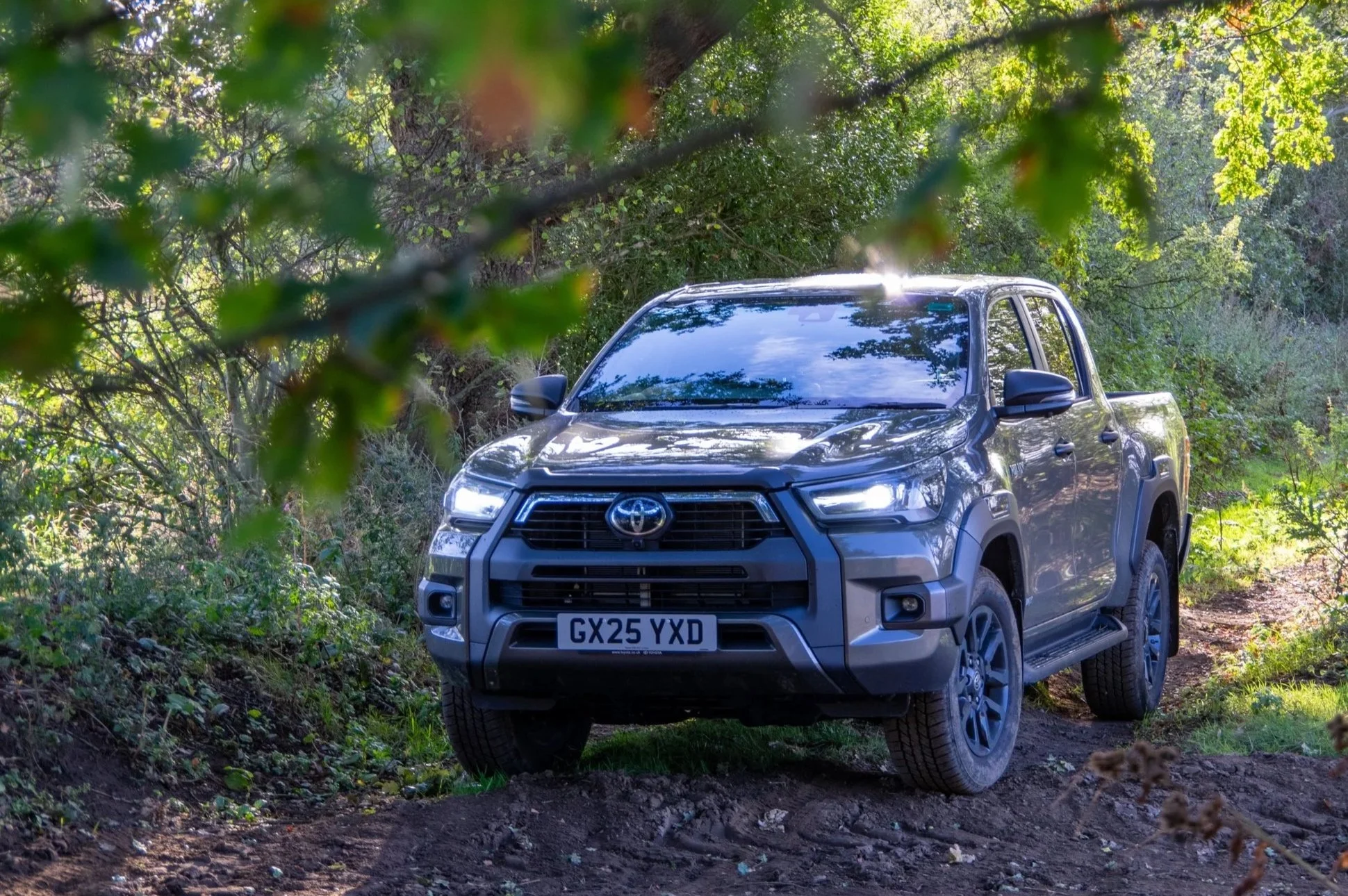
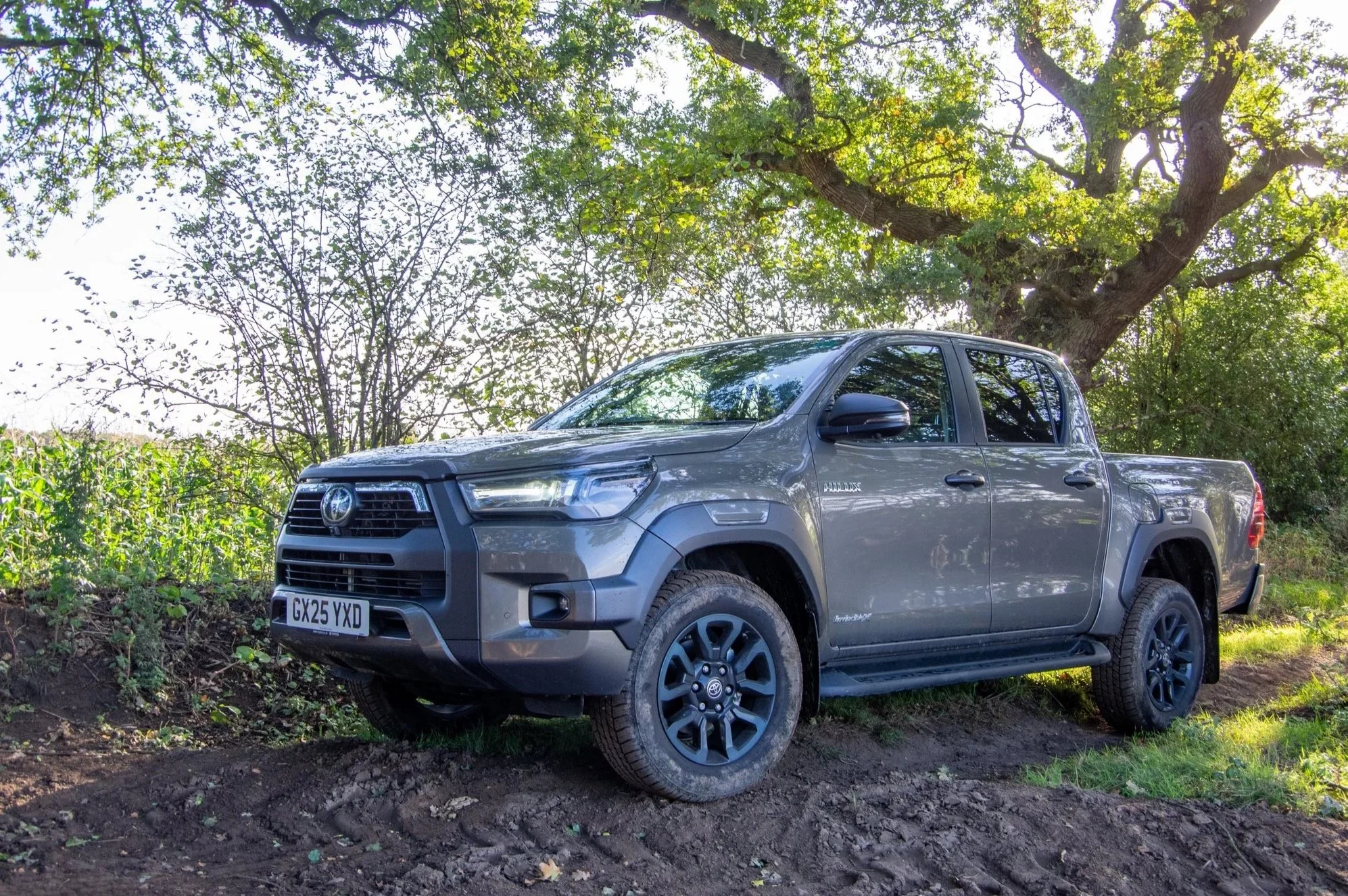
On the road – better than you expect, still very much a pickup
Let’s get the obvious bit out of the way: this is still a ladder-frame pickup with leaf springs and a live rear axle. Physics remains undefeated. Empty in the back, the Hilux can feel firm over sharp bumps, especially around town. Speed humps will remind you of your life choices, and potholes are dealt with using a mixture of suspension travel and quiet stoicism.
That said, Toyota has clearly fettled things. On A-roads and motorways, the Hilux settles down nicely. The ride smooths out once you’re rolling, and it tracks straight and true at speed. Wind noise is present but not intrusive, tyre roar depends on the rubber fitted, and overall refinement is better than older Hiluxes by a noticeable margin.
The 2.8 diesel is a known quantity: torquey, gruff, and entirely uninterested in revs. With around 204PS and a chunky slab of torque arriving low down, it pulls cleanly and confidently, even when loaded. The manual gearbox is a nice change from all the automatics I’ve been driving recently. It’s not something you’ll write poetry about, but it’s positive enough, with a clutch that’s reasonably weighted and forgiving in stop-start traffic.
Steering is light and a bit vague around the straight-ahead, but that’s par for the course. You guide the Hilux rather than place it with precision. On twisty roads, it’ll lean, it’ll remind you it’s tall, and it’ll get on with the job without drama. It’s not fun in the hot-hatch sense, but it’s honest and predictable
On wet roads, icy lanes, or greasy back routes, the rear-wheel-drive default setup can catch you out if you’re enthusiastic with the throttle. Flick it into four-wheel drive, though, and it feels immediately more planted.
Fuel efficiency – manage expectations
Let’s not kid ourselves. A big, boxy pickup with a 2.8-litre diesel isn’t here to win eco awards. Driven sensibly, you’ll see mid-30s mpg on a run, dipping into the high-20s around town or when loaded. That’s… fine. It’s about what you’d expect, and no worse than rivals.
Which brings us neatly to the 48-volt mild hybrid system, available only with the automatic gearbox. Toyota adds a belt-driven motor generator and small battery to assist the engine at low speeds, smooth stop-start, and shave a bit off fuel consumption and emissions. On paper, it’s a modest improvement rather than a revolution.
Is it worthwhile? If you spend a lot of time in traffic, towing, or doing stop-start work, yes, it makes the Hilux feel a bit smoother and slightly more refined. If you’re an old-school manual fan who values simplicity, the standard diesel doesn’t feel like it’s missing out. The hybrid doesn’t turn the Hilux into a Prius in work boots; it just sands off the roughest edges. Nice to have, not essential.
All roads, all surfaces – quietly confident
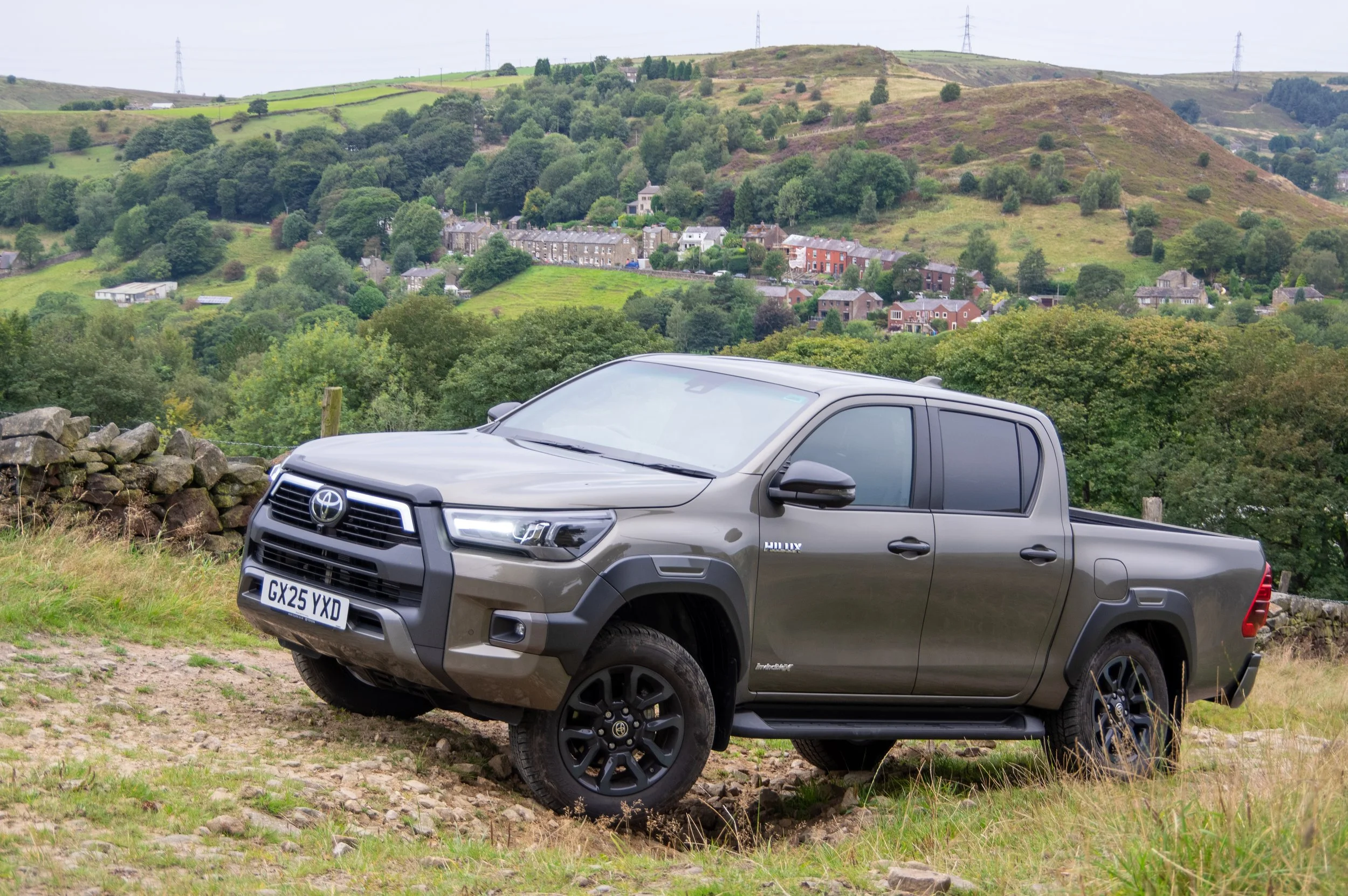
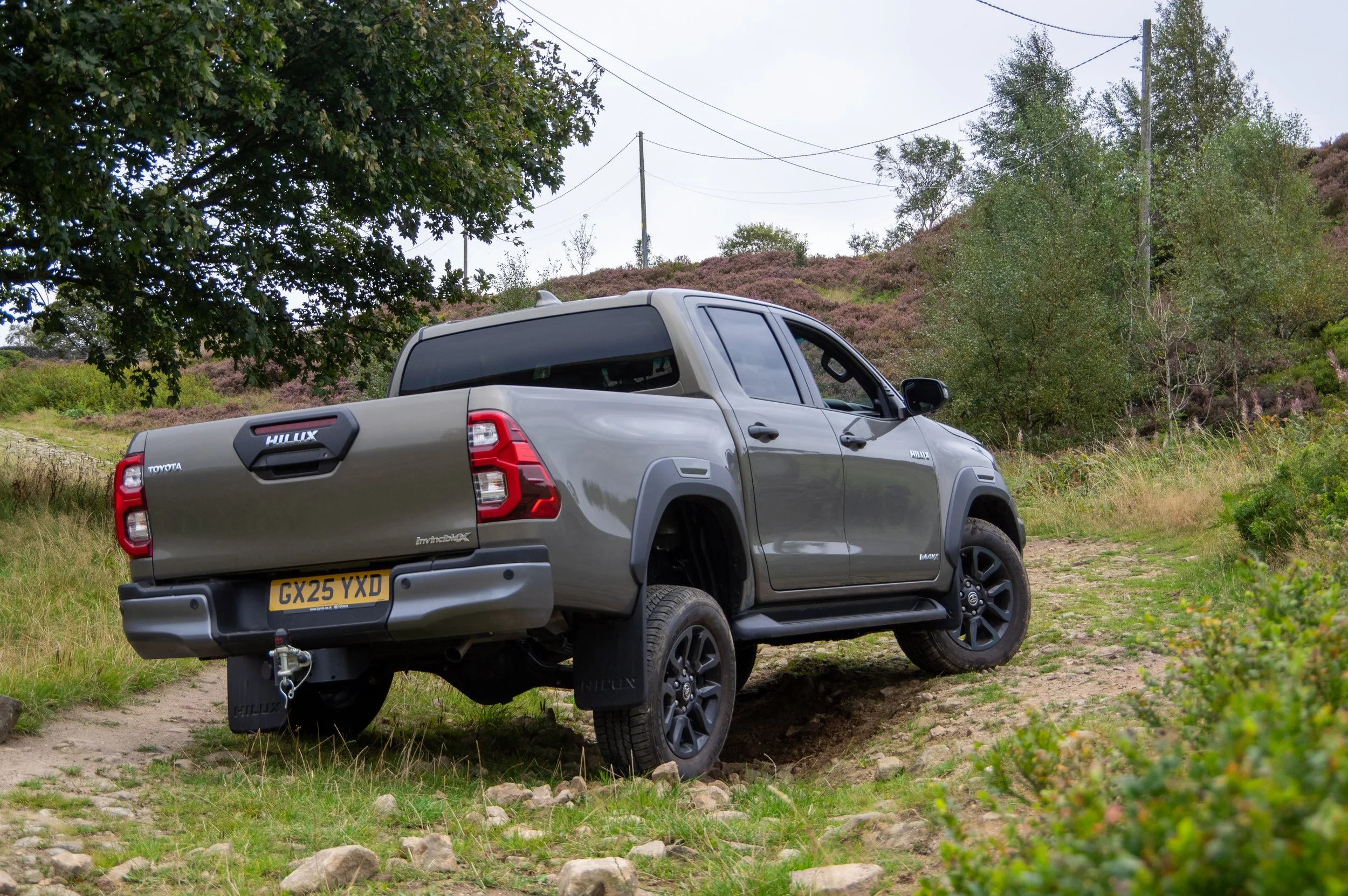
Where the Hilux really earns its keep is its ability to shrug and carry on regardless of surface. Broken tarmac, muddy lanes, gravel tracks, snow-dusted hills, it all feels well within its comfort zone. The long suspension travel and tough underpinnings mean you’re rarely worrying about what’s underneath you.
You do sit high, which gives excellent visibility, and there’s a reassuring sense that you could point it at most places in the UK and get there eventually. It’s not flashy or clever about it – it just works.
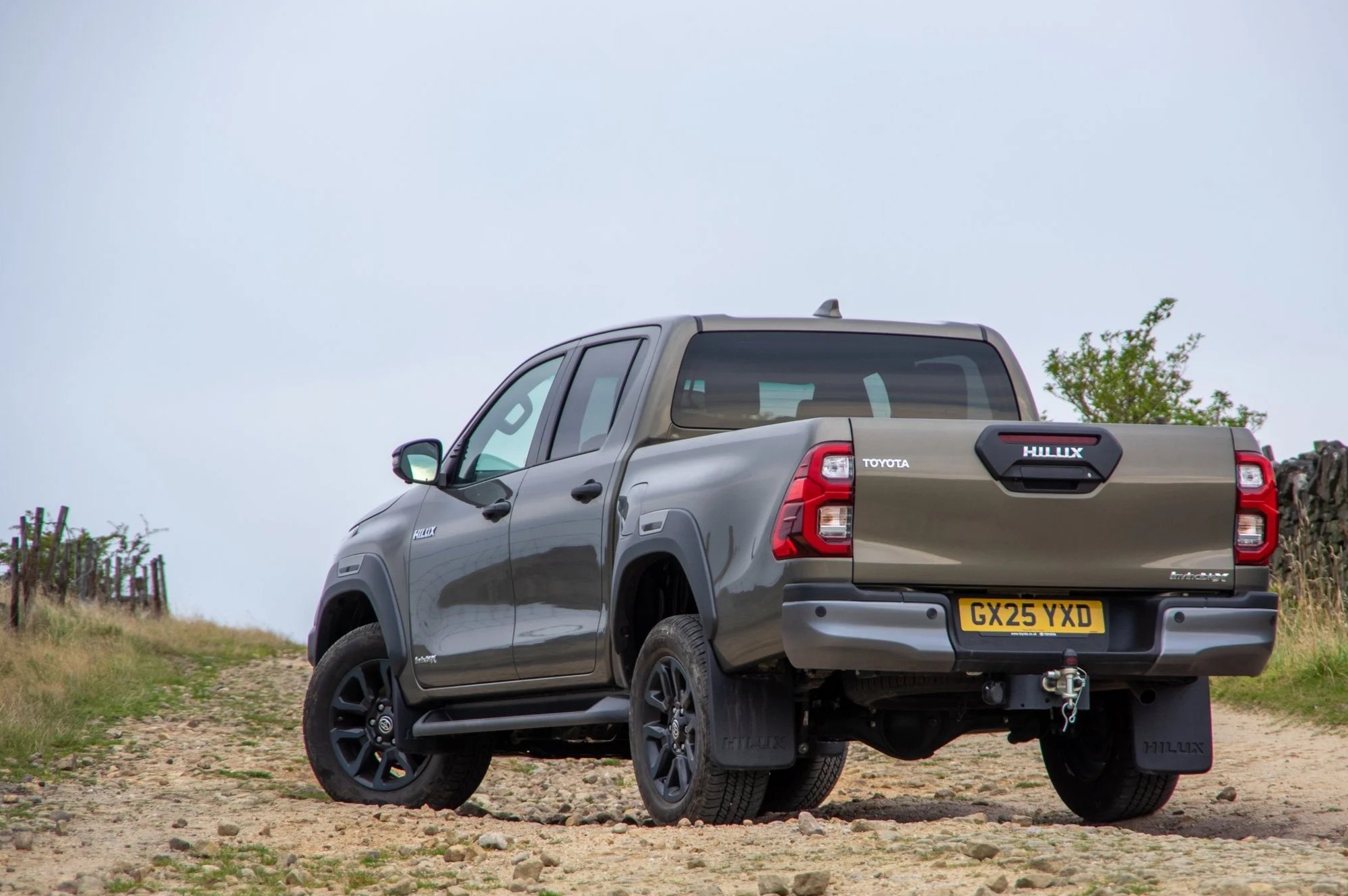
Off-road – still one of the best
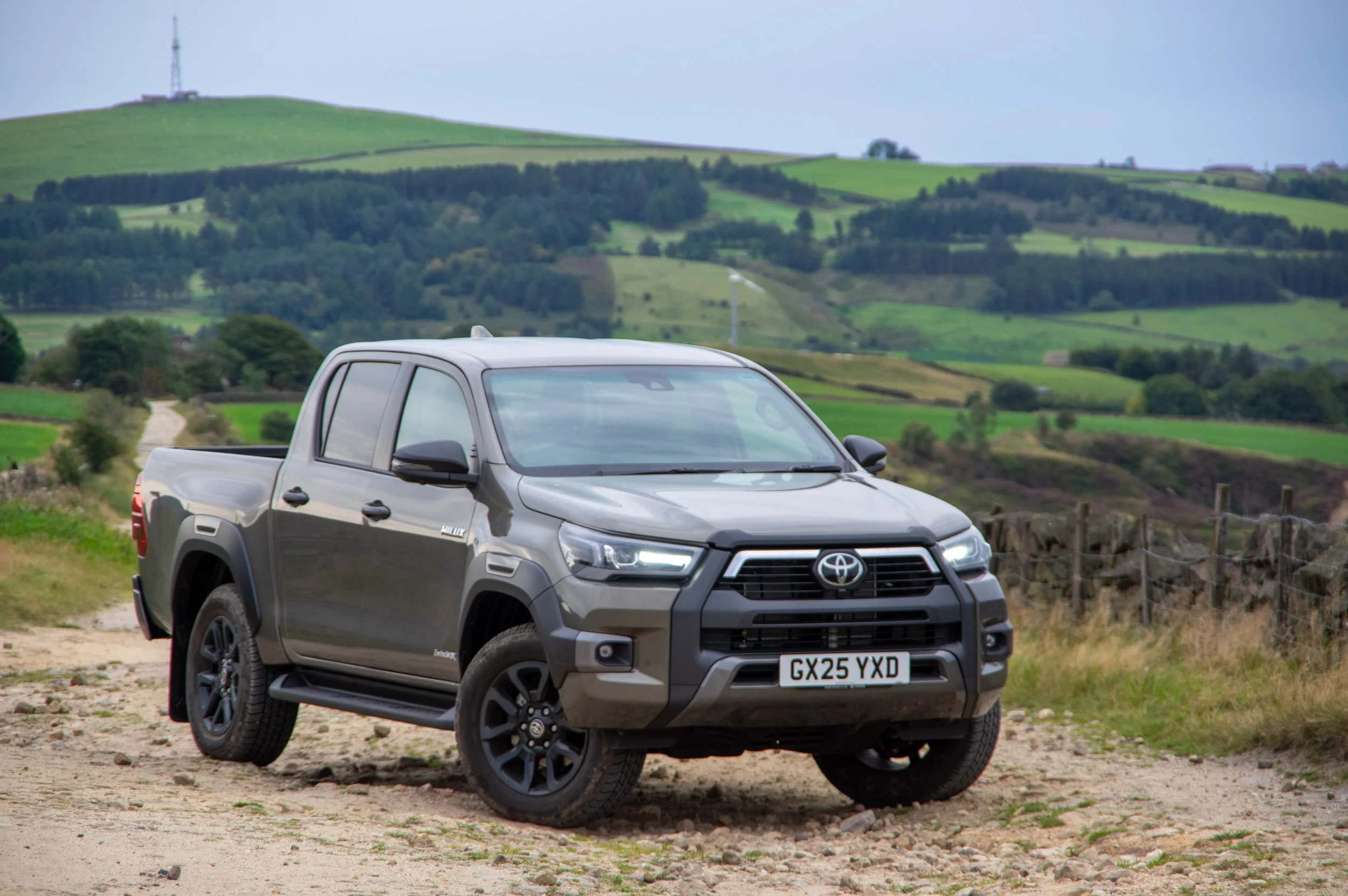
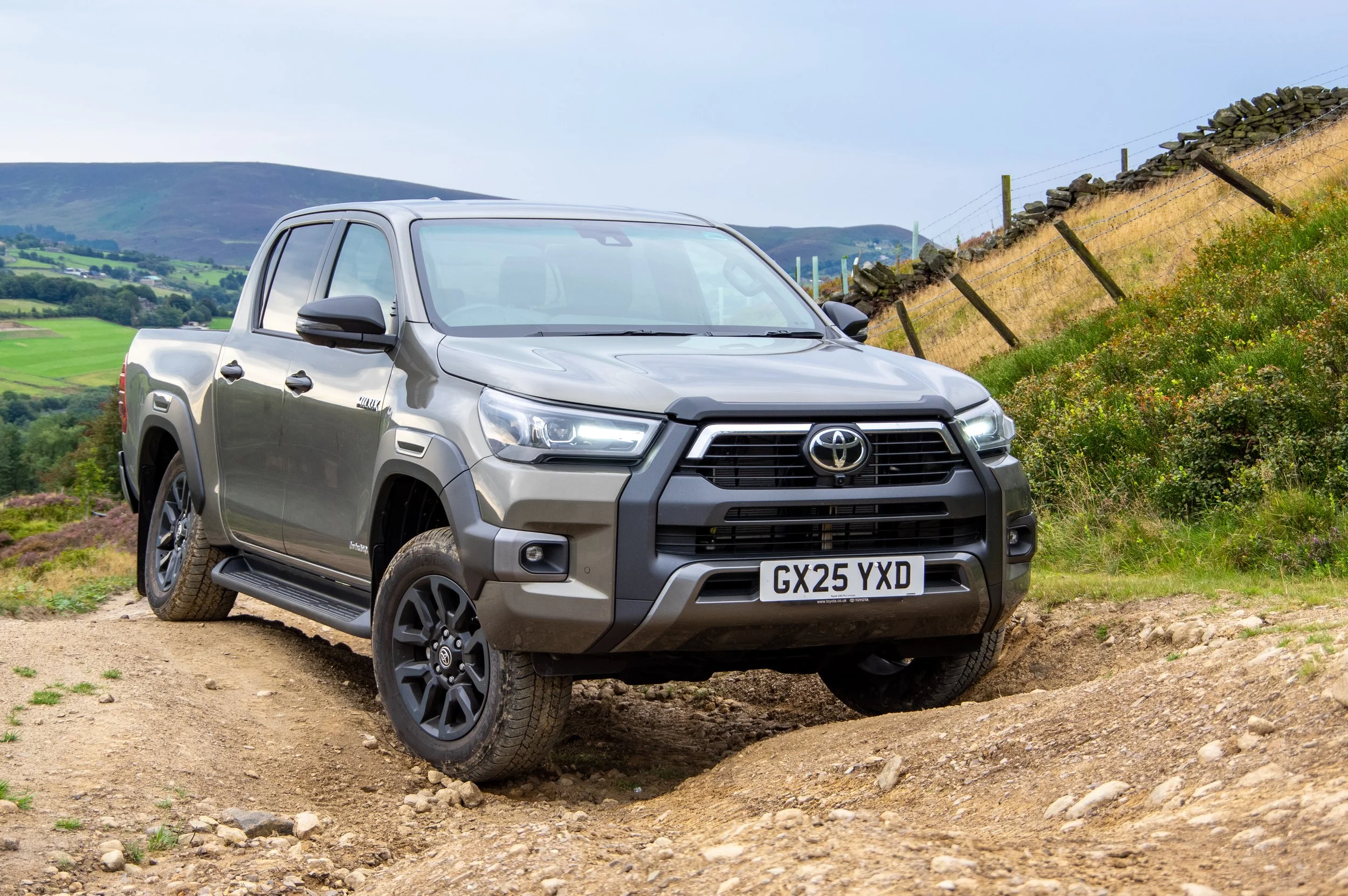
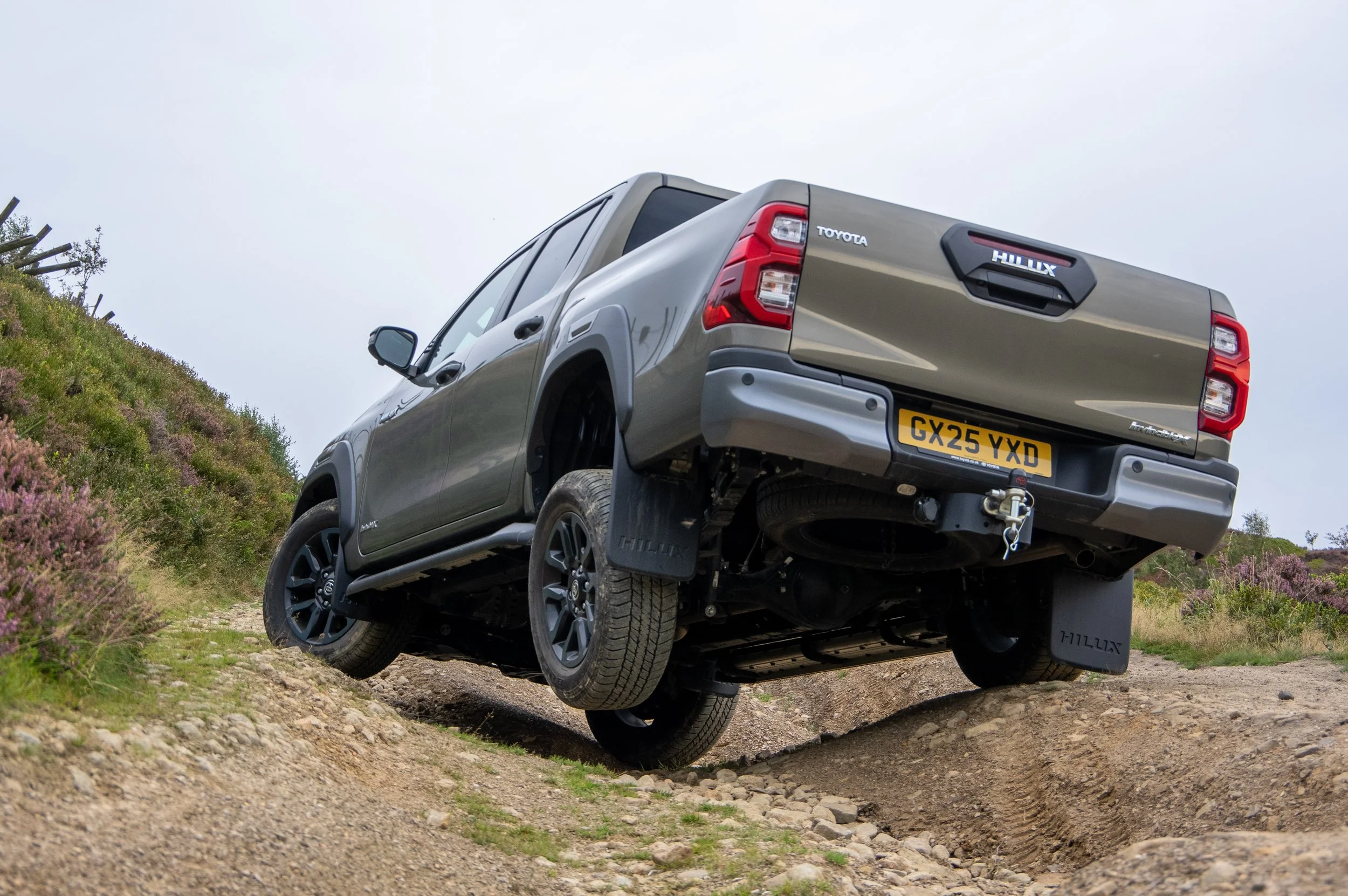
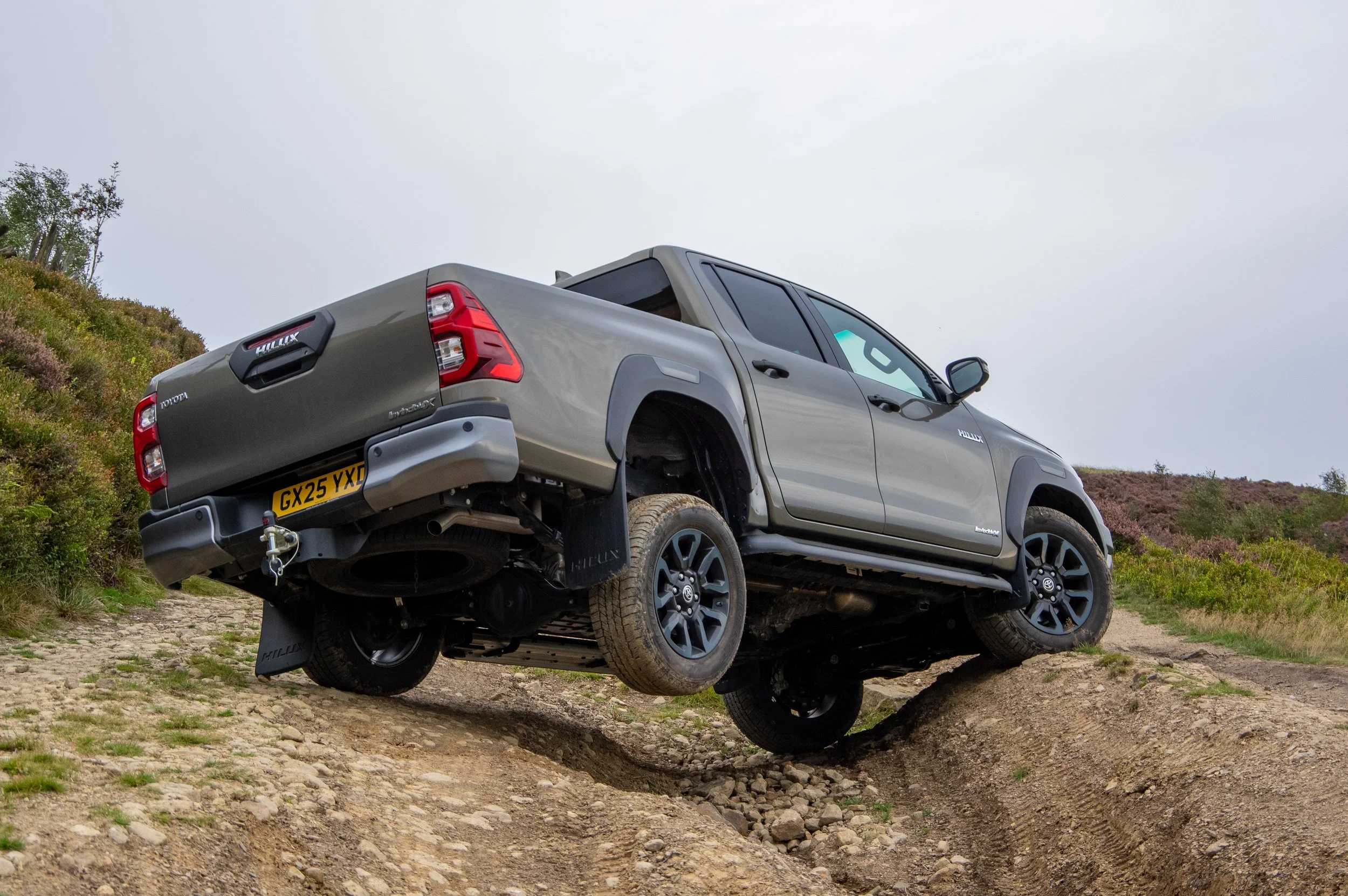
Off-road, the Hilux remains a bit of a benchmark. Engage low range, lock the rear diff if needed, and it’ll crawl up, down or across things that would have most SUVs calling for a tow rope and therapy.
Ground clearance is generous, approach and departure angles are solid, and the traction control is well calibrated for loose surfaces. It’ll scrabble a bit, then sort itself out. Mud, ruts, steep climbs, all dealt with calmly.
It’s not a rock crawler in the hardcore sense, and the length can be a hindrance in tight woodland, but for green lanes, farm tracks, muddy campsites and general UK off-road use, it’s superb. Importantly, it feels tough enough that you’re not constantly wincing at every scrape or knock.
Interior – toughened up, but civilised
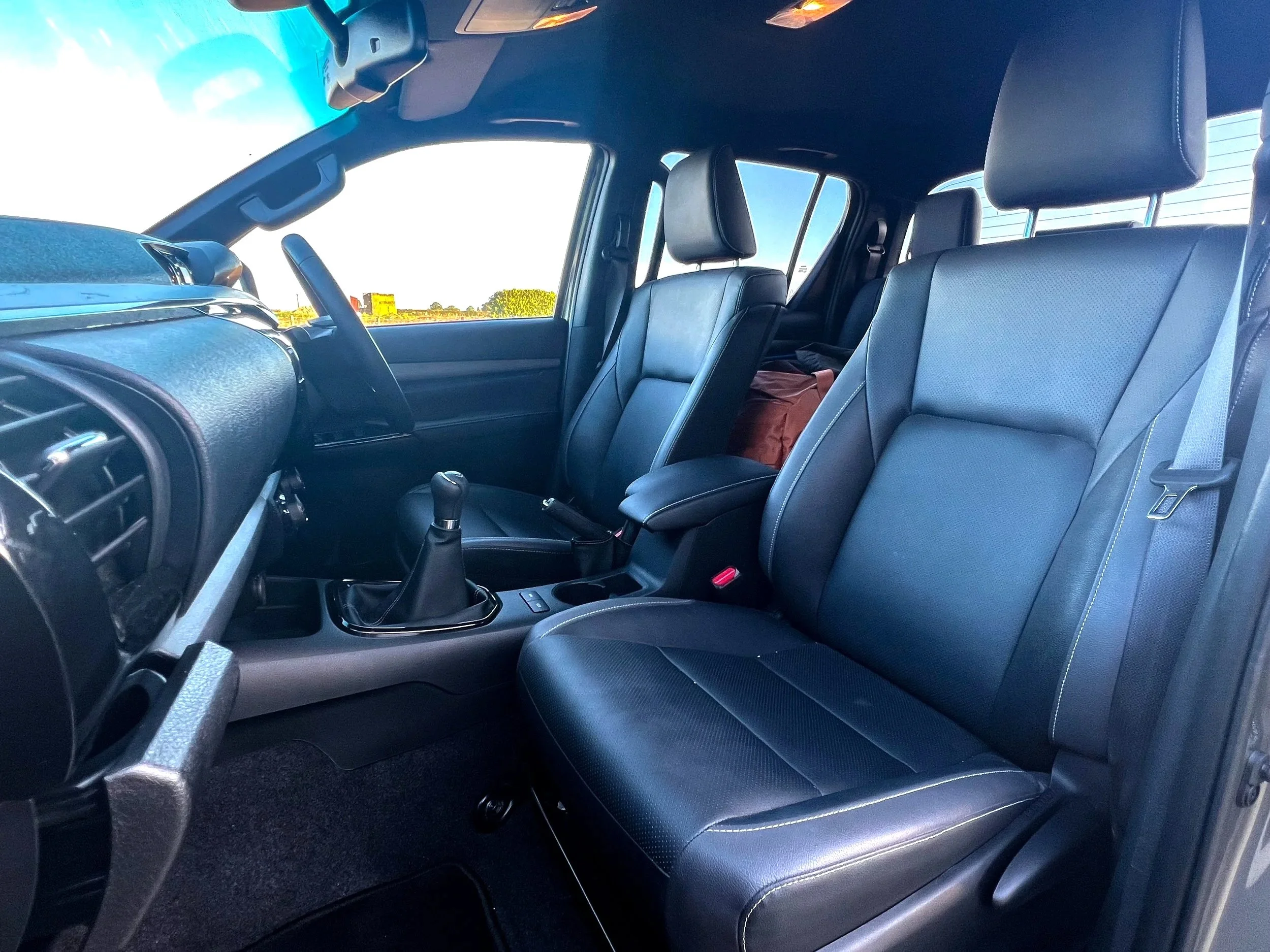
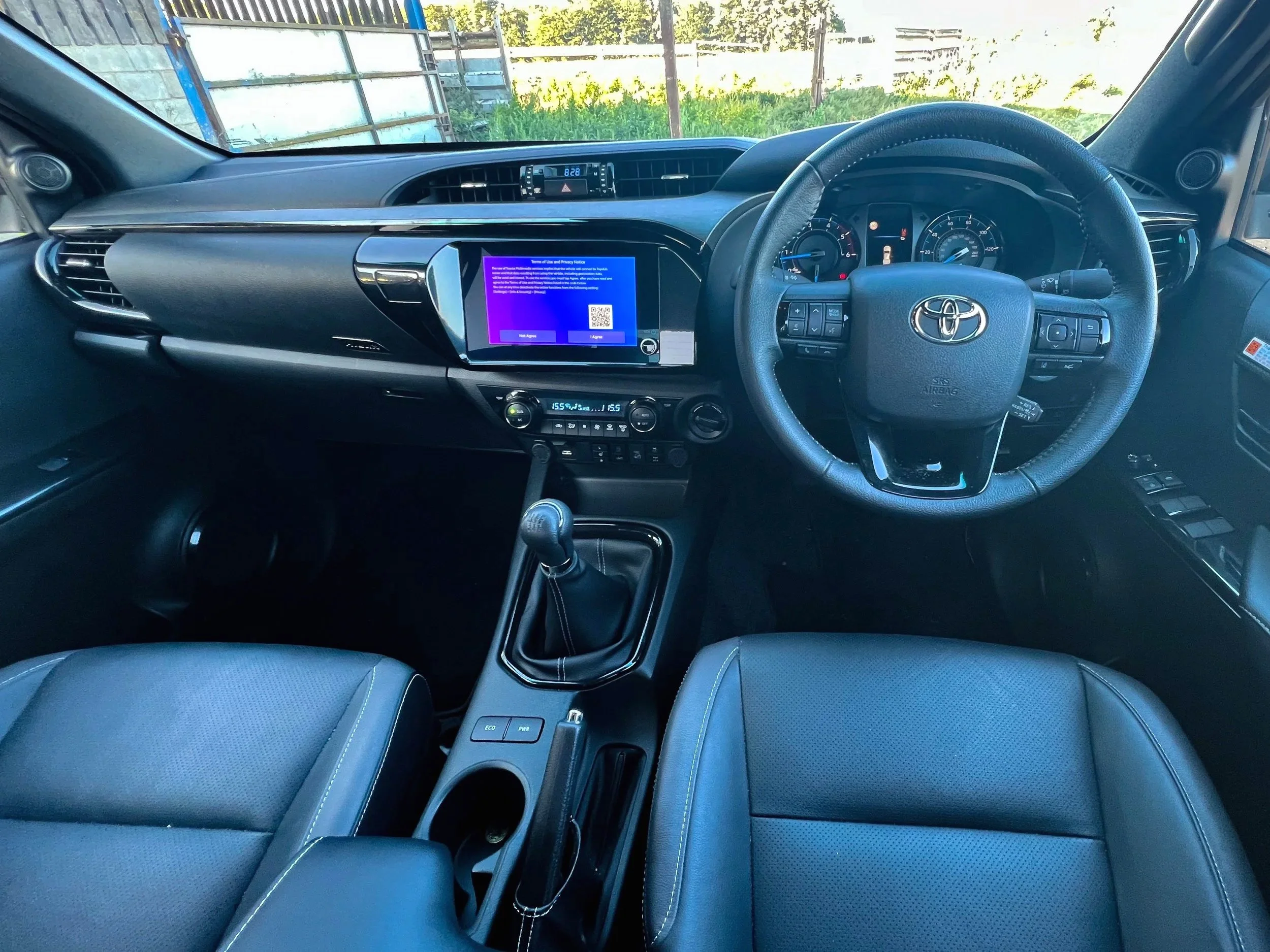
Inside, the Invincible X is a big step up from Hiluxes of old. It’s still more durable than plush, but that’s kind of the point. The materials feel hard-wearing, the seats are supportive and comfortable over long distances, and there’s enough adjustment to get a decent driving position.
Passengers are well catered for too. Rear seat space is good for adults, with decent legroom and headroom. The rear bench isn’t luxury-saloon comfy, but it’s perfectly acceptable for real people on real journeys.
Storage is plentiful: big door bins, centre console cubby, cupholders, and various trays for phones, keys and the general detritus of daily life. Everything feels designed to be used with muddy hands and not immediately fall apart.
Practicality – the whole point, really
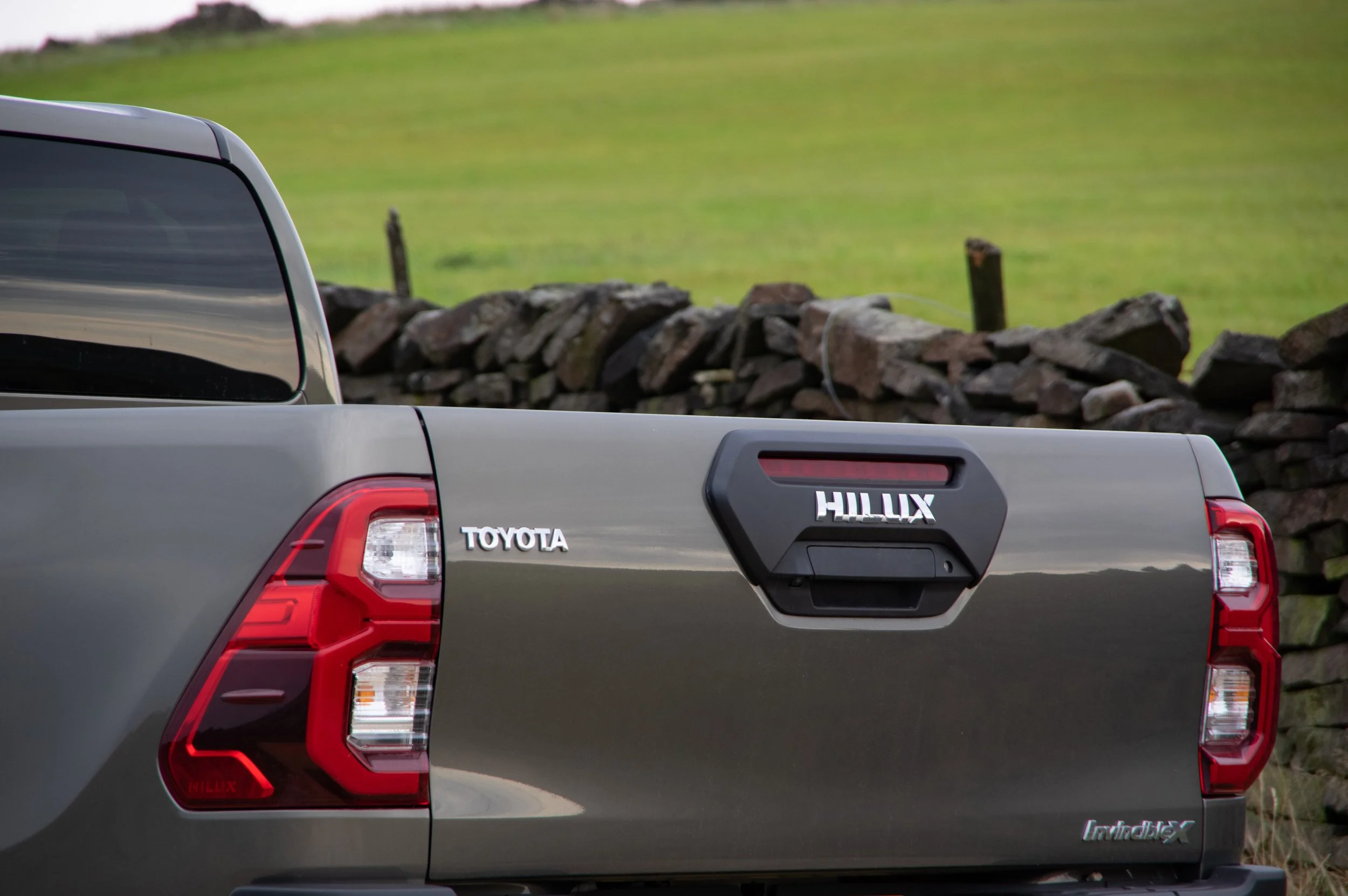
Round the back, the load bed is exactly what you’d expect: big, square, and ready to swallow bikes, logs, camping gear, building materials or a week’s worth of general tat. The tailgate is heavy but manageable, and the bed liner does its job without fuss.
Towing capability remains strong, with the Hilux quite happy dragging a decent-sized trailer or caravan without feeling flustered. It’s stable, predictable, and confidence-inspiring when loaded up.
Tech and pet peeves – some wins, some sighs
Toyota’s infotainment system is… acceptable. The screen is a decent size, graphics are clear enough, and it supports smartphone mirroring, which most people will use anyway. It’s not class-leading, but it works.
Crucially – and this matters – heater controls are proper, physical dials. Big win. You can adjust temperature and fan speed without taking your eyes off the road or diving into menus like you’re cracking a safe. Points awarded.
Driver assistance systems are present, as they must be, and here’s where the mild irritation creeps in. Lane departure warning, in particular, can be over-keen on narrow roads. Thankfully, it’s possible to turn these systems off without needing a degree in software engineering. It still involves a bit of button-pressing, but it’s manageable, and once done, the Hilux leaves you alone.
The elephant in the room – what about the new Hilux?
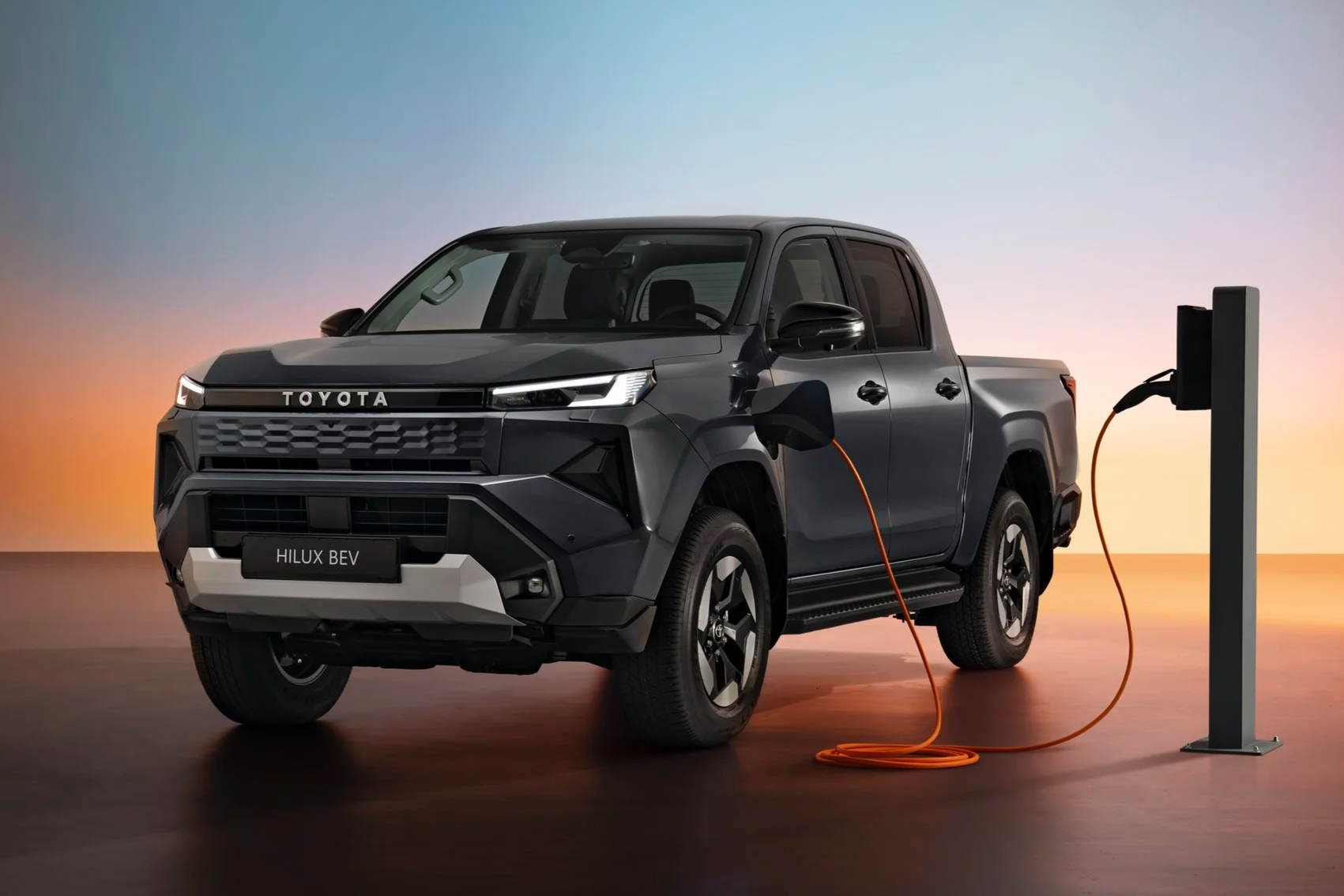
It’s worth mentioning that an all-new Hilux is on the horizon. Toyota hasn’t shouted about it, but the current generation is long in the tooth, and a replacement is expected soon with more electrification and updated tech. Does that make this one redundant? Not really. If anything, it makes the current Hilux feel like the last of a certain breed: tough, relatively simple, and proven. For some buyers, that’s a selling point, not a drawback.
Verdict – still hard to beat
The 2025 Toyota Hilux Invincible X doesn’t try to reinvent the pickup. It doesn’t need to. Instead, it refines what the Hilux has always done well: being dependable, capable, and quietly excellent at real-world jobs.
The 48-volt hybrid auto adds a layer of polish, but the manual diesel still feels like the purist’s choice – straightforward, honest, and unbothered by trends. It’s not cheap, it’s not flashy, and it won’t win you Instagram points. But it will start every morning, go almost anywhere, and put up with a level of abuse that would have most modern vehicles sulking.
In short, it’s a Hilux. And sometimes, that’s all you really need.