

Modern cars are astonishing things. They’ll steer for you, brake for you, beep at you when you drift six millimetres towards a white line, and will tell you off when you’re trying to figure how to use the heater instead of looking at the road ahead.
But ask most of them to do one very simple, very British thing on a cold morning — heat the cabin properly — and they fall flat on their softly padded, touch-screen-covered faces.
Meanwhile, my 1996 Toyota Surf - Deux Smurf, fires up, clears its throat, and in just a few minutes is belching out heat like a blast furnace in Doncaster. Windscreen clear. Hands thawed. Toes alive again. No drama. And that’s why it’s better.
Heat, Not “Climate Experience”
The Surf doesn’t offer a “thermal ambience” or a “personalised climate zone experience”. It has a heater. You slide the lever, hot air comes out. Slide it more, it gets hotter. Revolutionary stuff.
There’s no waiting for a computer to decide whether you really want warm air or whether it thinks 18.5°C is “optimal for alertness”. The Surf listens to you. Immediately. Like a loyal dog, but louder.
Modern cars often take an age to warm up because they’re too clever for their own good. Electric valves, software-controlled flaps, eco modes, emissions strategies — all conspiring to delay the moment you actually feel warm.
The Surf? Coolant gets hot, heater matrix gets hot, cabin gets hot. End of discussion.
Big Engine, Big Heat
Here’s the bit modern manufacturers don’t like talking about: inefficiency is brilliant for heaters.
The Surf’s old school 4-cylinder 3.0 litre diesel is a big lump of metal doing big mechanical things. It produces heat, lots of it. And crucially, it doesn’t try very hard to keep that heat to itself.
Modern engines are hyper-efficient. They warm up slowly, shed less waste heat, and often prioritise emissions over comfort. That’s great for the planet, but rubbish when you’re scraping ice off the inside of your windscreen.
The Surf gets warm quickly because it’s allowed to. It isn’t strangled by warm-up cycles, emissions maps, or “cold start optimisation”. It just gets on with it.

A Heater Matrix the Size of a Small Radiator
Older vehicles like the Surf tend to have proper heater matrices — big, chunky units with decent airflow and minimal restriction. No micro-channels, no weight-saving nonsense, no delicate plastic housings designed to save 300 grams.
The result? When the heater’s on full chat, it moves serious air. You don’t so much feel the heat as experience it as a physical event.
Modern cars often dribble warm air at you politely, like they’re afraid of upsetting your sinuses. The Surf hits you with it. It’s honest. It’s agricultural. It’s perfect.
There’s no waiting for a sensor to decide humidity levels. No touchscreen menu. No sub-menu. No warning telling you certain functions are unavailable while driving. Just heat. On glass. Job done.
In a world where many new cars still struggle to demist properly without air con running, the Surf does it through sheer thermal aggression.
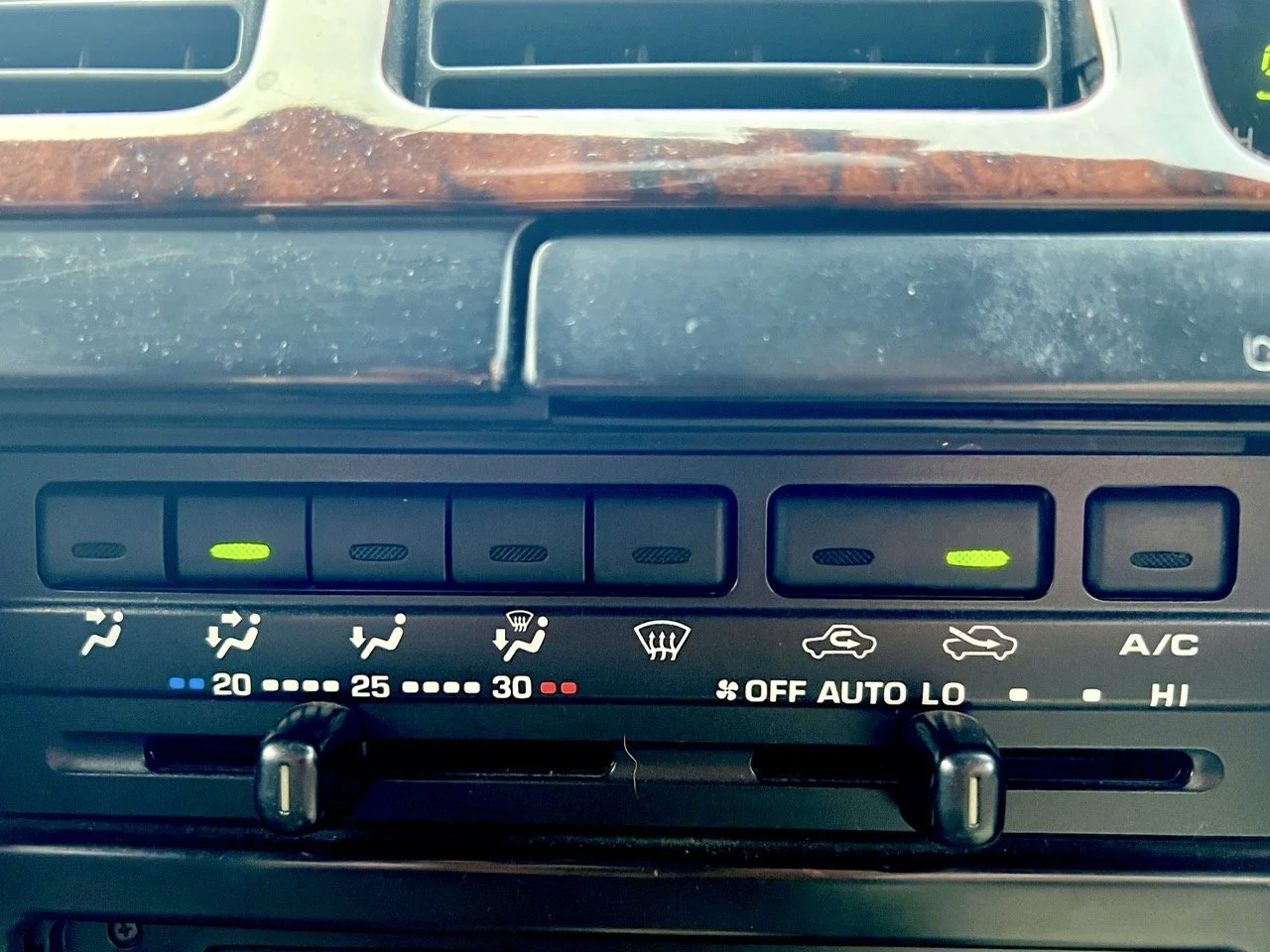
No Touchscreens. No Lag. No Nonsense
This matters more than people realise. The Surf’s heater controls are mechanical. Cables. Dials. Levers. When you move them, something physically moves elsewhere in the car. There is zero latency.
In modern cars, even adjusting the temperature can involve software delays, animations, and background systems having a quiet word with each other before allowing you warmth.
On a cold, wet morning, that’s unacceptable. The Surf understands urgency. You’re cold now. Not in 20 seconds once the UI’s finished loading.
Designed for Actual Cold Places
The Hilux Surf was built for markets where winter isn’t a mild inconvenience — it’s a genuine problem. Japan knows cold. Snowy mountain regions, damp coastal air, and mornings where condensation is unavoidable.
Toyota engineered the heater accordingly. Over-engineered, if anything. Because nobody complains about too much heat when it’s minus something outside.
Many modern SUVs are designed primarily for global averages — not worst-case conditions. The Surf was designed to work everywhere, even if that meant your kneecaps roasting on full blast.

Reliability: It Still Works Because It’s Simple
Another uncomfortable truth: the Surf’s heater still works brilliantly nearly 30 years later because there’s very little to go wrong. No stepper motors quietly dying behind dashboards. No software updates required. No glitch that randomly decides the passenger side should be Antarctic while the driver sweats.
Flush the coolant occasionally, keep the blower motor alive, and it’ll outlast most modern “climate systems” by decades.
Progress Isn’t Always Better
This isn’t a rant against modern cars — many of them are excellent. But heater performance appears to be one area where progress has gone sideways.
In chasing efficiency, weight saving, and digital everything, manufacturers have forgotten that sometimes the simplest solution is the best one. A strong heater isn’t a luxury. In the UK, it’s a safety feature. And the 1996 Toyota Surf nails it in a way many brand-new cars still don’t.
And honestly? On a grim winter morning, I’d take that over lane assist, adaptive cruise, or a 14” touchscreen any day of the week.