
Review: 2026 Toyota Hilux BEV
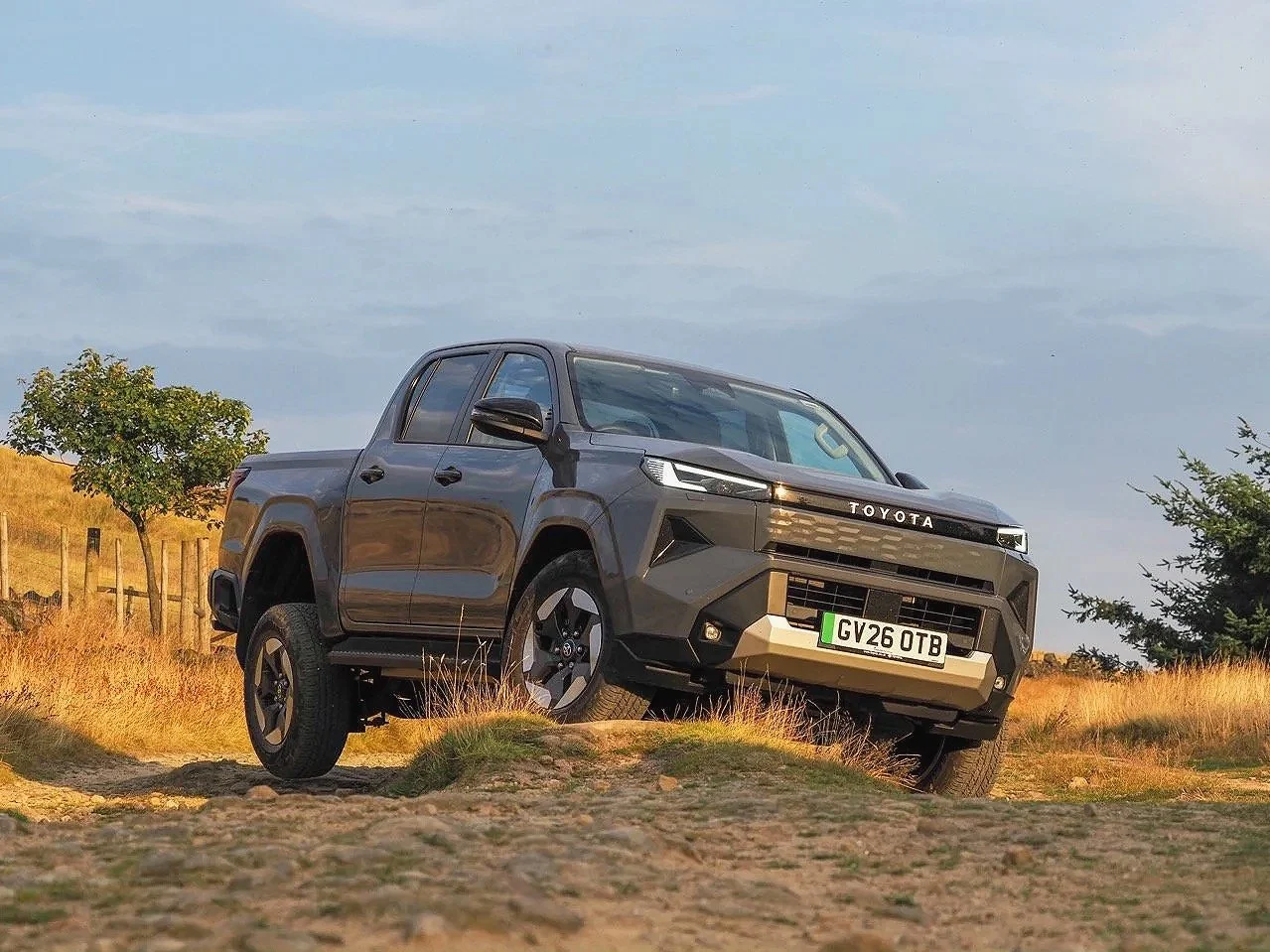
Can an Electric Hilux Really Be a Proper Hilux?
There are some combinations in life that sound wrong before you’ve even tried them. Pineapple on pizza, socks with sandals, saying fork and knife (that’s you Muddy Madam), and having sensible conversation with your mate after three pints.
And now this: an electric Toyota Hilux.
For more than half a century, the Hilux has built its reputation on being the sort of vehicle you could drive through a war zone, a building site or the sort of muddy field that would make a Defender driver quietly question his life choices. It has been a farmer’s tool, a tradesman’s workhorse, an expedition vehicle and, increasingly, an expensive way of getting a Labrador from the house to the campsite. And I’m confident I don’t have to mention Top Gear!
The 2026 Hilux BEV is the first time Toyota has put batteries and electric motors into that familiar recipe.
And this isn't some soft-roader wearing a Hilux badge. It remains a proper body-on-frame pick-up, with permanent all-wheel drive, serious ground clearance, a 700mm wading capability and Toyota's Multi-Terrain Select system. It is also the first fully electric body-on-frame vehicle Toyota has produced.
In the UK, it will sit alongside the new 2.8-litre 48V mild-hybrid diesel Hilux. The electric version is available as a Double Cab only, in Icon and Invincible grades, with prices starting at £57,845 before the £5,000 plug-in van grant. That makes it a fairly serious chunk of money for a pick-up that doesn't travel particularly far between charges.
So the obvious question is: why would anyone buy one?
First impressions
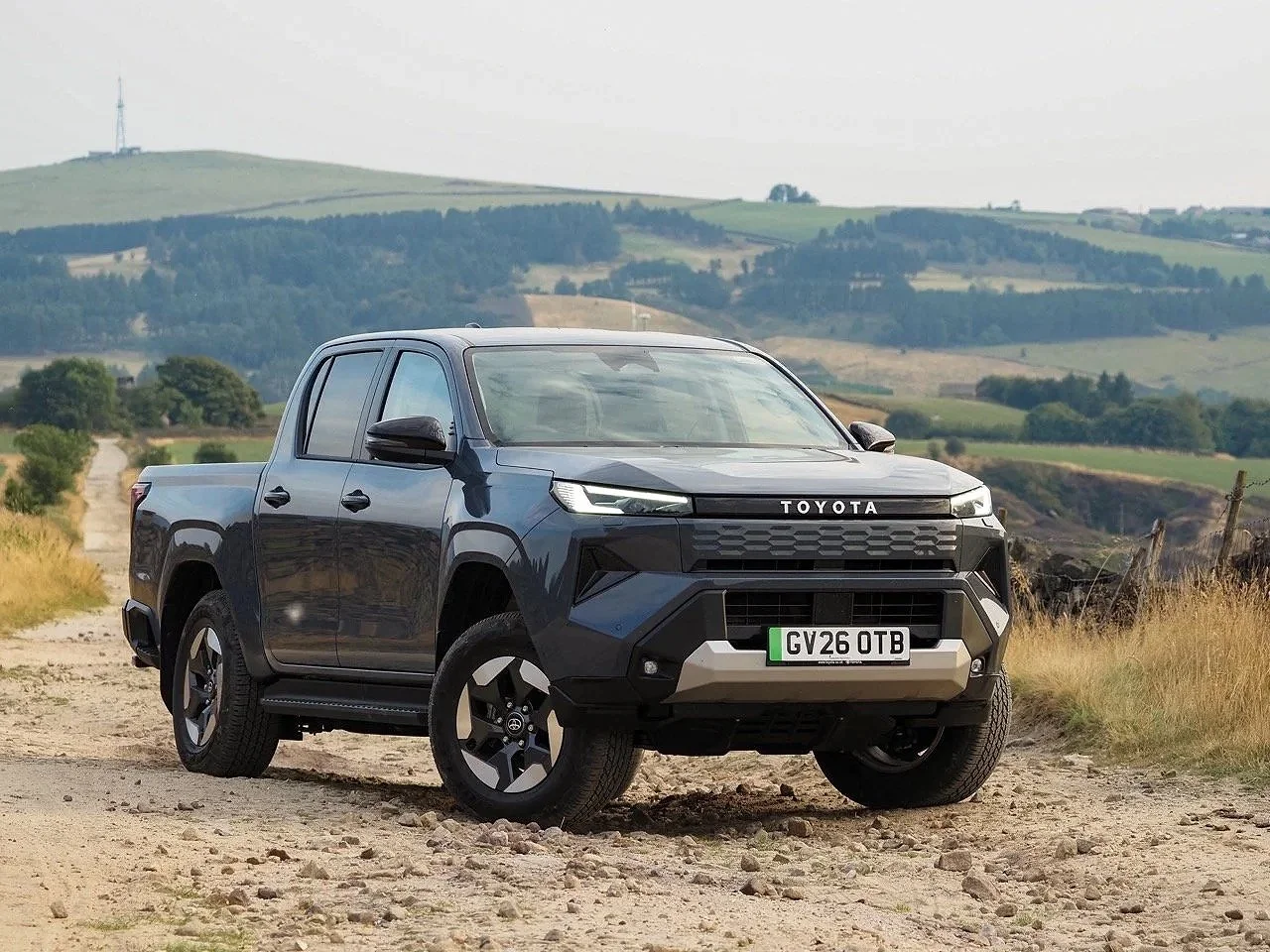
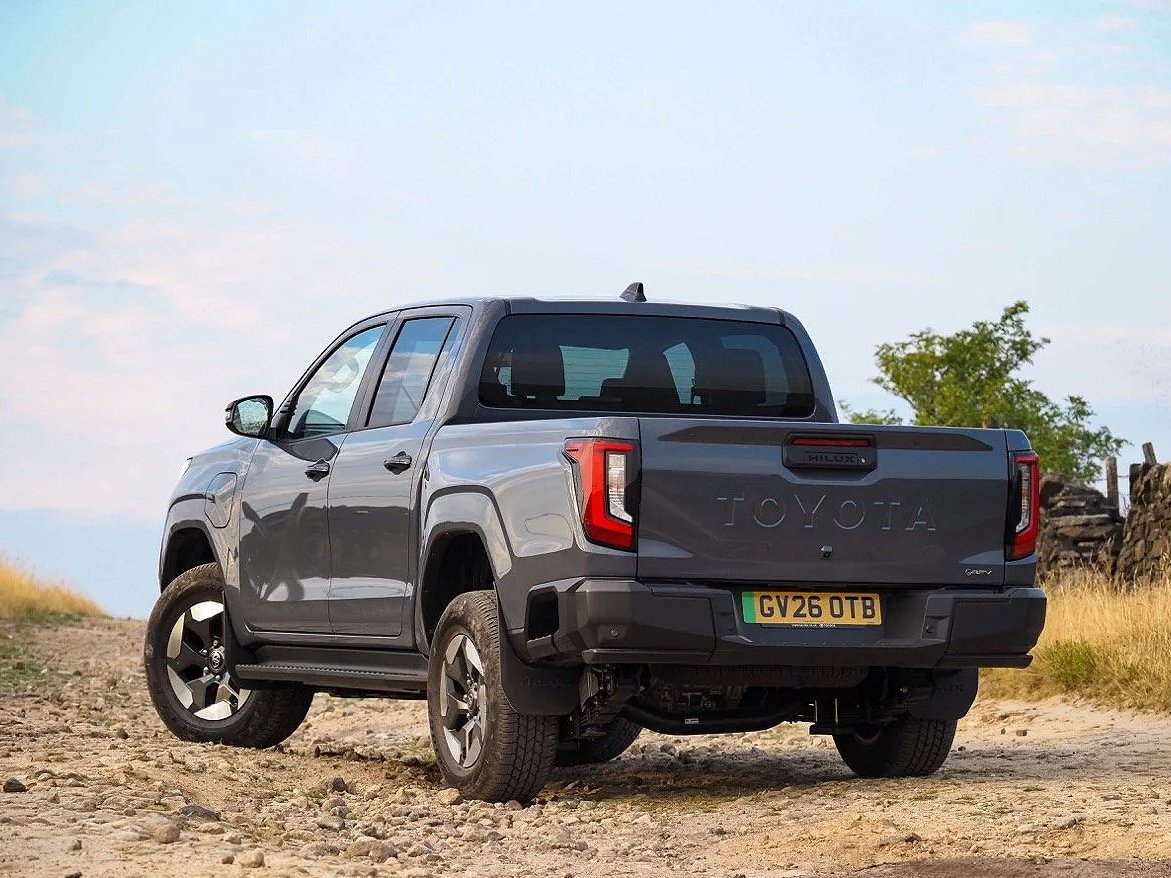
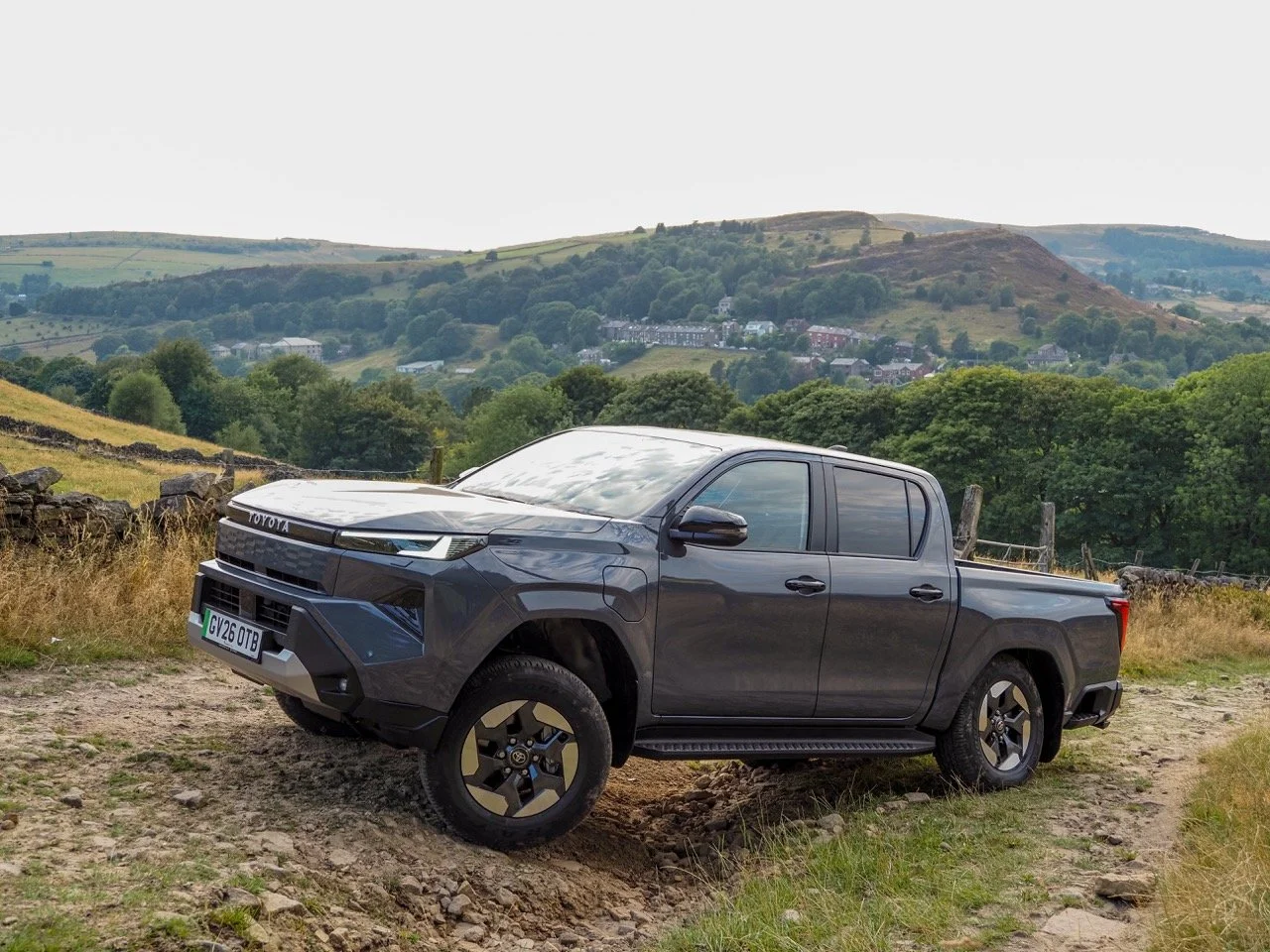
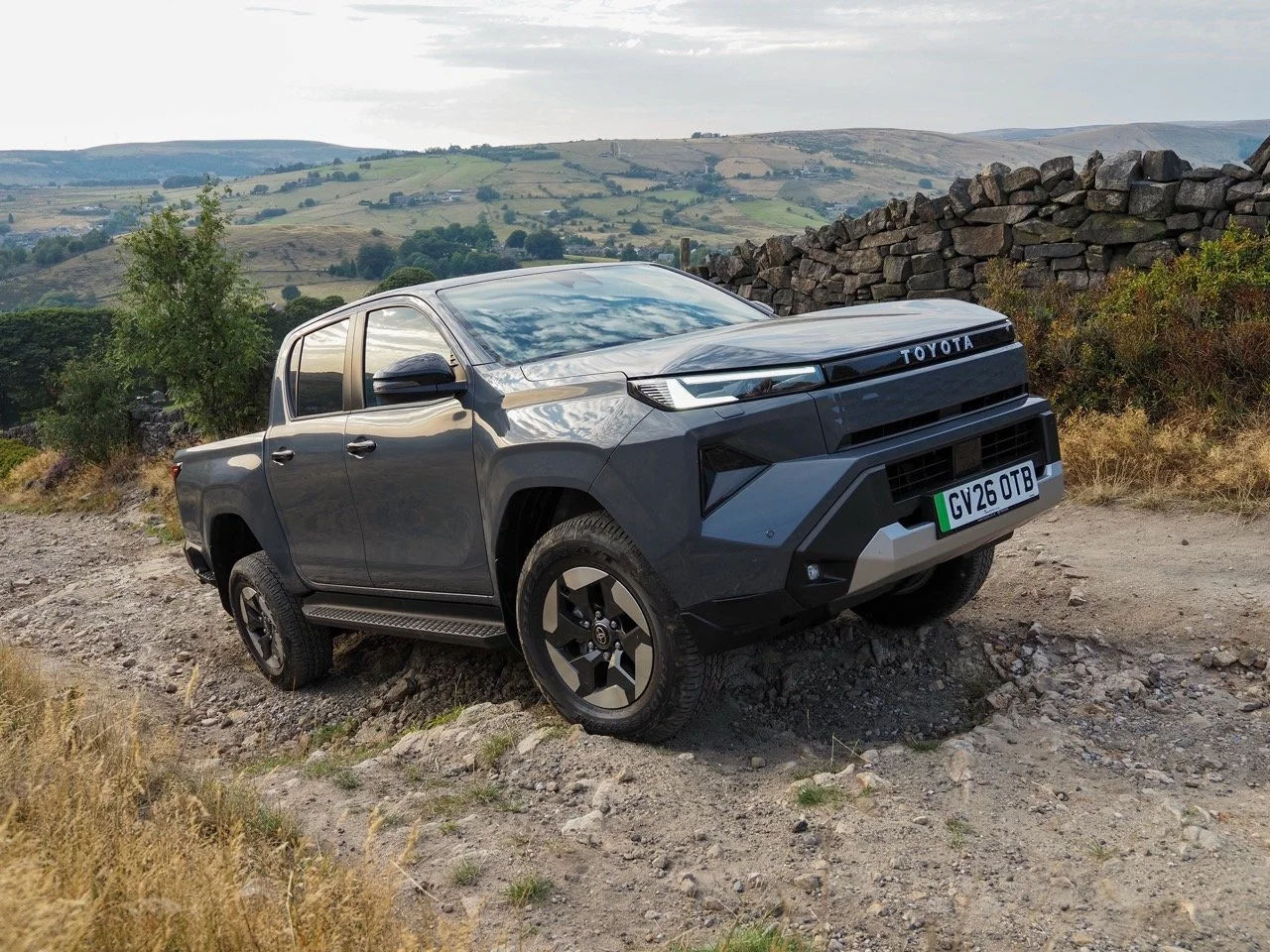
Visually, Toyota has managed to make the electric Hilux look like a Hilux without simply sticking a gigantic battery warning sticker down the side.
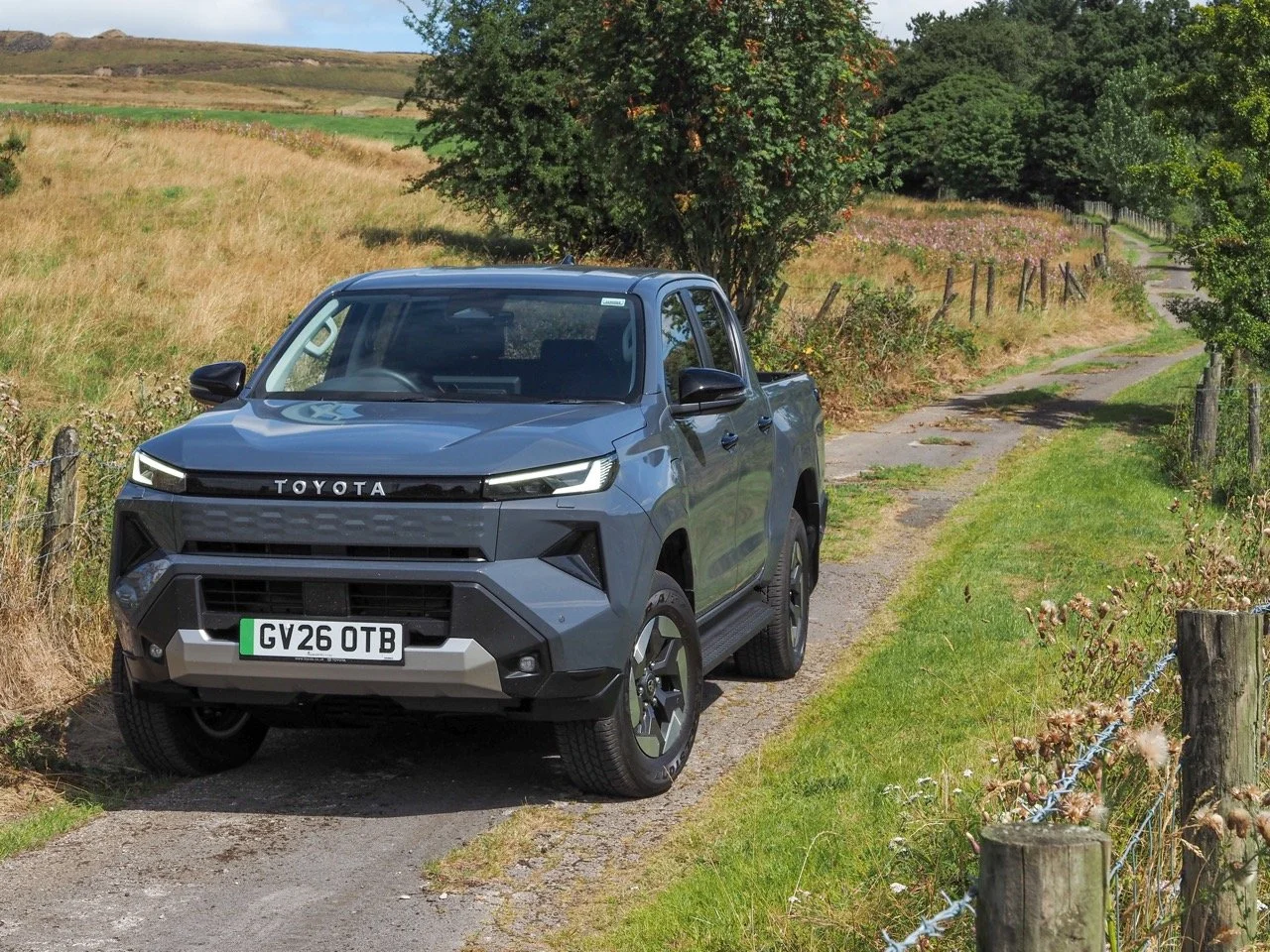
The front grille has disappeared, replaced by a smoother, more aerodynamic nose, while the 17” wheels are designed specifically to reduce drag. Otherwise, it remains chunky, upright and properly pick-up shaped.
It is unmistakably modern, but thankfully Toyota hasn't gone completely bonkers with the styling. There are no spaceship doors, no pointless origami and no attempt to make it look like a concept car that accidentally escaped the motor show.
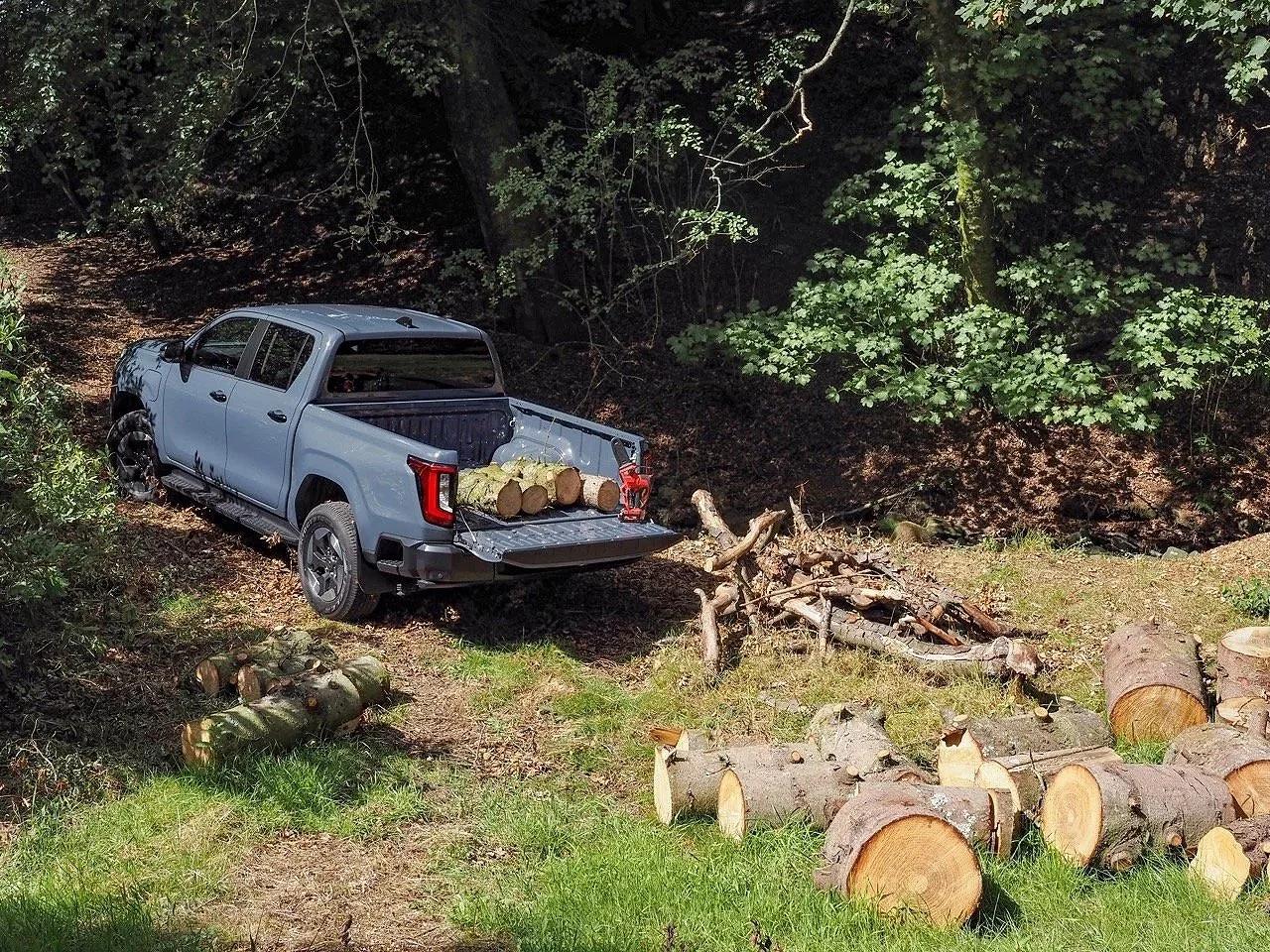
More importantly, the battery hasn't eaten into the useful bits.
The 59.2kWh battery sits within the chassis, rather than stealing space from the cab or load bed. Toyota has gone to considerable lengths to protect it from the sort of punishment a Hilux is expected to endure, including reinforcing the frame and giving the battery substantial underbody protection.
Underneath, there are electric drive units at both ends. The front eAxle produces 82kW and the rear 129kW, giving a combined system output of 144kW – around 196bhp – with a hefty 474Nm available from the two motors.
On the road
The first thing you notice is the silence. Well, almost silence.
Then, because there is no gearbox, clutch or propshaft doing the usual mechanical dance, the delivery is wonderfully immediate. Press the accelerator and it simply goes. No waiting for a diesel turbo to wake up. No automatic gearbox wondering what you've asked it to do. Just shove the pedal and off you go. It feels distinctly unlike an old Hilux.
It’s surprisingly brisk, Toyota quotes 0-62mph in around 9 seconds, which isn't going to frighten a Porsche, but is perfectly respectable for something with the aerodynamic qualities of a garden shed.
The electric motors give it a smoothness that suits the Hilux rather well, and around town it’s particularly pleasant.
The steering is electric too, and although it’s light and easy at low speed, there is a lot of wheel twirling required when parking. It doesn't have the old-school hydraulic steering feel that some owners will miss, although the upside is less kickback when you're clattering over rough ground.
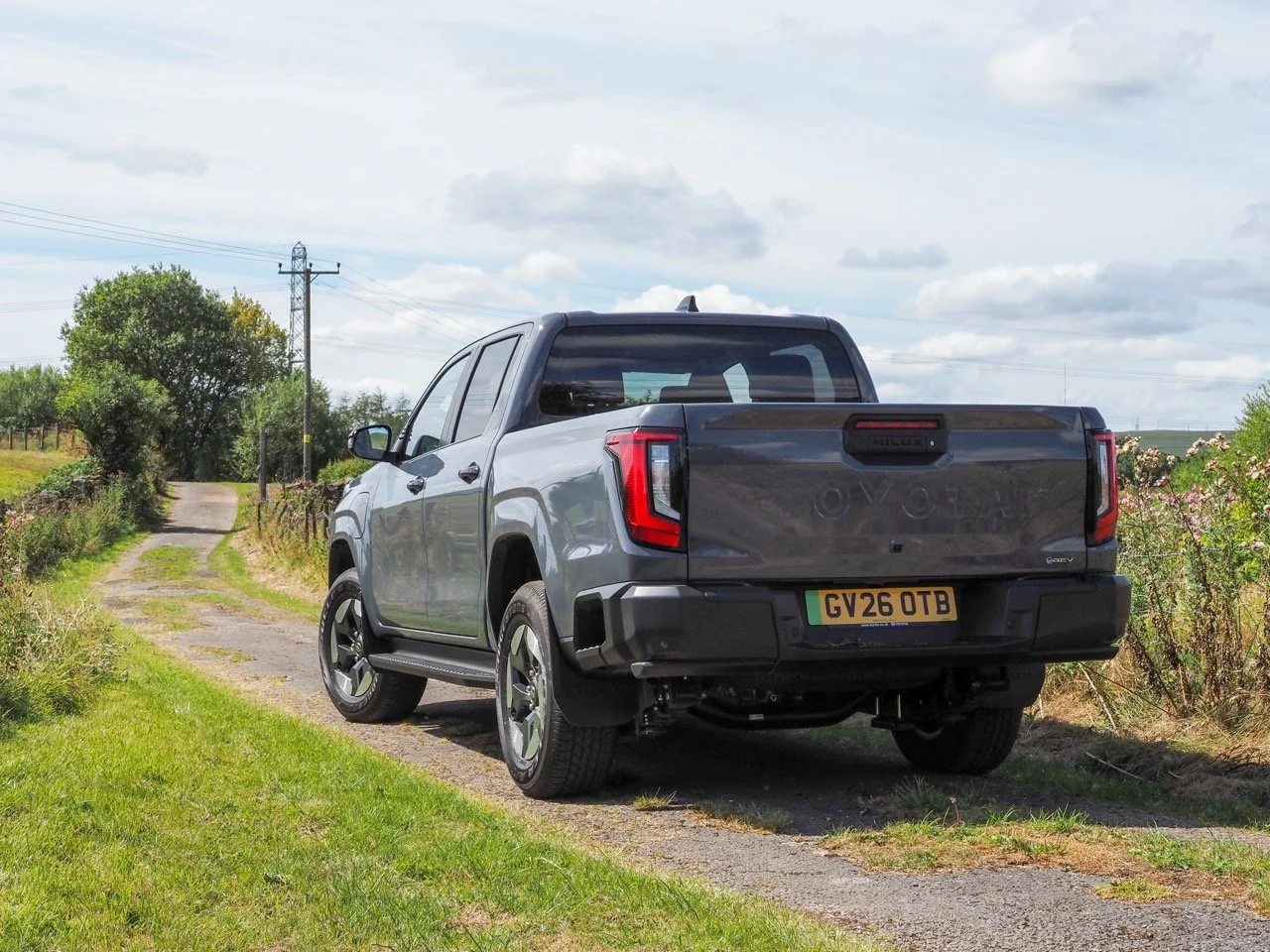
On faster roads, the extra weight of the battery actually helps. The BEV gets a de Dion rear axle with leaf springs, and the battery's low position gives the truck a planted feel. It isn't a sports car, obviously, but it feels stable and surprisingly refined on a motorway.
There is still some of the traditional Hilux ride over poorer surfaces. You haven't suddenly transformed a ladder-frame pick-up into a Lexus. Hit a particularly nasty pothole and you'll know about it, while the rear suspension can still remind you that it was designed to carry things rather than float around like a Range Rover.
But overall, the ride is considerably more civilised than you might expect. And that's probably the biggest surprise of the BEV: it feels less agricultural than a Hilux has any right to feel.
The elephants in the load bay
Then we arrive at the electric Hilux's biggest problem - Range.
Toyota quotes up to 159 miles WLTP, rising to 236 miles on the city cycle. Charging from 10 to 80% on a 150kW DC charger takes around 30 minutes, while a 10kW AC wallbox can take the battery from 10 to 100 per cent in roughly 6.5 hours.
The important word is up to.
In the real world, particularly in cold weather, with a load on board, at motorway speeds or while towing, you should expect less.
For a tradesman spending most of the day travelling between sites within a relatively small area, that may be perfectly acceptable. For forestry, industrial estates, airports, utilities or other operations where the truck returns to base each night, it makes considerable sense.
However, I couldn’t drive up to Yorkshire and back exploring some of my favourite lanes, it simply doesn’t have the range.
But what about proper off-roading?
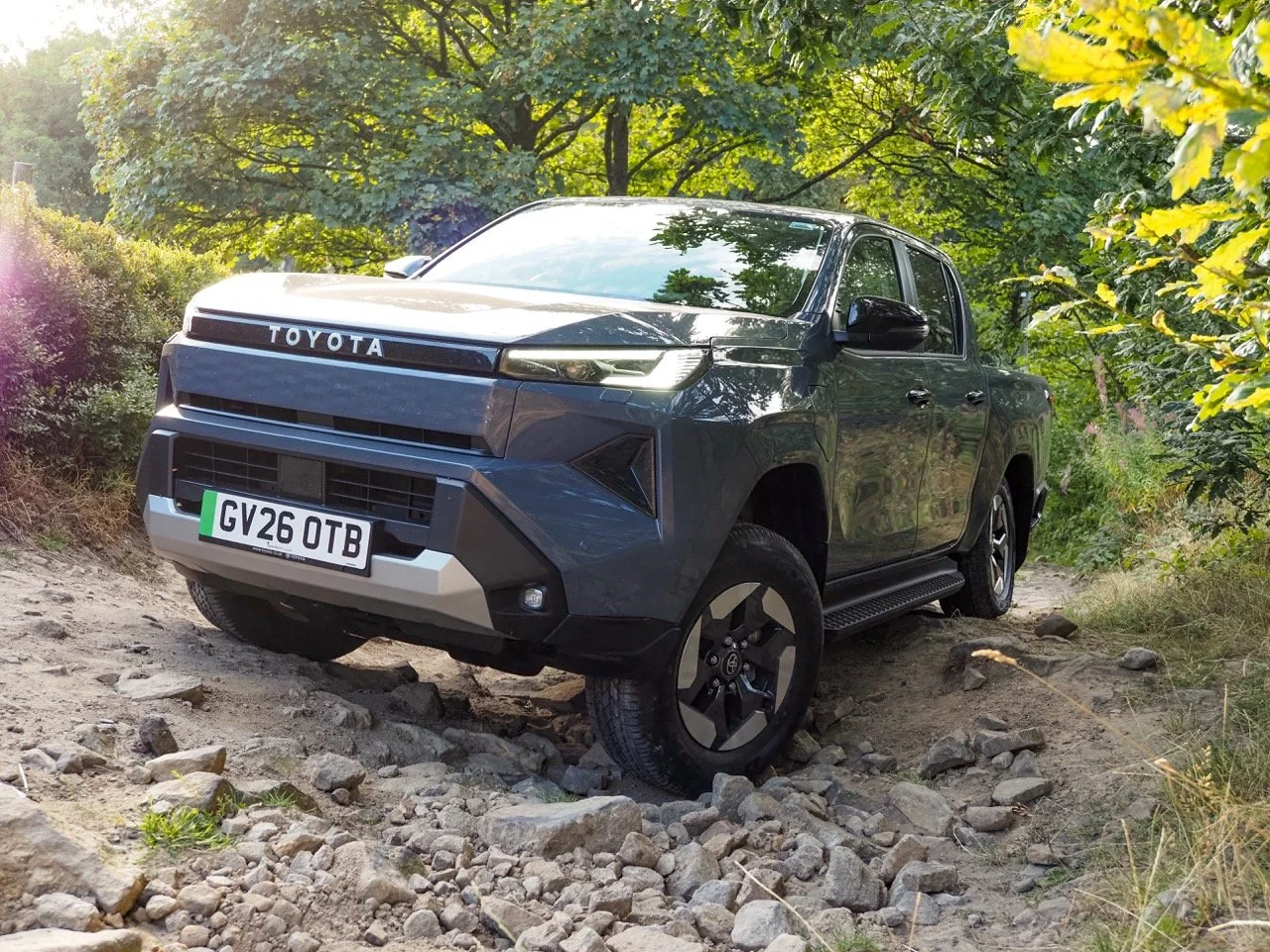
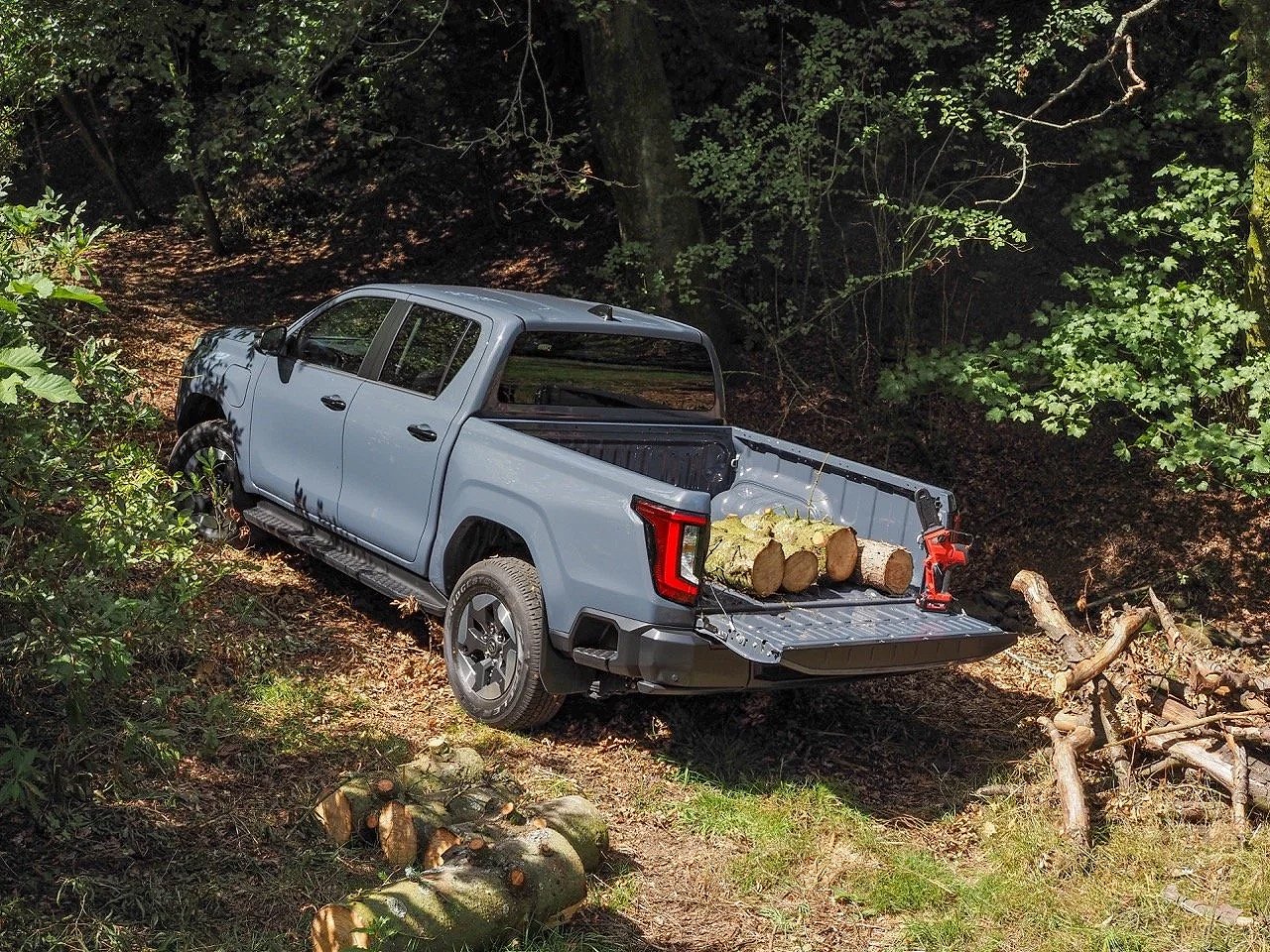
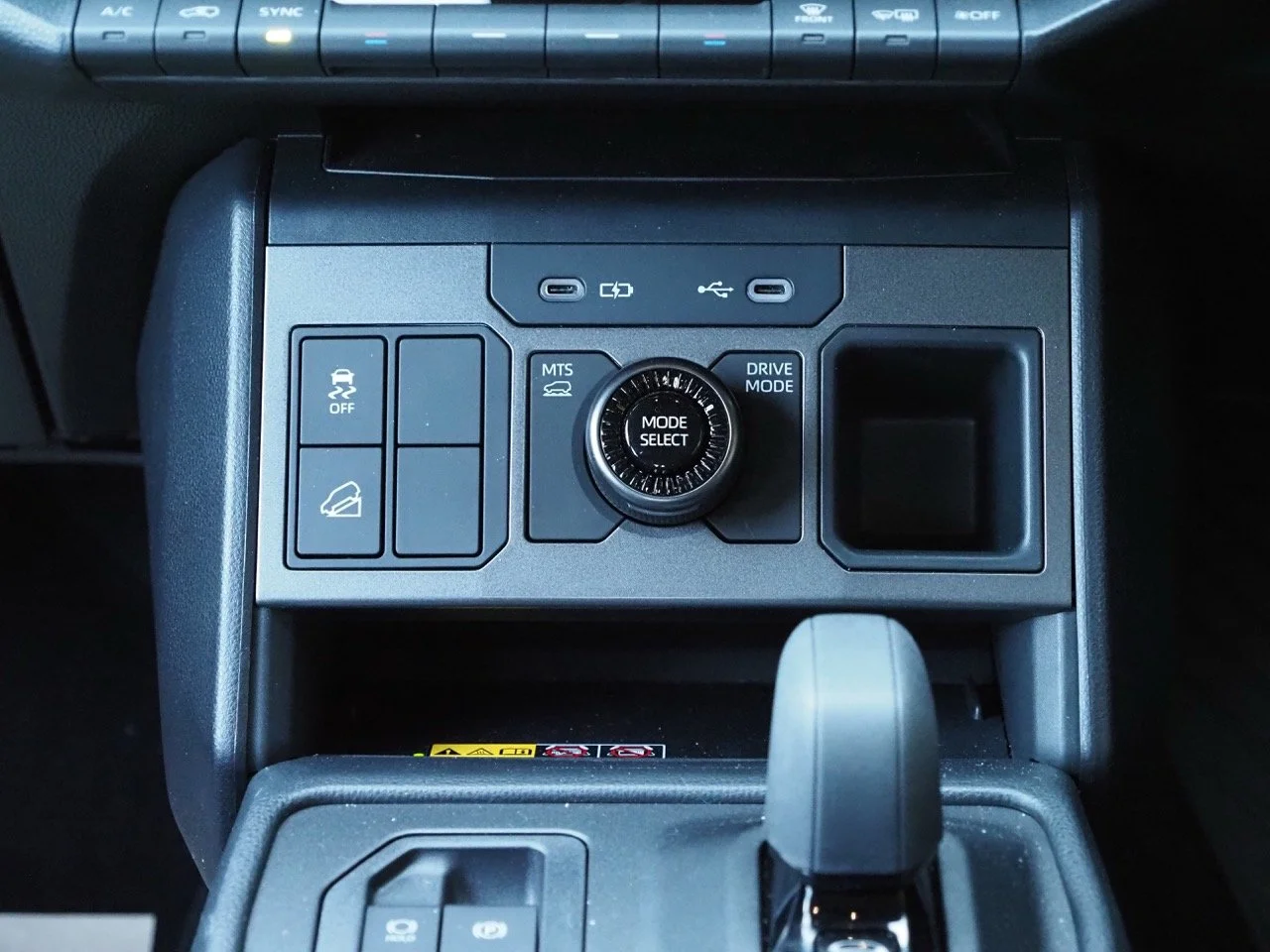
Here's the really interesting bit, the electric Hilux is properly capable off-road. It has permanent all-wheel drive and the two electric motors can distribute torque between the axles extremely quickly. There is no conventional low-range gearbox, but Toyota has cleverly programmed its Multi-Terrain Select system to control drive torque and braking in a way that effectively replicates the effect of low range.
There are modes for Rock, Sand, Mud, Dirt and, uniquely for the BEV, Mogul, plus an automatic setting.
And it works - at least on the lanes I drove along.
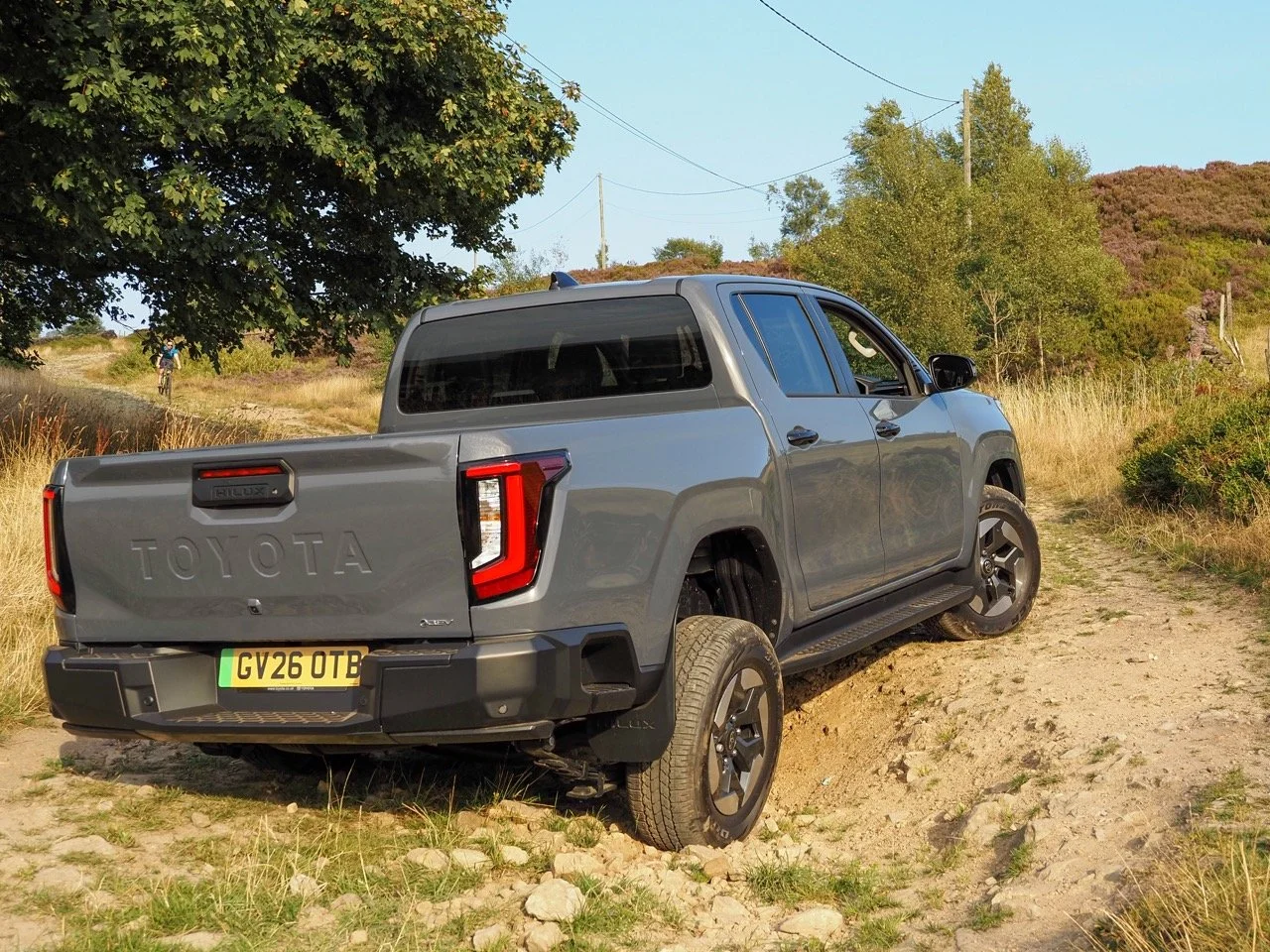
The Hilux BEV can also wade through 700mm of water, just like the diesel model. However, there is one important caveat, the battery sits underneath the vehicle, which reduces ground clearance to around 212mm and the breakover angle to 20º. Approach and departure angles remain a respectable 29º and 24º respectively.
For ordinary green lanes, muddy tracks, forestry roads and the sort of off-roading most people actually do, this shouldn't be a deal breaker.
For serious rock crawling, however, I'd be rather more careful.
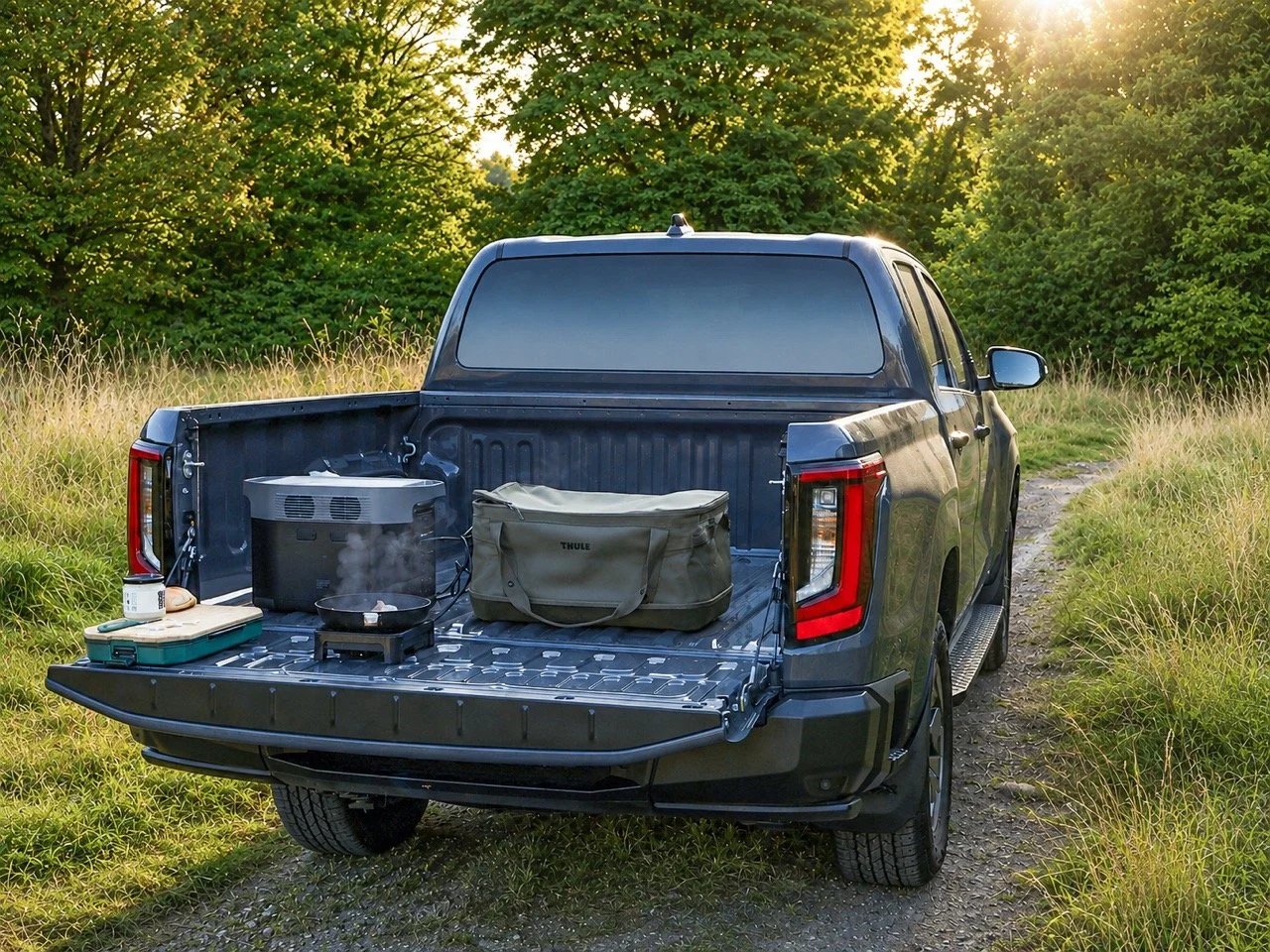
Another issue is the payload, at around 710-715kg, depending on specification, and a towing capacity of 1,600kg, it isn’t as good as the electric D-Max.
Inside the cabin
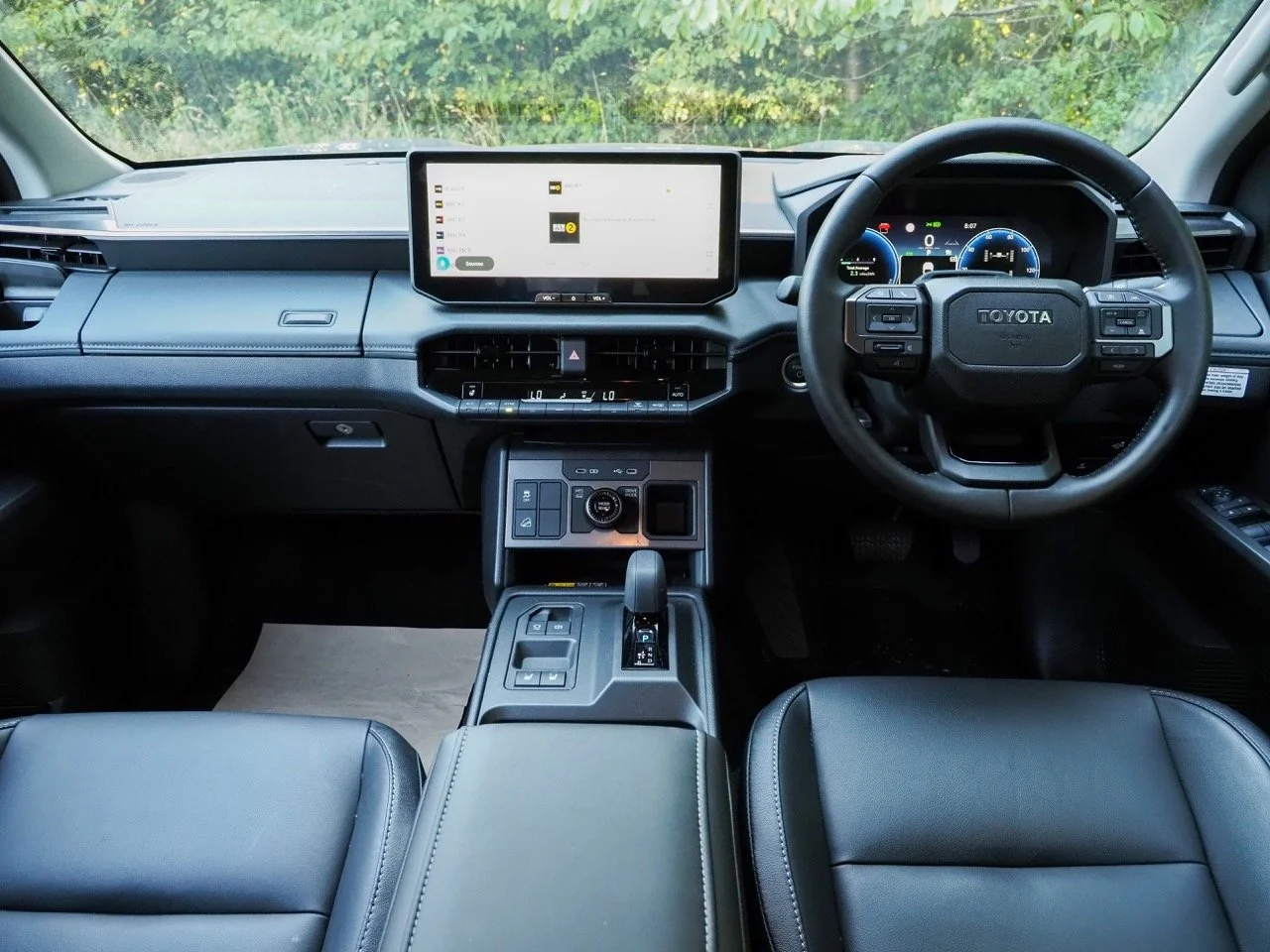
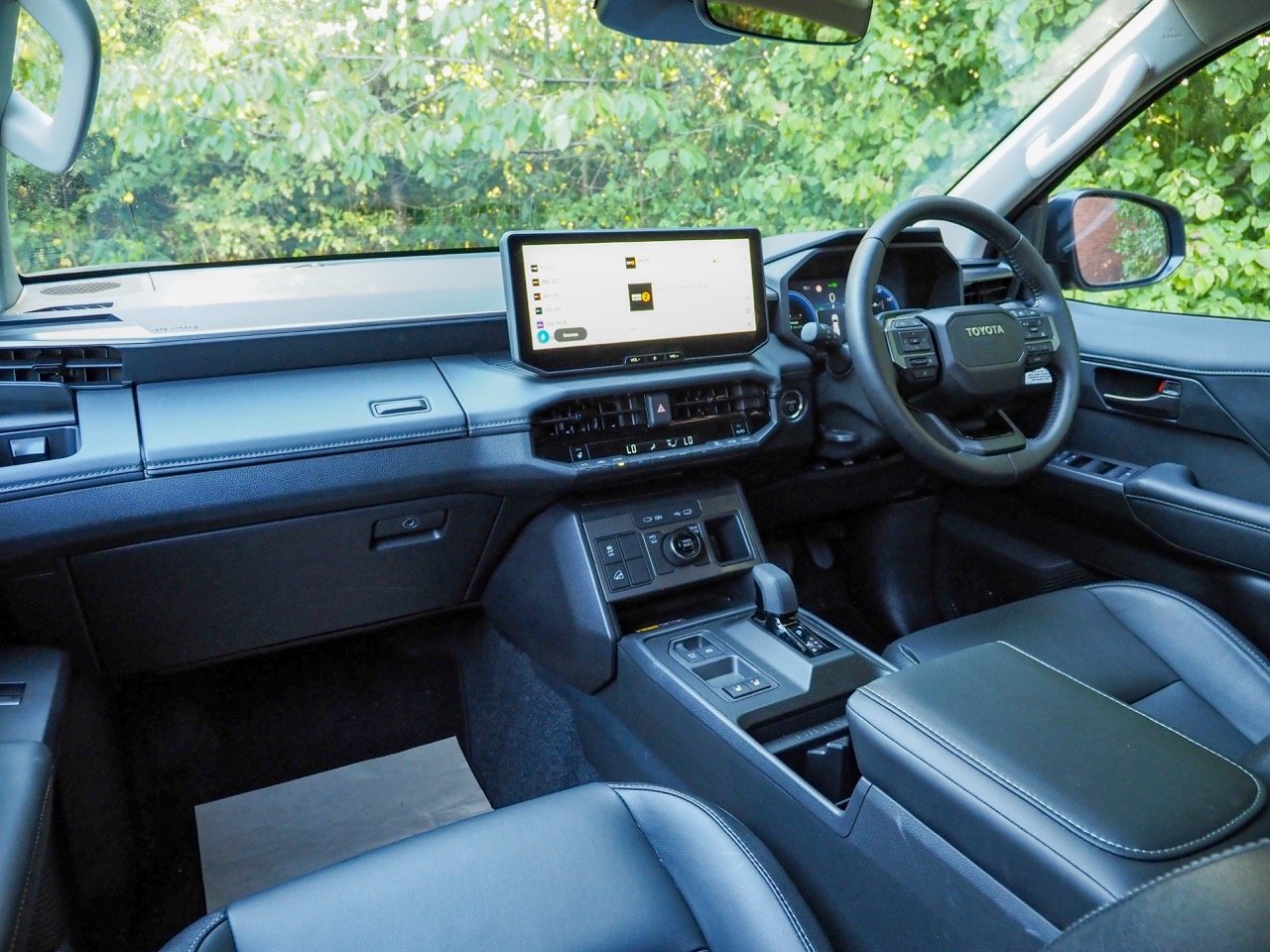
The dashboard is cleaner than than the previous model, the materials are better and there is a much greater feeling of quality. However, I feel the old version was better - it was certainly easier to switch off the annoying ADAS, which on this, along with the 250 Land Cruiser I find to be painful and frustrating to navigate.
Granted, the old Hilux interior may have begun to look its age, and the new one feels much more like a modern Toyota, with obvious influence from the 250 Land Cruiser, which again, in my opinion, isn’t a selling point.
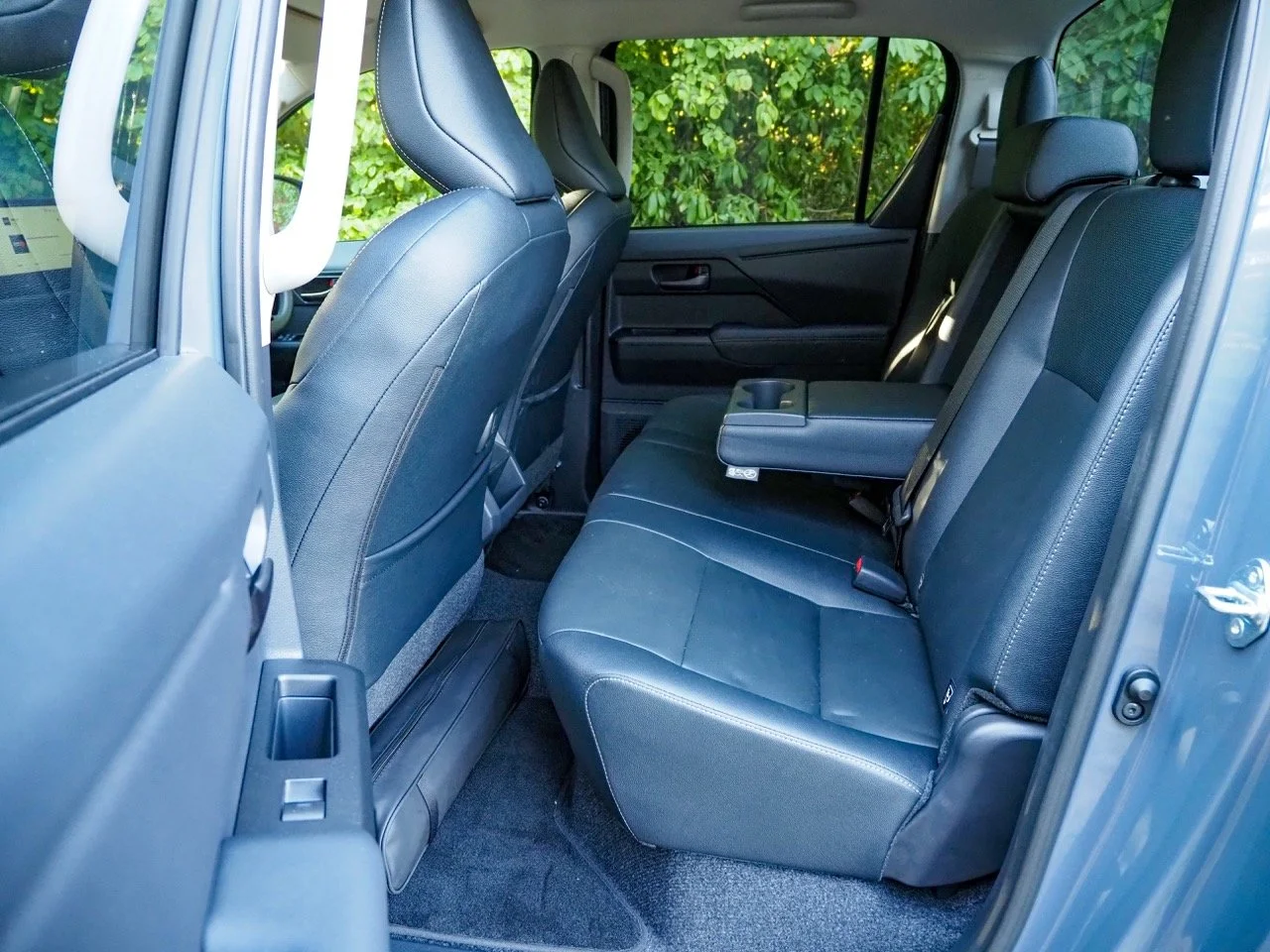
There are two 12.3'' displays on higher-spec versions: one for the driver's instruments and another for the central infotainment system. Apple CarPlay and Android Auto are available, while higher grades also get wireless smartphone charging.
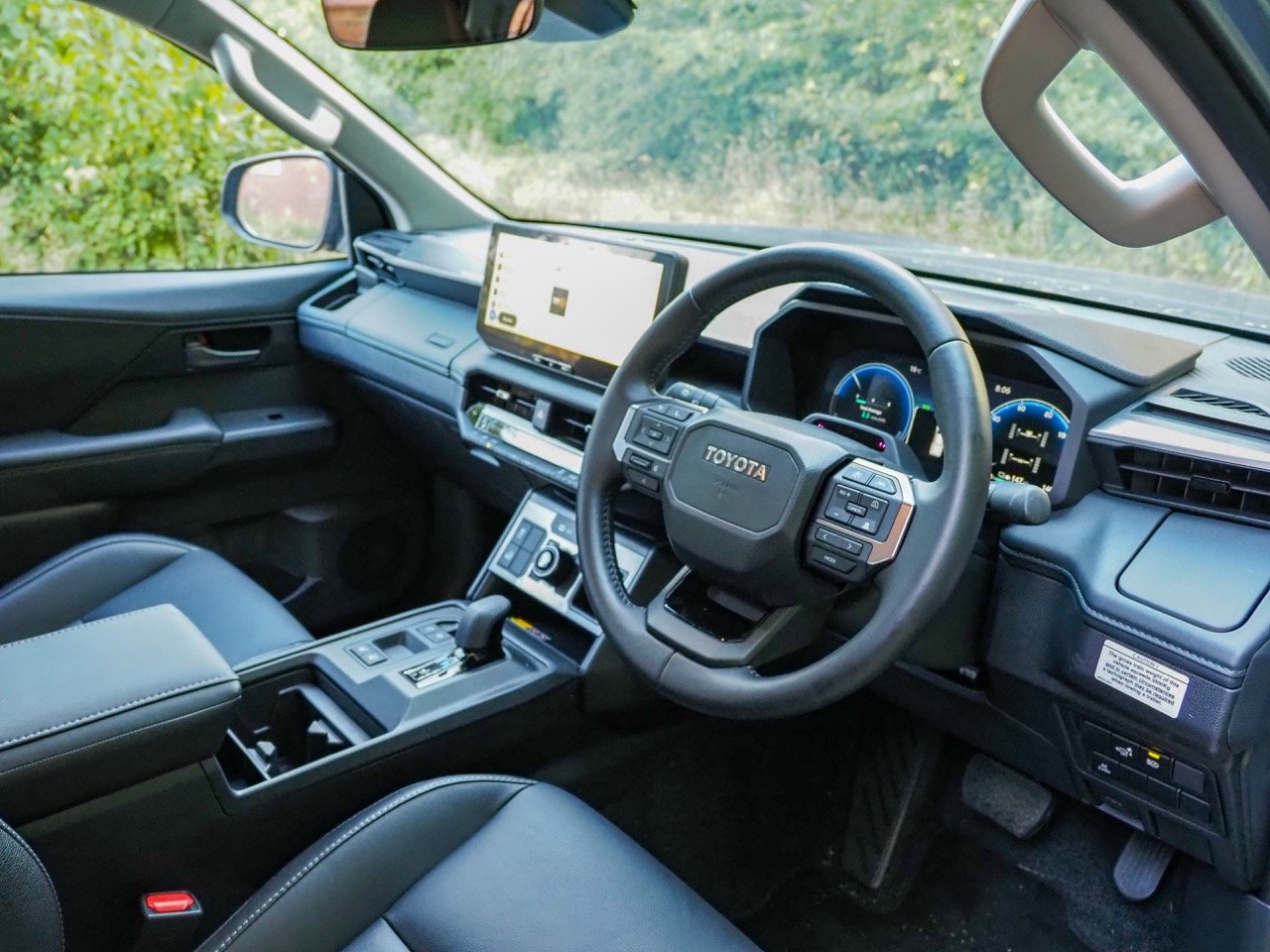
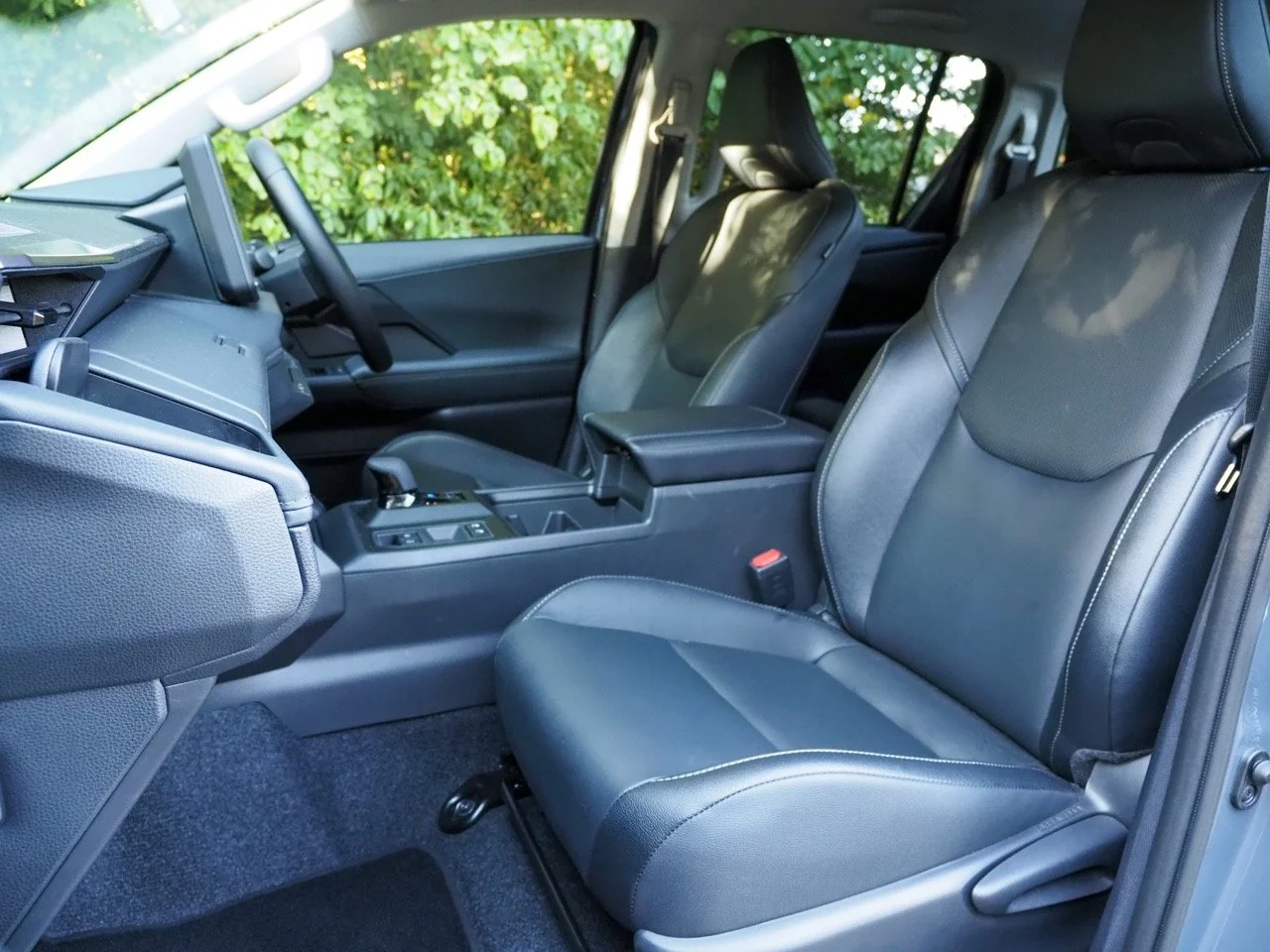
The seats are more comfortable too, with improved padding and thicker upholstery. Invincible versions get leather upholstery, and the higher-specification versions add further comfort equipment.
Storage is also sensibly thought out. There's a 5.7-litre centre console box, a glovebox and, on higher grades, a cooled upper dashboard storage compartment capable of holding two 600ml bottles.
That last one is brilliant, not because anyone actually needs another place to put a bottle of water, but because it demonstrates that someone at Toyota has occasionally been allowed to think like an actual human being.
And, praise be, the climate controls remain physical. There is a proper control panel beneath the infotainment screen rather than forcing you to prod a touchscreen while wearing gloves and travelling down a muddy lane.
For me, that's worth extra points.
Verdict
The instant torque, quietness, refinement and clever all-wheel-drive system suit a pick-up surprisingly well. Off-road, it feels every inch a Hilux, and the ability to creep almost silently through mud and over slippery terrain is rather addictive.
As a working truck, however, the numbers tell another story. If want electric and need to tow 3.5 tonnes, carry a tonne in the back, look at the D-Max, and if you drive hundreds of miles every day, buy the diesel.
For private buyers, it is harder to justify. The electric Hilux is superbly capable, but £57k-plus is a lot of money for a vehicle with a realistic range that can be considerably less than 159 miles.
For the traditional Mud Life reader who spends weekends dragging trailers, carrying camping kit, disappearing into the hills and occasionally driving somewhere simply because the road looks interesting, I'd still have the diesel.
Would I buy one?
No.
Would I happily borrow one for a muddy weekend in Wales?
Again, probably no.
Mostly because Muddy Madam, Lilly the Mud Life dog, myself and my camping gear combined weighs more than 715kg, and also because I've never yet found a wild campsite with a 150kW charger.
The electric Hilux may not yet be the answer to every 4x4 question, but it is a surprisingly convincing answer to some of them. And if Toyota can eventually give it another 100 miles of useful range and sort out their irritating ADAS menus, we might have something rather special. Until then, I'm more than happy to stick with diesel.
The Mud Life verdict: A genuinely capable electric Hilux that proves Toyota hasn't forgotten what a Hilux is supposed to be. Just don't plan on towing your house to John O’Groats.