
Volvo’s New Safety Coach Wants You to Drive Better…
… and Pay Less for Insurance.
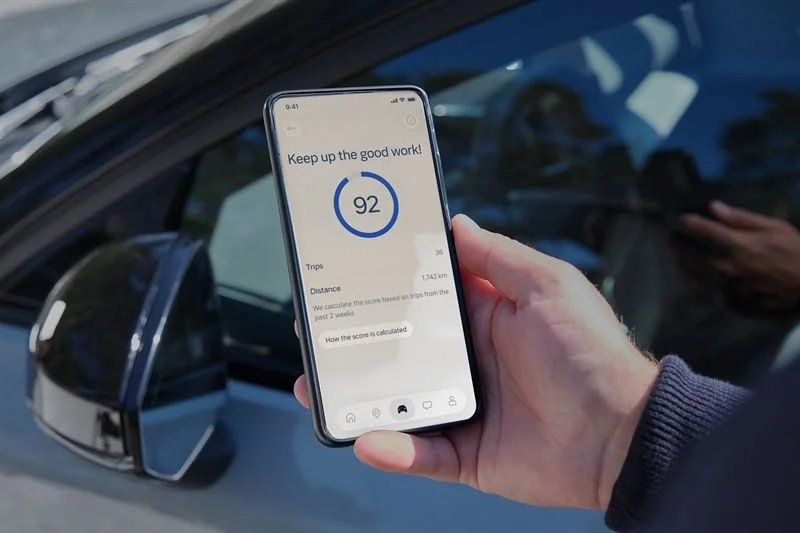
Volvo has never been shy about telling us that safety is rather important. After all, the company has spent decades building cars around the slightly obsessive idea that getting from A to B without becoming part of the scenery is a good thing. Now it wants to help us become better drivers too.
Its new Safety Coach app is designed to monitor how you drive and offer personalised advice on everything from braking and acceleration to cornering. And, potentially, there’s a financial carrot dangling at the end of it: drive more safely and you could qualify for cheaper car insurance.
It’s an interesting idea. Although I suspect some drivers may initially regard an app judging their driving rather like having your mum sitting in the passenger seat saying, “You’re going a bit fast.”
Safety Coach will provide real-time driving tips through the car’s infotainment system and the Volvo Cars app, based on what you actually do behind the wheel. Rather than simply bombarding you with generic safety advice, it creates a personal Safety Coach score, which changes according to your driving behaviour.
So, brake too hard, accelerate like you're trying to escape a police helicopter or chuck the car into a corner with more enthusiasm than necessary, and the app will notice.
The idea is based on Volvo’s enormous database of real-world safety research and accident data. And one of the key findings behind Safety Coach is surprisingly simple: predictability matters.
According to Volvo driver behaviour expert Mikael Ljung Aust, many accidents involve some element of surprise. If you drive within expected speed ranges and avoid sudden manoeuvres, other road users have a better chance of anticipating what you're about to do.
Which, when you think about it, makes perfect sense. Roads would probably be considerably safer if everyone stopped driving as though they were auditioning for a new series of Top Gear.
“Supporting safe driver behaviours is a key piece of the puzzle we need to solve to reach zero collisions,” says Aust, and Safety Coach is intended to turn that research into everyday driving habits.
The insurance carrot
The really interesting bit, however, is what happens when Volvo combines all this safety coaching with insurance.
The system is initially launching in Sweden and Norway, where drivers of most Volvo models from model year 2020 onwards will be able to download the in-car app, provided their car has Volvo’s Google Android-based infotainment system.
Volvo customers in those markets will also be offered the opportunity to share their driving data with insurance company Volvia. In return, safer drivers could potentially benefit from usage-based insurance rates.
In other words, the old insurance system of looking at your age, postcode, occupation and whatever other black magic insurers use to decide how much you’re going to pay could increasingly be supplemented by something rather more direct: How do you actually drive?
It's not difficult to see where this could go. If the app demonstrates that you generally drive smoothly, don't spend your life exceeding the speed limit and don't treat every set of traffic lights as the starting line at Silverstone, your driving record could potentially work in your favour.
And if you drive like an utter bell-end, presumably your insurance company will eventually find out about that too.
Volvo says the insurance element is entirely optional, though. Drivers first have to opt into Safety Coach itself, and then make a separate decision if they want their driving data shared with affiliated insurers.
That separation is important, particularly in an age when our cars already know an alarming amount about us.
It’s not just Volvo watching
Safety Coach is being developed with Cambridge Mobile Telematics (CMT), which provides the telematics and AI technology behind the system.
CMT says its data from other safe-driving programmes shows that people who actively engage with this sort of technology tend to reduce speeding and hard-braking events.
That makes sense. If you know the car is keeping an eye on you, there's a good chance you'll become slightly more conscious of what your right foot is doing.
It is rather like having a driving instructor permanently installed in the dashboard, albeit one who doesn't have the ability to reach across and grab the steering wheel when you make a complete arse of a roundabout.
The intention isn't simply to produce a score, though. Volvo wants drivers to use the feedback to gradually change their habits.
That distinction is important. Nobody needs another electronic nanny telling them they could have taken a corner 3mph more slowly. The useful bit is whether the feedback actually makes someone think about why they are braking hard, accelerating aggressively or approaching bends too quickly.
If it does, it could genuinely make people better drivers.
Privacy first
Naturally, there are questions about what happens to all that driving data. Volvo says privacy and transparency are central to Safety Coach. As I’ve said, drivers choose whether to use the system and then make a separate choice about whether their information can be shared with an insurance company.
That's a sensible approach, because while the idea of paying less for insurance is attractive, handing an insurer a detailed record of every mistake you make behind the wheel could also feel rather like voluntarily handing the prosecution evidence for its case. The important thing is that drivers have control over whether they participate.
When can we get it?
Following its initial launch in Sweden and Norway, Volvo plans to introduce Safety Coach in the United States and other European markets, with insurance-related offers also expected as the system rolls out.
For the UK, therefore, the interesting question isn't really whether the technology works. It's how long it will be before something similar becomes commonplace here.
The system will initially be available on Volvo models with Google Android-based infotainment from model year 2020 onwards, including the XC40, EX40, EC40, S60, V60, XC60, EX60, XC90, V90, EX90 and ES90. Availability will vary depending on the model and market.
And perhaps that's the most interesting thing about Safety Coach. Volvo isn't simply trying to make cars that protect us when we crash. It's trying to use the car's technology to help prevent the crash happening in the first place.
If it can make drivers smoother, more predictable and less inclined to drive like they're late for a meeting they've already missed, that's no bad thing.
And if the reward for becoming a better driver is a lower insurance bill, even better.
Although I suspect there will still be someone who manages to get a terrible Safety Coach score while driving a Volvo XC90. Probably the person who overtakes you on the inside at the roundabout.