Peggy Pegs Review
There's a certain type of person who packs away their outdoor setup the minute the first proper autumnal gust whistles past. And, let's be honest, we don't judge them. After years of wrestling with floppy metal pegs, bent like cheap cutlery, and watching our meticulously erected tents and awnings suddenly decide they fancy a quick trip over the nearest drystone wall, you start to realise why.
But for the brave, the slightly mad and stubborn amongst us who view winter as just an extension of camping season, packing up isn't an option. We just need better kit. Specifically, we need kit that laughs in the face of a low-pressure system rolling in off the Atlantic. And that, fellow Mud Lifers, is where the lads and lasses at Peggy Peg come in, offering a system that moves you from 'hoping for the best' to 'yeah, let's see what you’ve got, weather.’
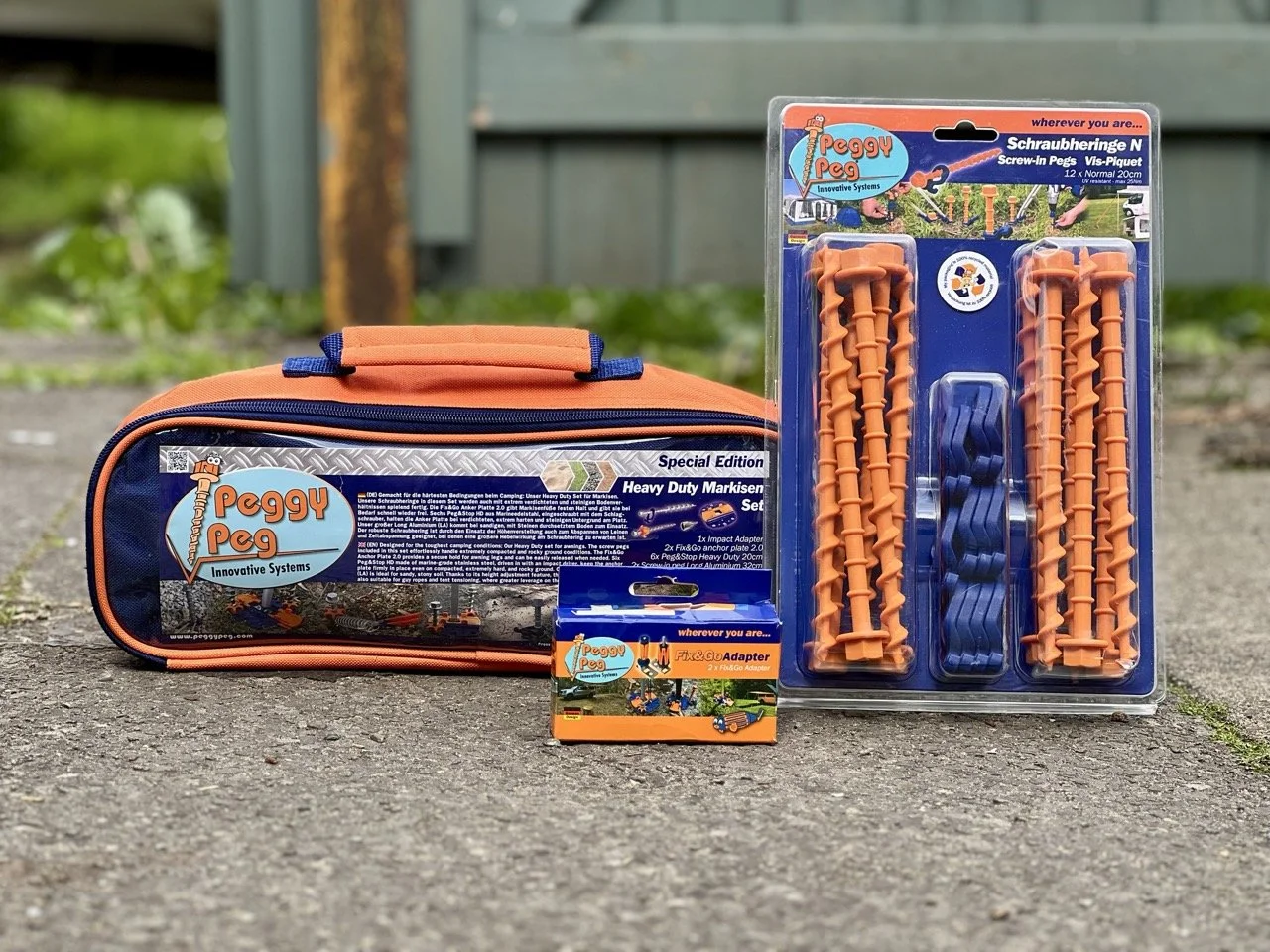
And so it came to be that sometime last year I was kindly sent a selection of Peggy Pegs to see if they could stand up to a proper Northern battering. Their Heavy Duty Awning Set, Fix&Go-Adapter Puffer and Screw-in Peg Normal (N) 20cm.
Spoiler alert - they did, and rather admirably too.
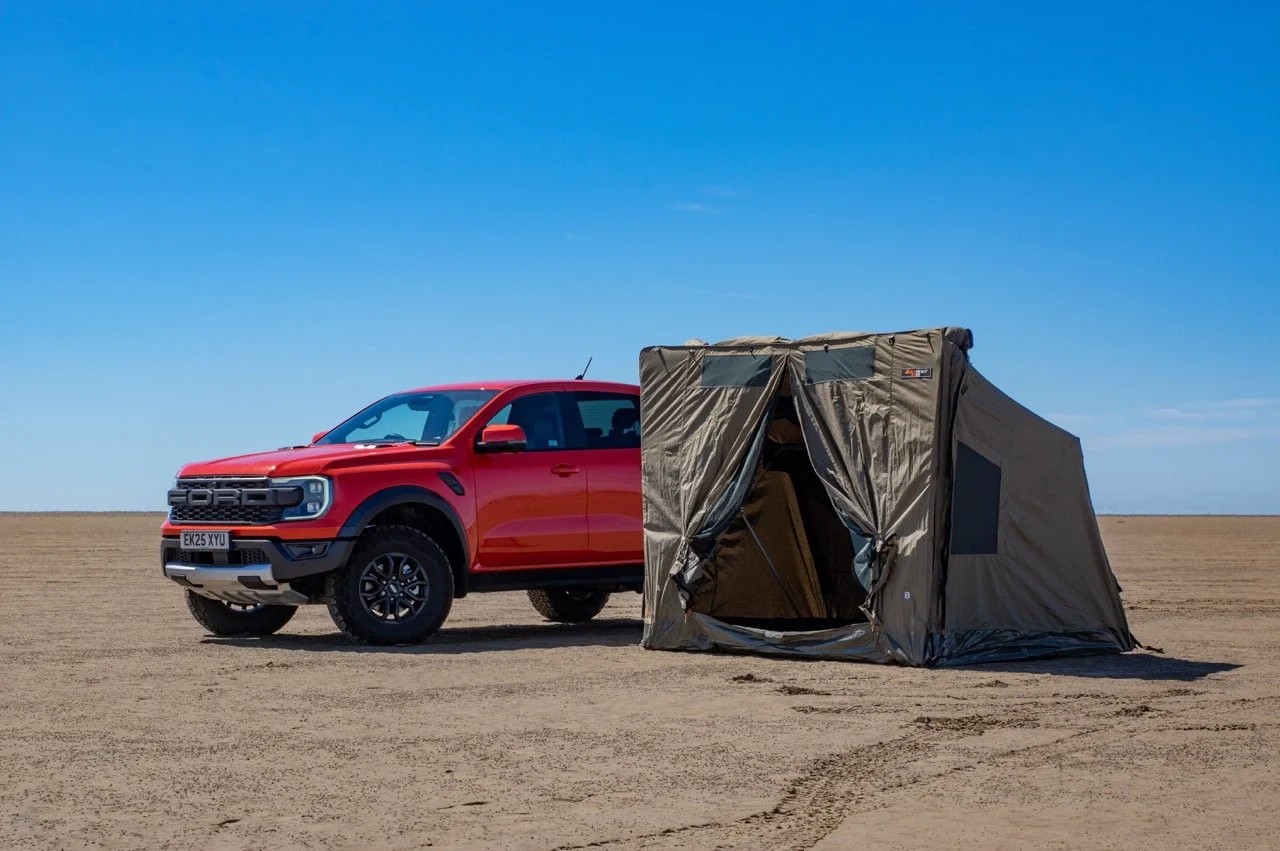
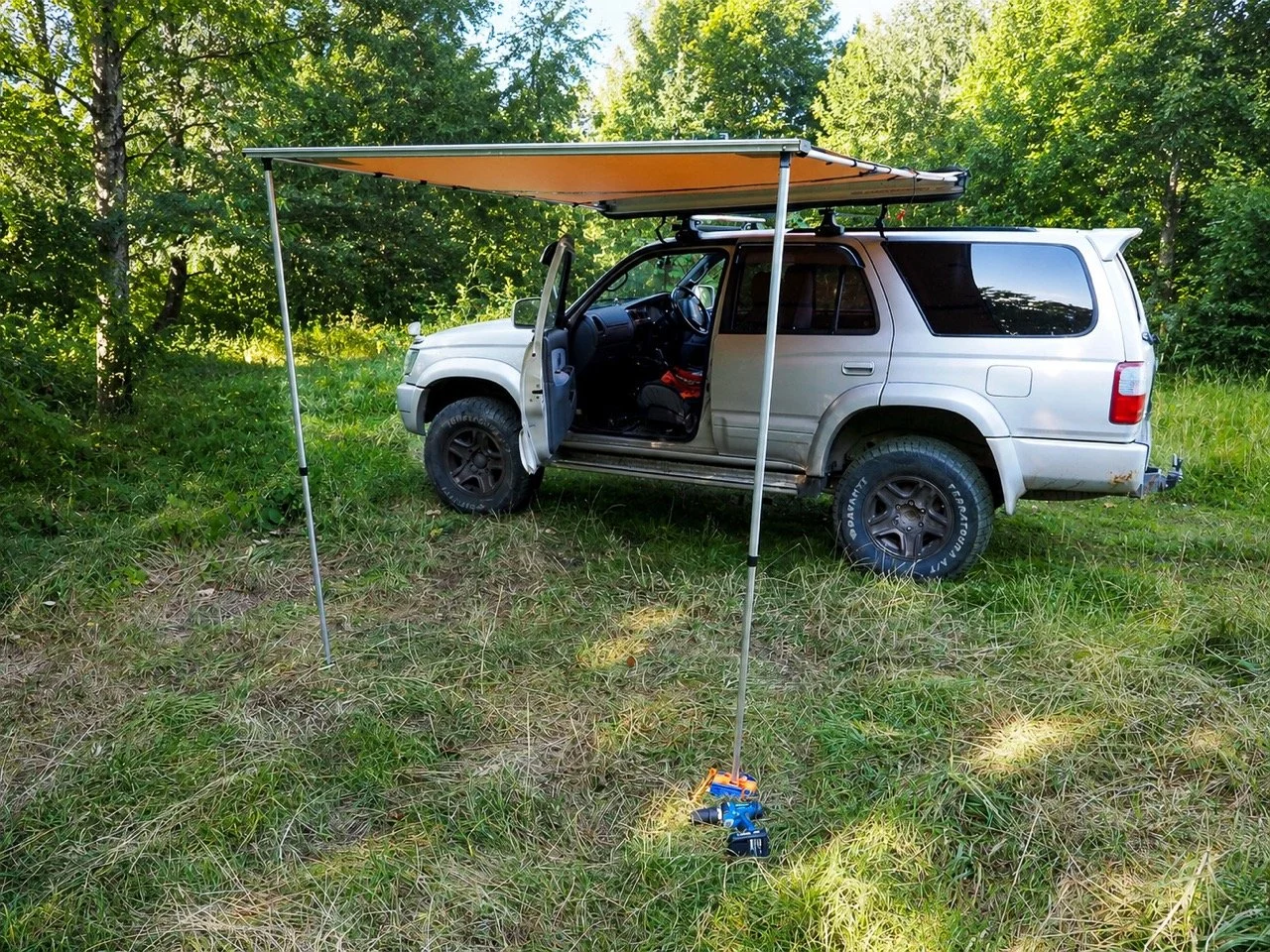
I went out in Deux Smurf with my ARB awning and a selection of tents in the most horrific of conditions during winter - on hilltops with headwinds, and even on a beach with soft sand, just to see if it would all go pear shaped. But it didn’t.
I took a bunch load of epic photos - even recorded a video - which is unusual for me.
Then, before I was able to put my review together my hard-drive went Kerflooey and died, and consequently, I lost it all, as well as over 90k other photos. I wasn’t happy.
Anyway, moving on…
So, what makes the Peggy Pegs different to standard tent pegs?
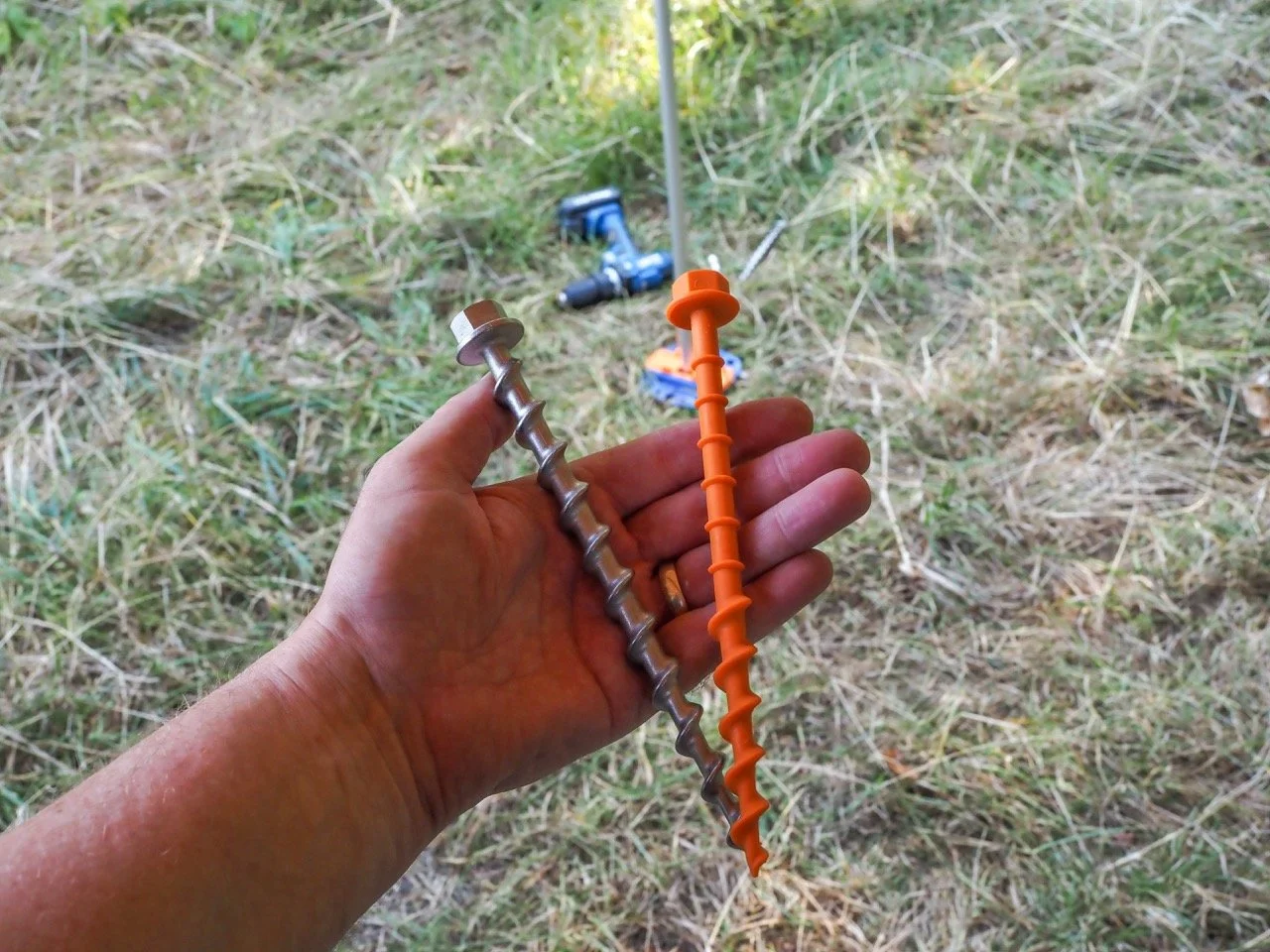
Well, for starters, you don't hammer them into the ground.
That might sound like a small thing, but it's actually the whole point. Rather than relying on a lump of bent steel being whacked into the earth and hoping it doesn't pull straight back out again, Peggy Pegs use a screw thread. You literally screw them into the ground, where the thread gives them considerably more surface area to grip against the soil or sand.
And because they're screw-in pegs, you can control how deeply they're anchored and, with the clever little hooks and lock nuts, where the tension is applied.
In other words, they're less 'hit it with a hammer and cross your fingers' and more 'screw it in until it's properly bloody well attached'.
Heavy Duty Awning Set
The Heavy Duty Awning Set is, essentially, Peggy Peg's answer to the problem of keeping an awning attached to the planet when the weather has decided that your campsite needs redecorating.
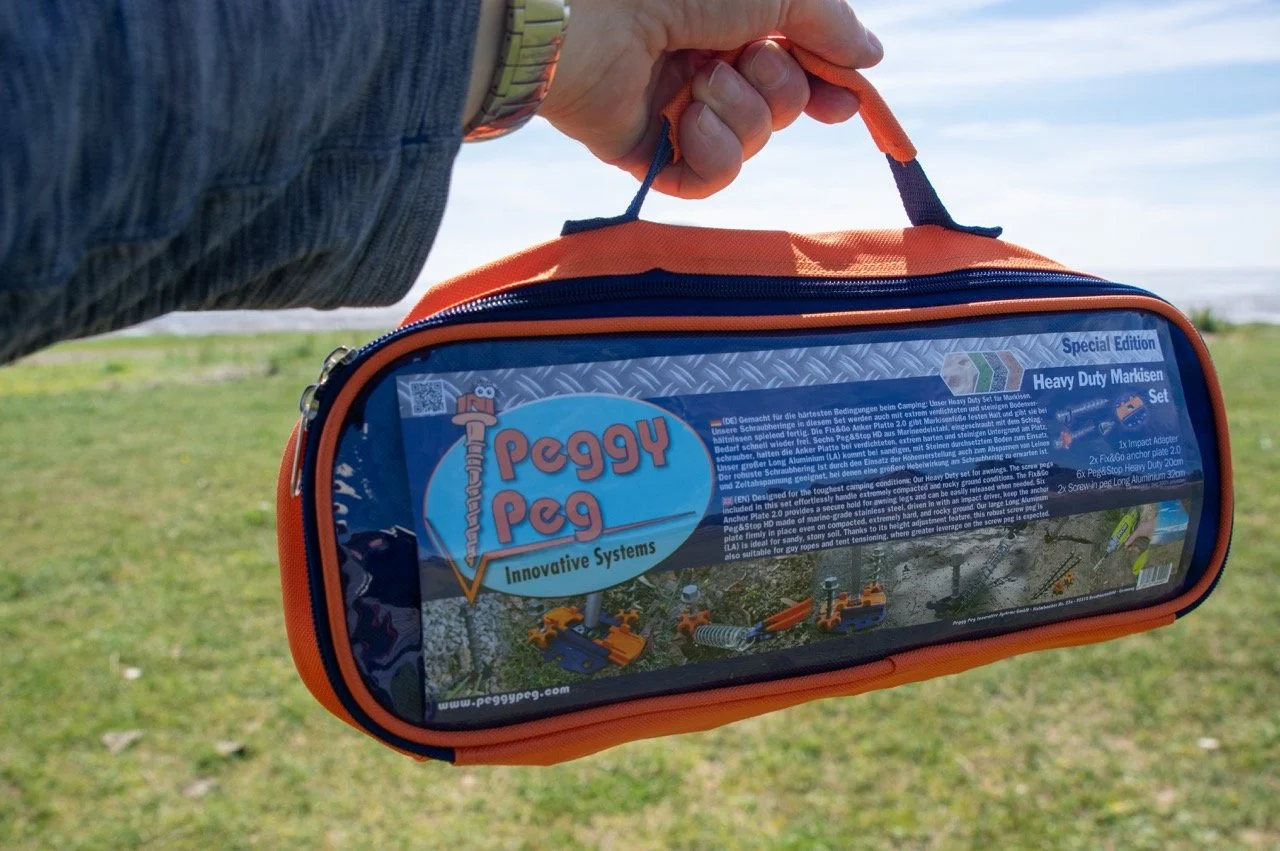
The kit comes in a proper storage bag and contains pretty much everything you need to anchor an awning: six 20cm stainless-steel Peg&Stop Heavy Duty screw pegs, six adjustable Lock Nut 2.0s, two 31cm aluminium screw pegs for softer ground, two L Hooks, two Storm Hooks, two Fix&Go Anchor Plates and an impact adapter. Phew!
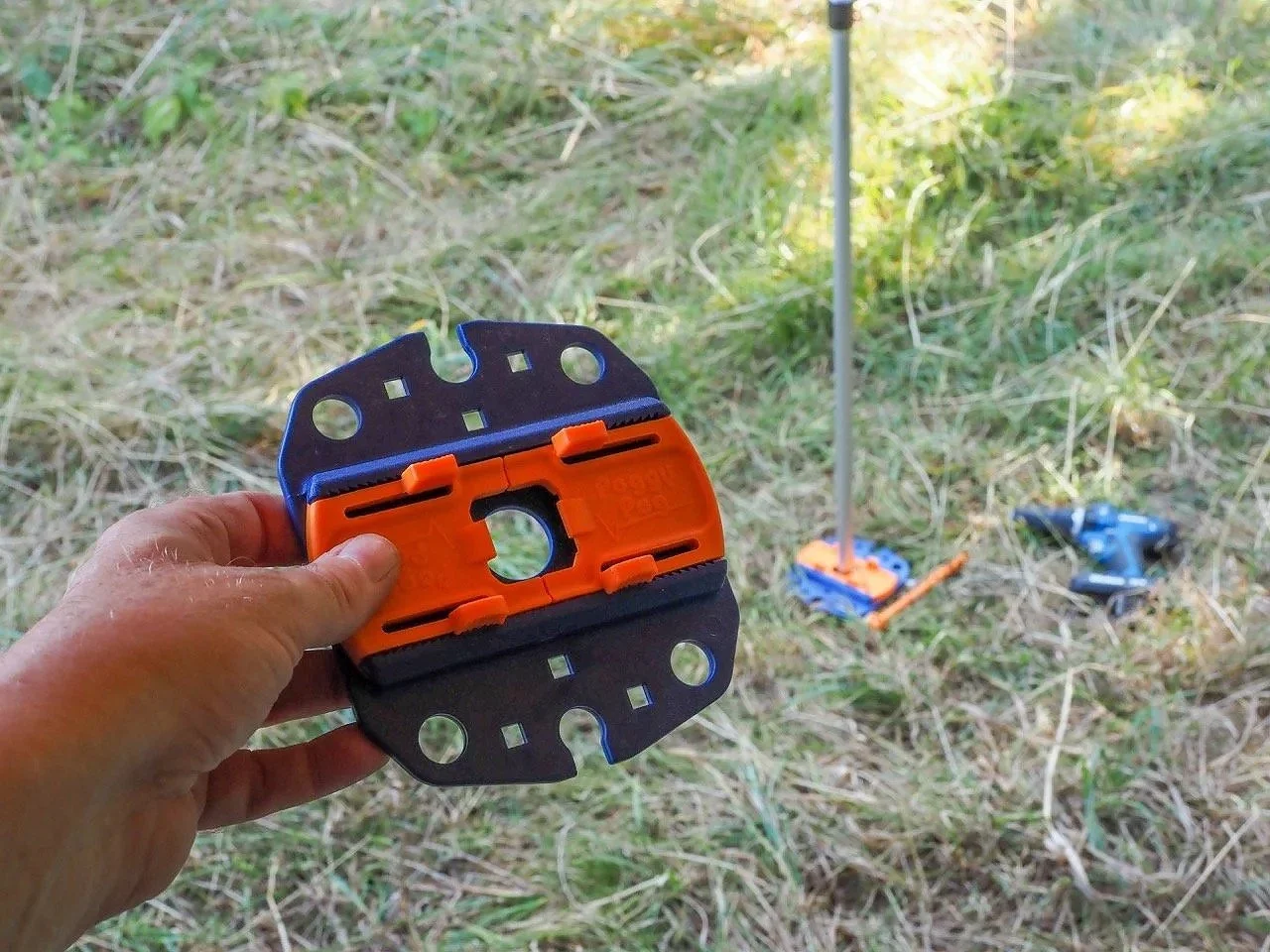
The clever bit is the Fix&Go Anchor Plate. Rather than having the awning pole simply sitting on the ground, the plate effectively gives it a solid, anchored base. You position the plate where you want the awning leg to sit, screw the appropriate Peggy Peg through the plate and into the ground, and then secure the awning pole into the plate.
On harder ground, the stainless-steel Heavy Duty pegs are the ones to use. They're designed to cope with compact, rocky and generally uncooperative terrain, and Peggy Peg even supplies an impact adapter so you can use a suitable impact driver rather than spending half your life turning a spanner. The company specifies a maximum torque of 150Nm for the HP60 Heavy Duty pegs, so obviously this isn't an invitation to give it death with the biggest cordless monster in your toolbox.
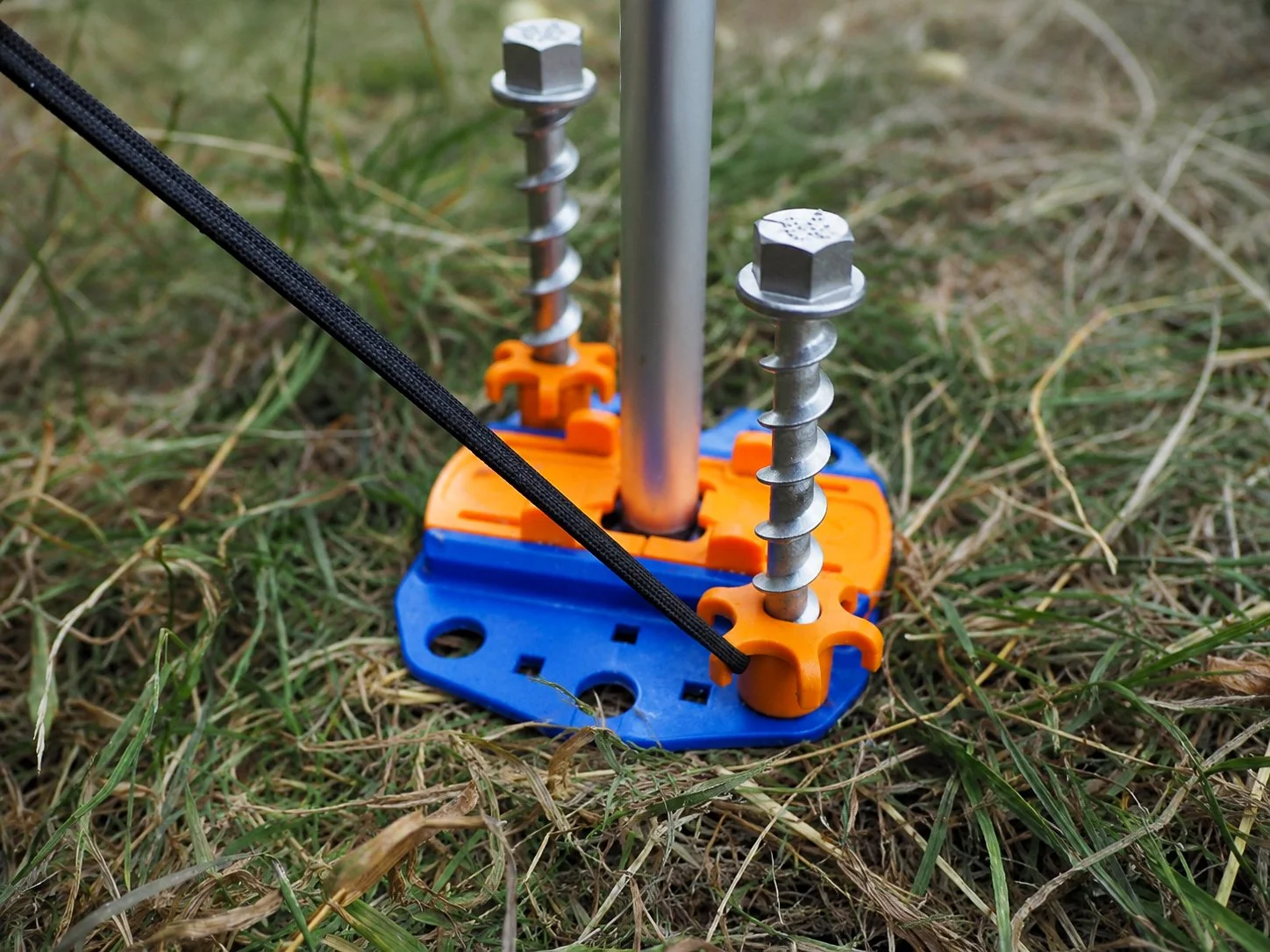
The other neat thing about the system is the Lock Nut. Because the fixing doesn't have to be screwed all the way into the ground, you can adjust the height of the connection and get your guy lines or straps properly tensioned without having to reposition the whole awning.
And if the weather suddenly turns from 'bit breezy' to 'Christ, where's that coming from?', the Fix&Go system means the awning can be released from the anchor plate without having to remove the ground fixings. That's rather handy when you're trying to get the awning safely away before it takes off for Ireland.
Screw-in Peg Normal (N) 20cm and Hooks
The standard Peggy N is the more straightforward member of the family, and probably the one most relevant to ordinary tent, tarp, gazebo and awning duties.
It's a 20cm screw-in peg made from fibreglass-reinforced, UV-resistant polyamide. Again, unlike a conventional tent peg, there's no need to batter it into the ground. You screw it in, using the 17mm head, until it stops. It doesn't necessarily need to disappear completely into the ground; the important thing is that the thread has properly bitten.
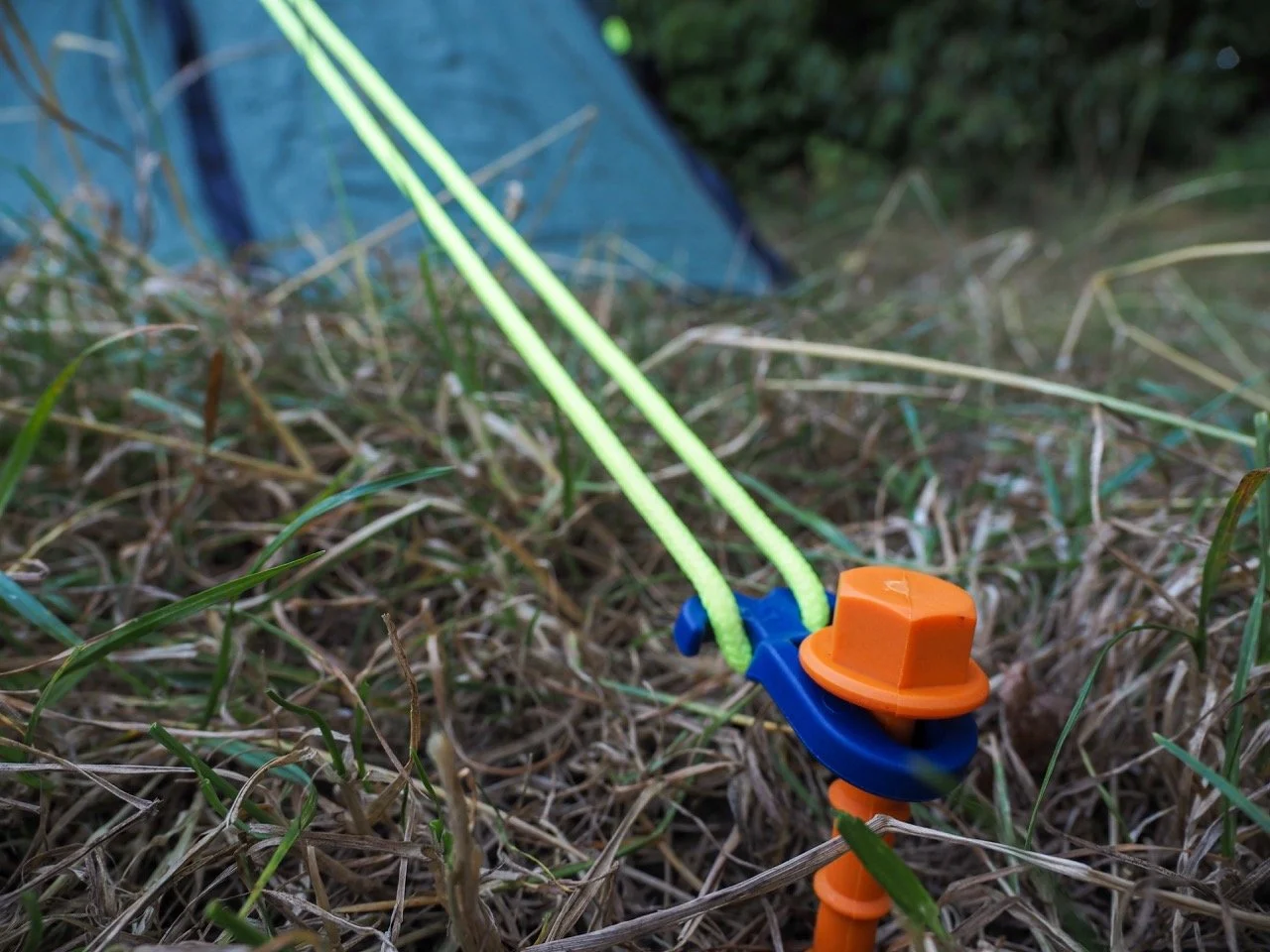
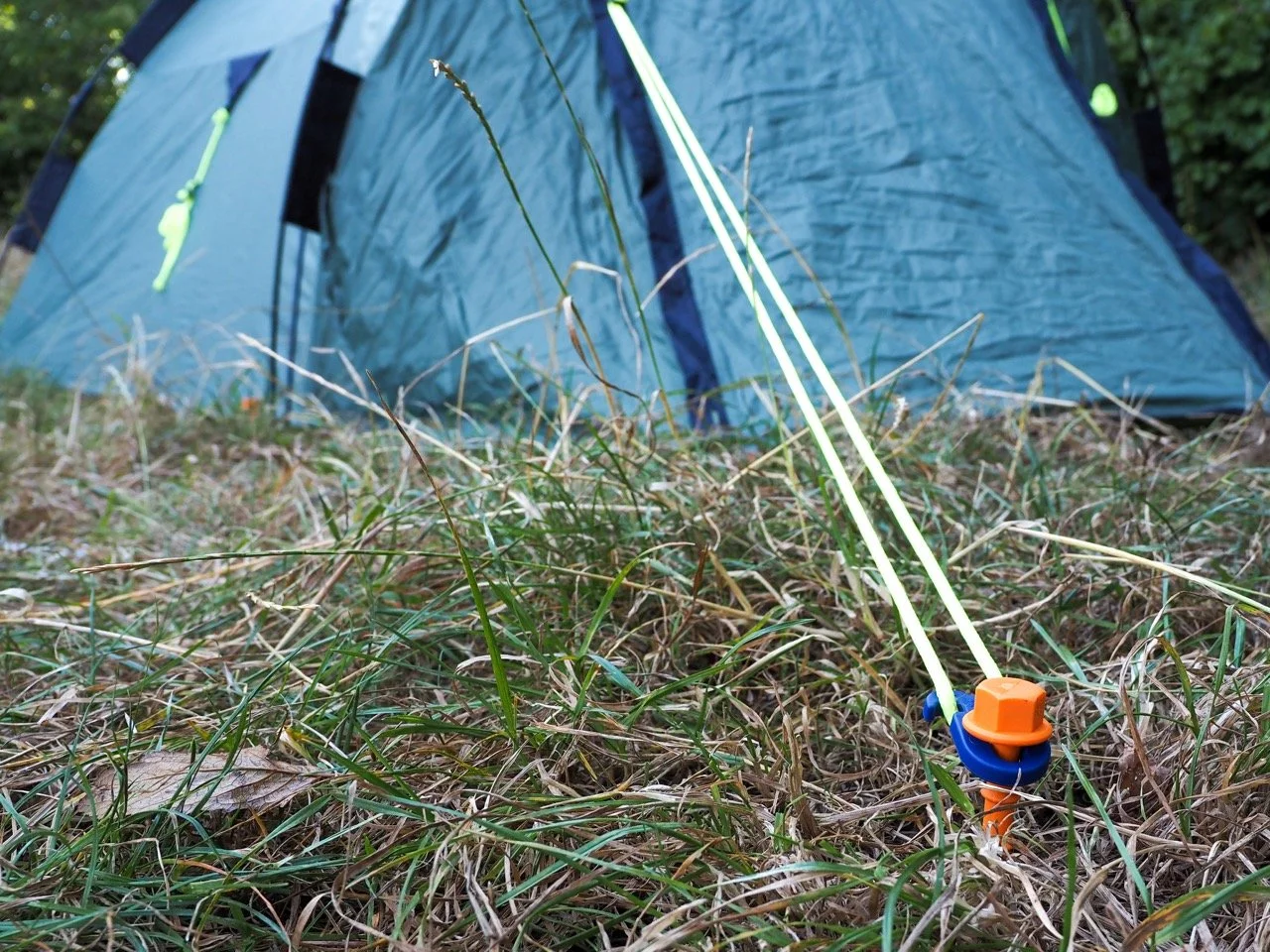
The little blue N Hooks are what make the system particularly useful. Before screwing the peg in, you slide the hook onto it. Once the peg is firmly in place, you click the hook down to the lowest practical position and attach your guy rope - unlike I did below - for photo purposes!
Why bother with that?
Because putting the tension as close to the ground as possible reduces the leverage being exerted on the peg. In simple terms, rather than your guy rope trying to yank the peg sideways from several inches above ground level, it's pulling from much closer to the point where the peg is actually gripping the earth.
It's a simple idea, but one that makes a surprising amount of sense.
And there's another advantage. Because the hook is adjustable, you don't have to screw the peg all the way down just to get the guy rope at the right height. You can stop when the peg has achieved a good grip, click the hook into the appropriate position and carry on.
In normal ground, Peggy Peg reckons the N will do the job in roughly 90 per cent of situations. In very hard or frozen ground, it recommends pre-drilling a 10mm hole, although importantly, you shouldn't keep forcing the peg once it has stopped advancing.
Fix&Go Adapter
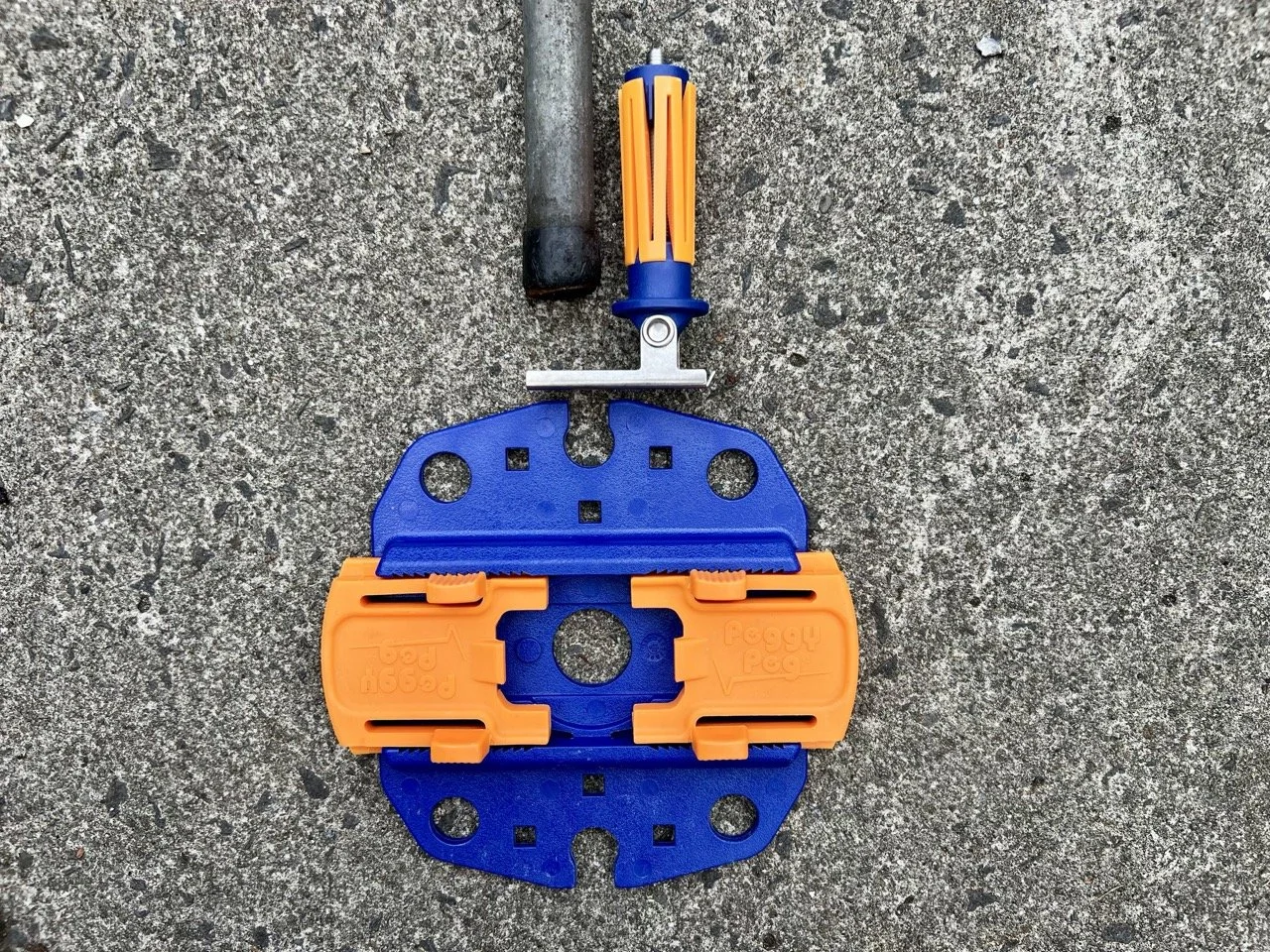
Then there's the rather clever bit of kit that initially looks like something that escaped from a box of IKEA leftovers: the Fix&Go Adapter.
This is designed for awnings that use a conventional round pole. The problem with a round pole is that it doesn't naturally fit into Peggy Peg's Fix&Go Anchor Plate. The adapter gets around that by replacing the existing end cap on the pole.
You simply remove the black cap from the end of the awning pole, insert the Fix&Go Adapter and twist it clockwise to lock it in place. It fits poles with an internal diameter between 18 and 27mm.
The adapter then slots into the Fix&Go Anchor Plate. Press the orange buttons on the plate to open the sliders, position the adapter in the recess, insert the pole and close the sliders. The pole is now effectively attached to the ground anchor.
You then secure the plate with your Peggy screw-in pegs, add the appropriate storm hook and guy line, and that's it.
Even better, you can generally leave the adapter in the end of the awning pole. Peggy Peg designed it so that it can remain there and still fit neatly back into many awning cassettes. If you do need to remove it, it takes seconds.
And that, really, is the appeal of the whole Peggy Peg system.
It's not just a collection of slightly posh tent pegs. It's a system designed around the idea that the bit of kit keeping your tent or awning attached to the ground should be every bit as well engineered as the thing you're trying to stop blowing away.
Which brings us neatly back to the bit that actually matters.
Does it work?
Well, having taken it all out in Deux Smurf, onto exposed hillsides, beaches and into some properly unpleasant winter weather, I can tell you that I wasn't exactly gentle with it.
And, despite the best efforts of the weather system, neither the awning nor the pegs decided to go exploring.
Which, after losing 90,000 photographs to a hard drive having what can only be described as an industrial-strength nervous breakdown, was about the only thing that went according to plan.
For more details, visit their UK website at: PeggyPegUK