
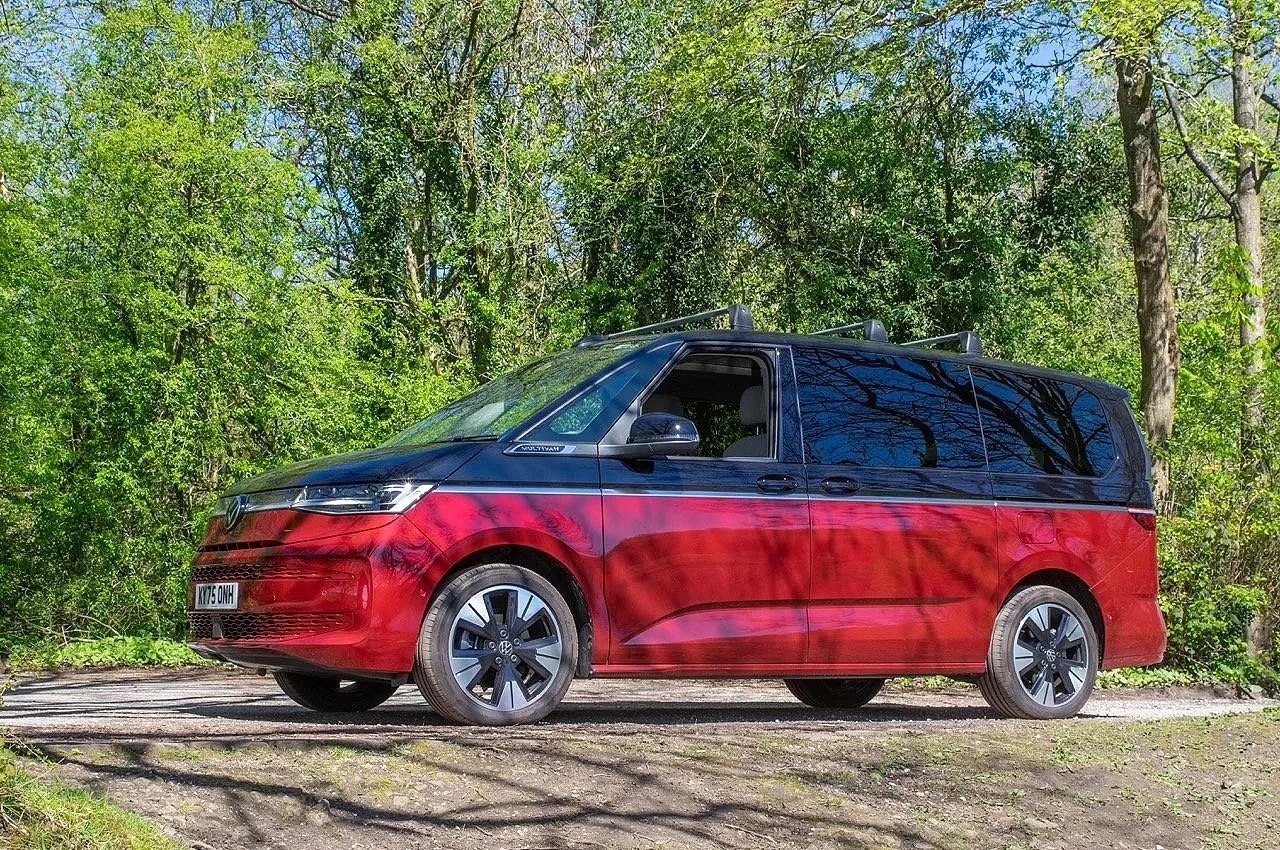
There’s something quietly reassuring about a big Volkswagen van. Not in a flashy, “look at me” sort of way, but in the same comforting manner as a decent brew or a well-worn pair of boots. The 2026 Volkswagen Multivan carries that tradition forward, but with a modern twist that’s less builder’s mate with a clipboard and more active family with a Labrador, paddleboards, and a vague plan to go camping, but mostly eat snacks in a field.
This isn’t the full-fat commercial Volkswagen Transporter, nor is it quite the laid-back, surfy Volkswagen California. Instead, the Multivan sits squarely in the middle of Volkswagen’s van-based lineup, a people carrier with van DNA, built for those who need space, flexibility, and just enough lifestyle credibility to justify a roof rack and some muddy boots in the boot.
It’s now based on Volkswagen’s MQB platform (shared with cars like the Golf), which is a posh way of saying it’s less van-like than ever before.
First Impressions: Less Van, More… Lounge on Wheels
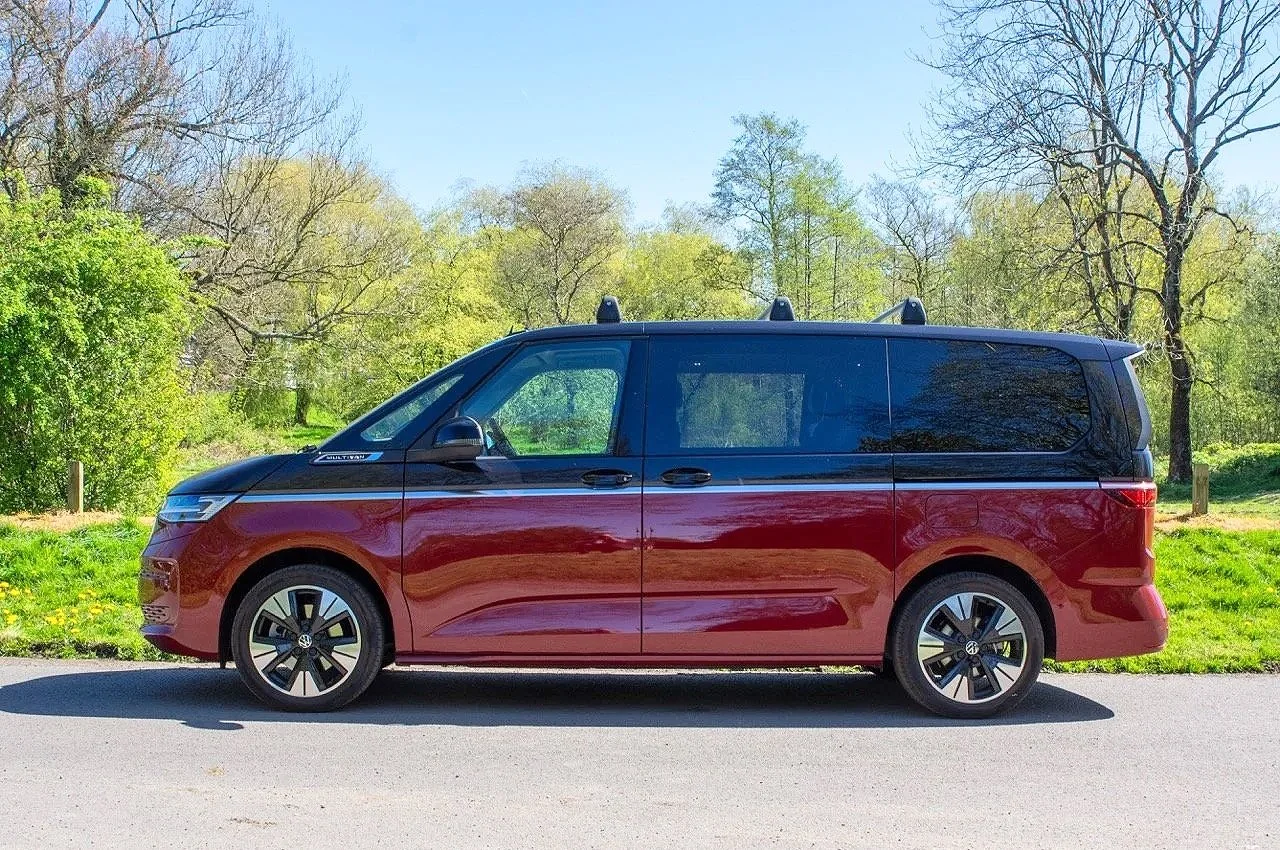
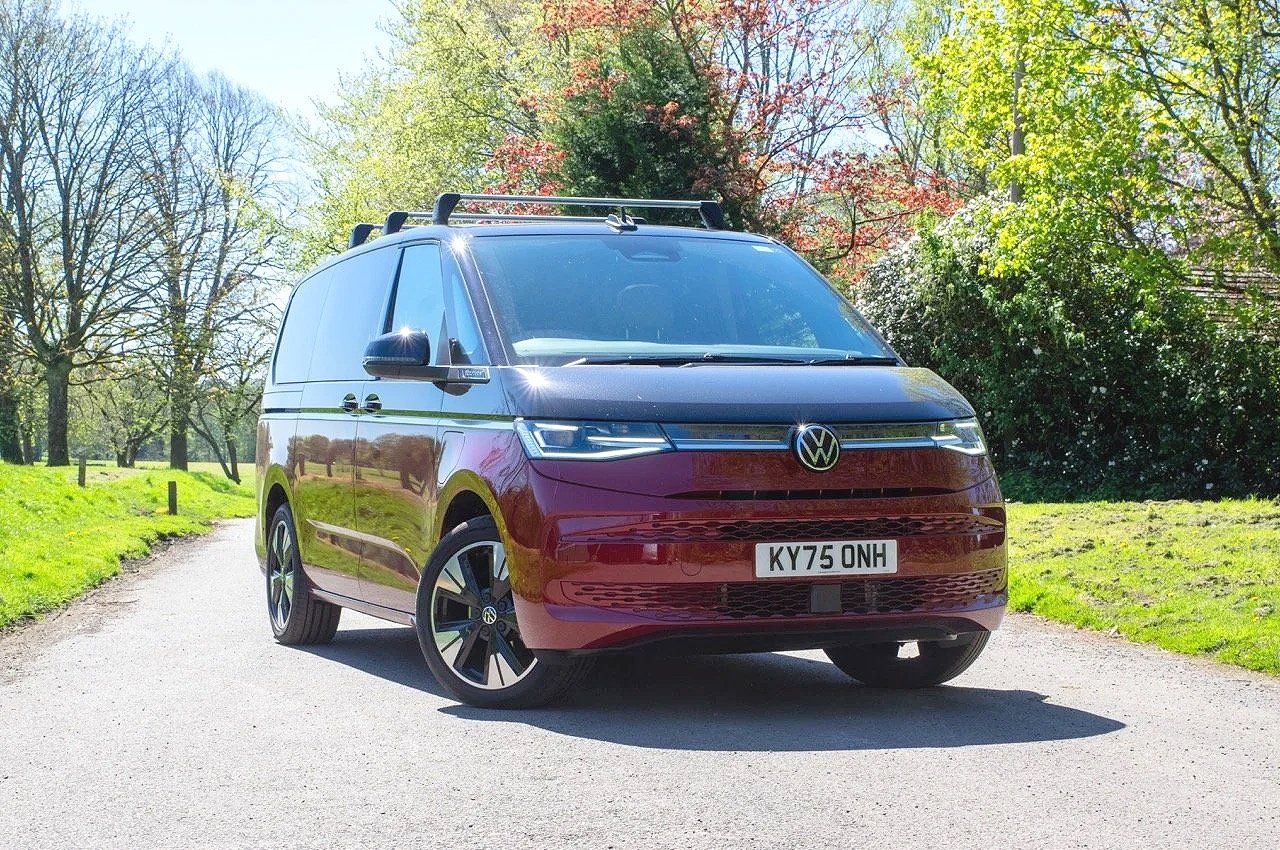
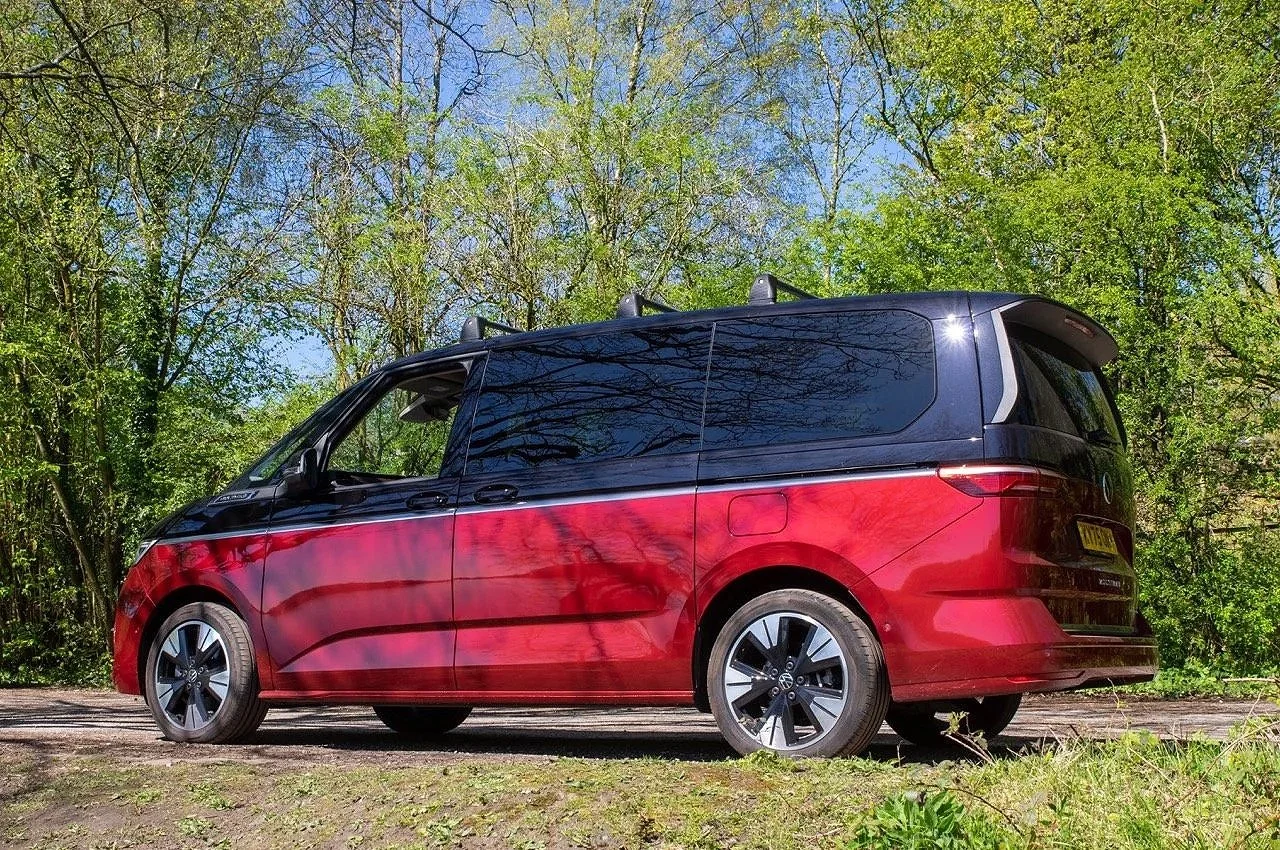
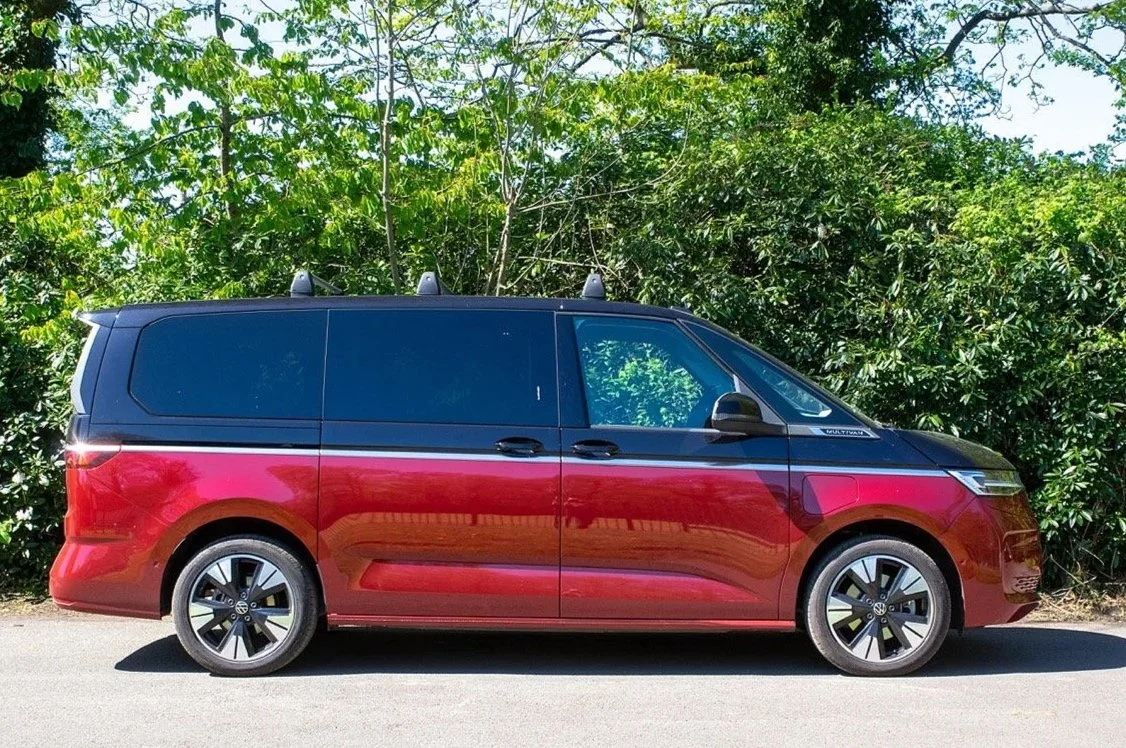
At a glance, the Multivan has softened. Gone are the slab sides and utilitarian charm of older models. In their place, you get a sleeker, more car-like silhouette, a bit of chrome here and there, and a front end that wouldn’t look out of place parked outside a middle-class yoga studio. It’s not ugly, far from it, but if you were hoping for rugged, go-anywhere vibes, you might need to look elsewhere.
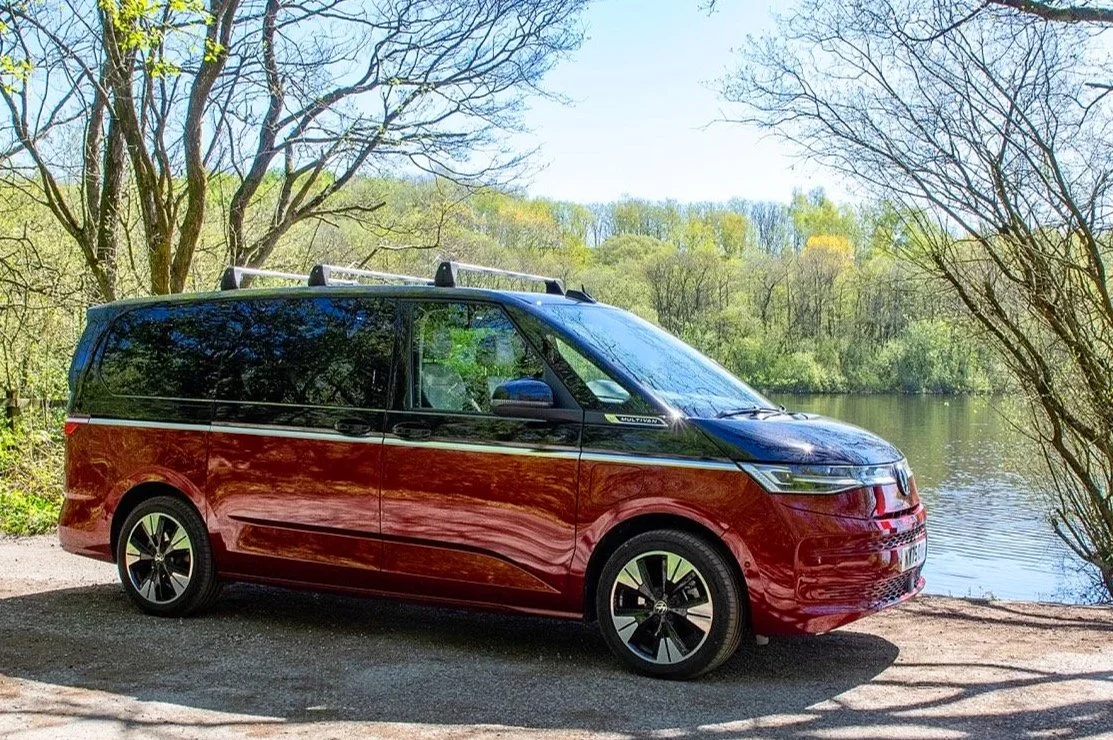
With it’s optional 17” black diamond-turned alloys, Deep Black Pearl Effect and Fortana Red Metallic paint job, and privacy glass, it’s still, it’s a handsome thing, and crucially, it still looks like it could swallow half your life without complaining.
On the Road: Surprisingly Civilised
Fire it up, and the first thing that strikes you is how un-van-like it feels. Thanks to that MQB platform, the Multivan drives much more like a large car than a commercial vehicle. The steering is light but accurate, visibility is excellent, and it doesn’t bounce you around like a poorly loaded wheelbarrow.
On A-roads and motorways, it’s genuinely impressive. It settles into a cruise with minimal fuss, soaking up miles with the kind of ease that makes you glance down and realise you’ve accidentally been doing, ahem mph, for the last 20 minutes without noticing. Wind noise is well controlled, and the suspension irons out most imperfections without turning the ride into a marshmallow.
Around town, it’s more manageable than its size suggests. Yes, it’s still a big bus, but the turning circle is decent, and the driving position gives you that commanding “king of the road” feel, just without the usual van-based compromises.
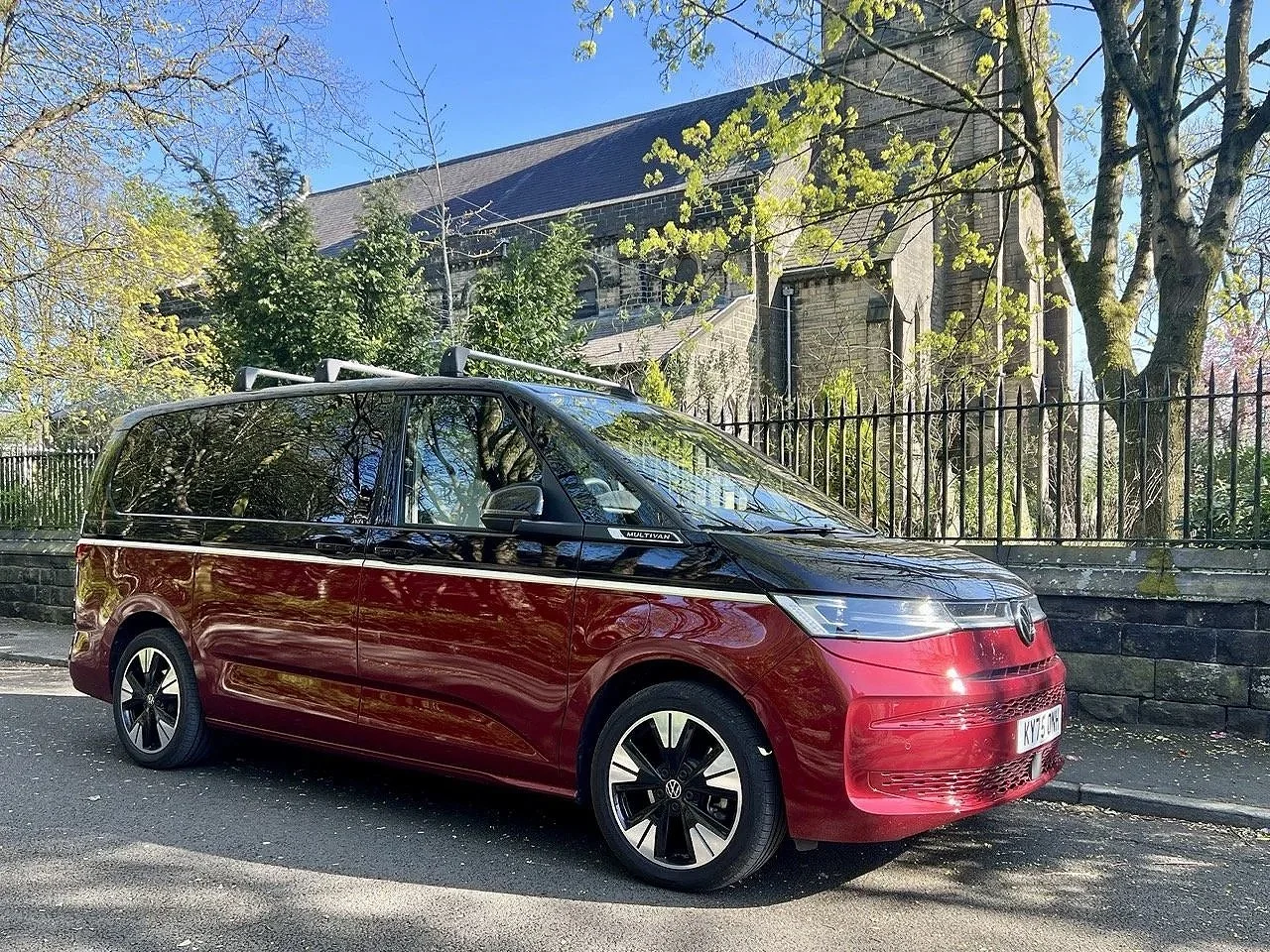
Under the bonnet, you’ll find a mix of petrol, diesel, and plug-in hybrid options depending on spec. This, the 1.5-litre 4-cylinder petrol plug-in hybrid, is particularly interesting for UK buyers, offering a decent electric-only range for short trips, school runs, supermarket dashes, and the obligatory drive to the nearest farm shop for something artisan and overpriced.
WLTP combined fuel economy suggests 99.8mpg, and depending on how and where I drove it, I saw anything between 52 and 63mpg, which overall is respectable. Oh, and you get around 55 miles of electric range.
Push it a bit harder (as much as one “pushes” a Multivan), and it remains composed. It’s not going to trouble a hot hatch, but it doesn’t fall apart either. Body roll is controlled, grip is predictable, and it feels reassuringly planted, which is helped by its all-wheel-drive system.
In short: it’s a very easy thing to live with on the road.
All Roads and Surfaces: Where It Starts to Show Its Limits
On tarmac, it’s excellent. On broken country lanes, the sort you find when you’ve trusted a sat-nav a bit too much, it still holds its own. The suspension has enough give to deal with potholes and uneven surfaces, and it doesn’t feel fragile.
But venture beyond that, onto muddy tracks, gravel paths, or anything resembling a green lane, and the Multivan starts to look a bit sheepish. Not because traction is limited when things get slippery, no, just its ground clearance is quite modest. It’ll handle campsites, farm tracks, and slightly questionable National Trust car parks without any drama, but proper off-roading? Not its game.
Interior: The Real Party Piece
Step inside, and this is where the Multivan earns its keep.
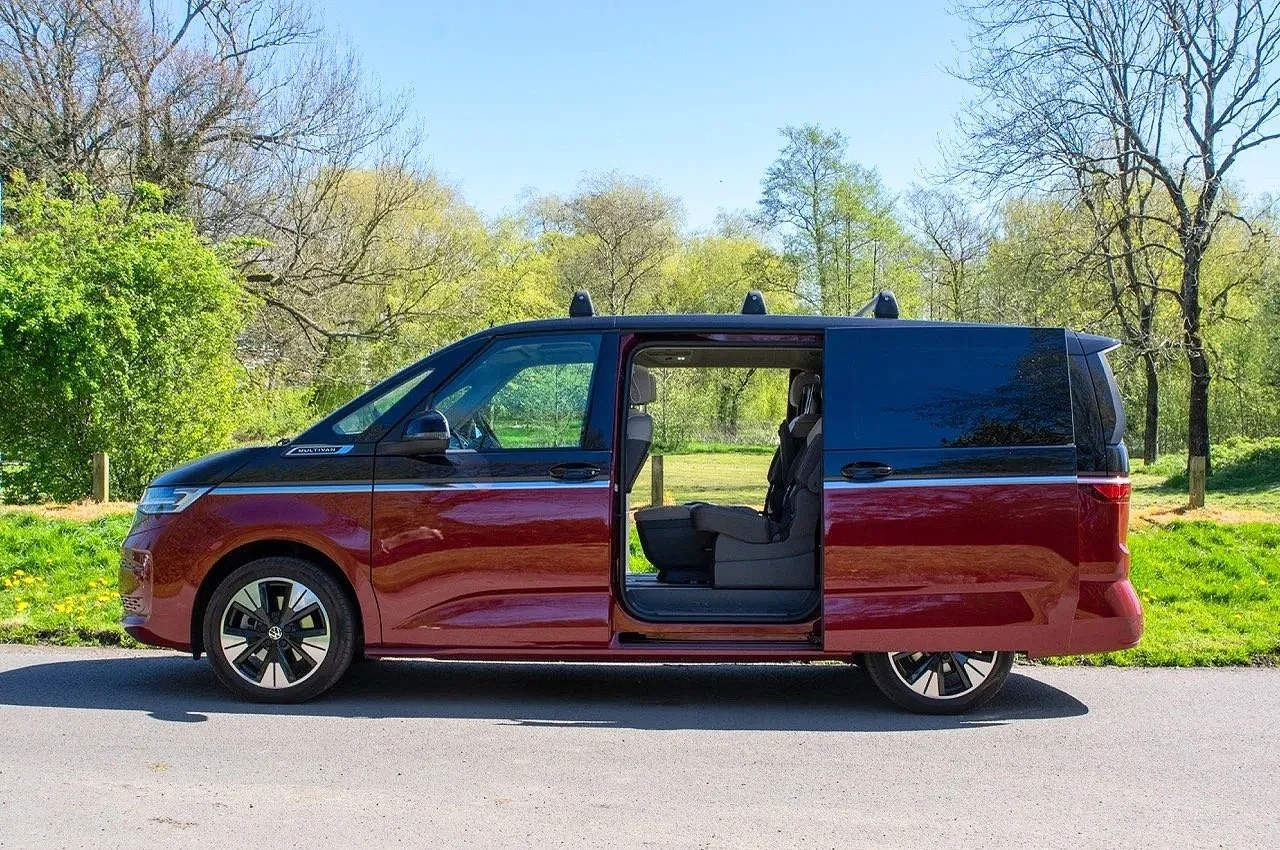
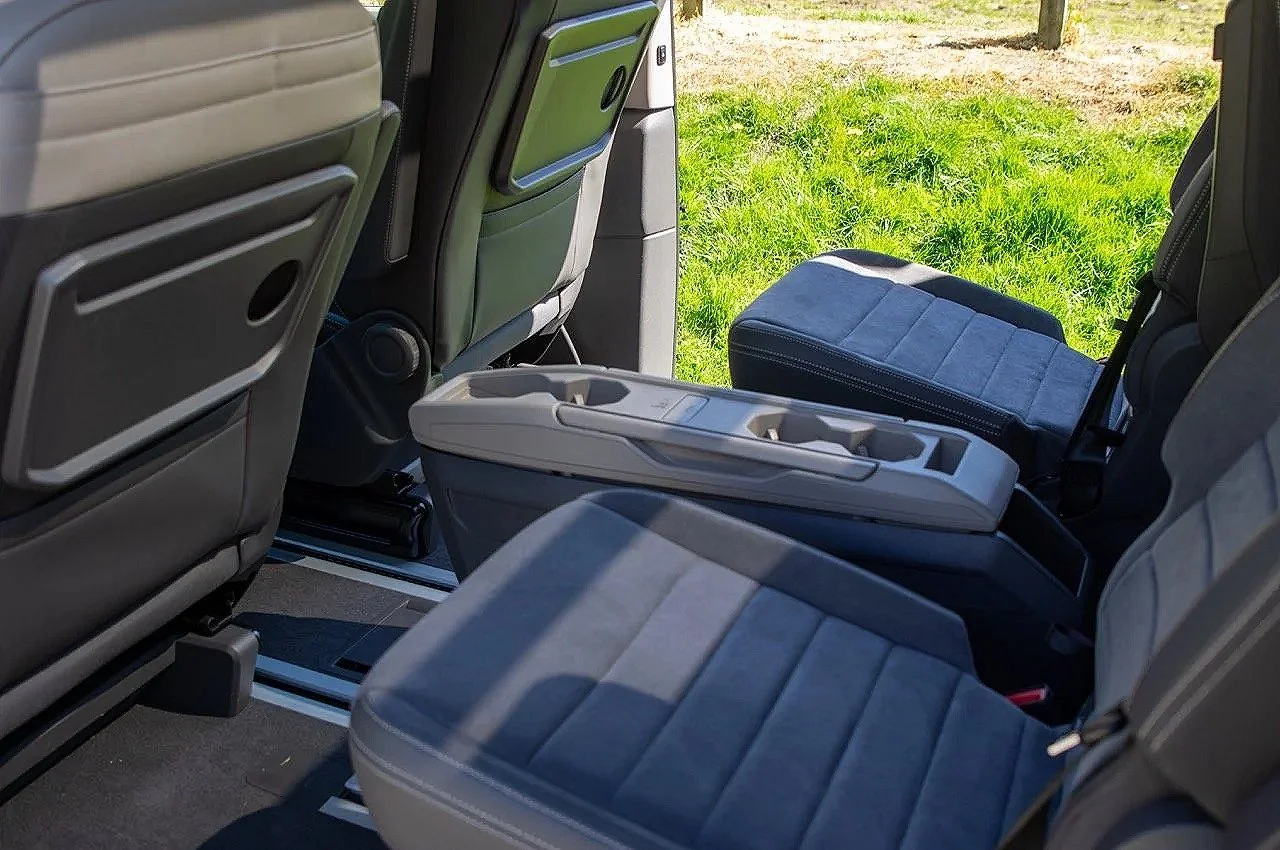
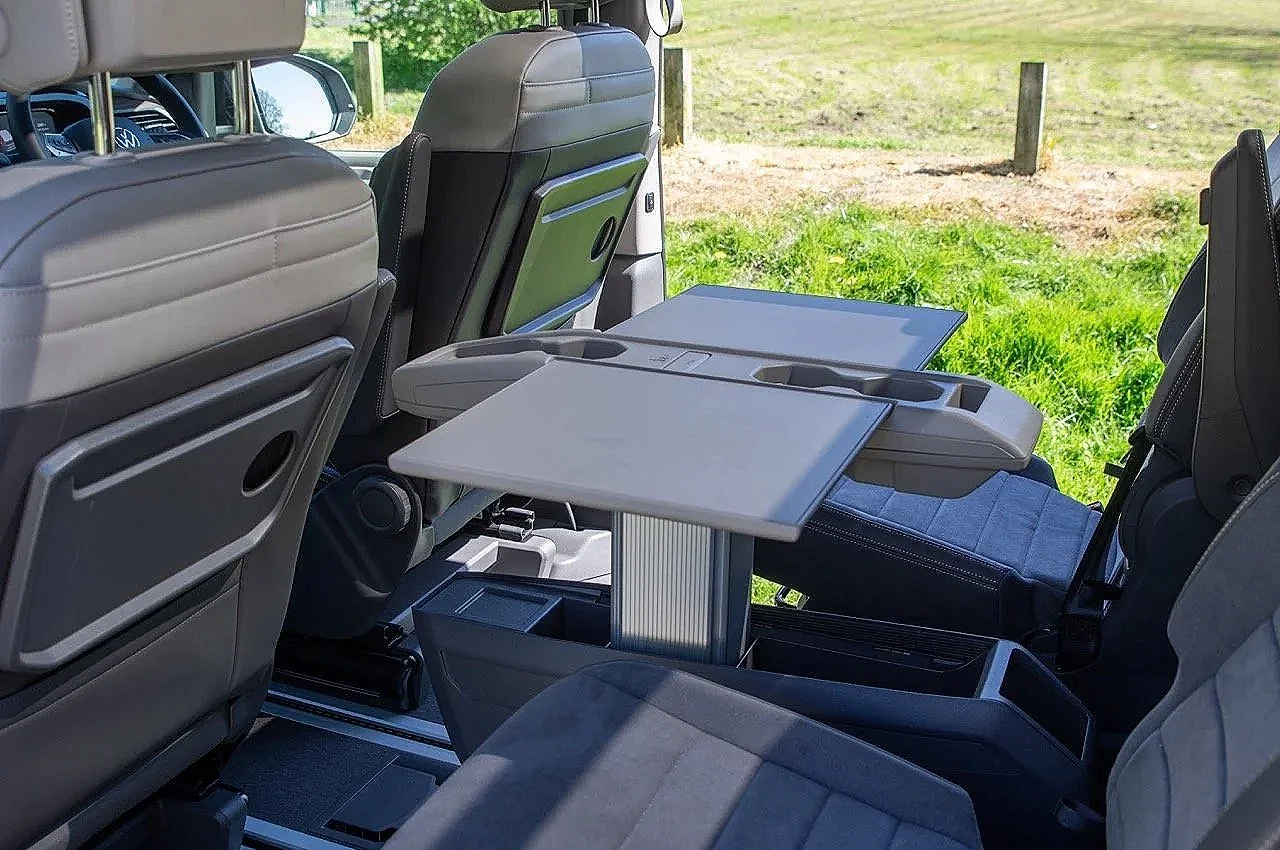
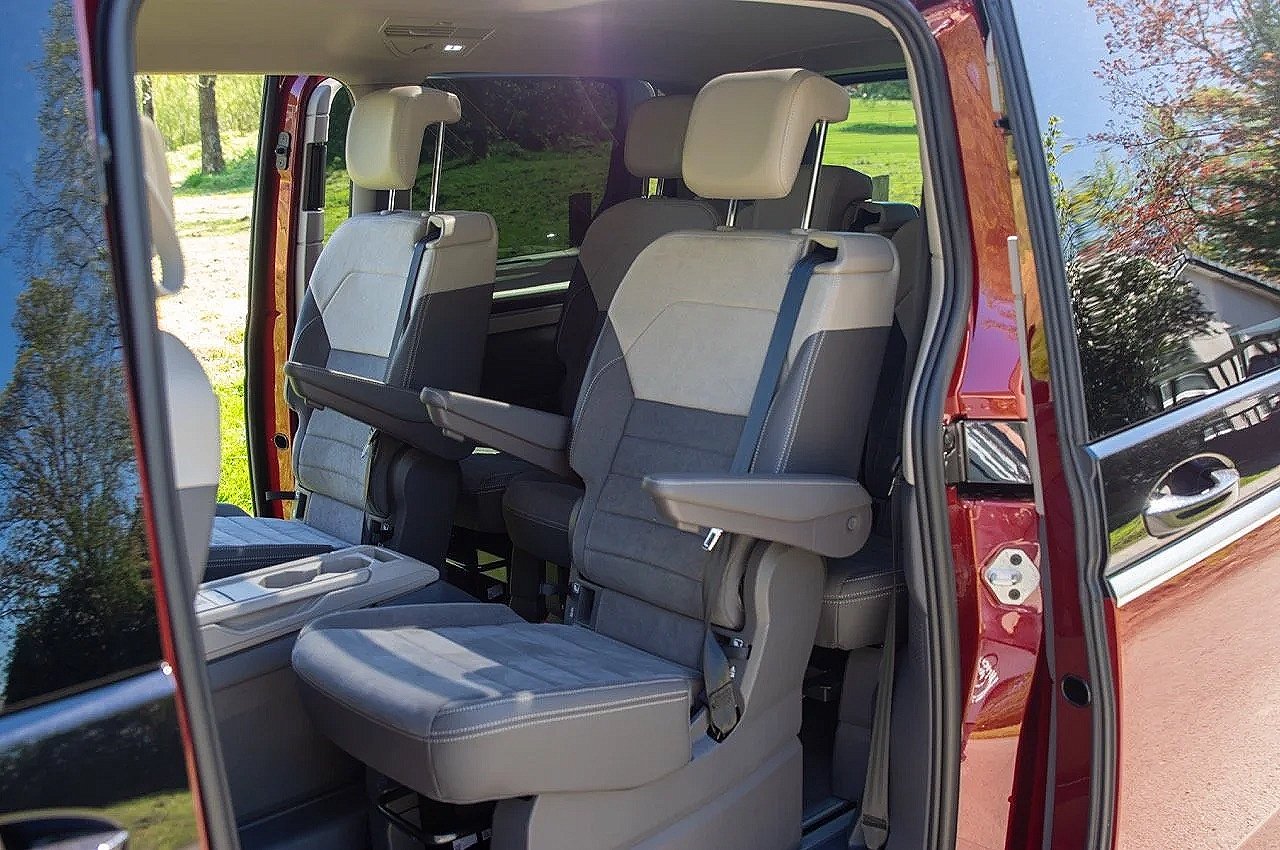
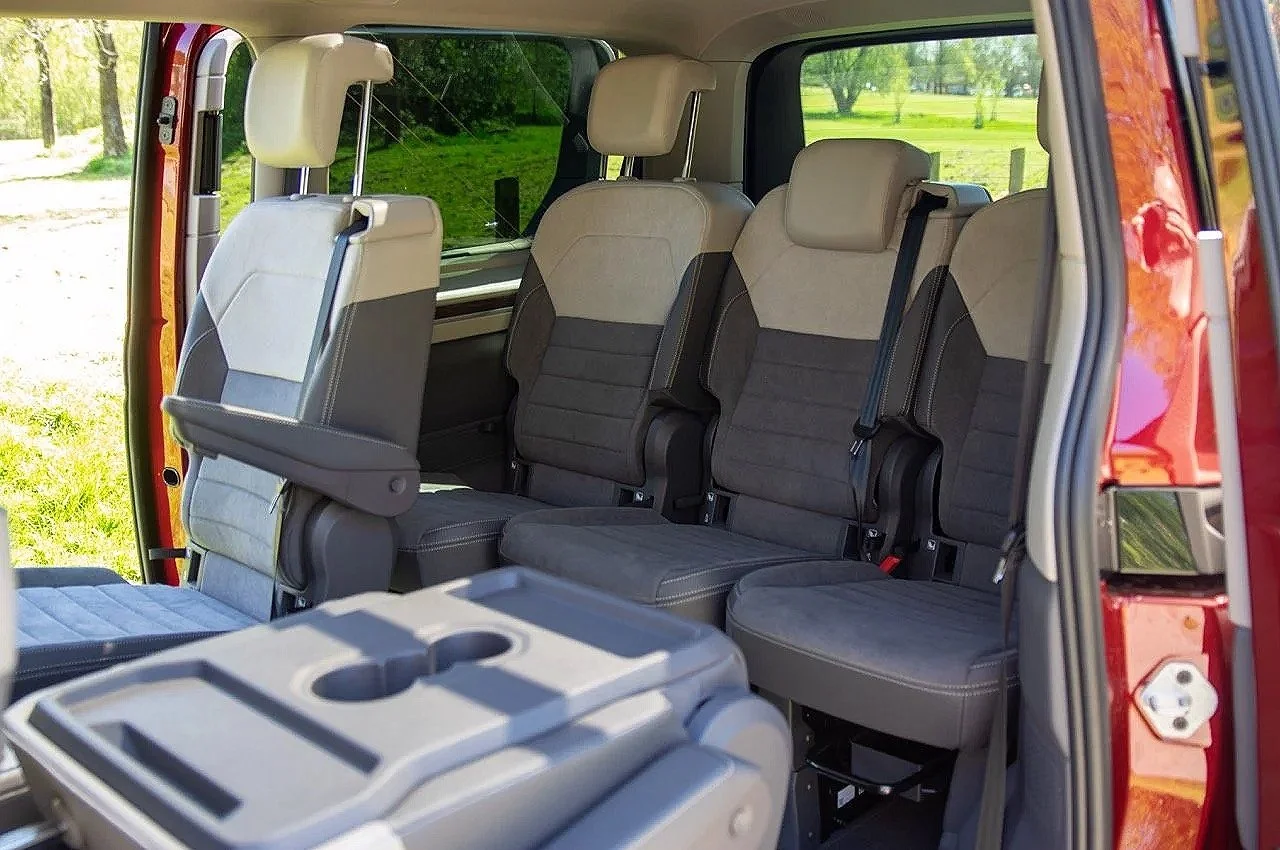
The cabin is spacious, airy, and impressively flexible. This version had the optional 7-seat Conference package with 2 individual 2nd row seats with armrests and pop up table, and 3-rear seats. For your convenience, all seats can be moved, or removed entirely, giving you a level of configurability that would make a Swiss Army knife blush. Want a lounge? Done. Need a load hauler? Easy. Fancy a mobile picnic setup? Why not.
The seats themselves are comfortable, even on longer journeys, and there’s plenty of headroom for everyone, even the tall mate who always ends up in the back. Storage is generous too, with cubbies, trays, and compartments dotted about like Easter eggs.
Materials are a bit of a mixed bag. Some areas feel properly premium, while others remind you that this is still, at heart, a van. It’s not a deal-breaker, but it’s noticeable.
Living With It: Dogs, Gear, and General Chaos
If your life involves muddy dogs, camping gear, bikes, or just an alarming amount of “stuff,” the Multivan is your friend.
The boot space is vast, especially with the seats adjusted or removed. Loading is straightforward thanks to the wide opening and relatively low load lip. A muddy Lurcher can leap in without too much effort (and without you needing to perform a deadlift), and there’s enough room for crates, bags, and whatever else you’ve thrown in at the last minute.
Electric sliding doors on both sides are a godsend in tight car parks, and they make loading kids, dogs, or awkward gear much easier.
Cleaning it out after a muddy weekend? Not too painful. The flooring is reasonably durable, though you might still wince the first time a pair of filthy boots makes contact.
Tech and Pet Peeves: Here We Go…
Now, let’s talk about the elephant in the room: technology.
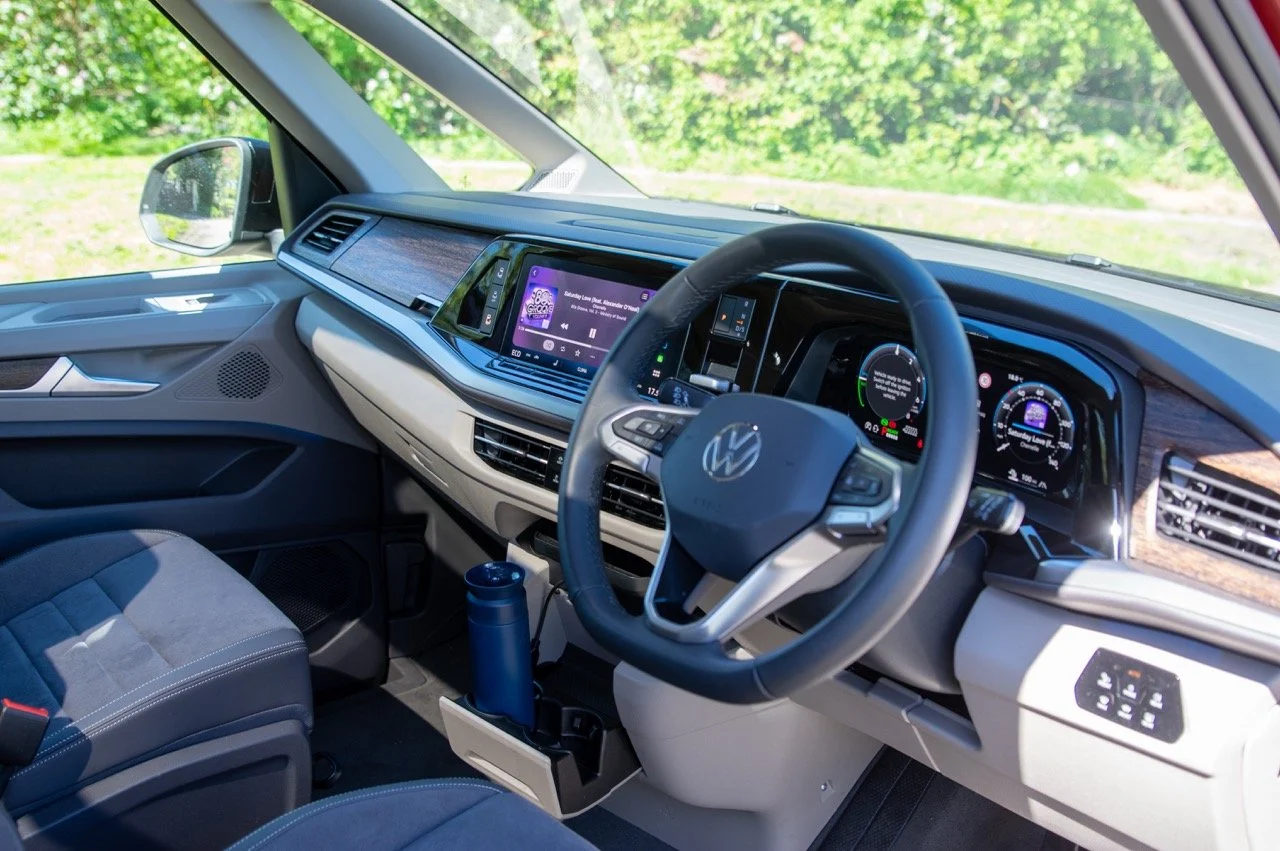
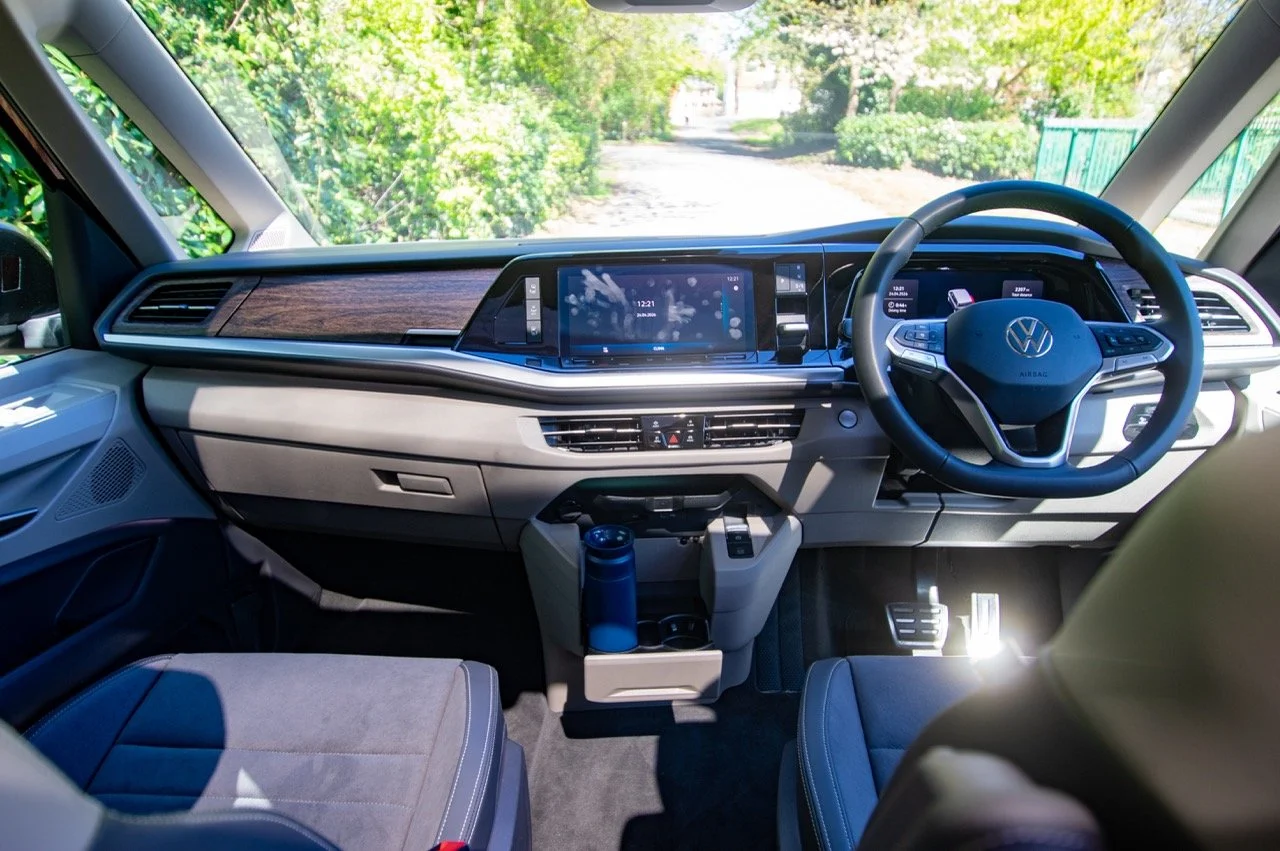
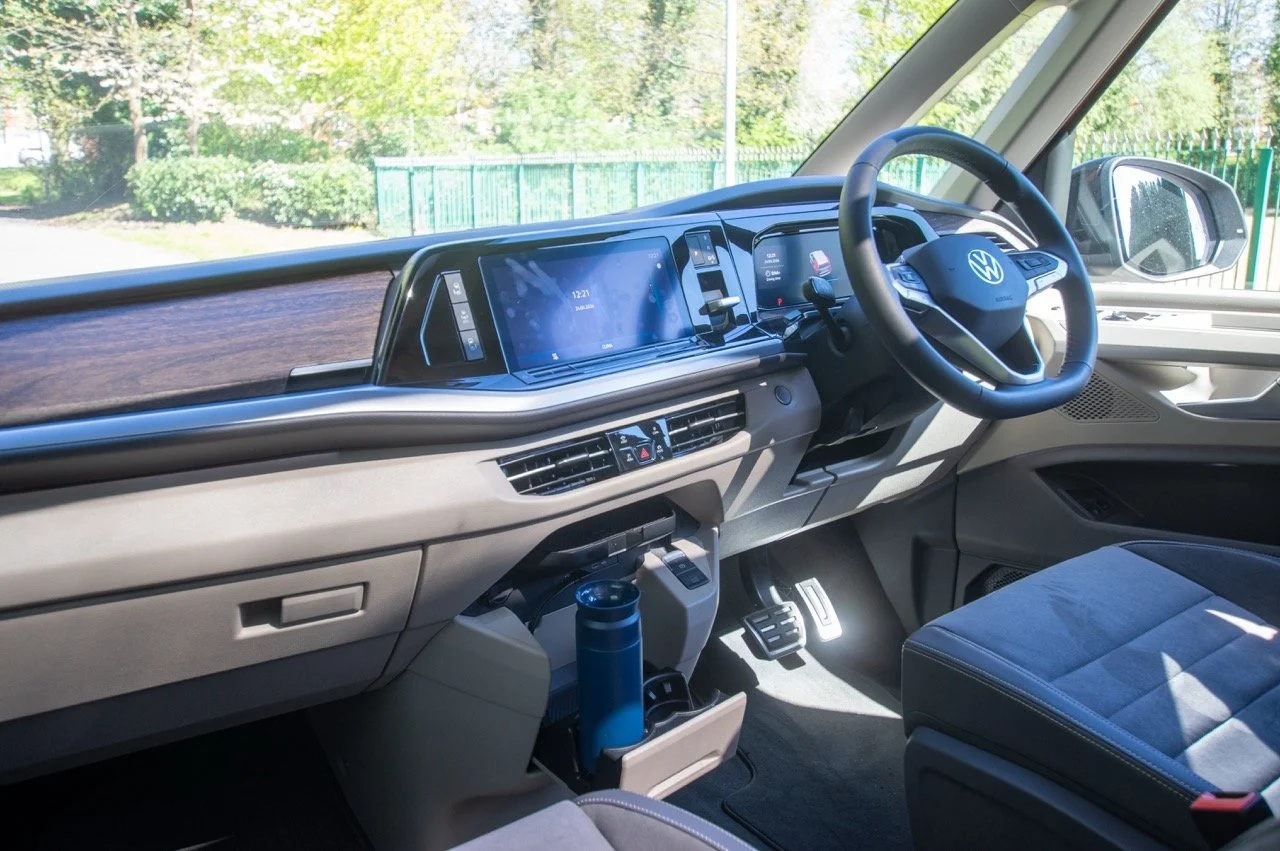
Volkswagen has gone all-in on touchscreens, and while the infotainment system is slick and responsive enough, it does come at a cost. Key controls, like climate settings, are buried in menus, which is about as practical as hiding your kettle in the loft.
There are touch-sensitive sliders, haptic buttons, and enough digital wizardry to make you feel like you’re piloting a spaceship. But when you just want to turn the heating up without taking your eyes off the road, it becomes a faff.
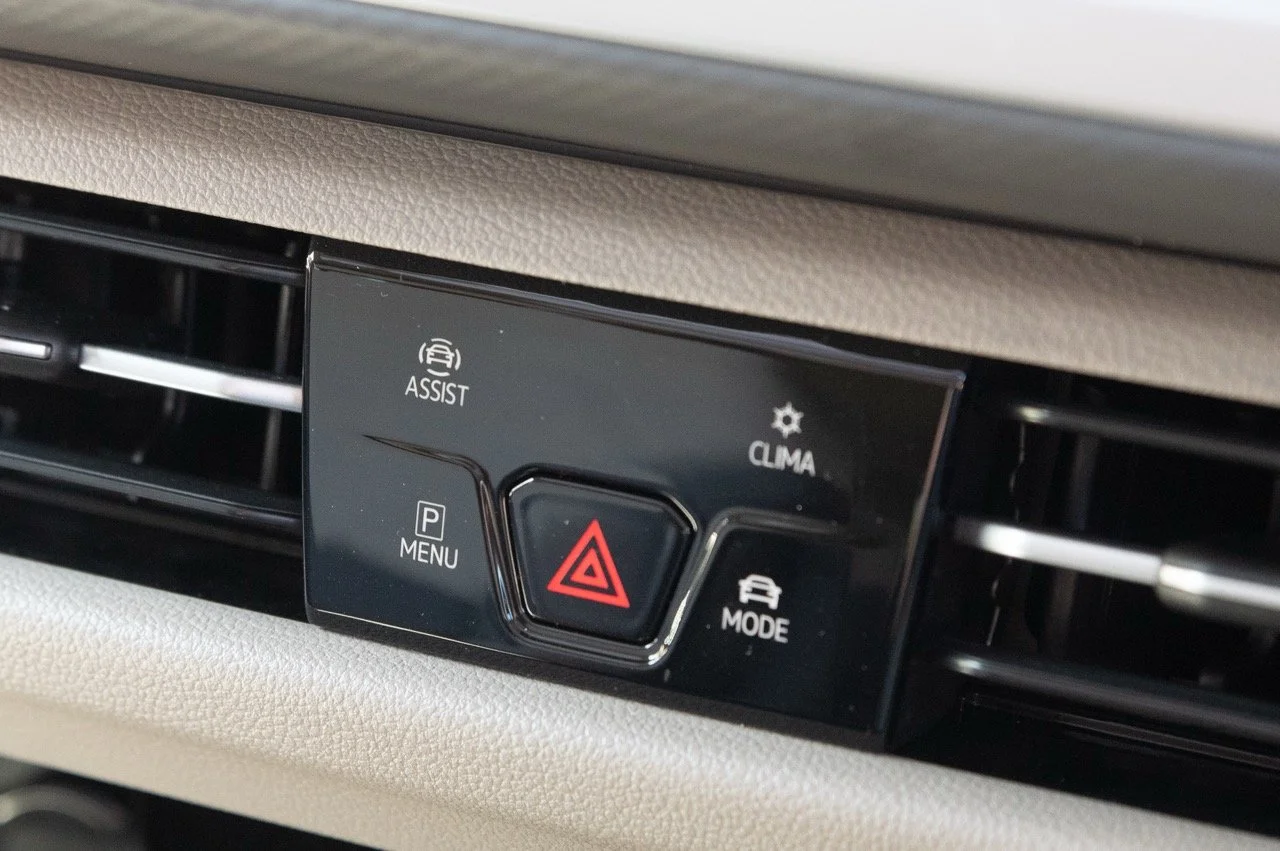
Driver assistance systems are plentiful, including lane departure warning, adaptive cruise control, and more. They work well enough, and thankfully there’s a switch on the dash that takes you straight to a menu in which you can turn them off.
In short: it’s clever, but not always user-friendly. And yes, proper dials for heating would still be better. Always.
Verdict: A Brilliant Family Bus (With Caveats)
The 2026 Volkswagen Multivan is, at its core, a very clever bit of kit. It takes the practicality of a van and blends it with the comfort and drivability of a car, creating something that’s genuinely easy to live with day-to-day.
For families, adventurers, and anyone who regularly finds themselves transporting a mix of people, pets, and paraphernalia, it makes a lot of sense. It’s comfortable, versatile, and far more refined than you might expect.
But, and it’s a noticeable but, it’s not the rugged, go-anywhere machine some might hope for. Off-road ability is limited, and the tech-heavy interior won’t be to everyone’s taste, especially if you value simplicity over screens.
Still, if your adventures are more “weekend camping with a decent coffee setup” than “expedition into the wilderness,” it fits the bill nicely.
Overall it’s a cracking all-rounder that’s swapped a bit of old-school toughness for modern comfort and usability. Not perfect, but very, very good at what it’s designed to do.
Website: https://www.volkswagen-vans.co.uk/en/new-vehicles/multivan.html
Price: £50,683 (as tested: £75,221)