Adventures in a Commercial Land Cruiser
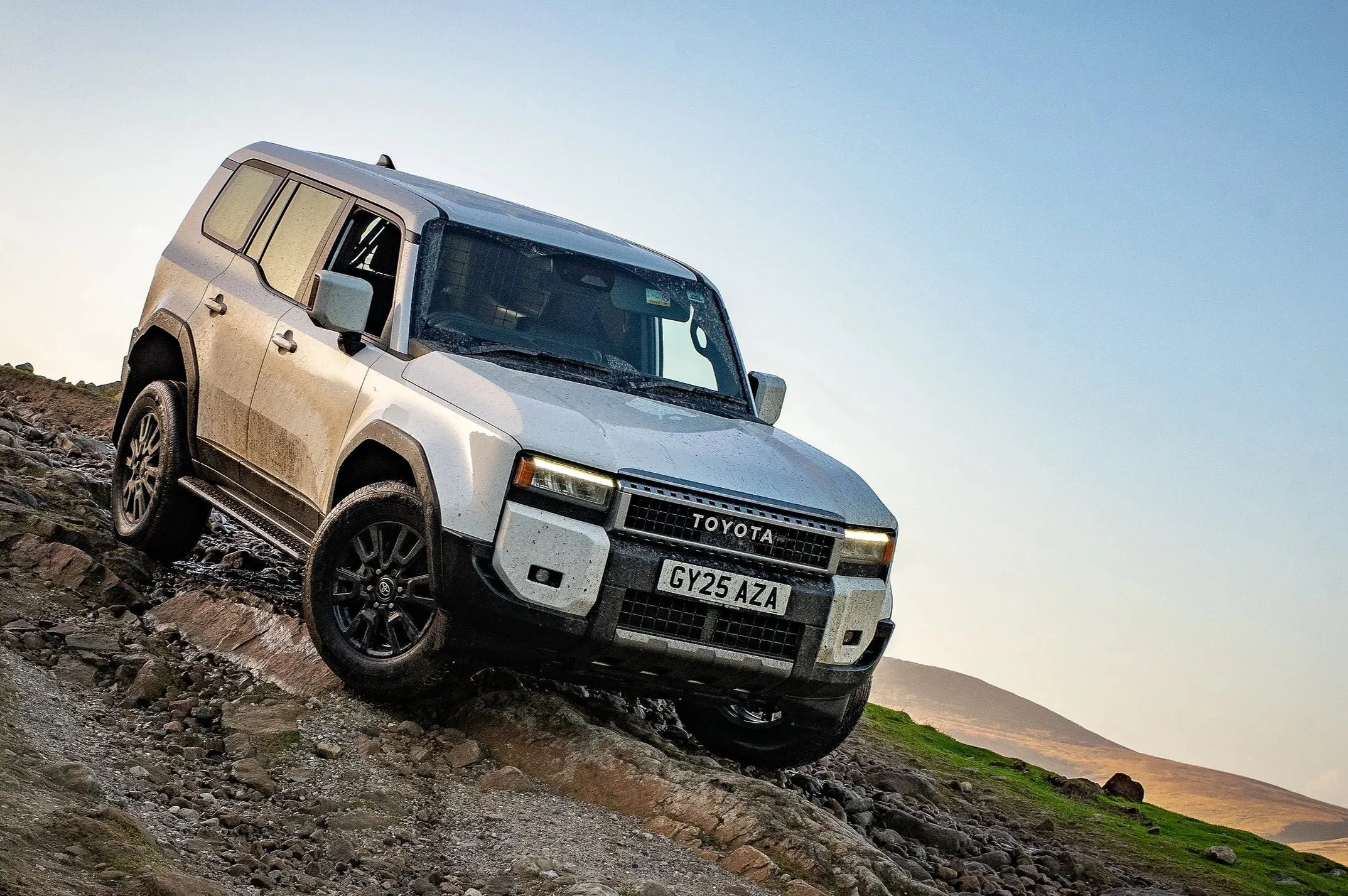
Toyota has done something slightly odd, slightly brilliant, and very… British with the new Land Cruiser 250.
On the surface, the passenger version is exactly what you’d expect: big, boxy, unapologetically old-school and clearly designed by people who believe a vehicle should survive more than one muddy winter. It’s a modern Land Cruiser that nods heavily to its heritage while still being comfortable enough for long motorway slogs and civilised enough (ish), not to feel like farm machinery on the school run.
Then there’s the Commercial
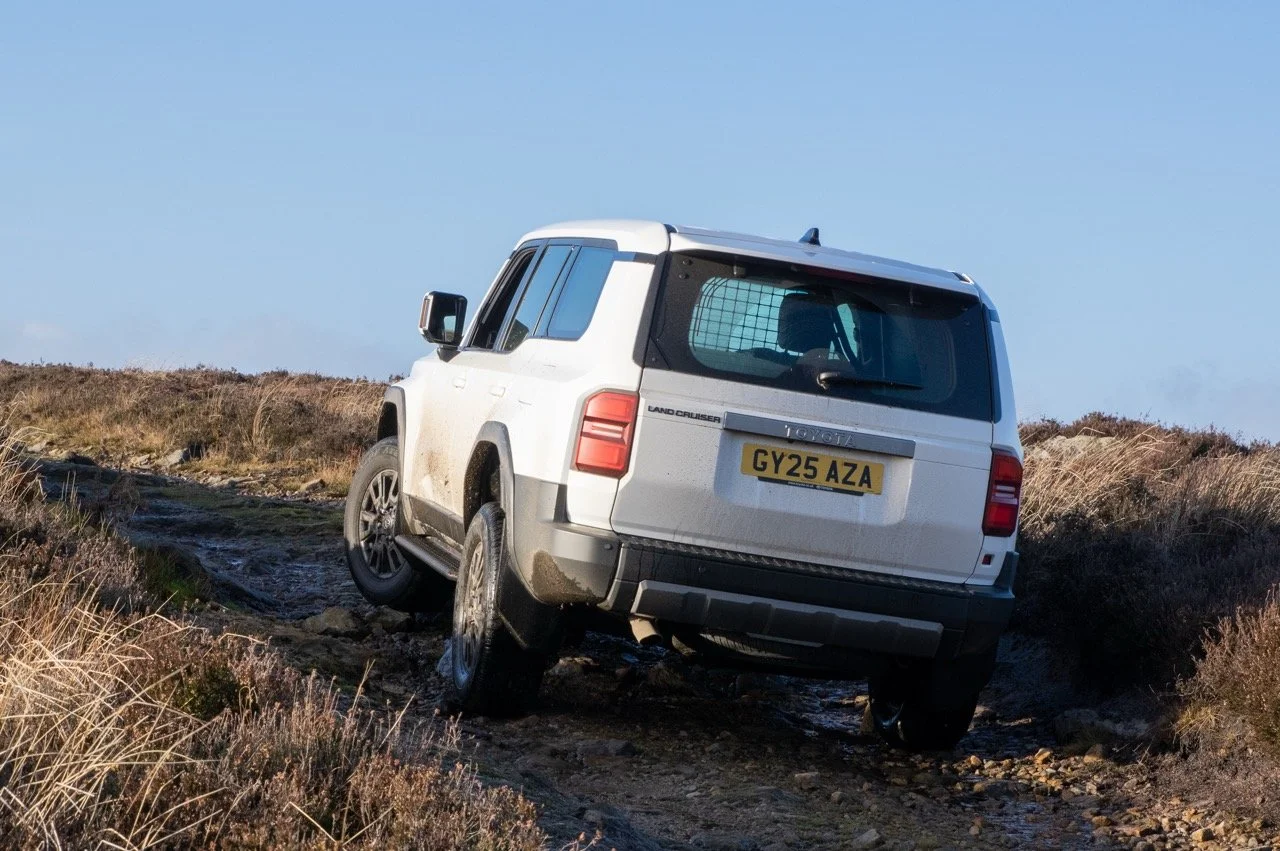
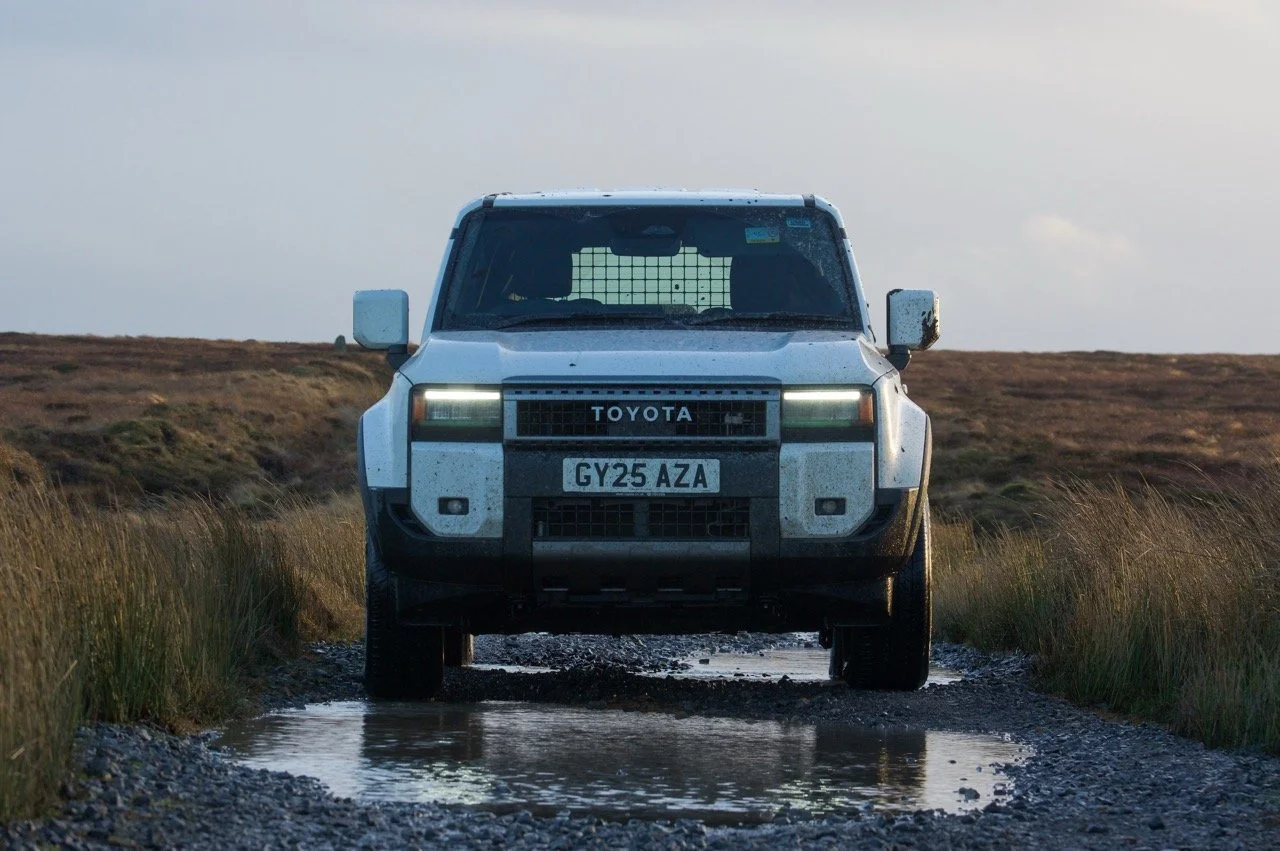
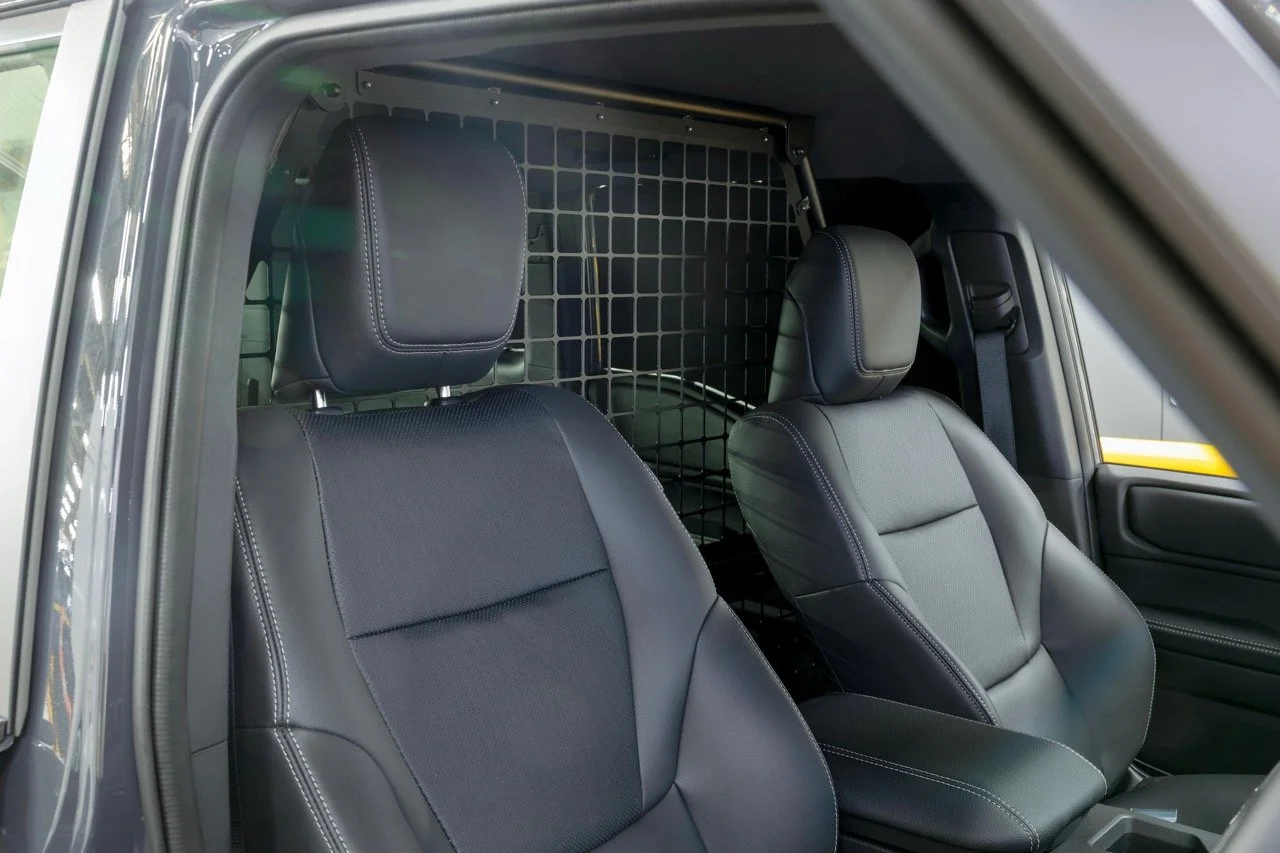
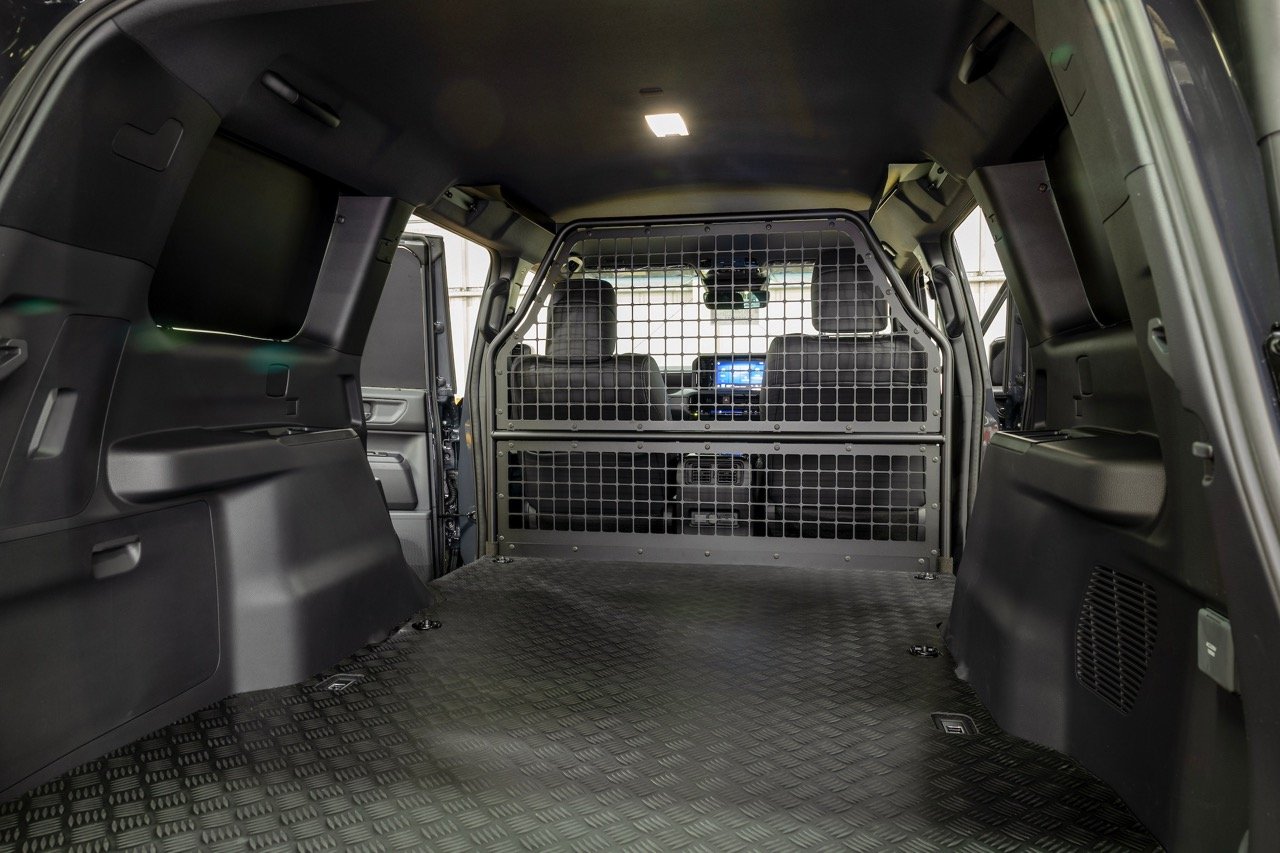
Same ladder-frame chassis. Same proper four-wheel drive. Same off-road tech and pedigree. But instead of rear seats and family-friendly trim, you get a steel bulkhead, a vast flat load bay, and the quiet understanding that this exists because Britain loves a tax loophole almost as much as it loves muddy lanes.
Officially, it’s for farmers, utilities, and businesses needing to reclaim VAT and dodge Benefit-in-Kind. Unofficially, it’s a Land Cruiser stripped back to the essentials — and that’s precisely why it makes such an intriguing companion for a week of definitely-not-commercial use, including a properly epic day green laning.
A Quick Bit of Context
Last year I was invited to Burnaston, Toyota UK’s headquarters, to watch the Commercial being built and to drive it on local roads and their purpose-built off-road course (click here for the full nerdy details).
This time, though, it wasn’t a curated launch event. This was real life: school runs, commutes, long drives, and a few days out on the lanes to see what it’s like when it’s not being politely demonstrated by someone in a branded jacket.
First Impressions: From Luxury Pick-Up to Bare-Knuckle 4x4
Jumping straight out of a Ford Ranger Stormtrak and into the Land Cruiser 250 Commercial was, I’ll admit, a bit of a shock.
Where the Ranger cossets you with comfort and an almost SUV-like sense of calm, the Land Cruiser brings you back down to earth with a firm thud. The steering is heavier. The engine is noisier. Everything feels more mechanical, more deliberate, more… honest.
You could argue that’s exactly what you’d expect from a commercial vehicle. The surprise is that the passenger version isn’t massively different. This isn’t pretending to be soft. It’s engineered to last.
The Run North
After a week of commuting and the usual trip out, I decided a proper ‘laning adventure was required.
My destination was Yorkshire, Wreaks Lane to be precise, just outside Grewelthorpe, south of Masham — about 101 miles and just over two hours from Muddy Towers via the M62 and A1(M).
Despite the agricultural soundtrack, motorway cruising is actually very relaxed once you’ve wrestled the ADAS systems into submission, which is not as straightforward as it should be. There’s a fair bit of menu-diving required before the car stops telling you how to drive.
Still, once settled, it just lopes along, big tyres humming, suspension doing its thing, feeling like it could cross a continent without breaking sweat.
Wreaks Lane: Scenic, Not Savage
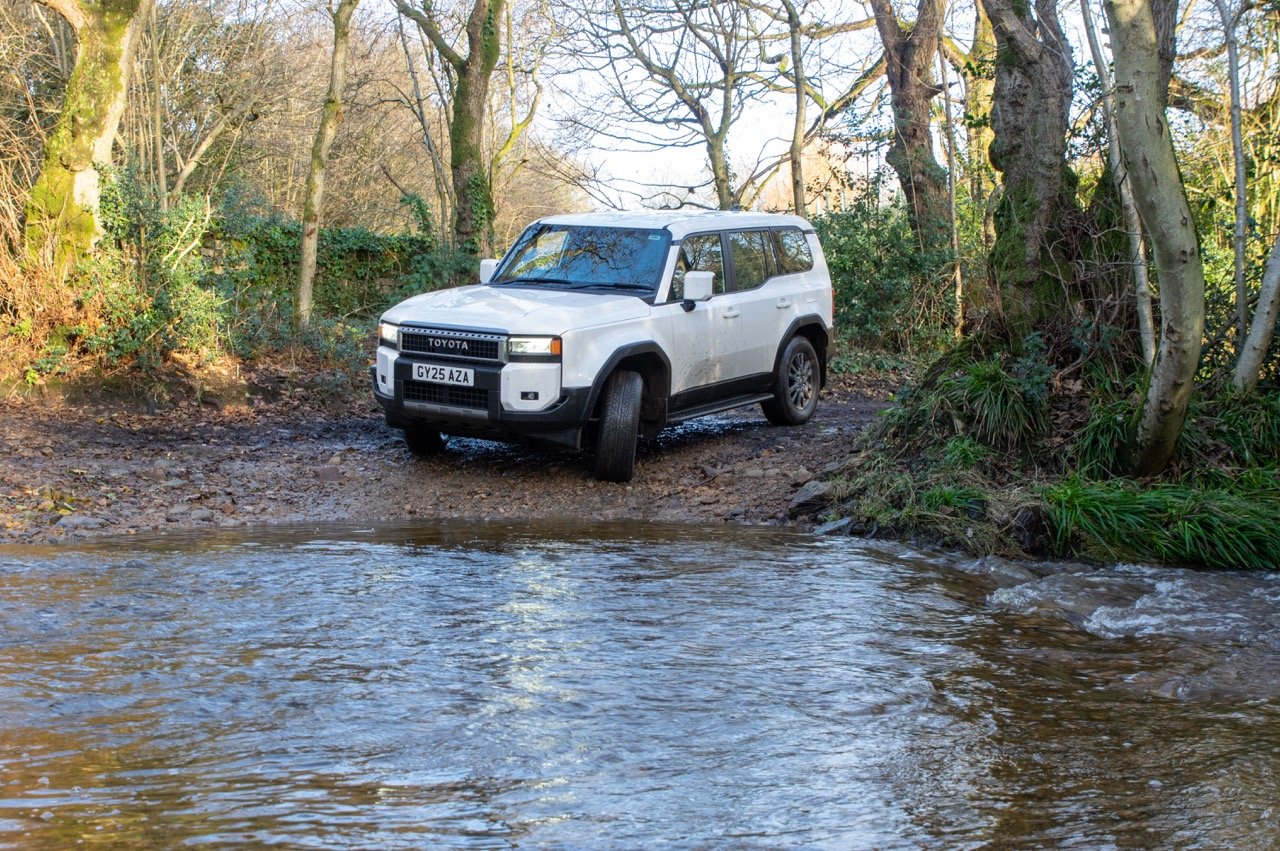
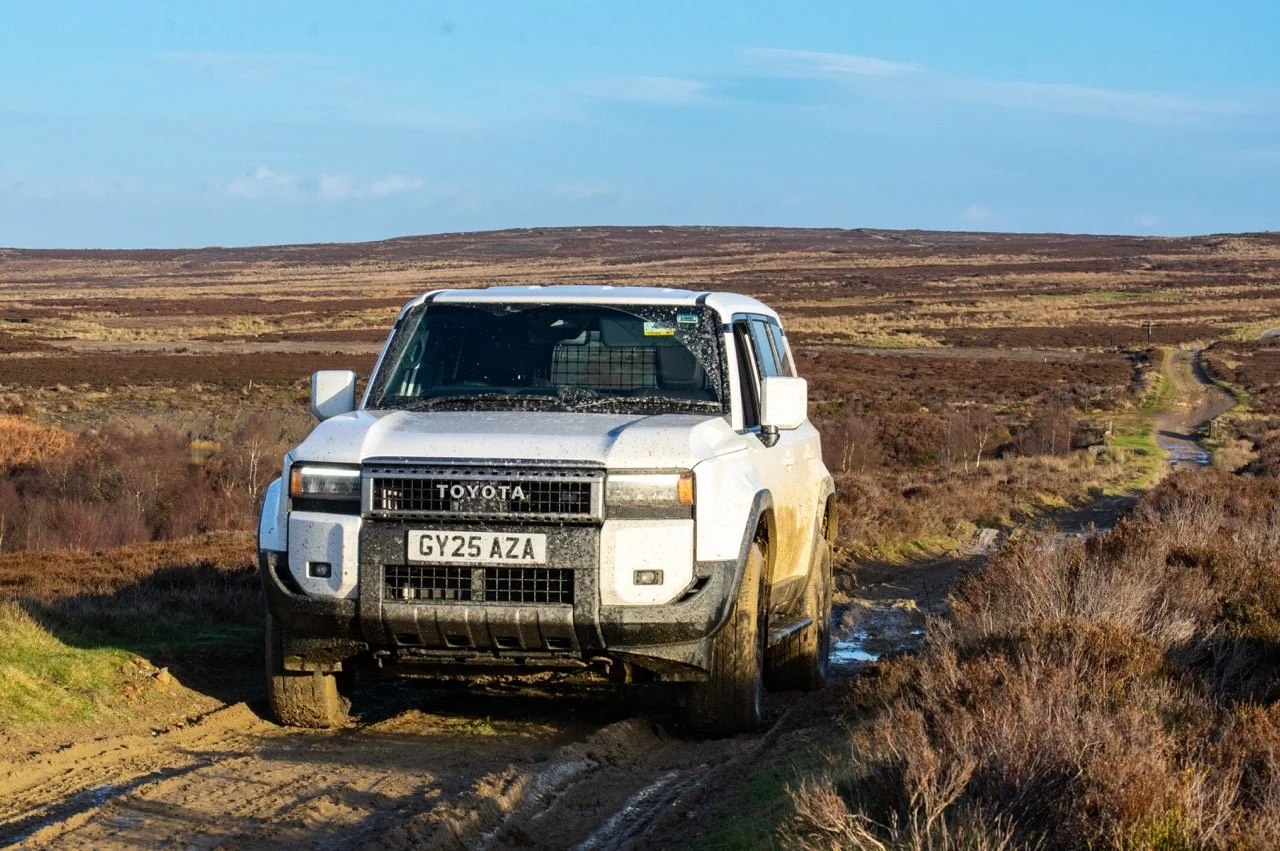
Wreaks Lane is more picturesque than punishing. It begins with a wide, muddy stretch leading to a water crossing that, on this dry day, would have been manageable in something like a soft-roader. (I know — I’ve driven it in one years ago).
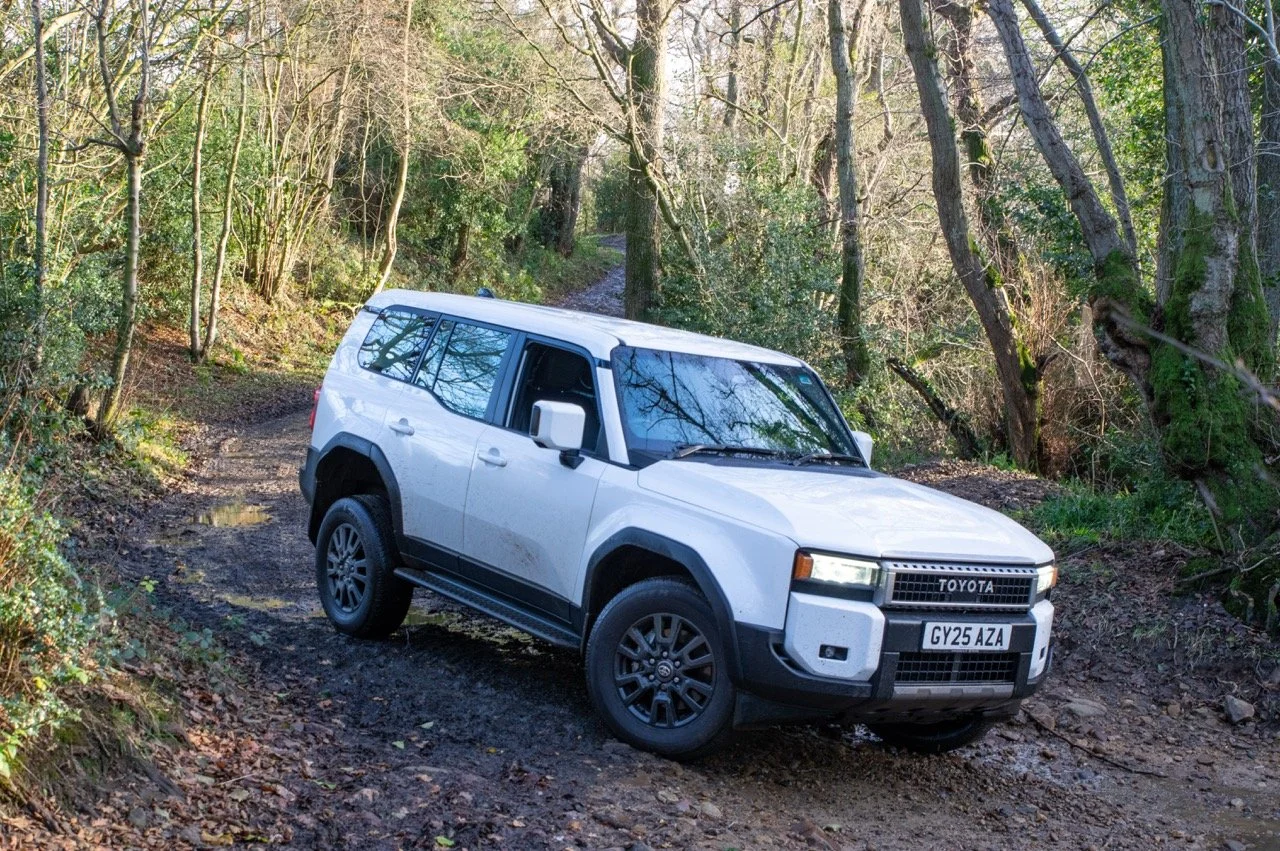
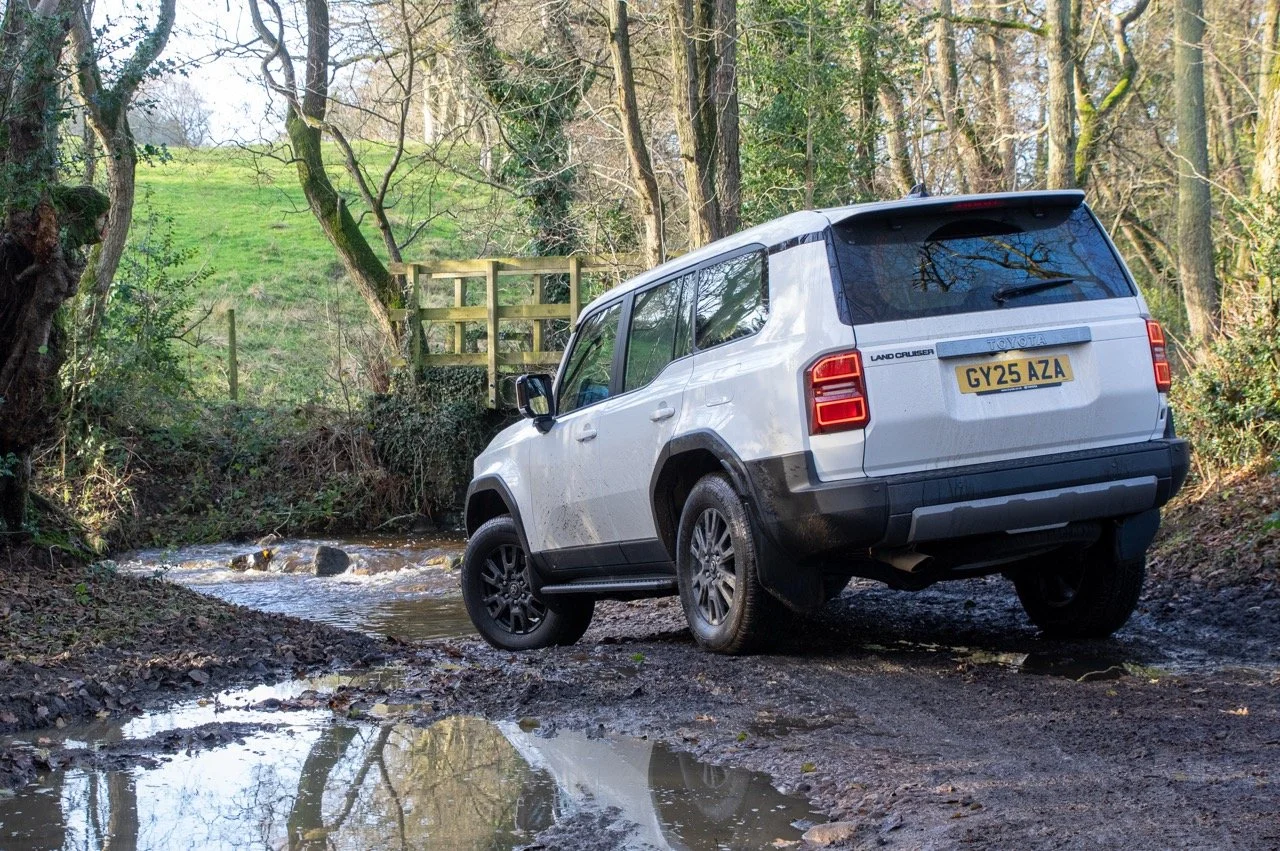
From there, it’s a gentle meander through tree-lined tracks before a short tarmac link and the start of the climb into the moors.
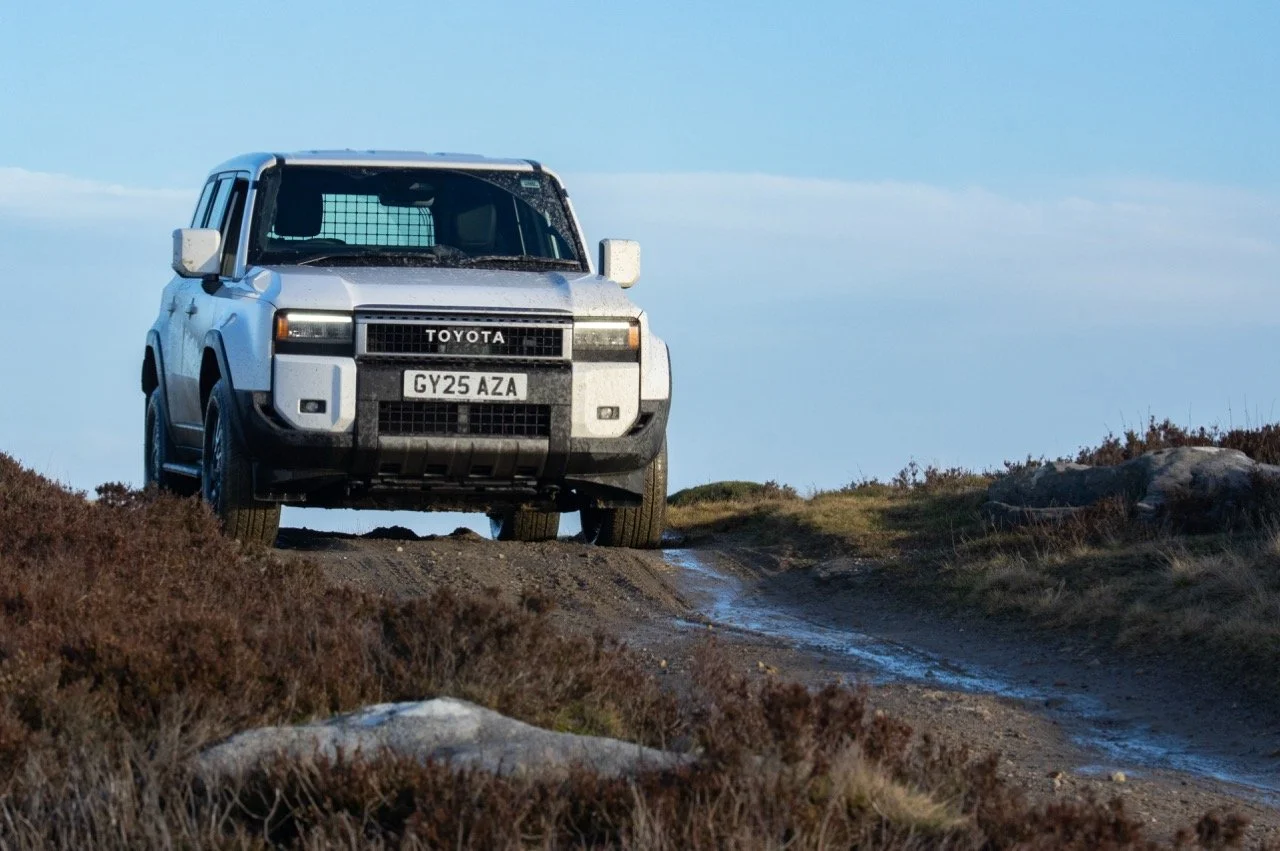
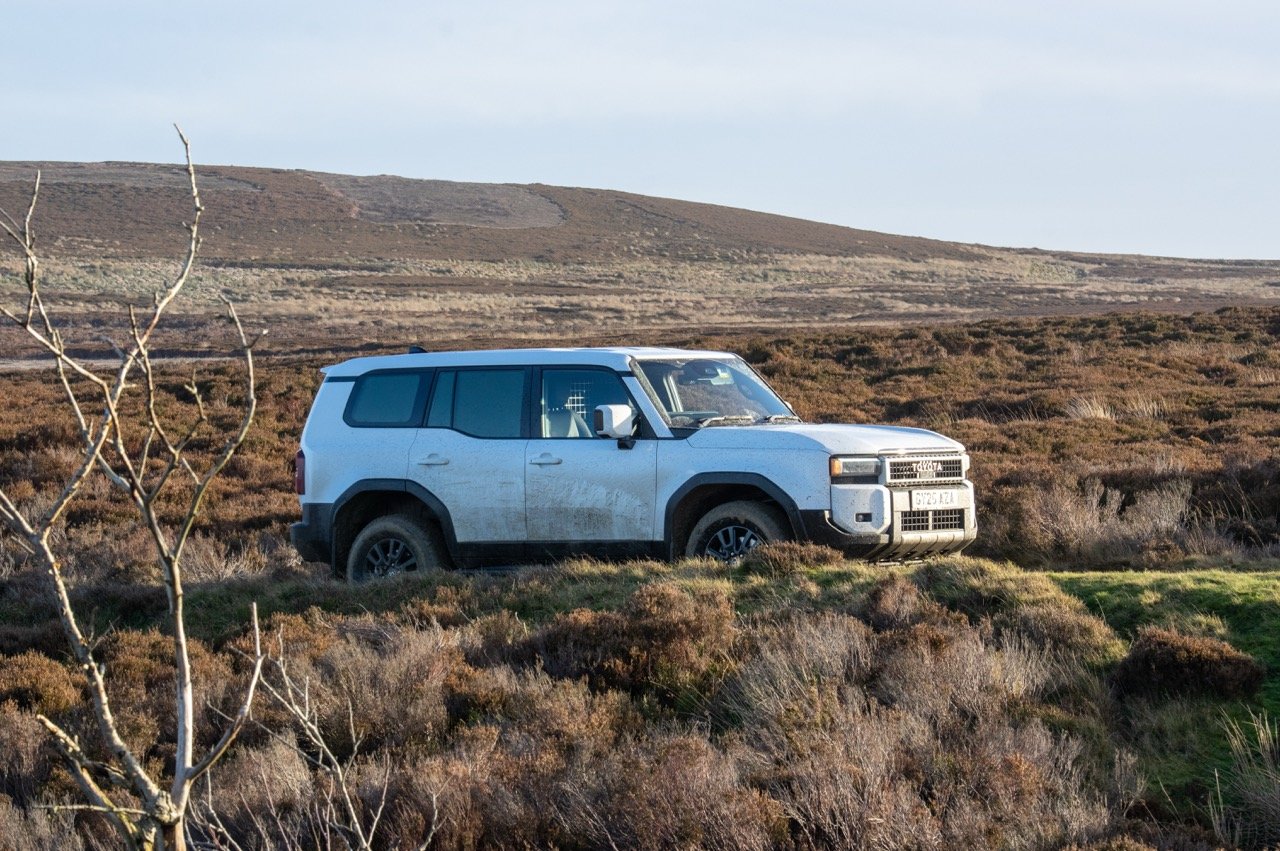
Today, the weather gods were on my side, blue skies, clear air, and those big Yorkshire views that remind you exactly why we bother getting mud under our fingernails in the first place.
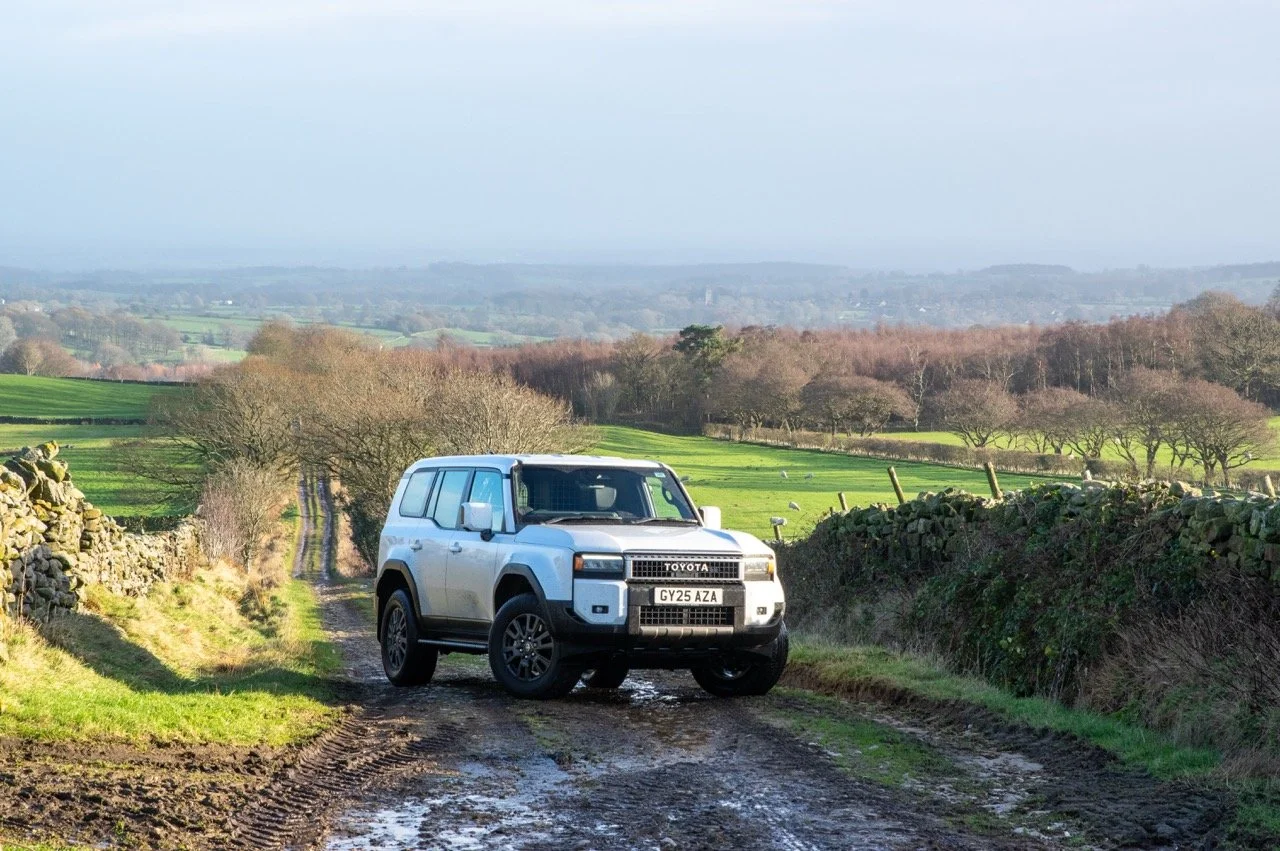
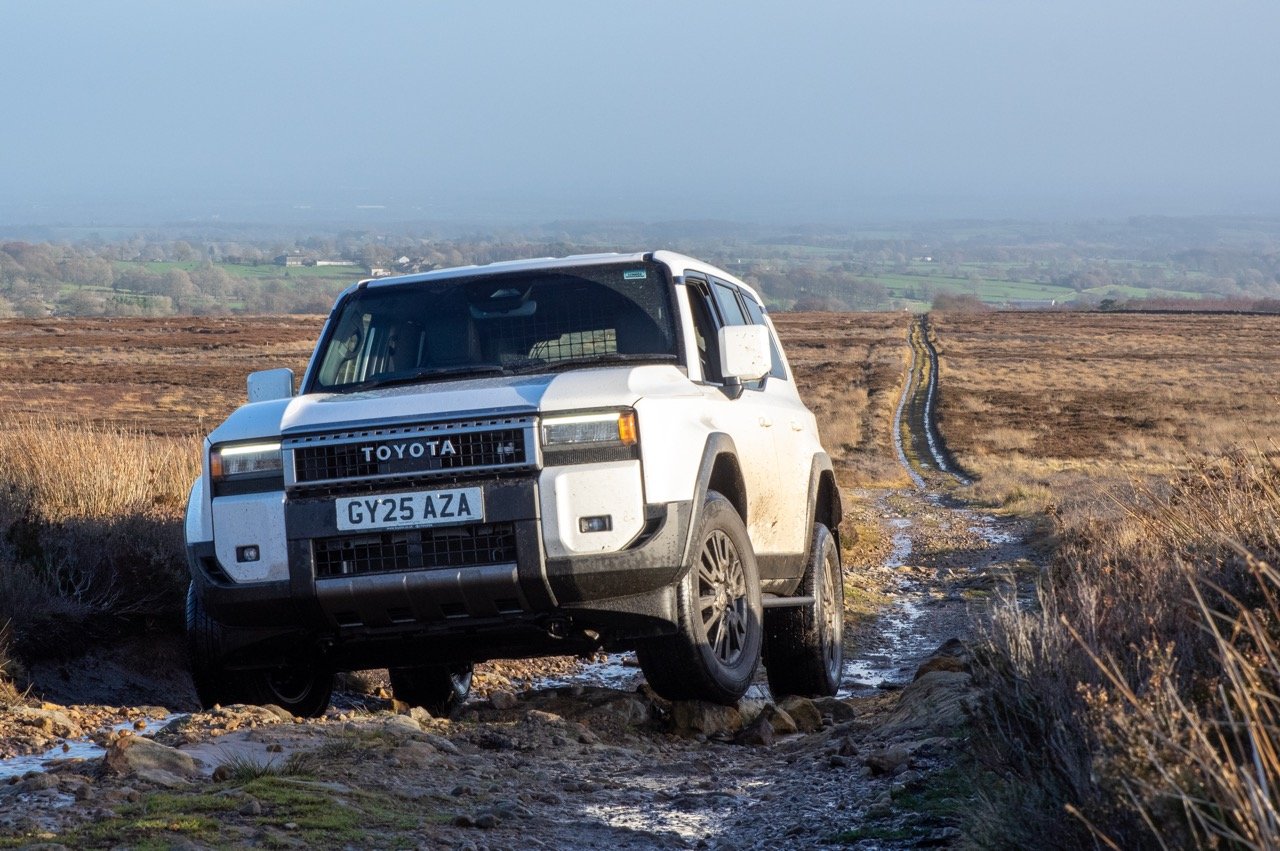
The surface on Wreaks Lane varies between rock, sludge, and hard-packed stone, but nothing that warranted low range. The 250 simply chugged along at walking pace, completely unfussed.
Midweek solitude meant I saw just one other person in a Ford Ranger heading the opposite way. We slowed, nodded, and carried on. Standard countryside etiquette.
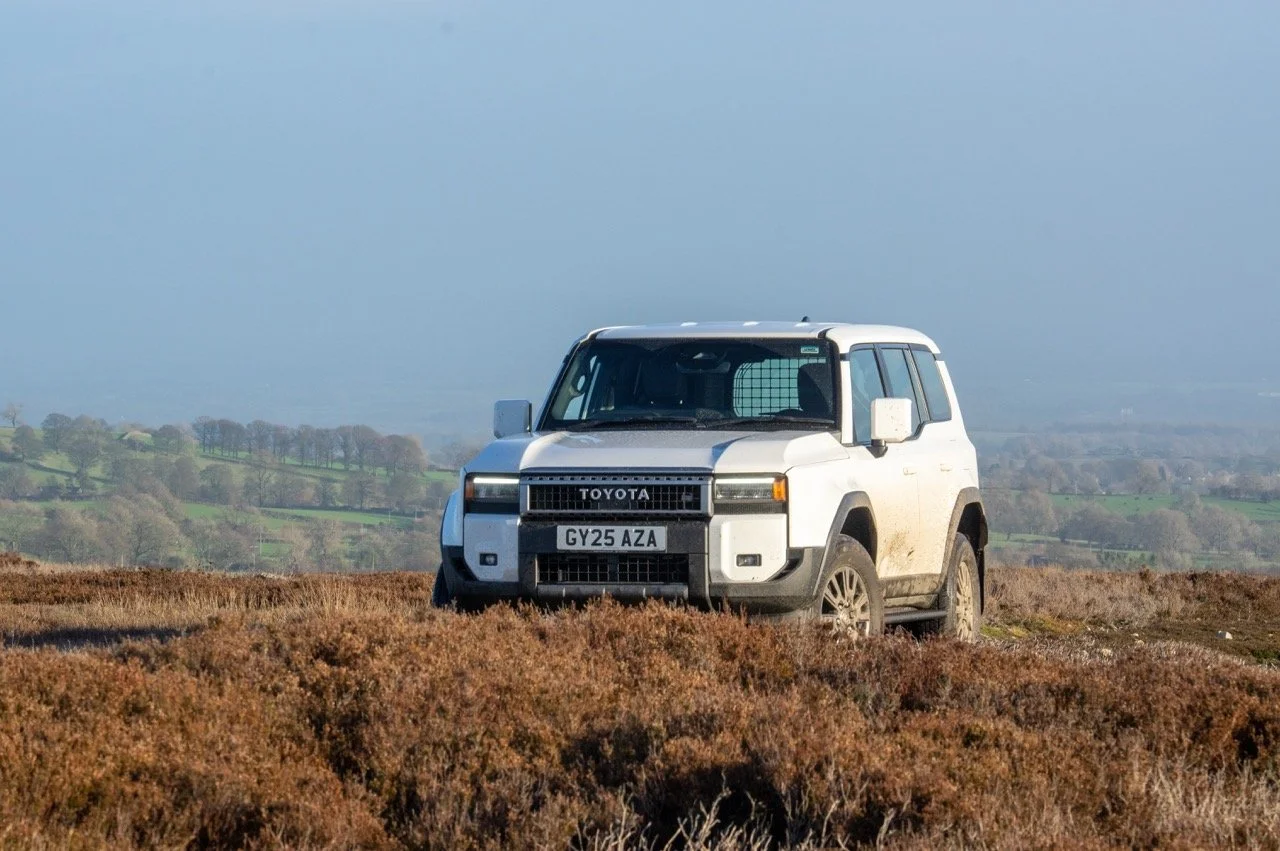
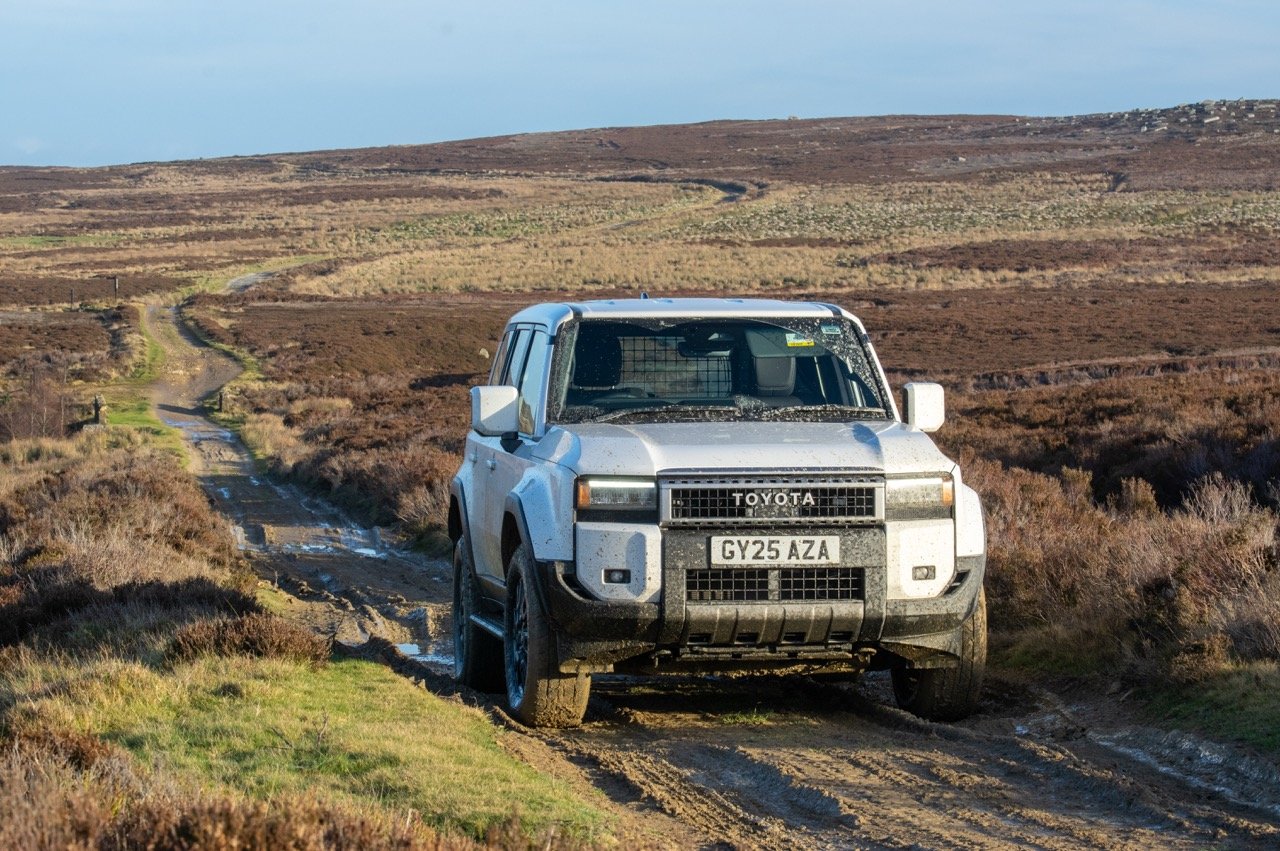
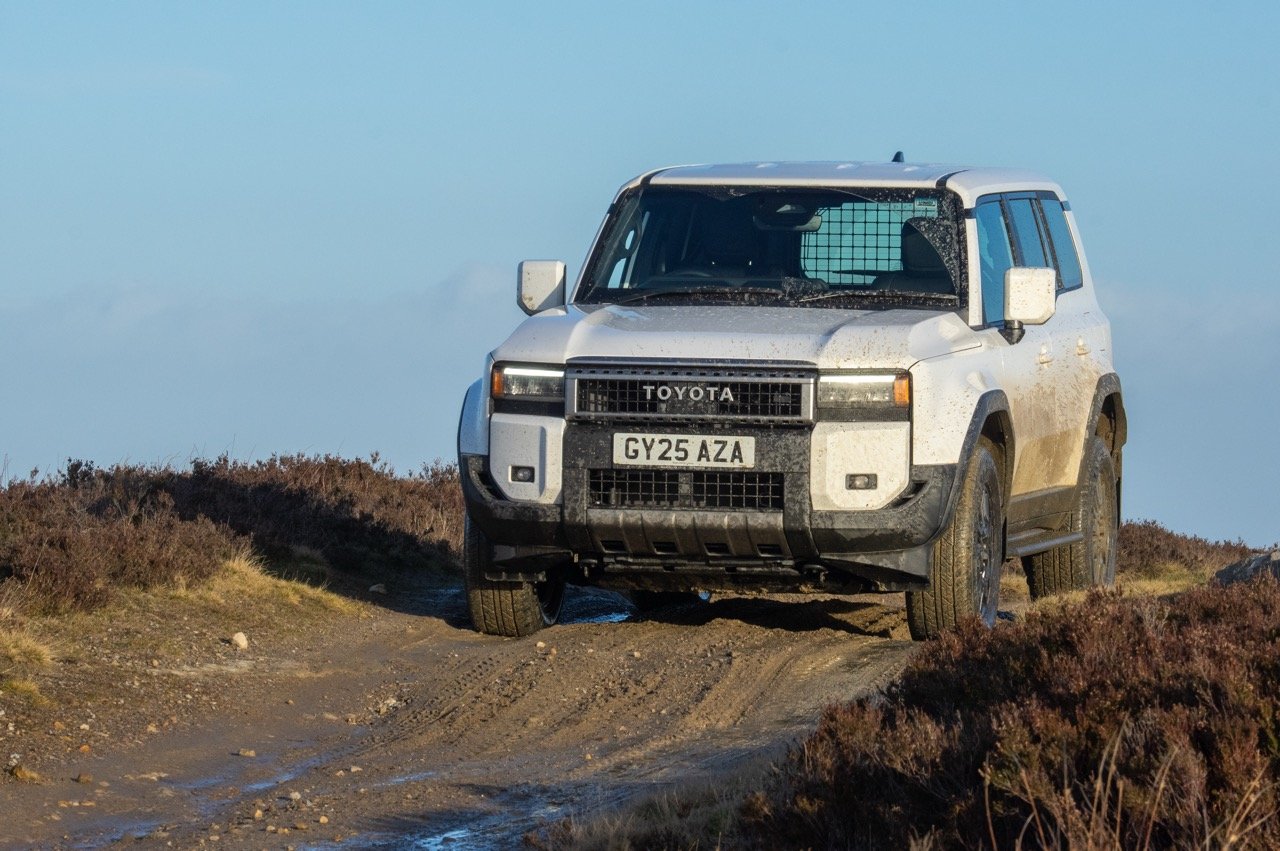
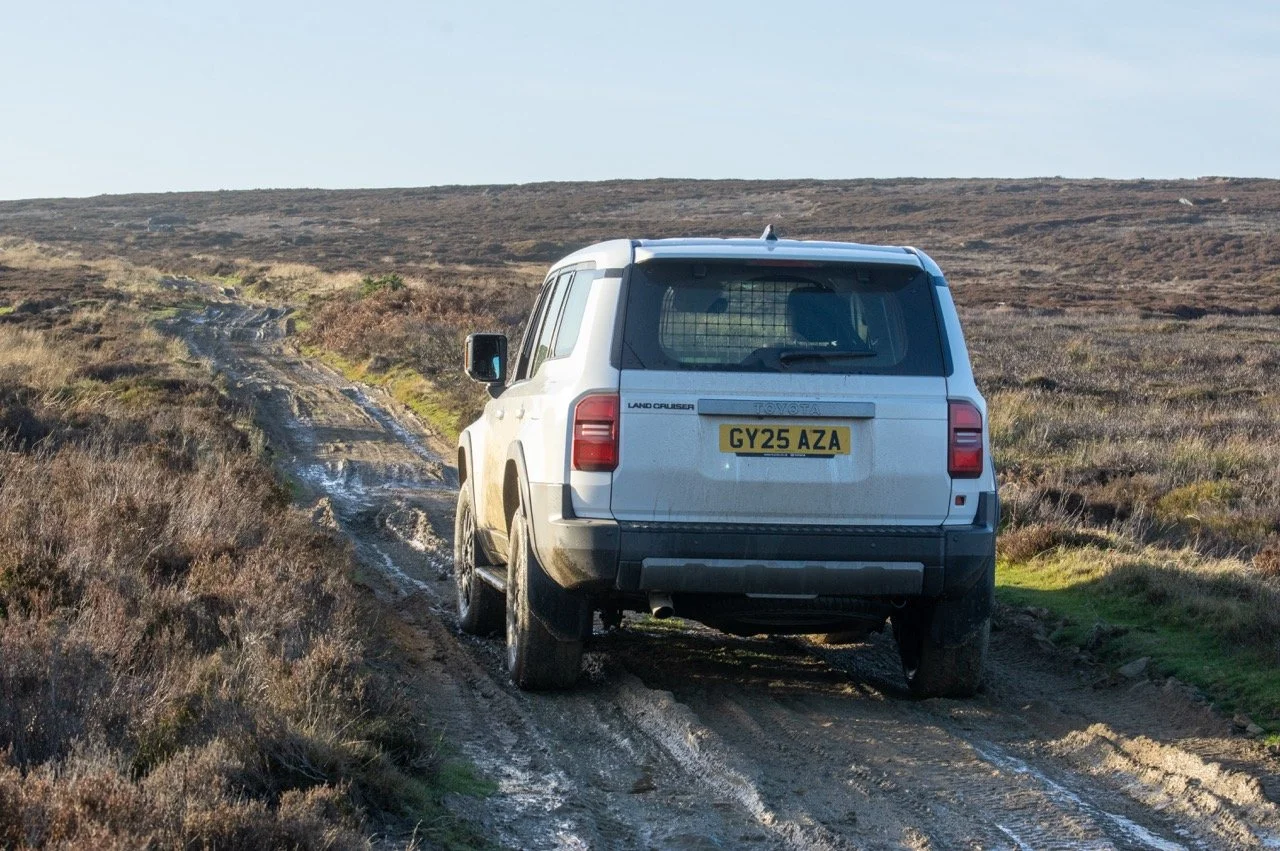
Then, without warning — BANG. ROAR.
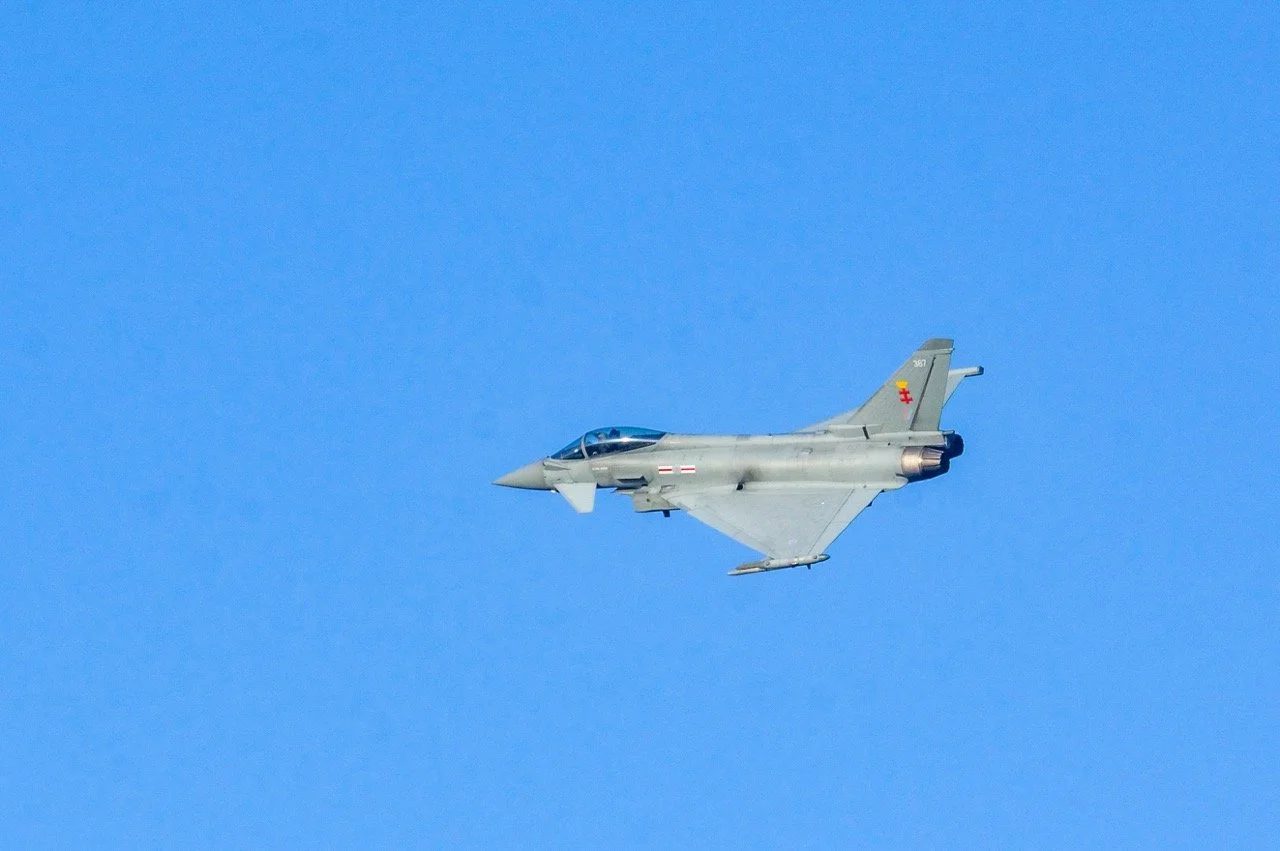
Three Typhoons screamed overhead at what felt like hedge-trimming height. I nearly had a heart attack - a properly brown-trousers moment! I was able to get a snap of the last one.
As you near the end of Wreaks lane, on the map, there’s a ‘V’ shaped section that you have the option of driving; SE1372-02 and SE1372-04. Again, these are hard packed gravel lanes and slightly less used than other routes on the moors, but in excellent condition.
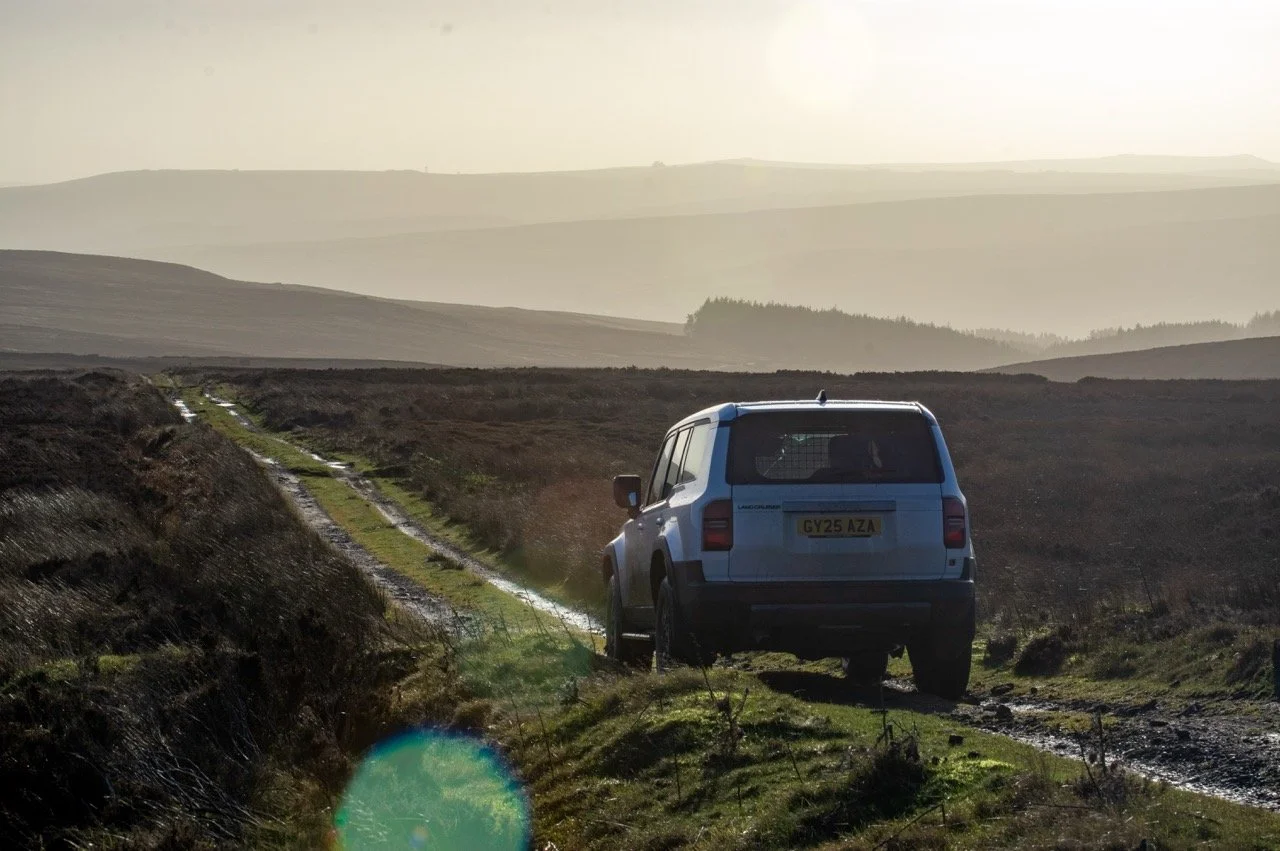
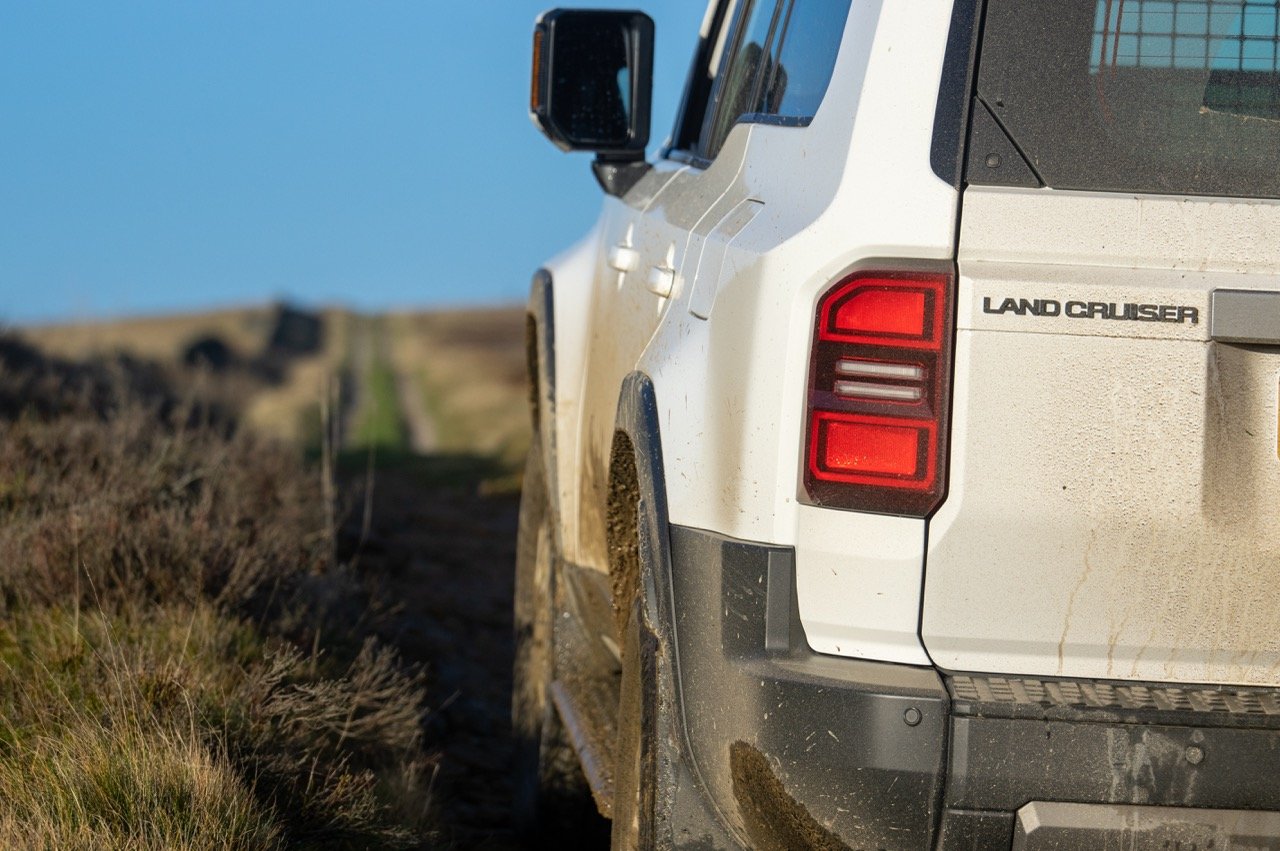
Upon reaching my next lane, In Moor Lane (SE0676-04), it’s here where I realised I’d completely misjudged the time. The sun was already dropping, and my ambitious plan of tackling another four lanes was looking optimistic at best.
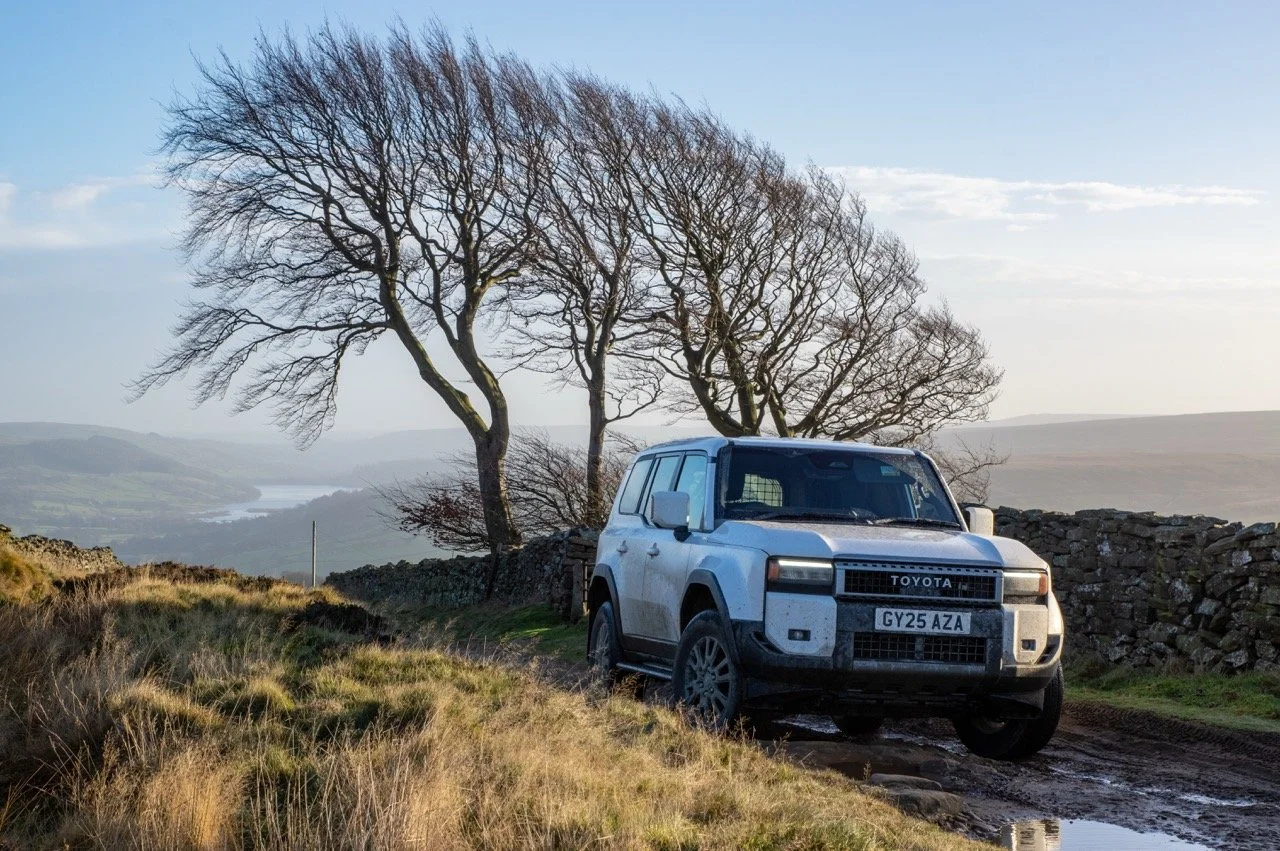
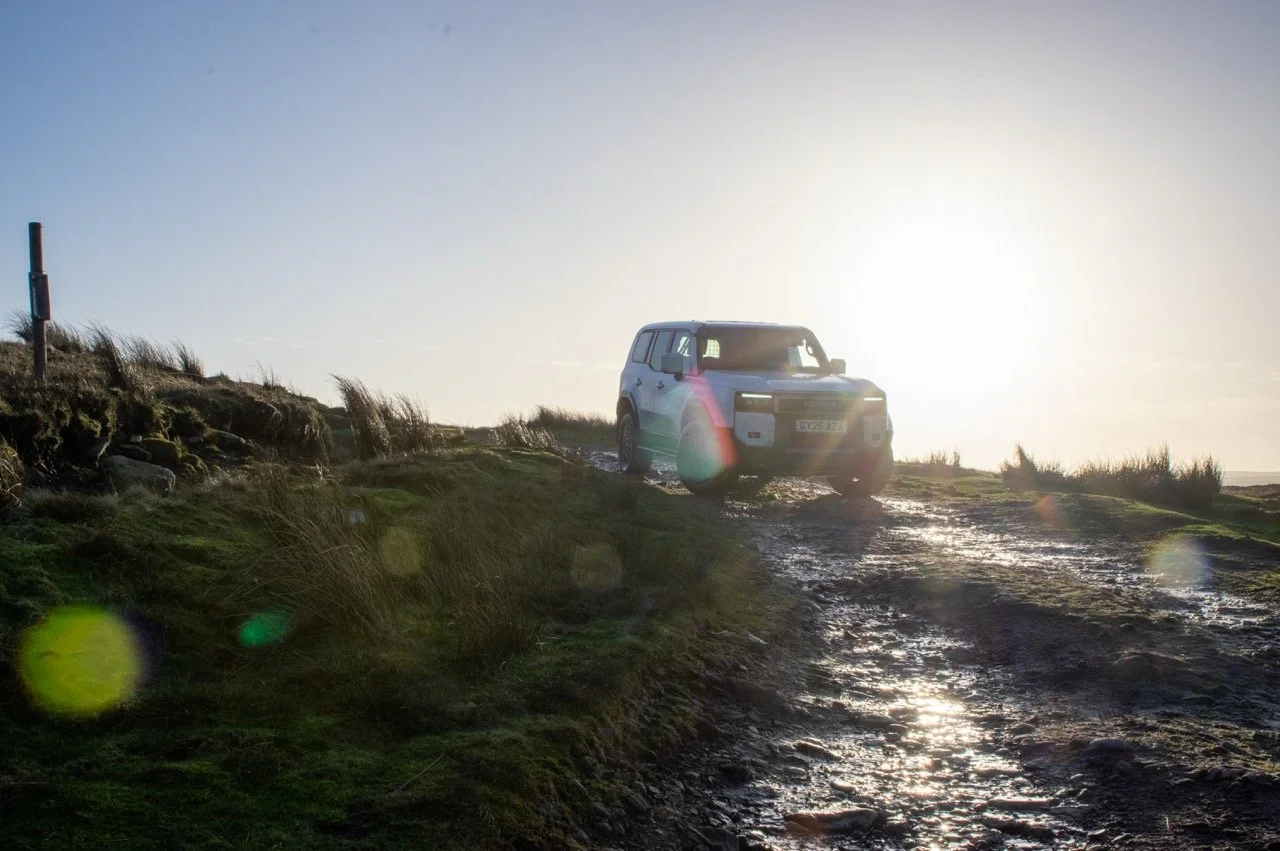
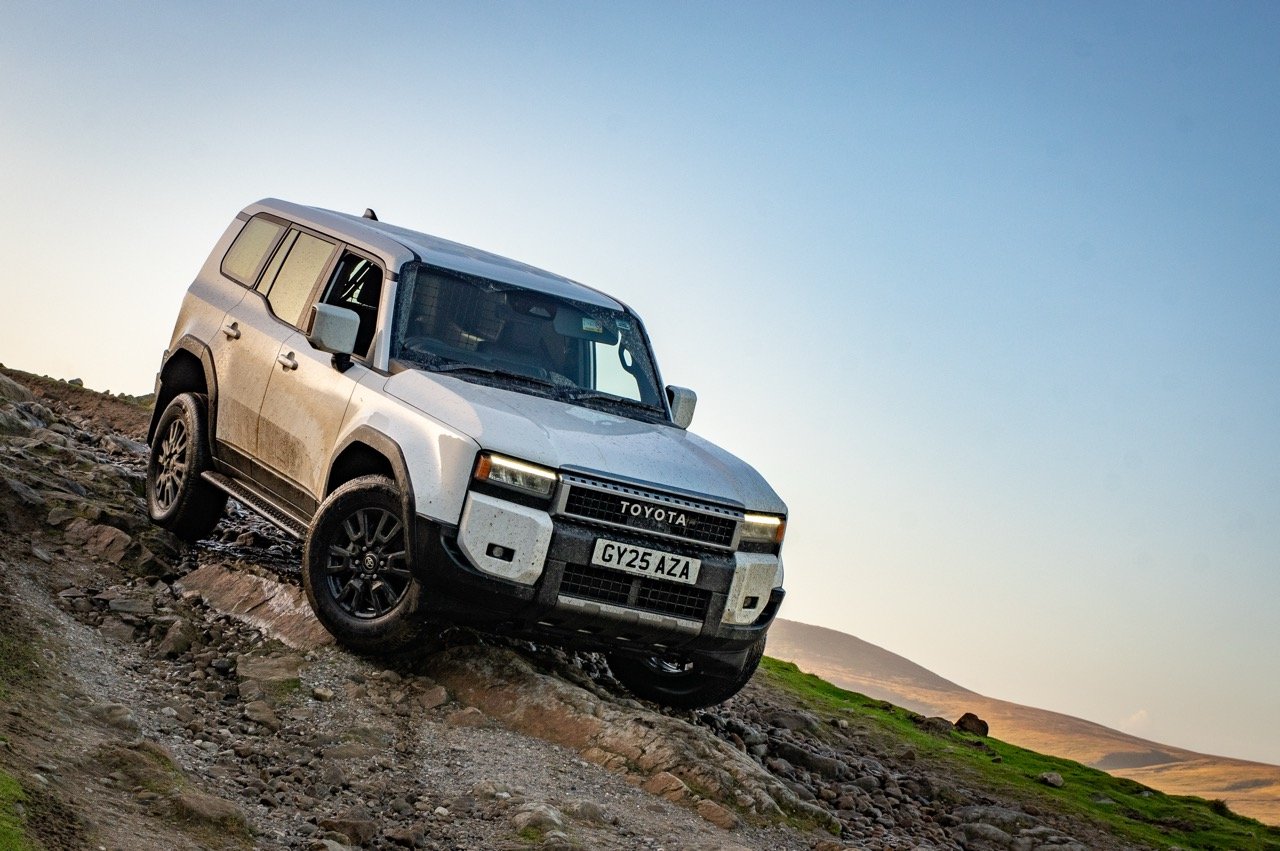
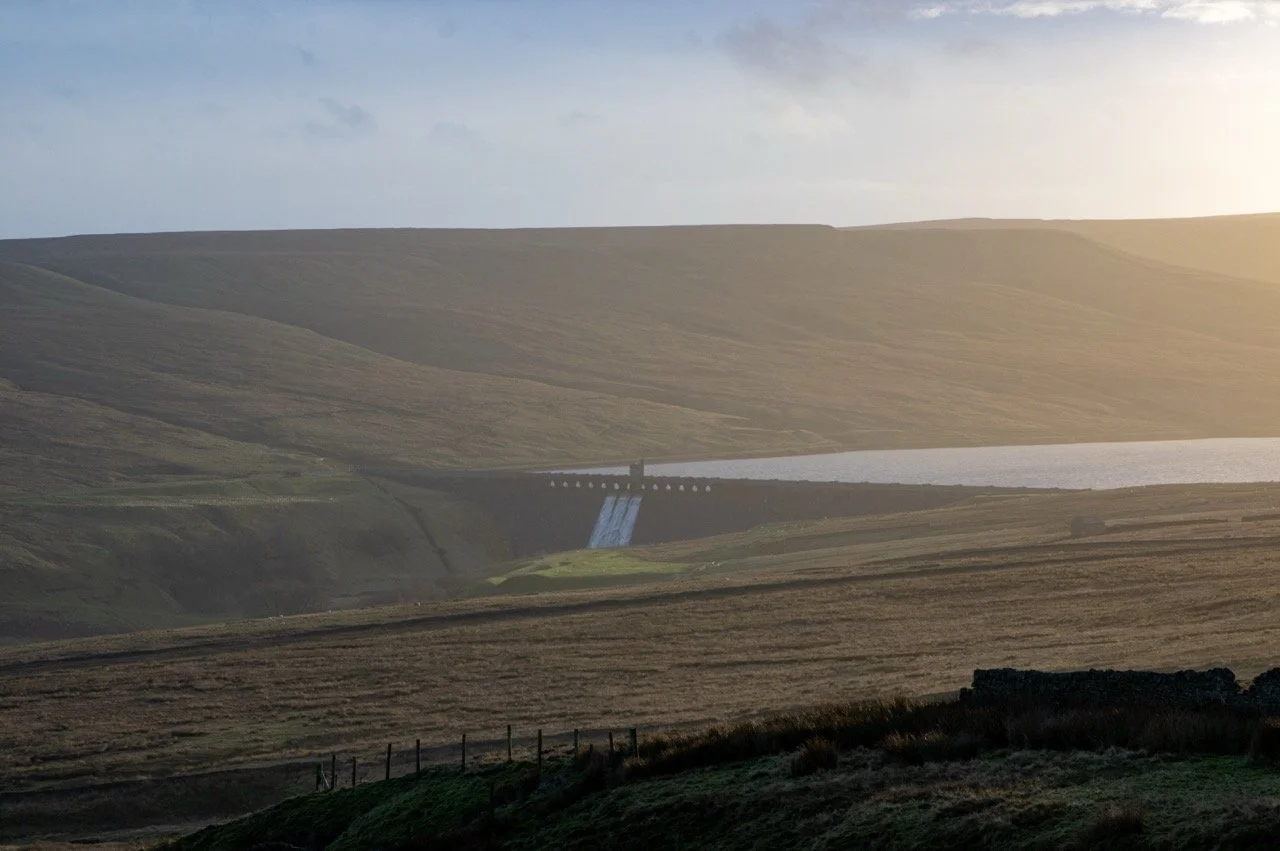
Approaching In Moor Lane from the south starts easily enough, it was flattened and resurfaced a few years back, but after the gate, as you descend toward Scar House Reservoir, things get a bit more interesting.
A handful of tight, steep and uneven switchbacks, with some decent rock steps thrown in for good measure, made sure I stayed alert. This was the only time the Land Cruiser showed any vulnerability. A couple of deeper ruts exposed the slightly limited ground clearance, and I grounded out once or twice, never a pleasant sound, especially when it’s not your vehicle. Still, nothing dramatic.
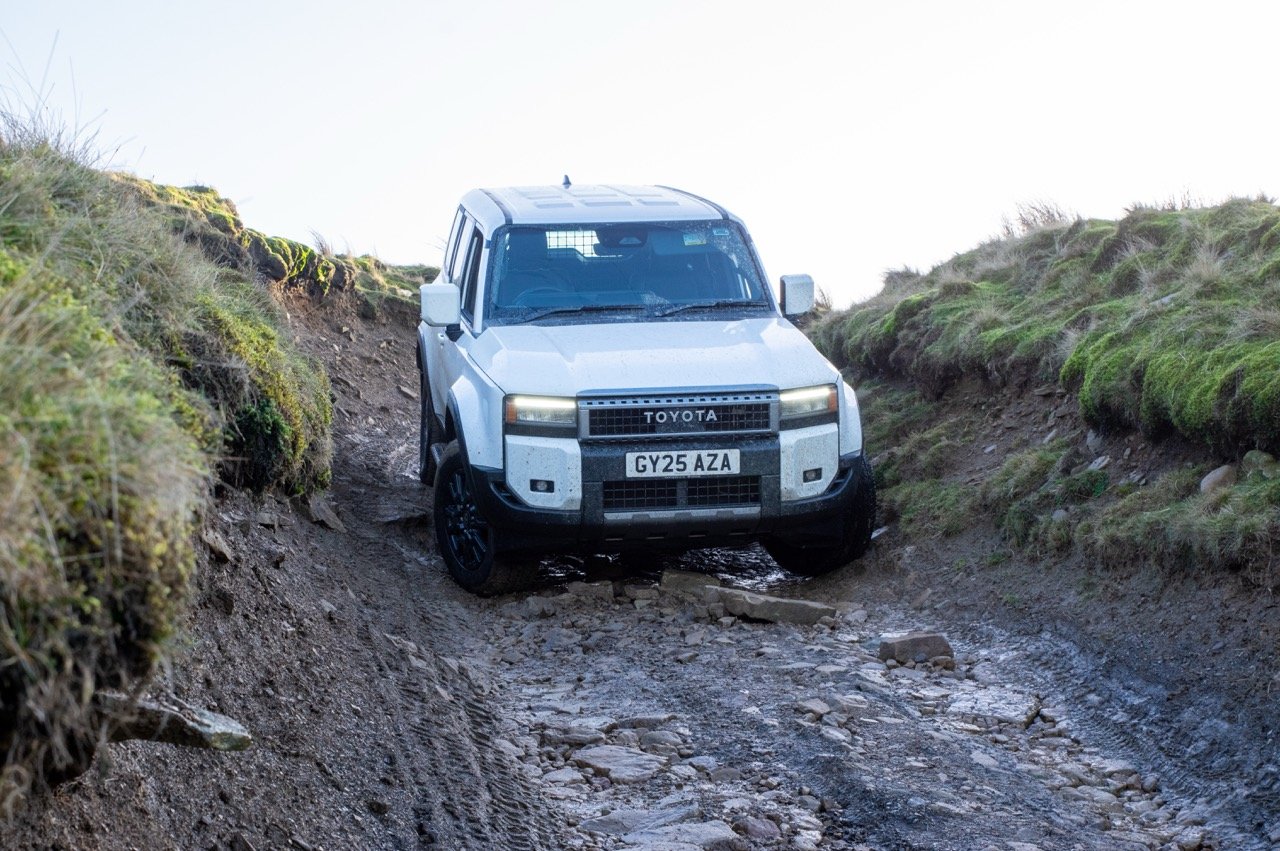
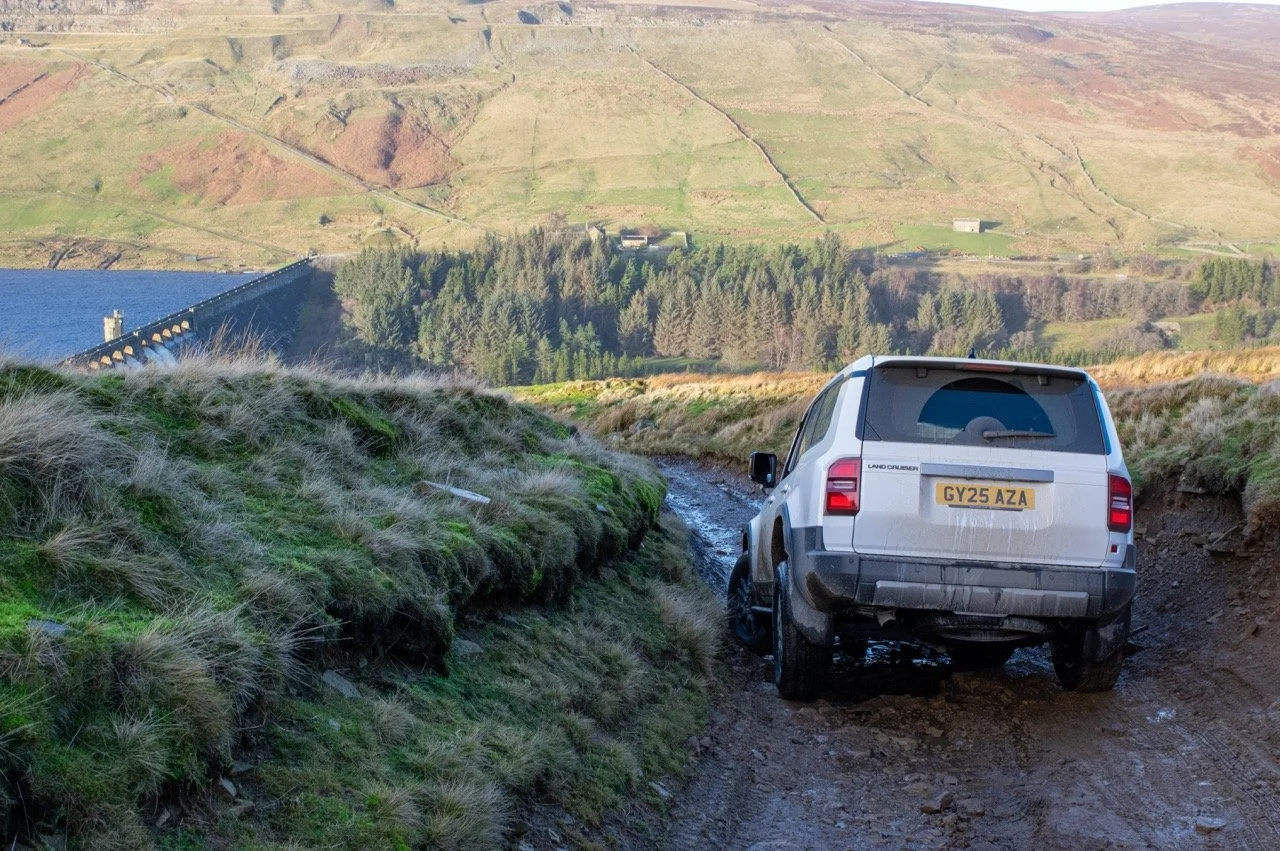
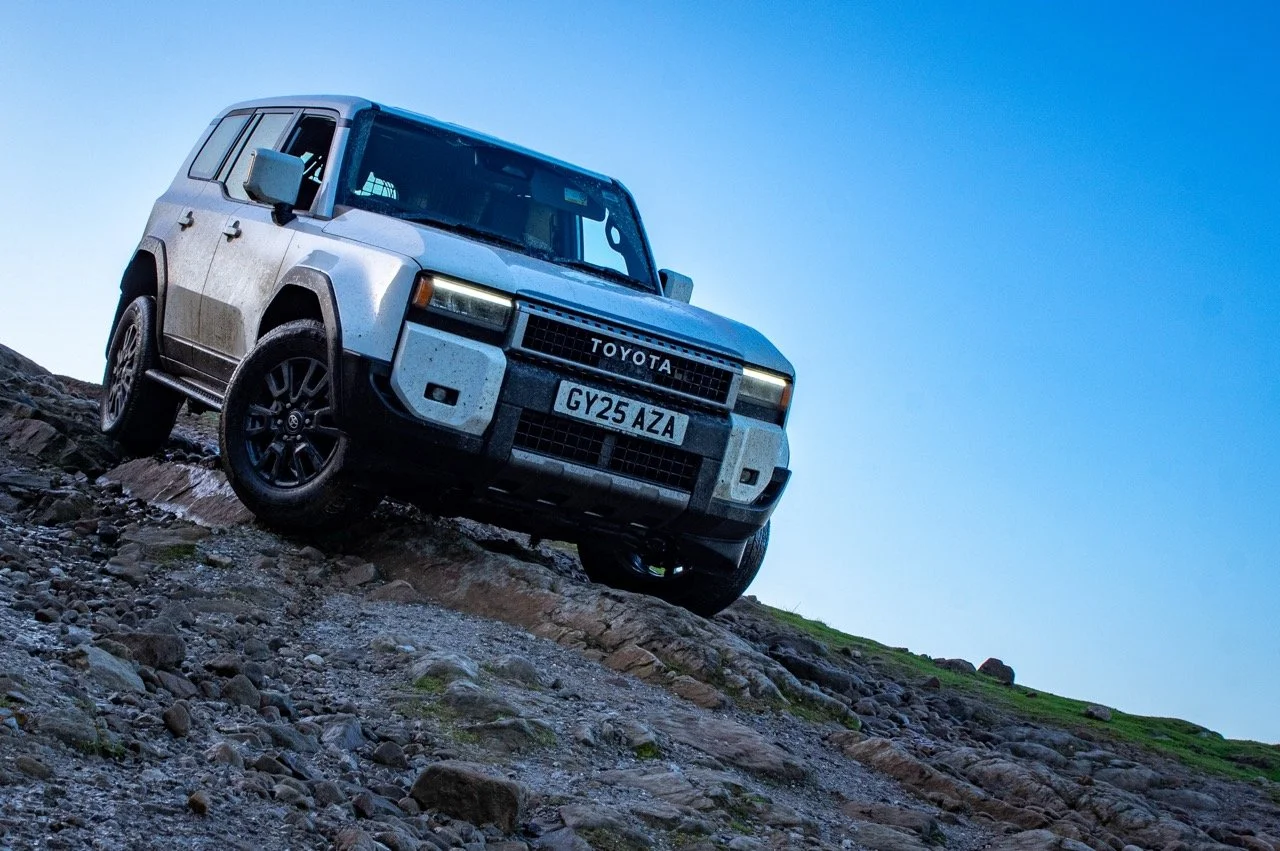
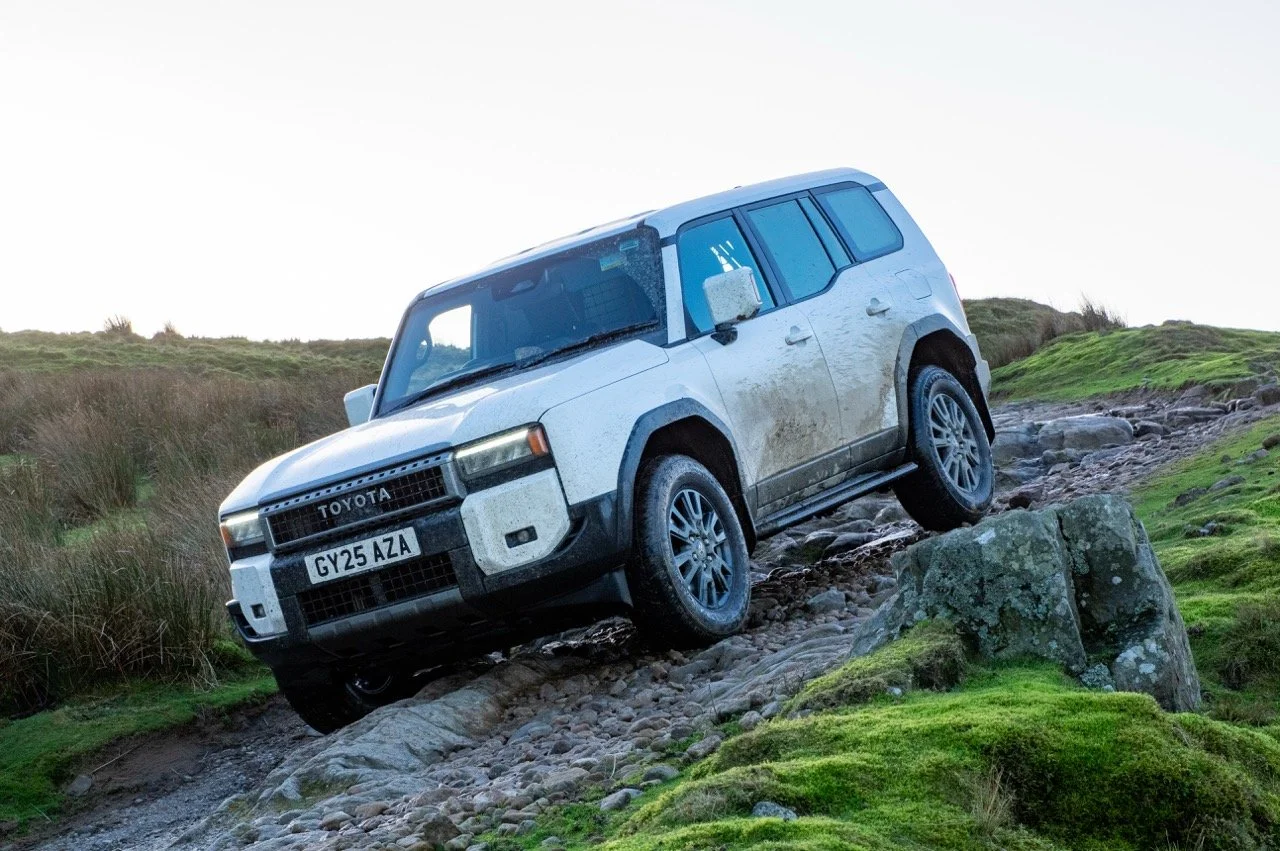
Once past the boulders on the edge of the lane it smooths out (a bit), as you head down towards the reservoir.
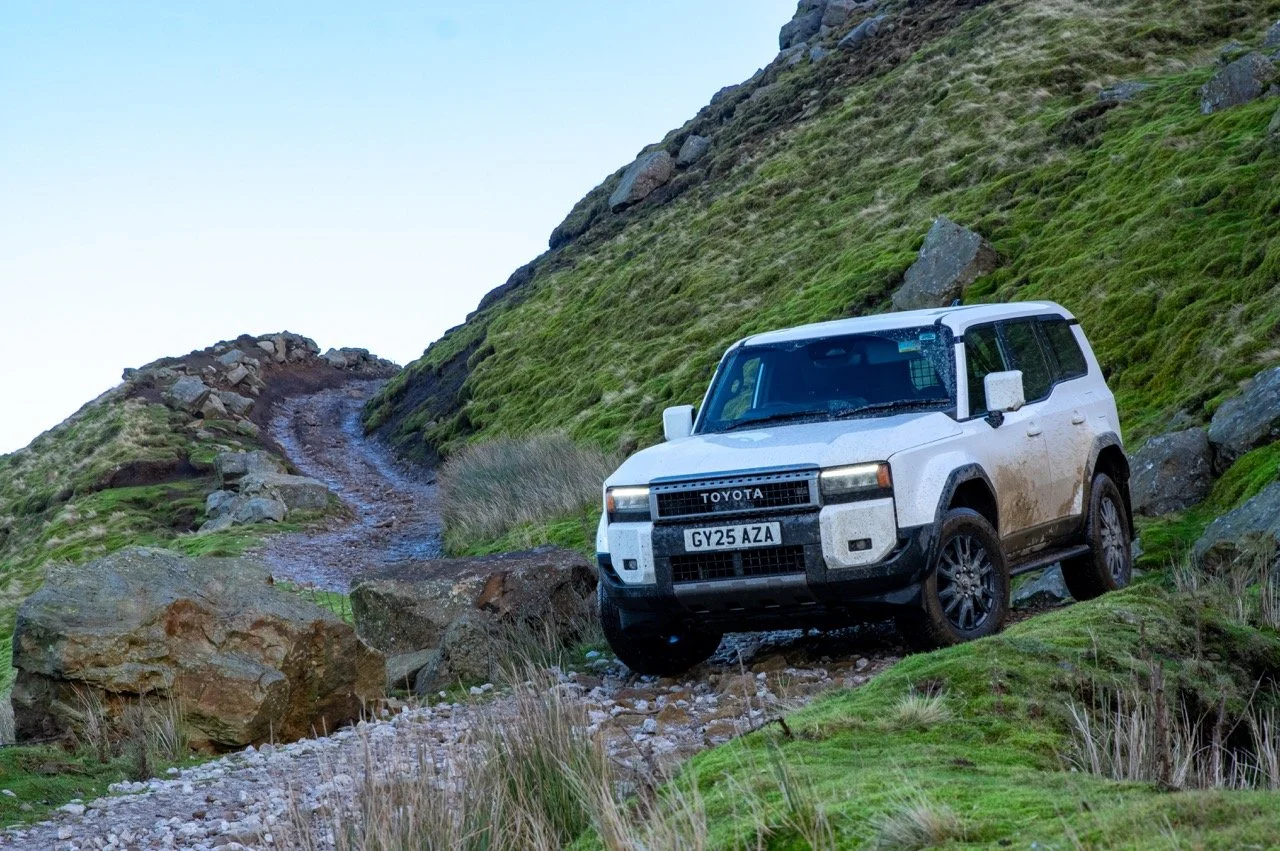
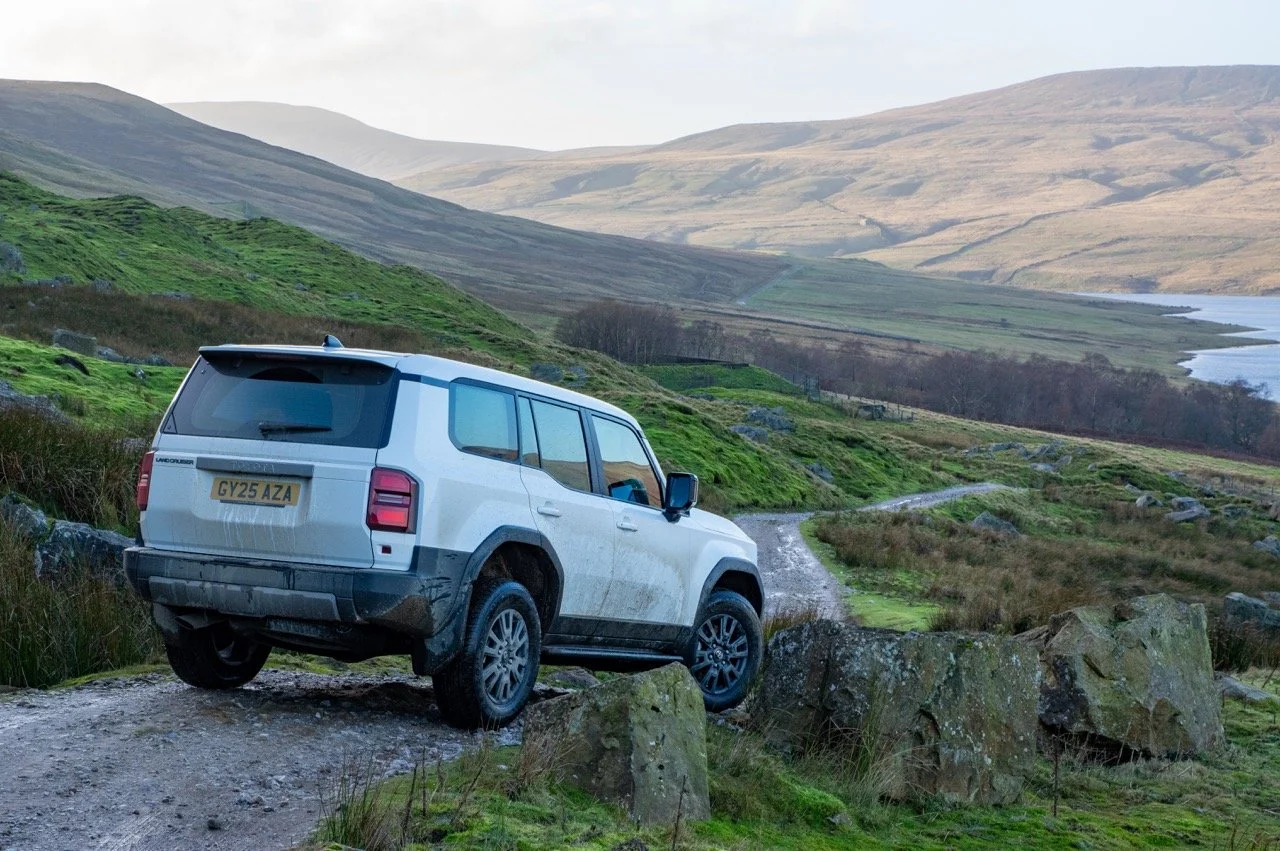
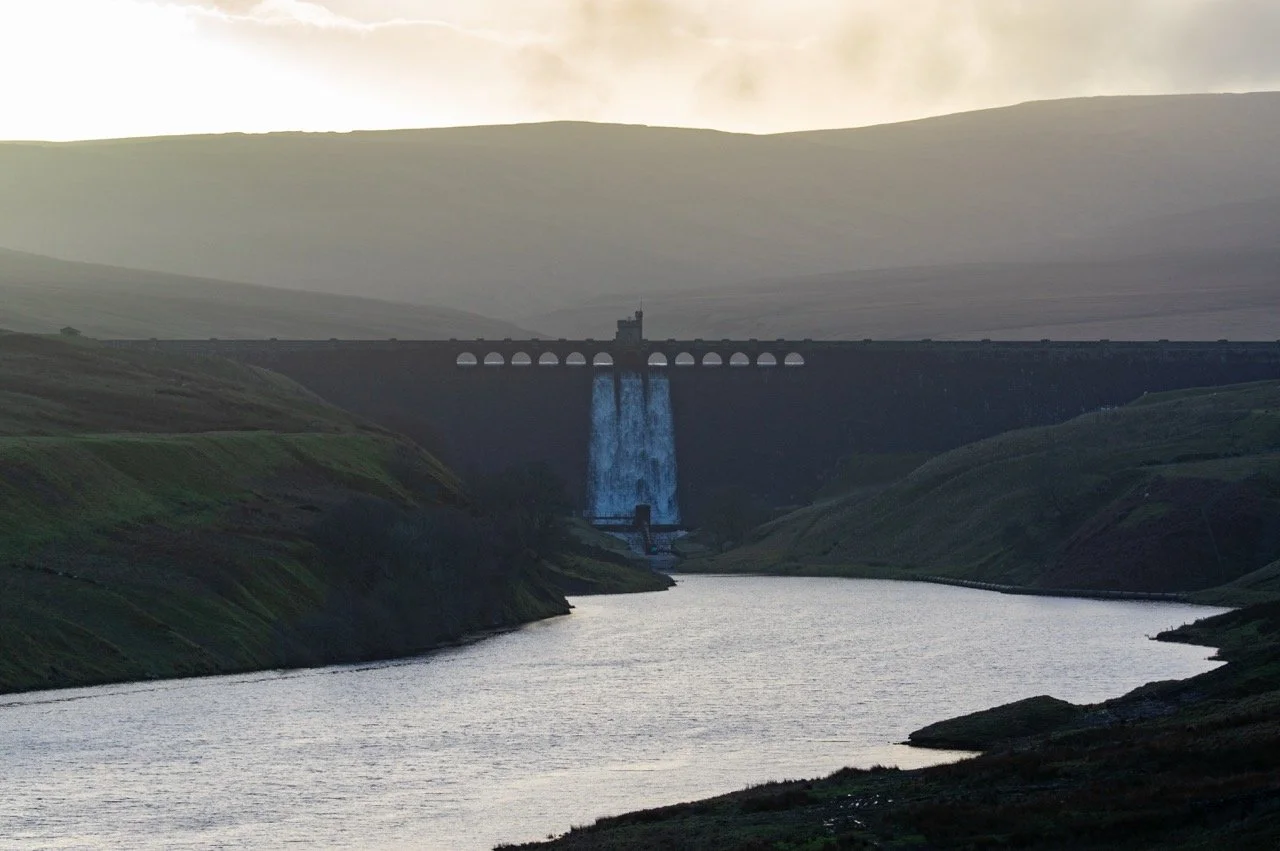
A quick hop across the dam and I began the steady climb up towards Deadman’s Hill (SE0677-02).
The section of the lane that skirts along the side of Scar House is relatively easy - a few ups and down, twists and turns, nothing to worry about. But keep your eyes on the lane as the views are quite distracting.
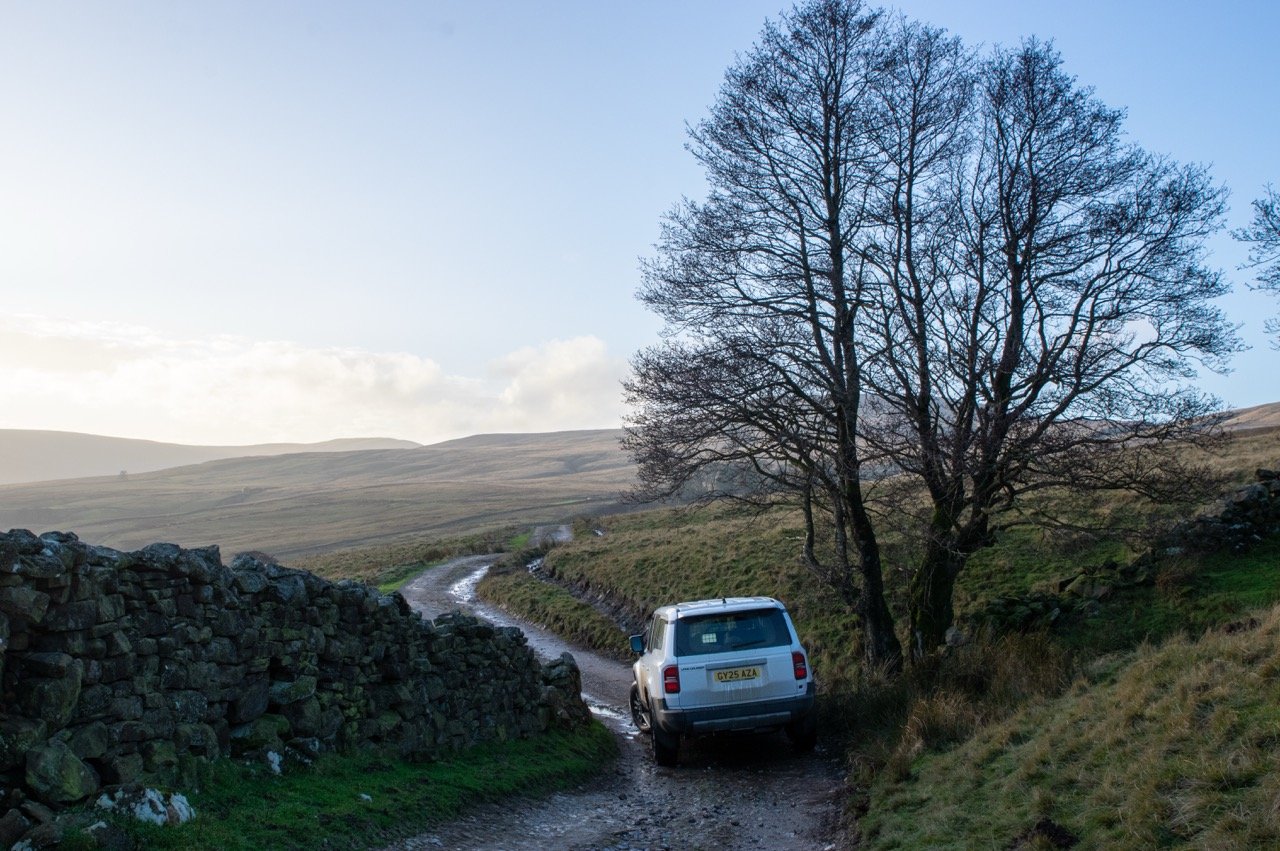
A little further along there’s a sharp right turn then an uphill climb that’s seen quite a number of repairs over the years, and if you haven’t done so already, it’s time to engage low range whilst being gentle on the throttle.
It’s not difficult driving, just slow, deliberate progress over rockier sections. Exactly the sort of terrain the Land Cruiser was designed for.

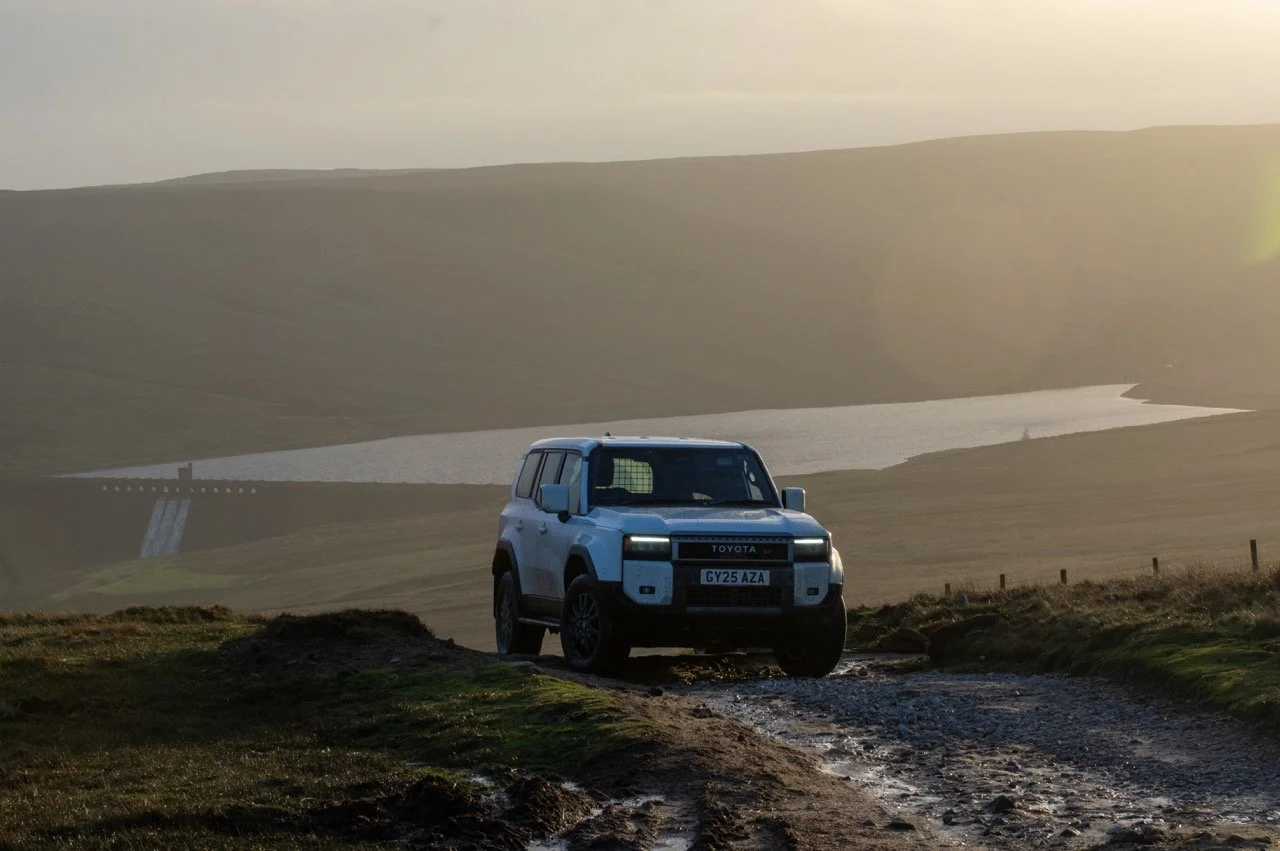
By now the sun was setting fast, and the descent toward Arkleside was simple but gate-heavy. Opening and closing gates on your own gets old quickly, but it’s part of doing things properly.
And that brings us neatly to a point worth making.
While logging feedback on Trailwise later, another user mentioned speaking to a local farmer who was — understandably — fed up with people leaving gates open and tearing through at night driving off-piste. He’s already contacted the authorities and is pushing to get the lane closed.
So, if you’re one of the people doing that: stop being a dick!
Drive responsibly. Shut gates. Respect the land. Otherwise we all lose access. It’s that simple.
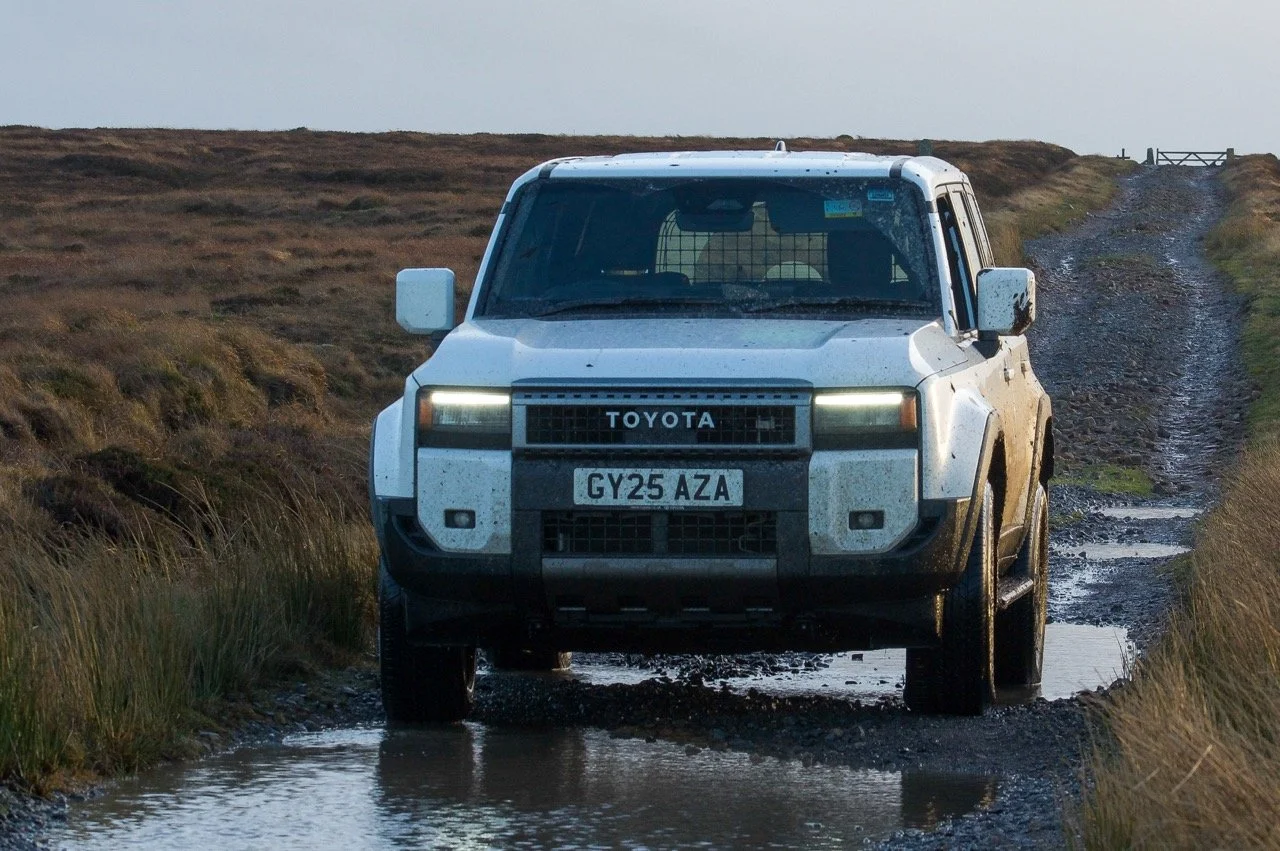
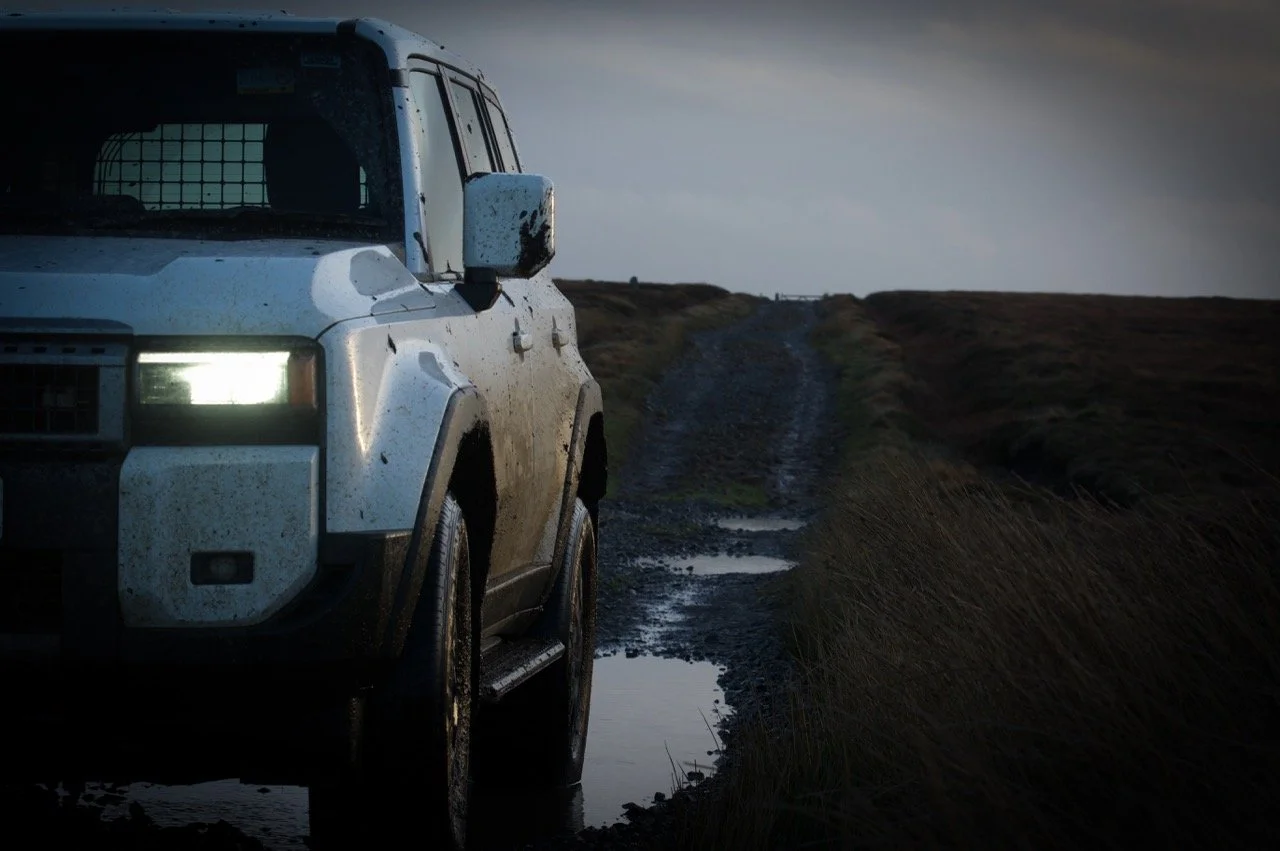
Turning onto Cam Gill Road toward Kettlewell is one of those drives that’s enjoyable in almost anything, and the Land Cruiser is no exception.
Yes, it’s loud. Yes, it sounds agricultural. But once you adapt to its rhythm, the gearing, the weight transfer, the deliberate nature of everything, it becomes predictable and quite satisfying to drive.
It doesn’t flatter you, it doesn’t isolate you either, it just gets on with the job. And for the 2-1/2 hour drive home, that honesty left me with a big grin on my face.
Verdict?
The Commercial version strips away the lifestyle gloss and reveals the Land Cruiser’s core character: durable, slightly gruff, immensely capable, and engineered with longevity in mind rather than showroom sparkle.
It’s not trying to be clever. It’s trying to be dependable.
And after a week of using it for everything except actual commercial work, that might just be its greatest appeal.
After a full day threading the Commercial down rutted lanes, dragging it through axle-twisters and bouncing it off damp rock steps, the logic behind its existence becomes crystal clear. In the UK, this isn’t just a working Land Cruiser for people in hi-viz, it’s Toyota planting a flag in a niche market currently dominated by the Land Rover Defender Hard Top, the Ineos Grenadier Commercial, and the KGM Rexton Commercial.
It’s a reminder that the Land Cruiser name still means something. And while the passenger 250 makes a cracking long-term family overlander, it’s the Commercial that feels closest to the Land Cruiser’s roots. A tool first, a toy second… even if, for one muddy day at least, it was very much used as the latter.