
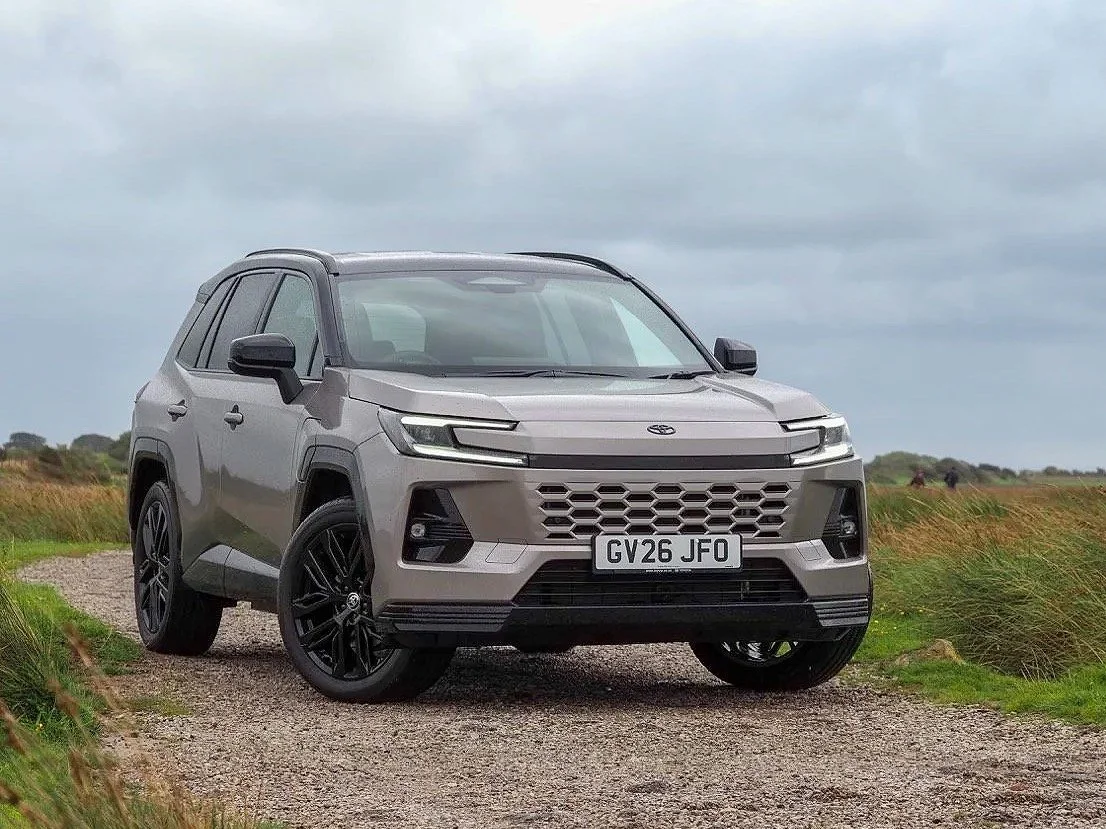
R.I.P. the RAV4 we knew and loved
There are some cars you climb into and immediately think, yes, I get this. Then there are cars that require a week, a few hundred miles and a fair bit of head-scratching before you decide whether you like them or not.
The all-new, sixth-generation Toyota RAV4 is, unfortunately, one of the latter.
And that’s rather surprising because the RAV4 has never been difficult to understand.
Since its arrival in 1994, it has occupied that increasingly rare bit of automotive real estate between proper SUV and sensible family car. It was practical without being dull, capable without pretending to be a Land Cruiser and, crucially, it had a personality of its own.
The sixth-generation car arrives in the UK as a plug-in hybrid only, with the choice of front-wheel drive or all-wheel drive. The FWD version tested here produces 272 hp, while the AWD version gets Toyota's more powerful 309hp system. The FWD PHEV is therefore not the stripped-back poor relation; it is simply the version without the rear electric motor.
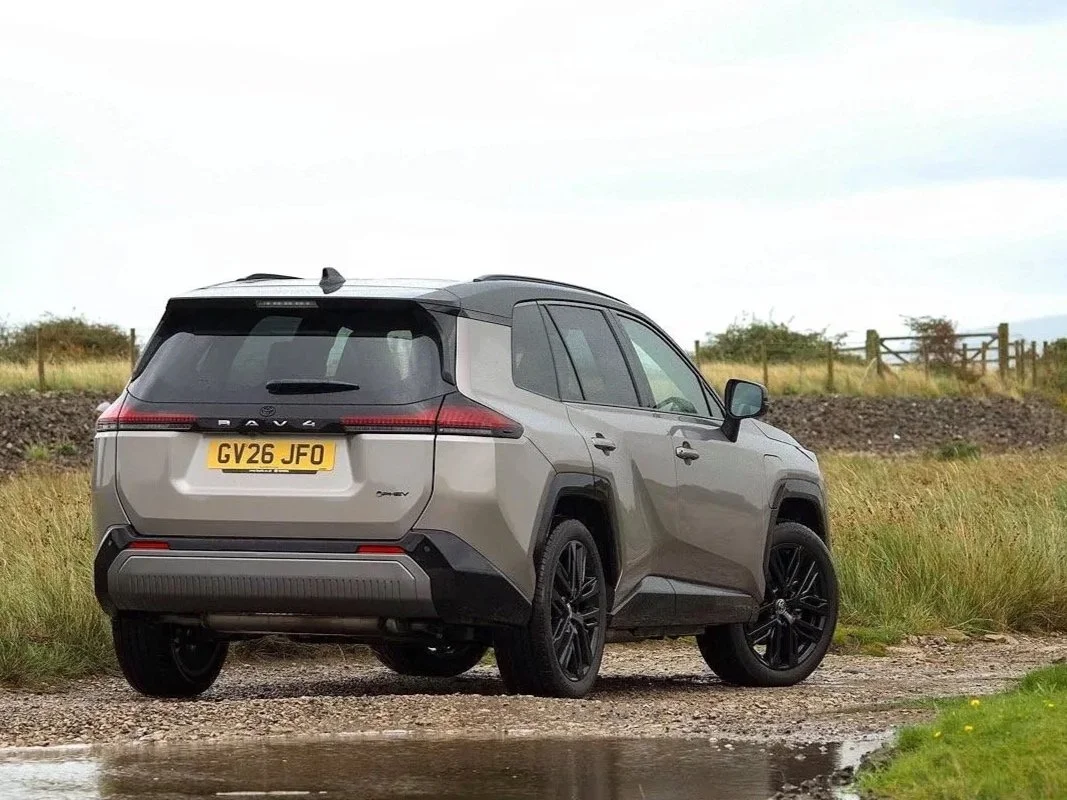
And there's the problem.
Toyota has somehow managed to make the new RAV4 feel less like a RAV4 and more… normal.
Don't get me wrong. It’s a very good car. In many respects, it’s an excellent car. It’s comfortable, quiet, remarkably refined and impressively efficient. It has plenty of room, decent luggage space and enough performance to make joining a motorway considerably less stressful than it needs to be.
But somewhere between the drawing board and the showroom, a little bit of RAV4 magic appears to have fallen off the back of the wagon.
First impressions
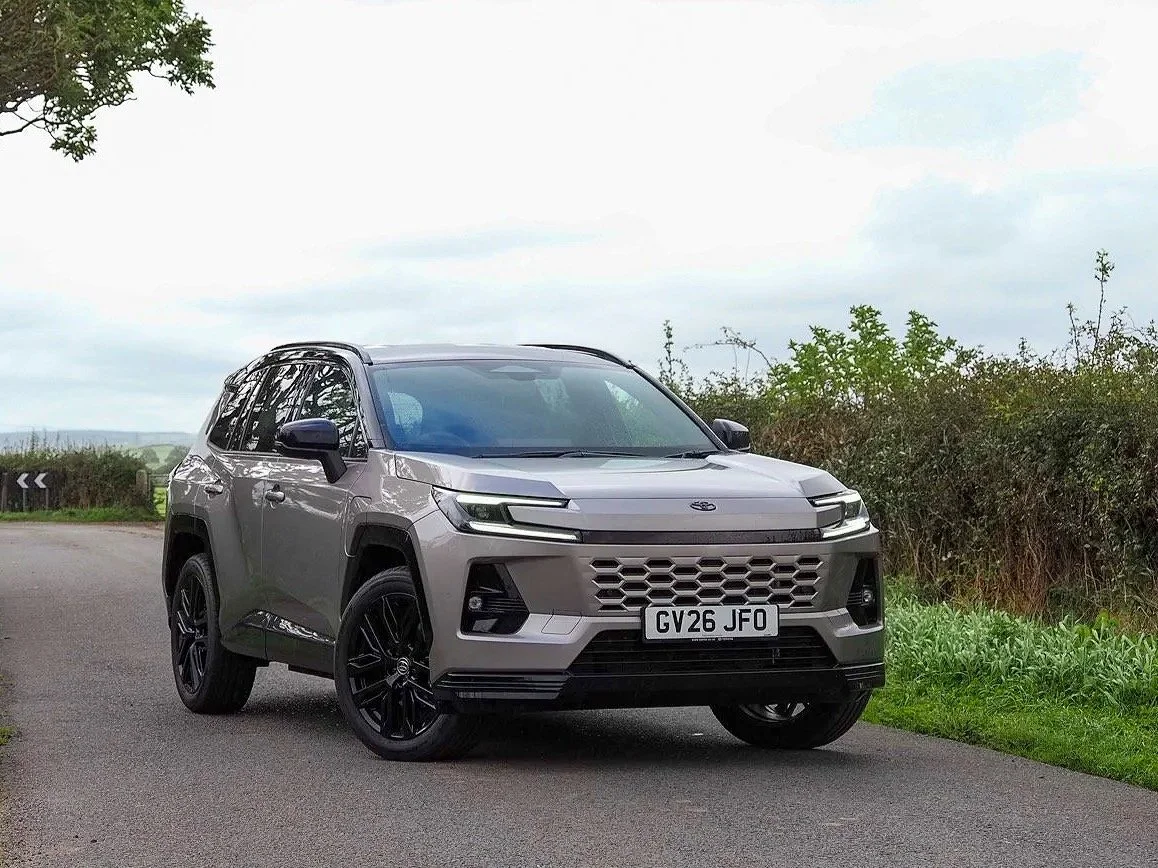
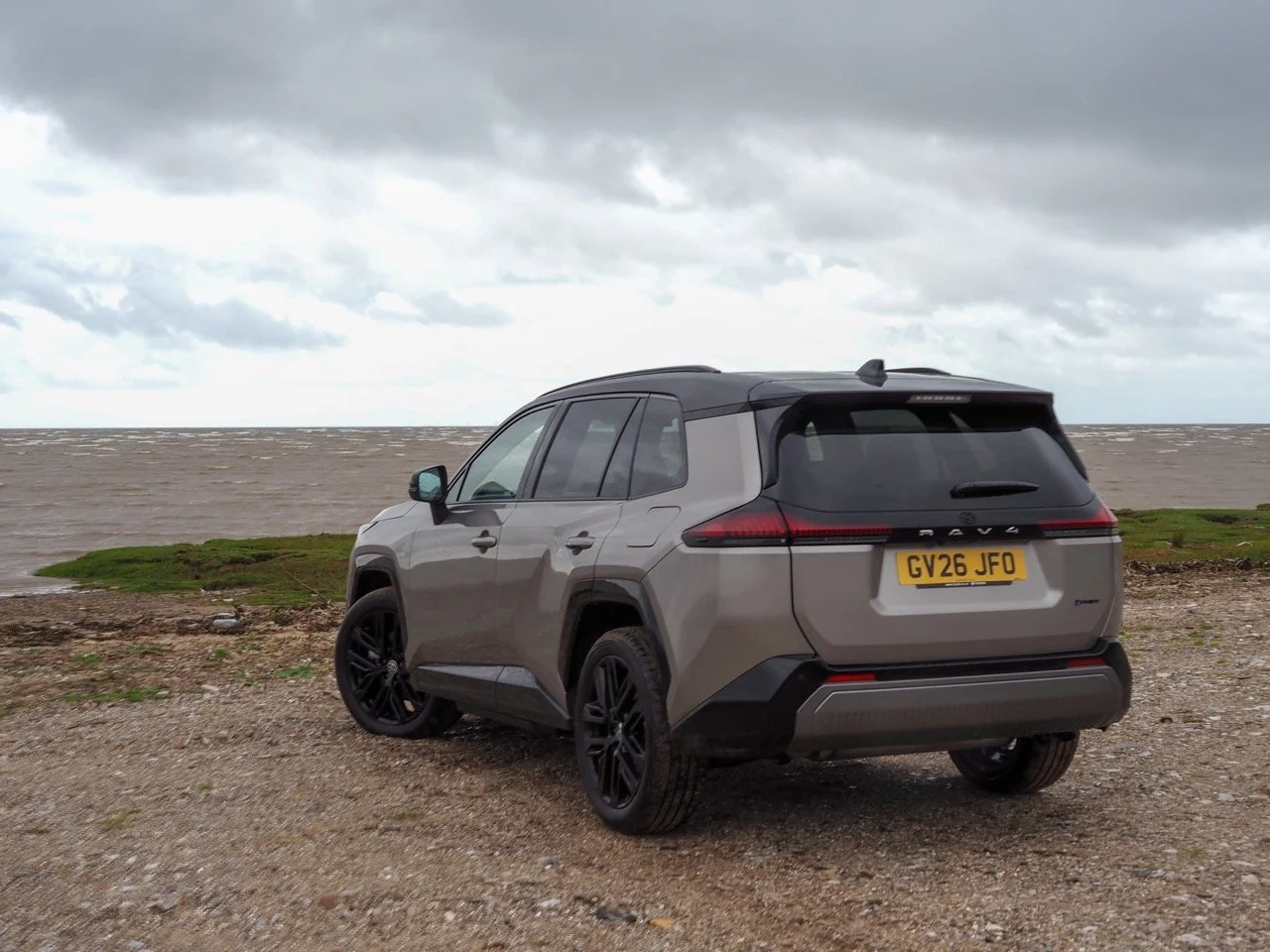
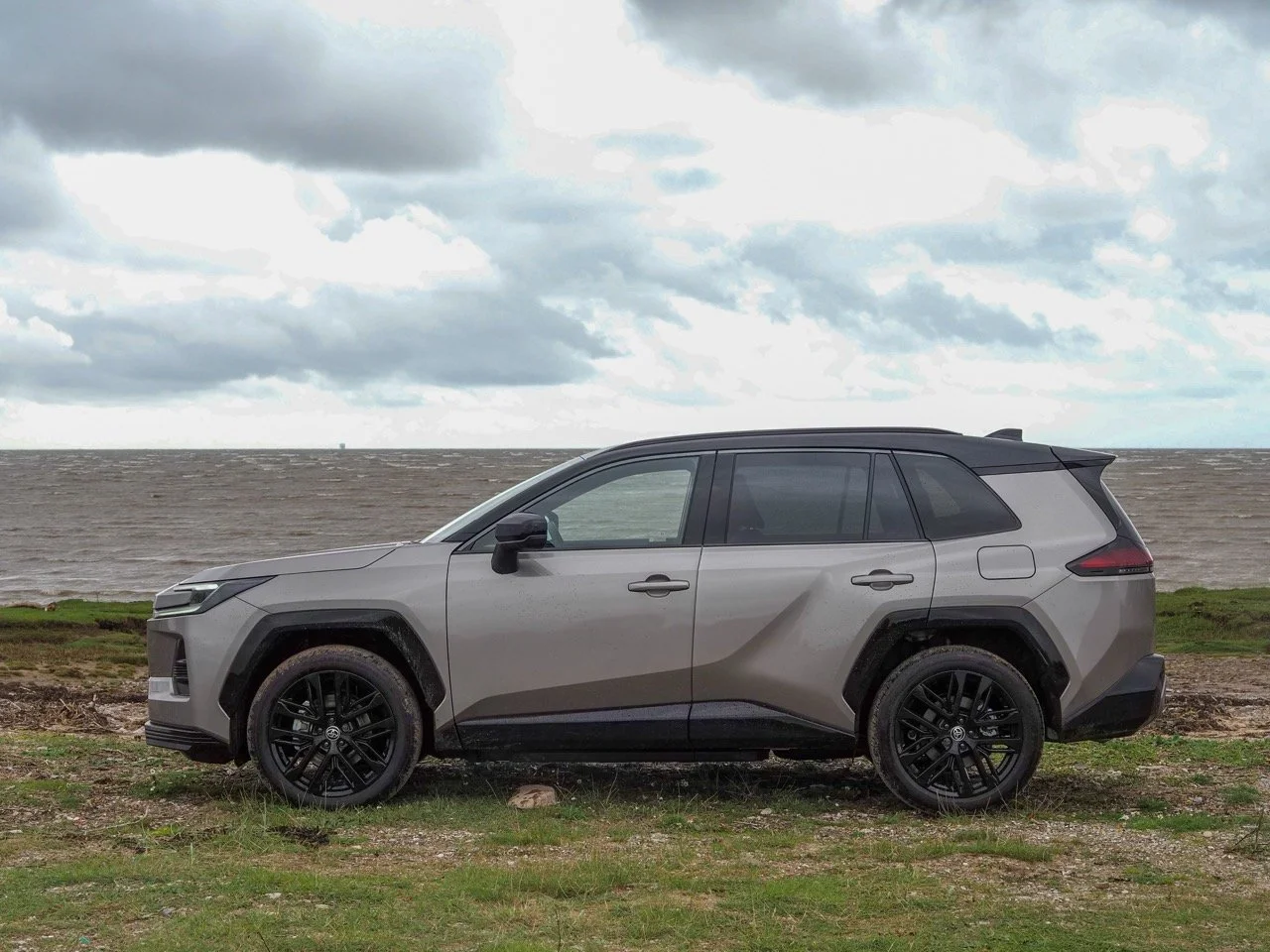
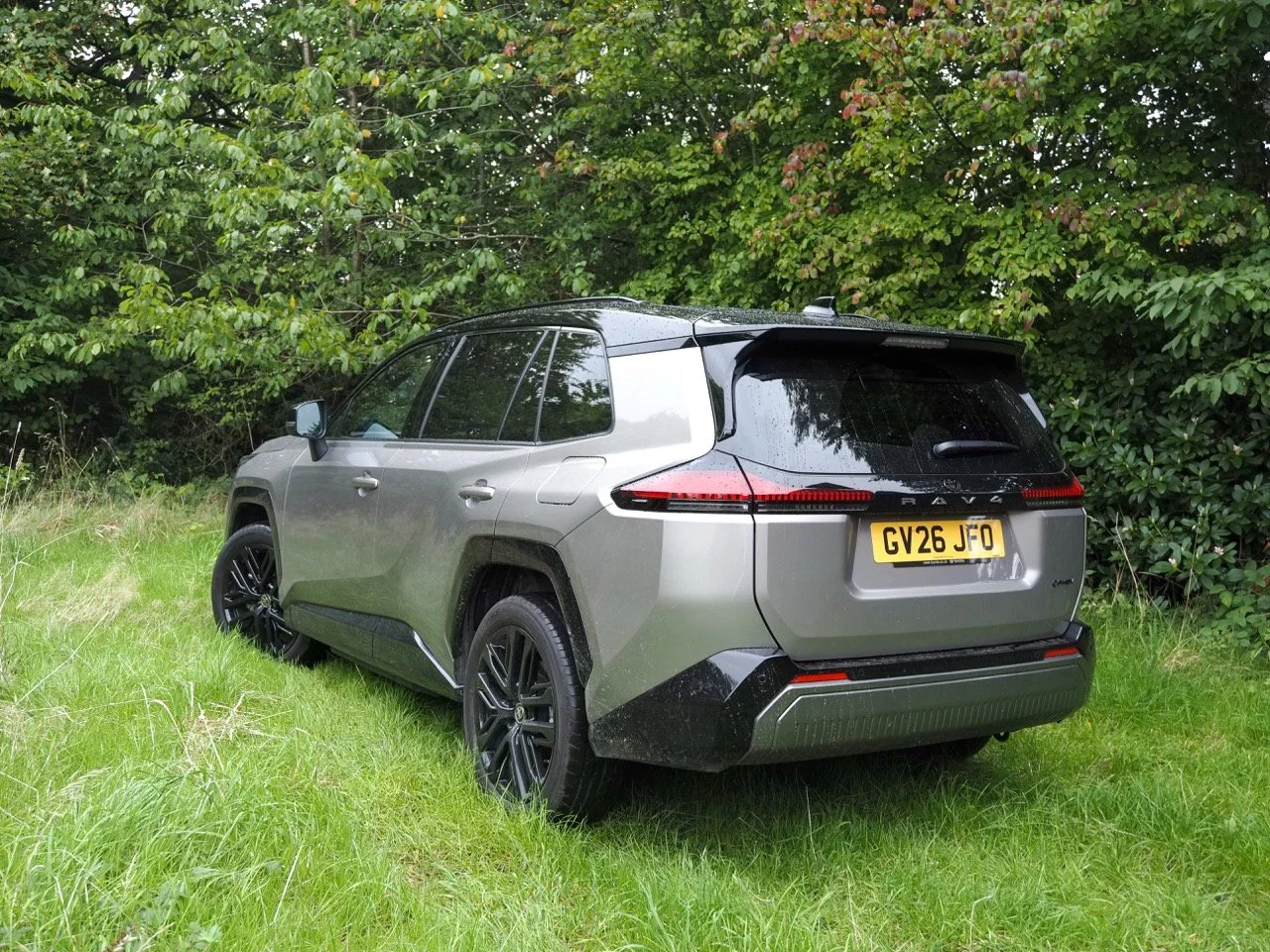
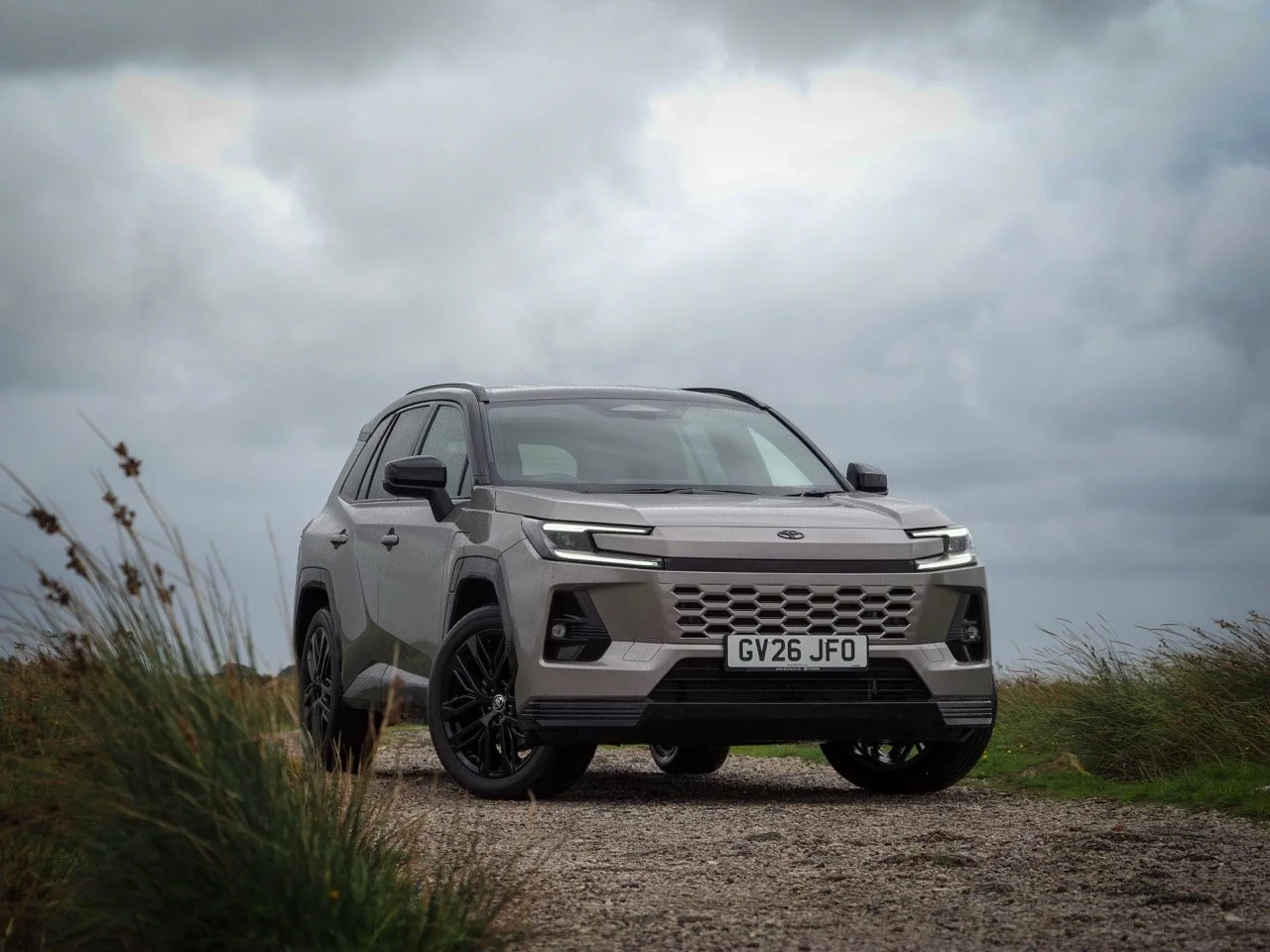
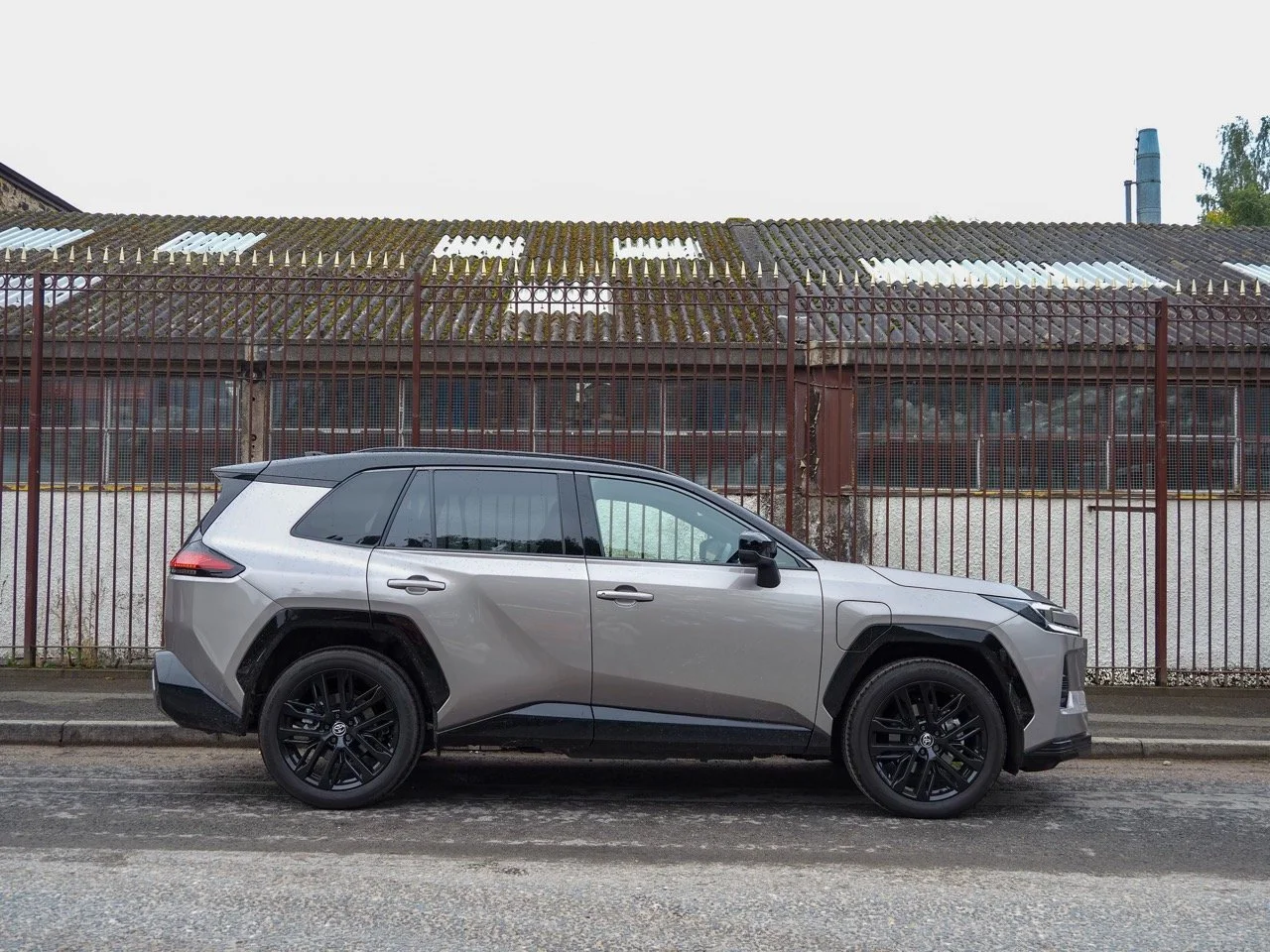
From the outside, Toyota has done a decent job of retaining some RAV4 identity. The chunky wheelarches, upright stance and angular detailing give it a purposeful appearance, and there are enough design cues to stop it becoming completely anonymous.
But spend some time with it and you begin to wonder whether Toyota has deliberately rounded off the edges of what made the RAV4 different.
A motoring writing colleague summed it up rather well: Toyota has somehow designed a replacement that has lost its RAV4-ness.
I couldn't have put it better myself.
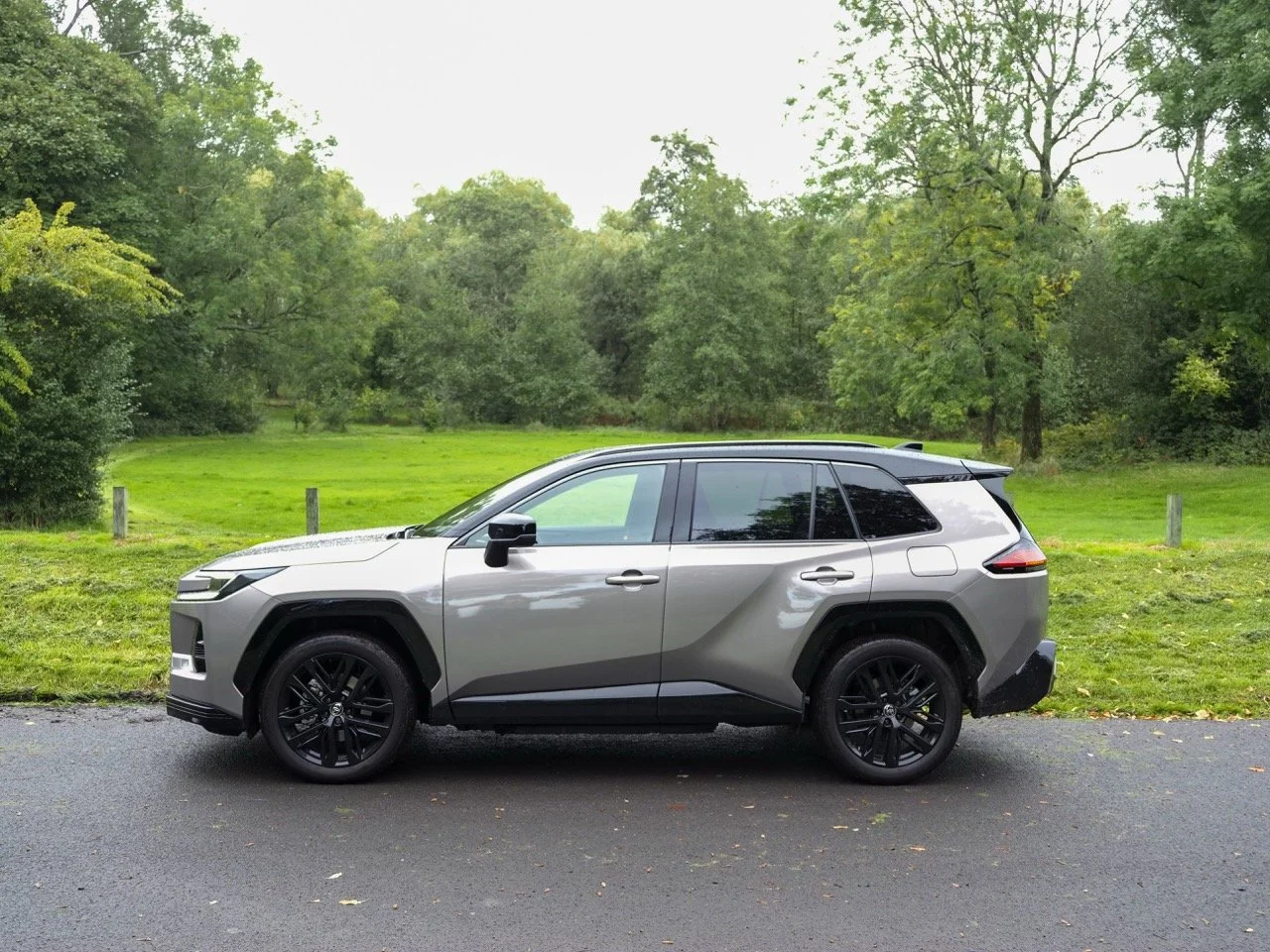
The sixth-generation RAV4 looks like a modern crossover. A good-looking modern crossover, admittedly, but one that could quite easily have a different badge on the bonnet and nobody would be particularly surprised. And that feels like a shame.
The original RAV4 was an oddball. It was compact, chunky, slightly cheeky and genuinely useful. It looked like it wanted to go somewhere muddy even if most owners never did. This new one feels considerably more polished, more corporate and much more concerned with being a modern vehicle than being the RAV4.
On the road
Fortunately, things improve considerably once you press the button and drive away.
The new RAV4 is lovely to drive.
The PHEV powertrain is smooth and quiet, and the electric assistance gives it the sort of instant response that makes urban driving particularly pleasant. With 272 DIN hp available in the FWD version, there is certainly no shortage of shove when you need it.
The ride is generally comfortable without becoming floaty. Broken British roads, potholes, speed humps and the sort of surfaces councils describe as "recently improved" are dealt with reasonably well. It settles nicely at motorway speeds, too, where the combination of electric propulsion and decent sound insulation makes it a relaxed long-distance companion.
On faster A-roads, it is composed rather than exciting. The steering is light and easy, but there's little of the old RAV4's slightly agricultural charm. You point it at a corner and it goes around it without fuss.
Which is exactly what most people want.
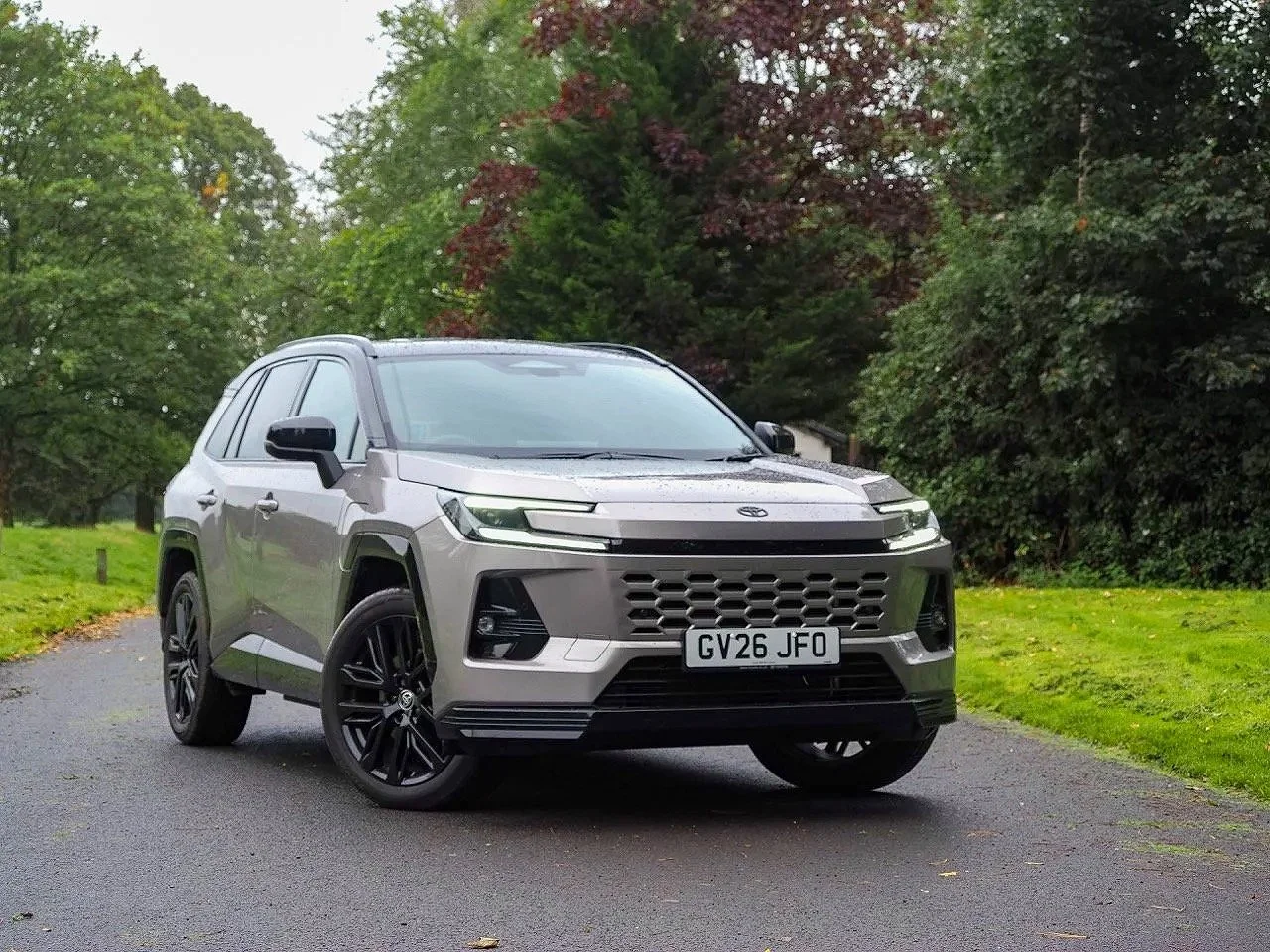
The FWD configuration is worth considering carefully if your idea of RAV4 ownership involves little more than tarmac, gravel tracks and the occasional campsite. The rear electric motor of the AWD-i version isn't there to make the car magically brilliant off-road; it is primarily there to provide additional traction and capability when conditions deteriorate.
For normal road use, the front-drive car feels perfectly capable. And because this is a plug-in hybrid, efficiency is potentially one of its biggest strengths. Toyota quotes an electric range of up to 85 miles WLTP depending on specification, while the official weighted combined fuel-consumption figures stretch as high as 217.2mpg. As ever with PHEVs, those figures depend enormously on how often you charge it and how you drive it.
Charge it regularly and use it for shorter journeys and the petrol engine can spend a surprising amount of time doing very little. Treat it like a normal petrol car without plugging it in and you are missing the point.
The new system also supports faster charging than its predecessor, with an 11kW AC charger and, on applicable versions, 50kW DC charging.
What about off-road?
Well... let's not get carried away.
The FWD RAV4 PHEV is not an off-roader. It is an SUV-shaped family car that can cope with the sort of surfaces that frighten ordinary hatchbacks.
A muddy campsite entrance? Fine.
A wet grass car park? Fine, provided you don't treat the accelerator like an on/off switch.
A decent gravel track? Absolutely.
A proper muddy lane with ruts, steep climbs and the sort of surface where you start wondering whether the farmer will charge you for using his tractor to get you out? That's where the AWD version becomes the sensible choice.
Inside: spacious, comfortable... and slightly irritating
The cabin is where my relationship with the new RAV4 becomes complicated.
There is lots to like.
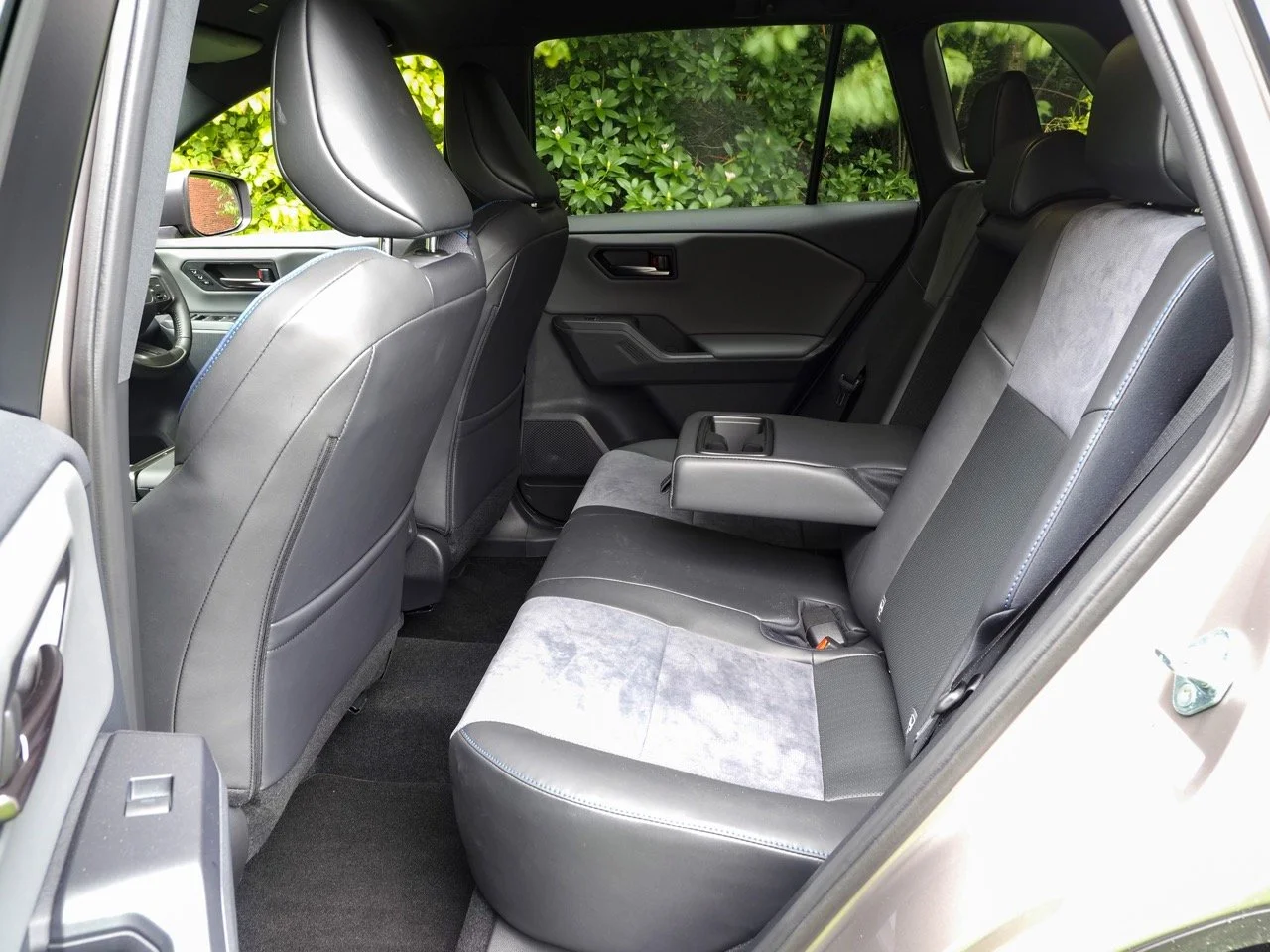
The driving position is good, the seats are comfortable and there's plenty of room for passengers. Rear-seat accommodation is particularly good, with useful legroom and headroom, while Toyota has provided plenty of USB-C connectivity and sensible storage.
The boot is also perfectly usable, with up to 446 litres of luggage capacity in the current UK specification.
So, on paper, it's exactly the sort of family-friendly package the RAV4 ought to be. Then you look at the dashboard.
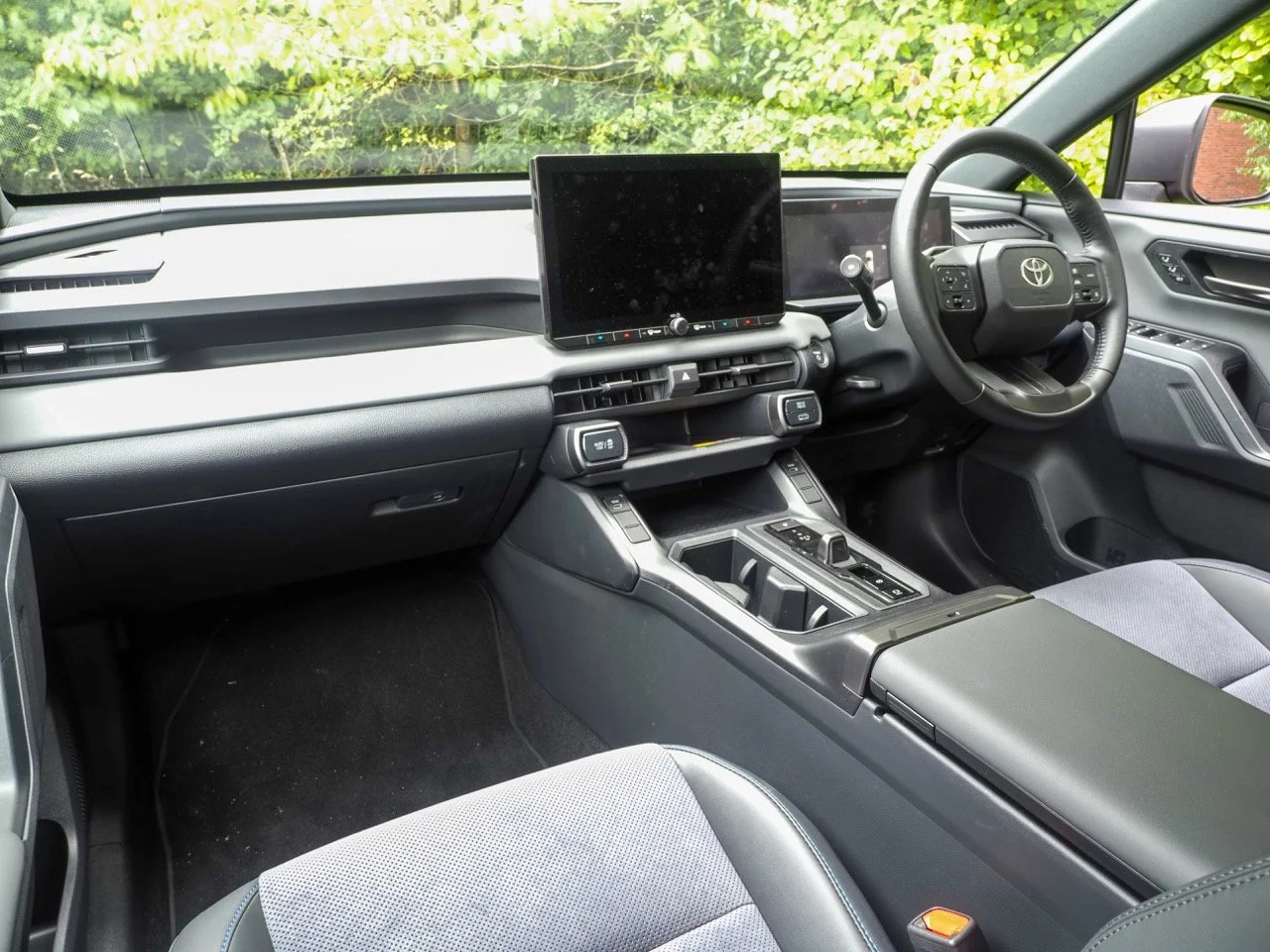
Hello, television.
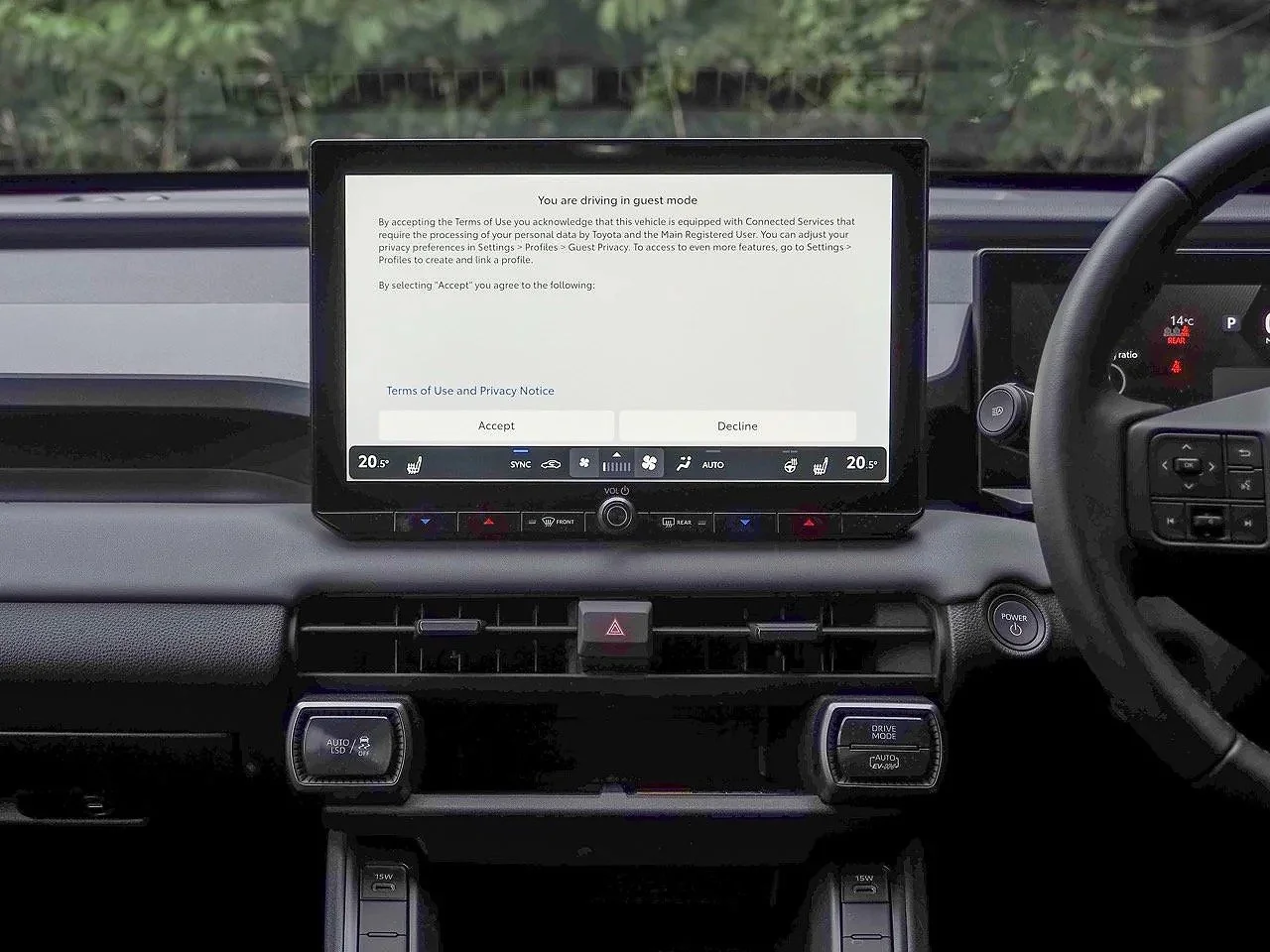
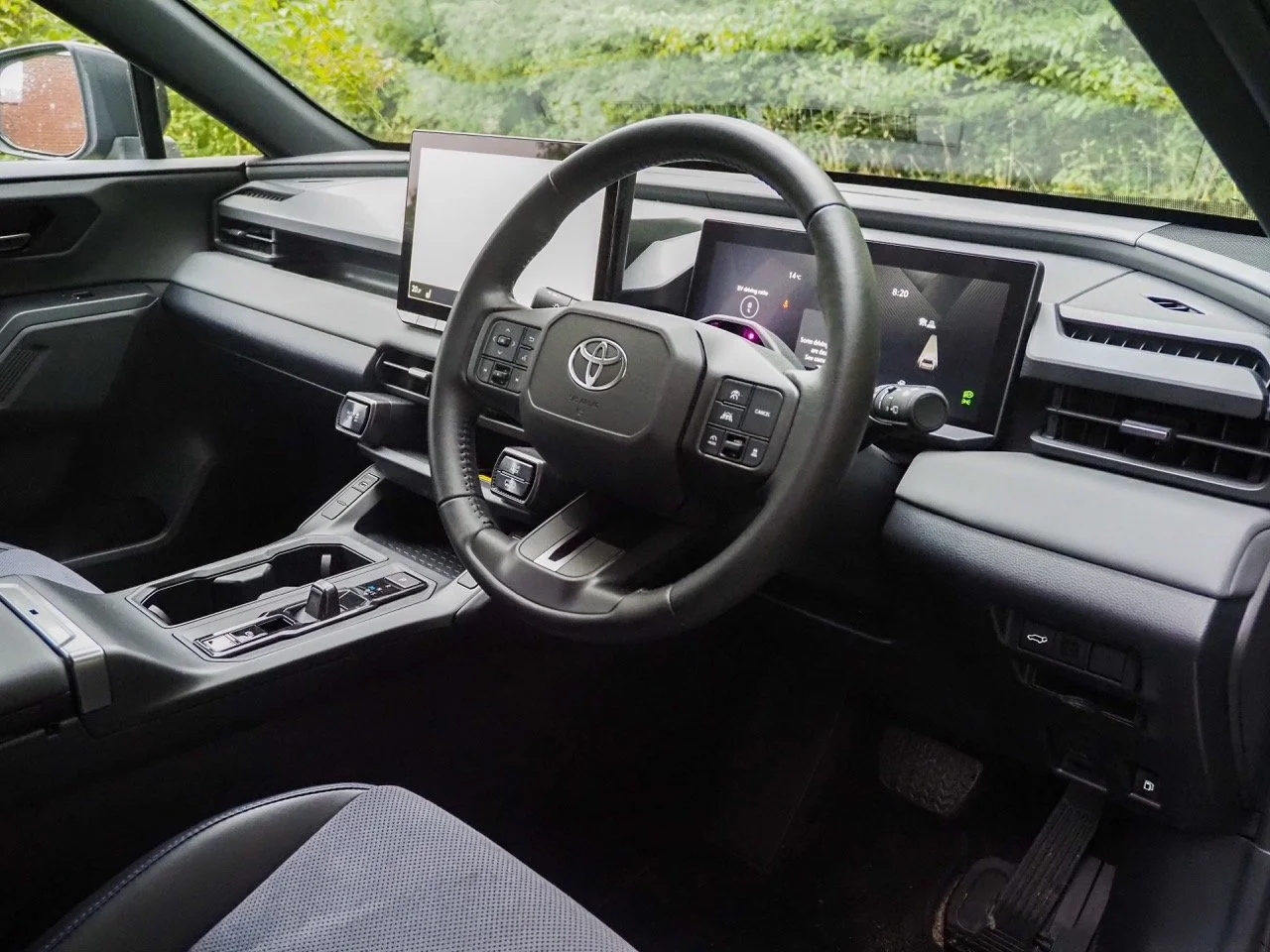
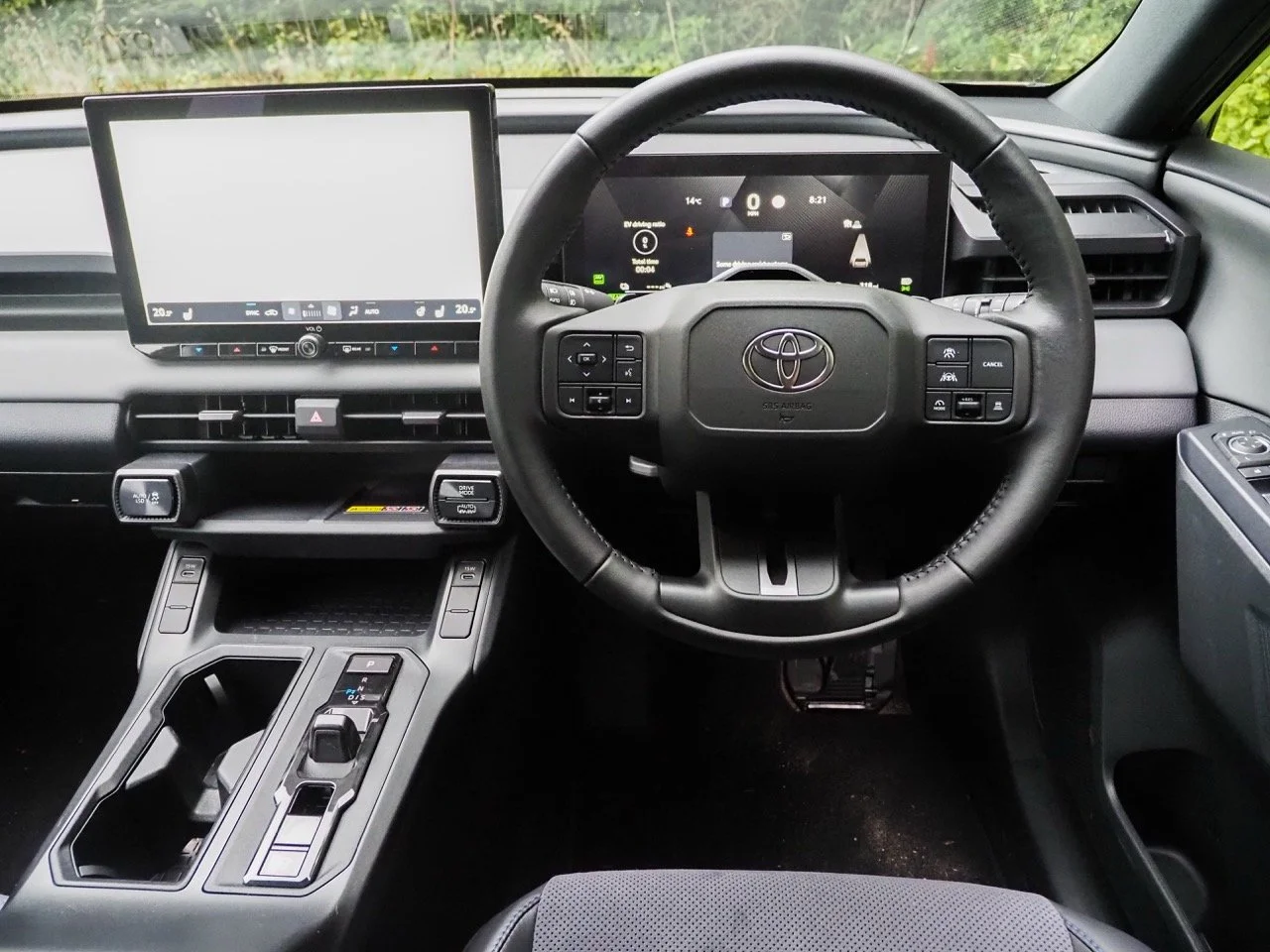
The 12.9” central multimedia display is accompanied by a 12.3” digital instrument display. Toyota describes the arrangement as intuitive and easy to read.
I describe it as looking like someone has mounted a small cinema screen across the dashboard. It’s a bit distracting.
The previous RAV4 had huge, rubberised chunky dials for the heater controls (left image), these have been replace with the tiniest of buttons that appear to have been designed by a 12-year old gamer who sits in their bedroom where heating is an afterthought. (Right image).
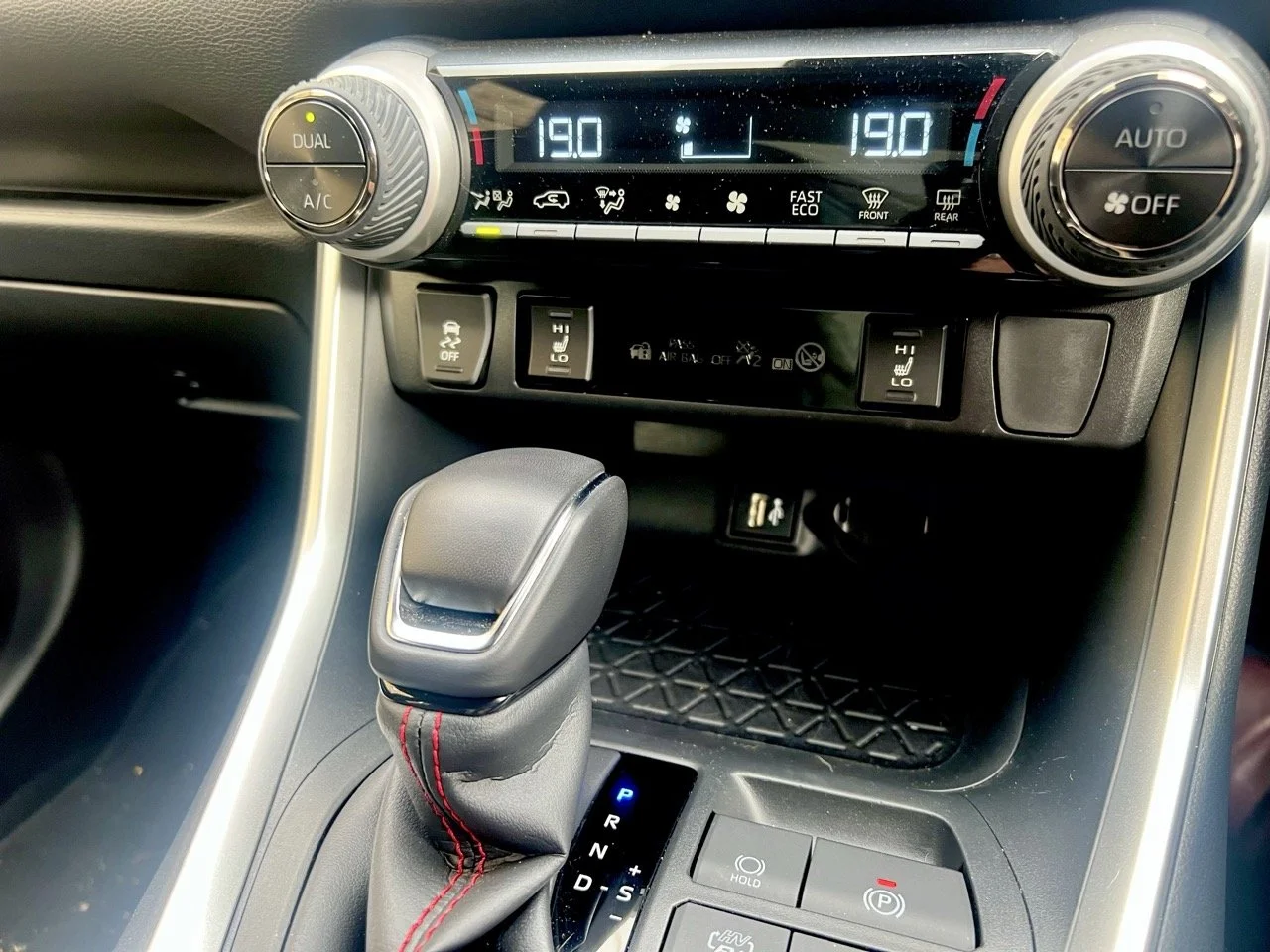
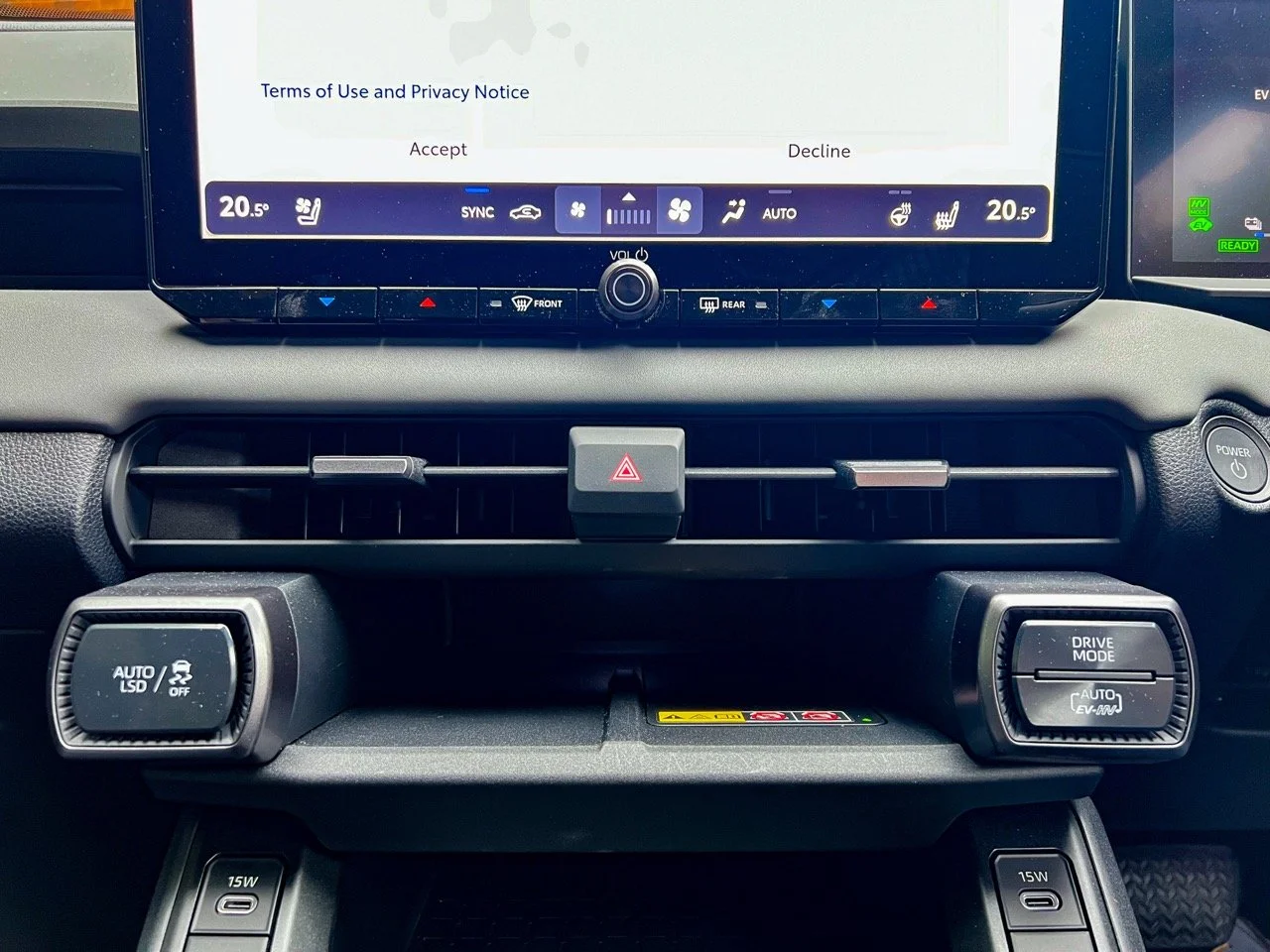
Consequently they’re small, fiddly and unnecessarily tucked into the surrounding dashboard design.
I know it’s a silly thing to get wound up about, but this is supposed to be a vehicle designed to be used in the real world. People will drive it when it's freezing, raining, misting up, boiling hot, while wearing coats, with children arguing in the back and a dog trying to lick the windows. That's when physical controls make sense.
I’ve moaned about this on previous cars, and readers have commented that you can use voice control to change the temperature. No, just no.
The muddy dog test
This is where the RAV4 does redeem itself.
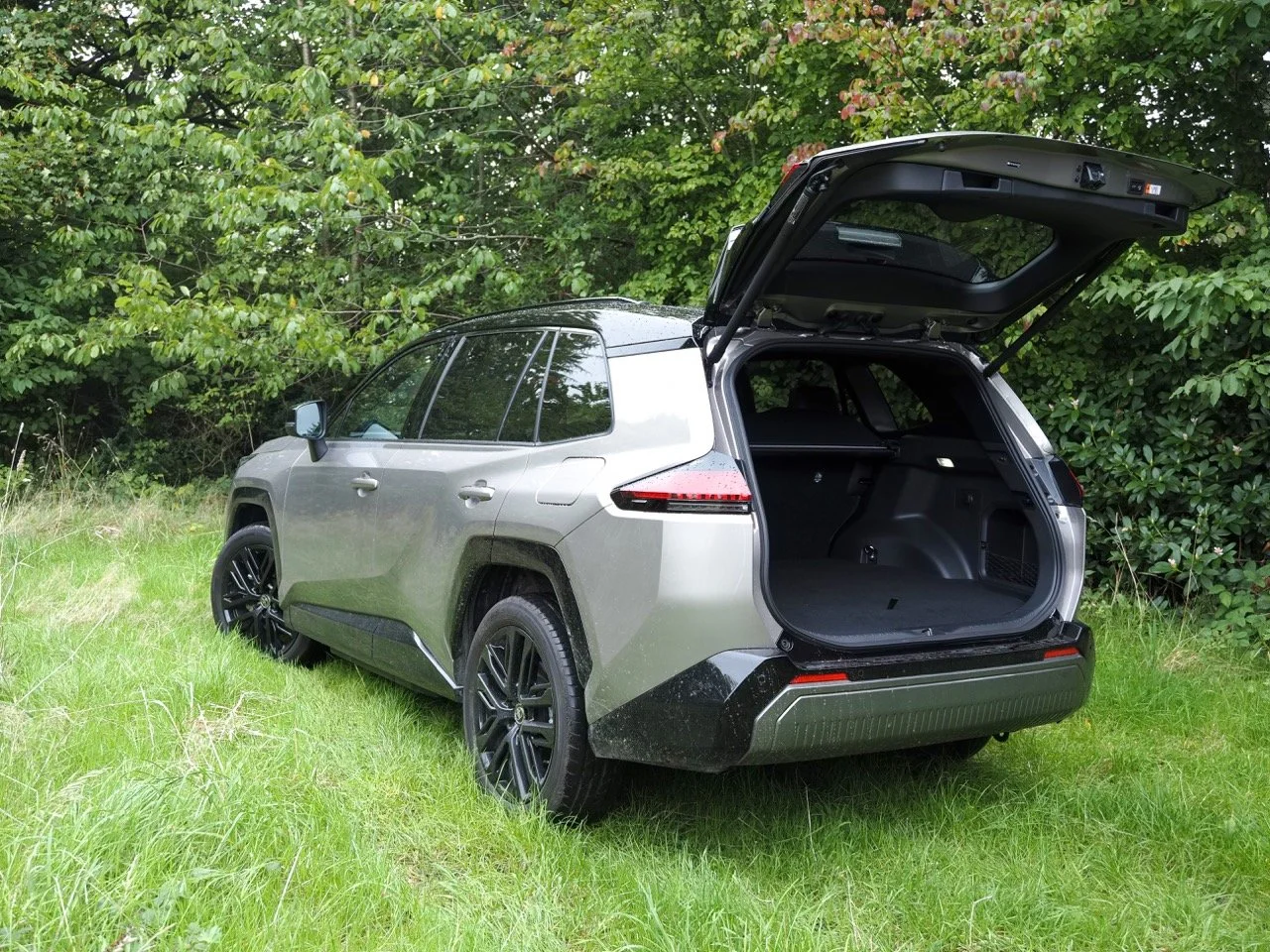
Open the tailgate and you've got a decent, square-ish load area that is easy to use. The rear seats fold almost flat for larger loads and the boot is sufficiently practical for the usual collection of outdoor nonsense.
And by nonsense, I mean important stuff.
Mud-covered boots. Camping chairs. Recovery gear. A dog. Bags of logs. A stove. Half a kitchen. A rucksack containing another rucksack for reasons nobody can explain. The RAV4 can swallow a respectable amount of it.
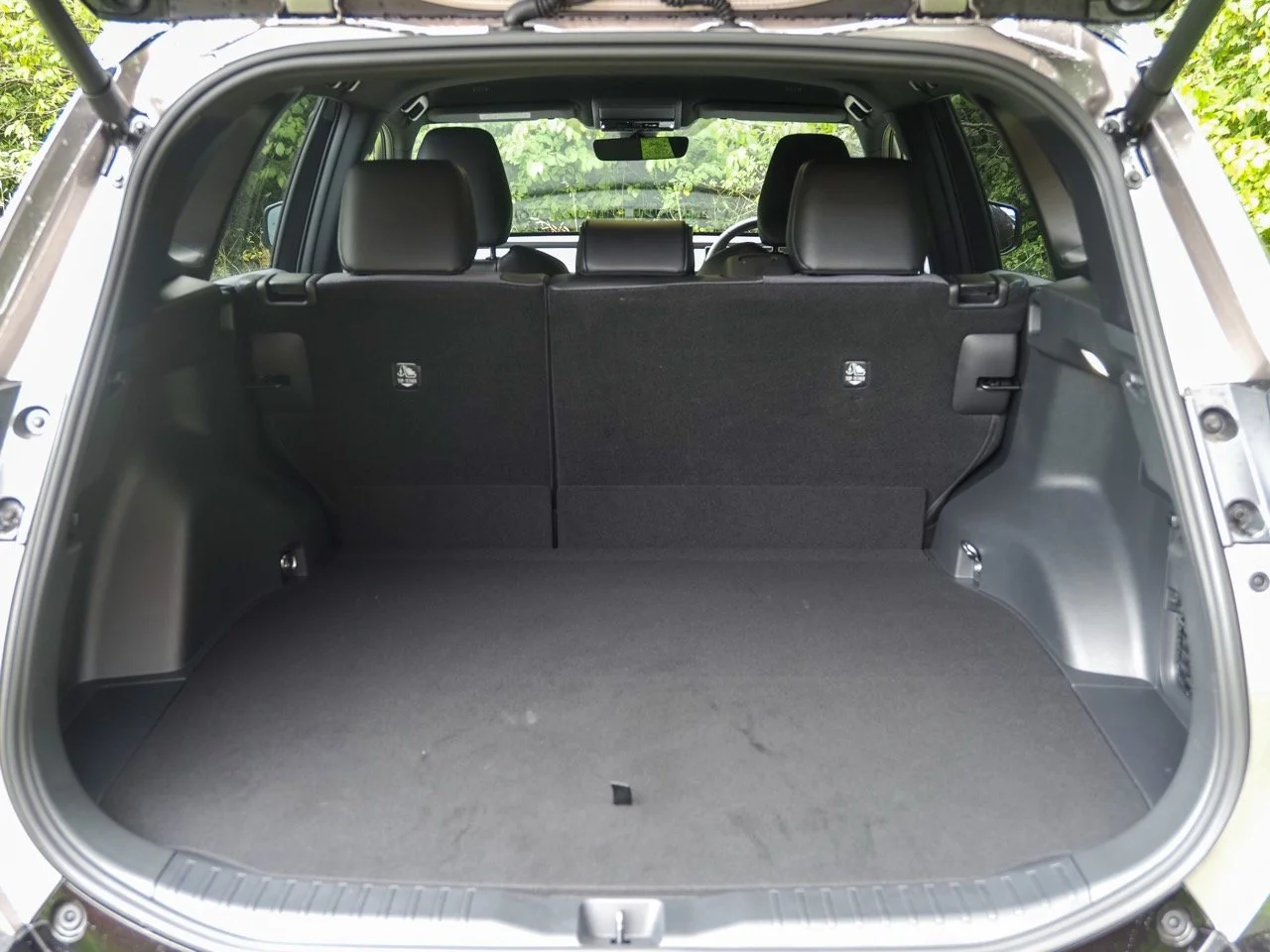
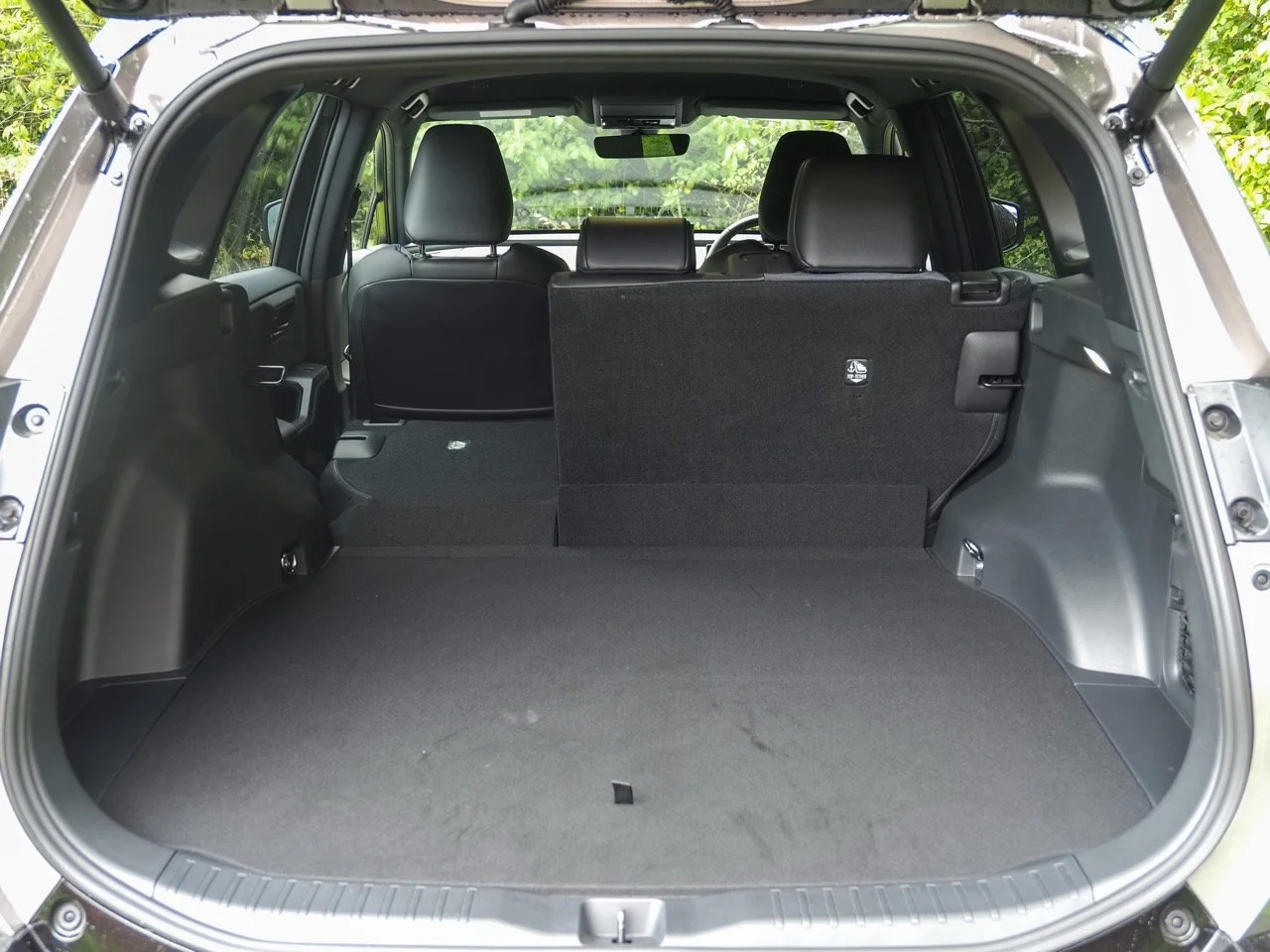
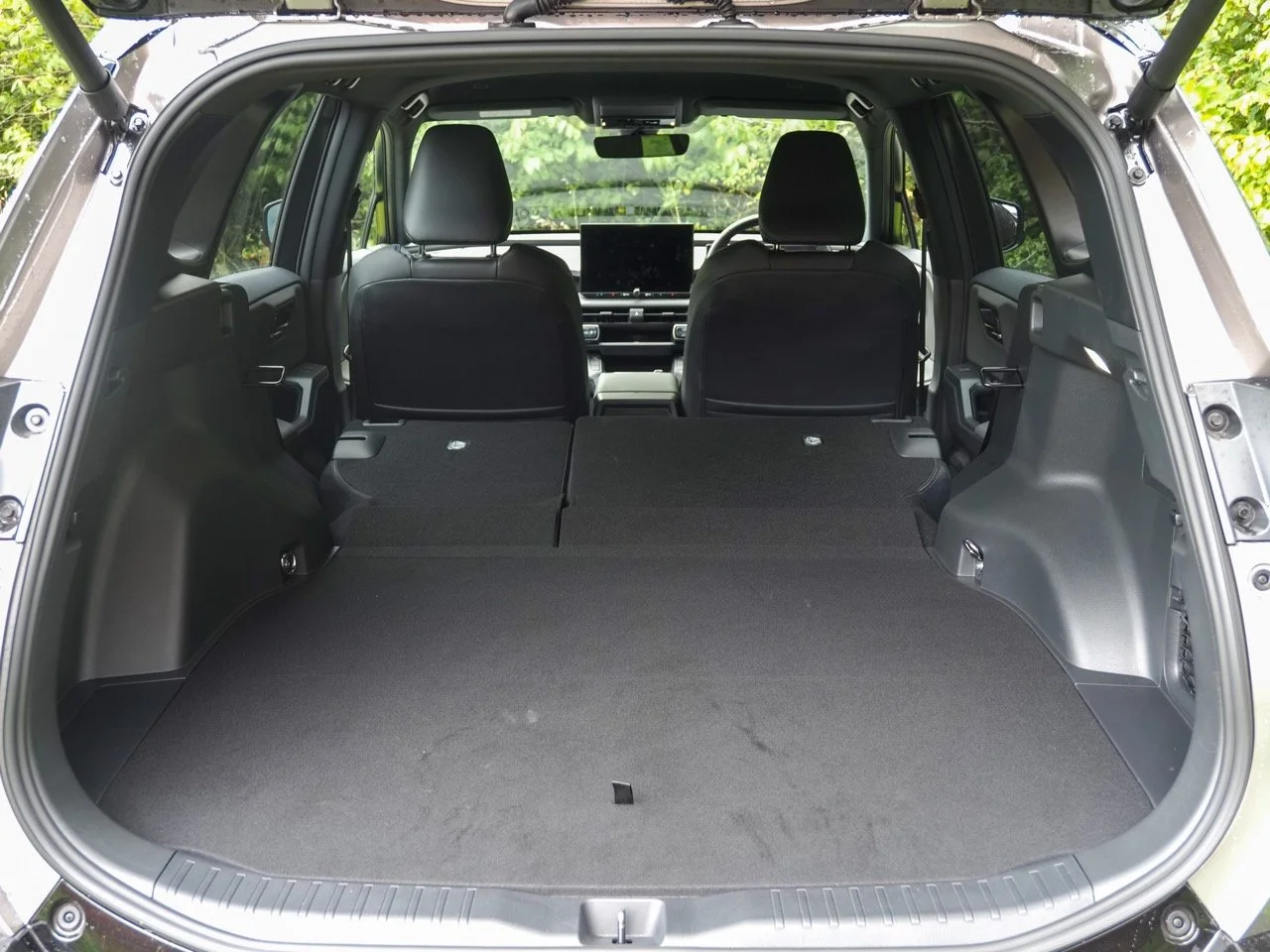
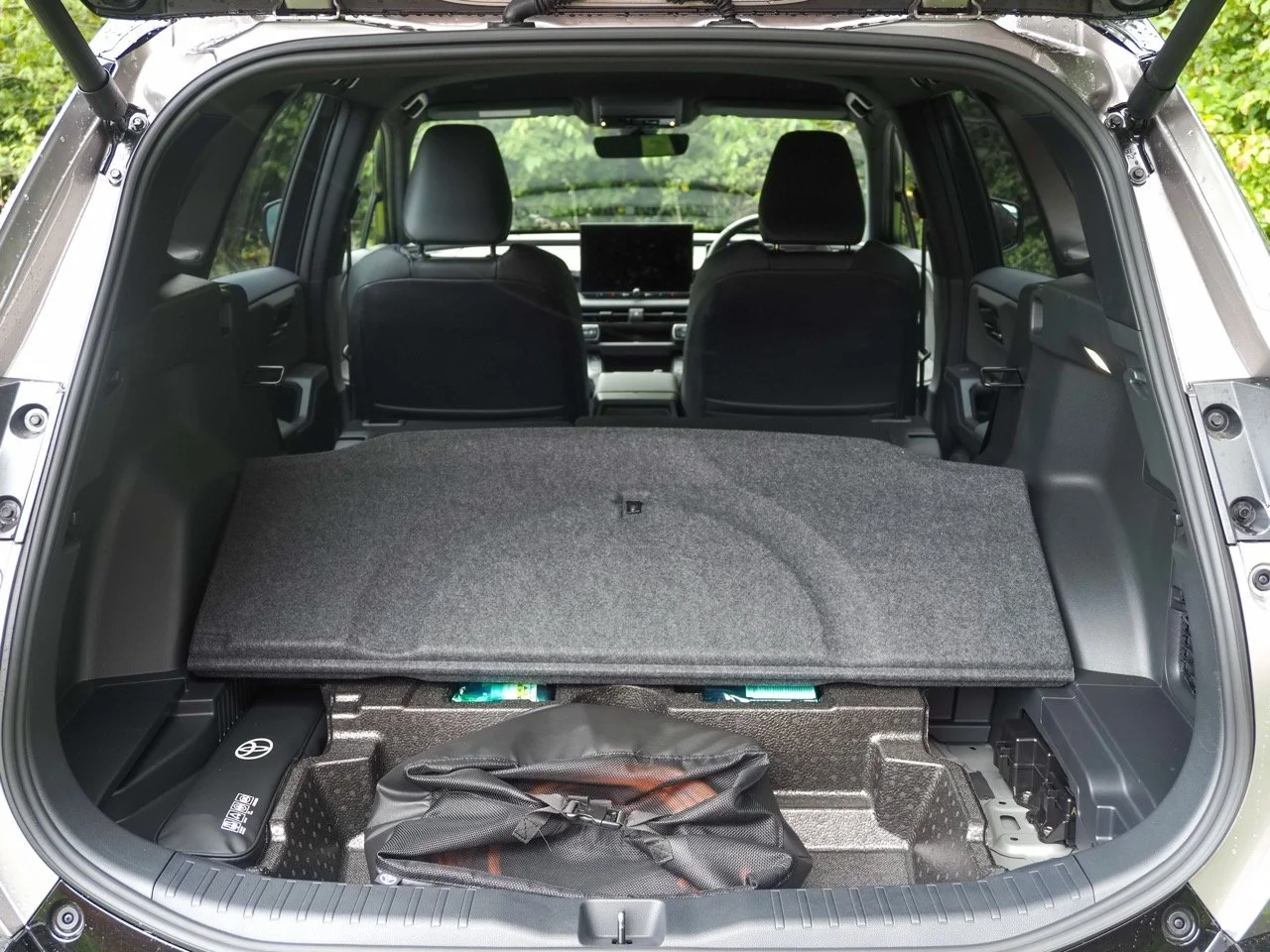
The loading height is manageable and the boot opening is broad enough that you're not playing automotive Tetris every time you load it.
Toyota also offers practical accessories such as boot liners, seatback protection and all-weather mats, which make considerable sense if your idea of recreation involves mud rather than a golf club and a fleece waistcoat.
For a family, dog owner or outdoorsy couple, it's a useful space. It's just not quite as usefully rugged in spirit as the RAV4's history suggests it should be.
Verdict
At the end of the week, I came away with two completely conflicting opinions.
The first is that the sixth-generation Toyota RAV4 PHEV 2WD is a very good crossover.
The second is that I don't particularly like what Toyota has done to the RAV4.
As a modern family crossover, it is comfortable, refined, practical, efficient and pleasantly quick. The plug-in hybrid system is particularly impressive if you have somewhere to charge it, and the FWD version will be perfectly adequate for the majority of owners who spend their lives on tarmac.
But the RAV4 used to be more than a collection of useful attributes.
It had character.
It felt like the sort of car you could chuck camping gear, a muddy dog and a pile of questionable outdoor equipment into without giving it too much thought. It felt rugged without being a battered old Hilux.
The new one can still do all those things, but it just feels as though it's wearing a nice shirt while doing them.
And perhaps that's the inevitable progression of the modern car. Everything gets smarter, quieter, cleaner, safer and more technologically advanced.
But sometimes, in making something objectively better, you accidentally remove the thing that made people love it in the first place.
So yes, the sixth-generation RAV4 is good. Very good, in fact.
But is it still a RAV4 in the way the old RAV4s were RAV4s?
For me, sadly, no. Gone is much of the original charm, replaced by another thoroughly competent crossover.
And that's a bloody shame.