
Rhino vs EV: The KGM Musso Showdown
A Bit of Friendly Rivalry
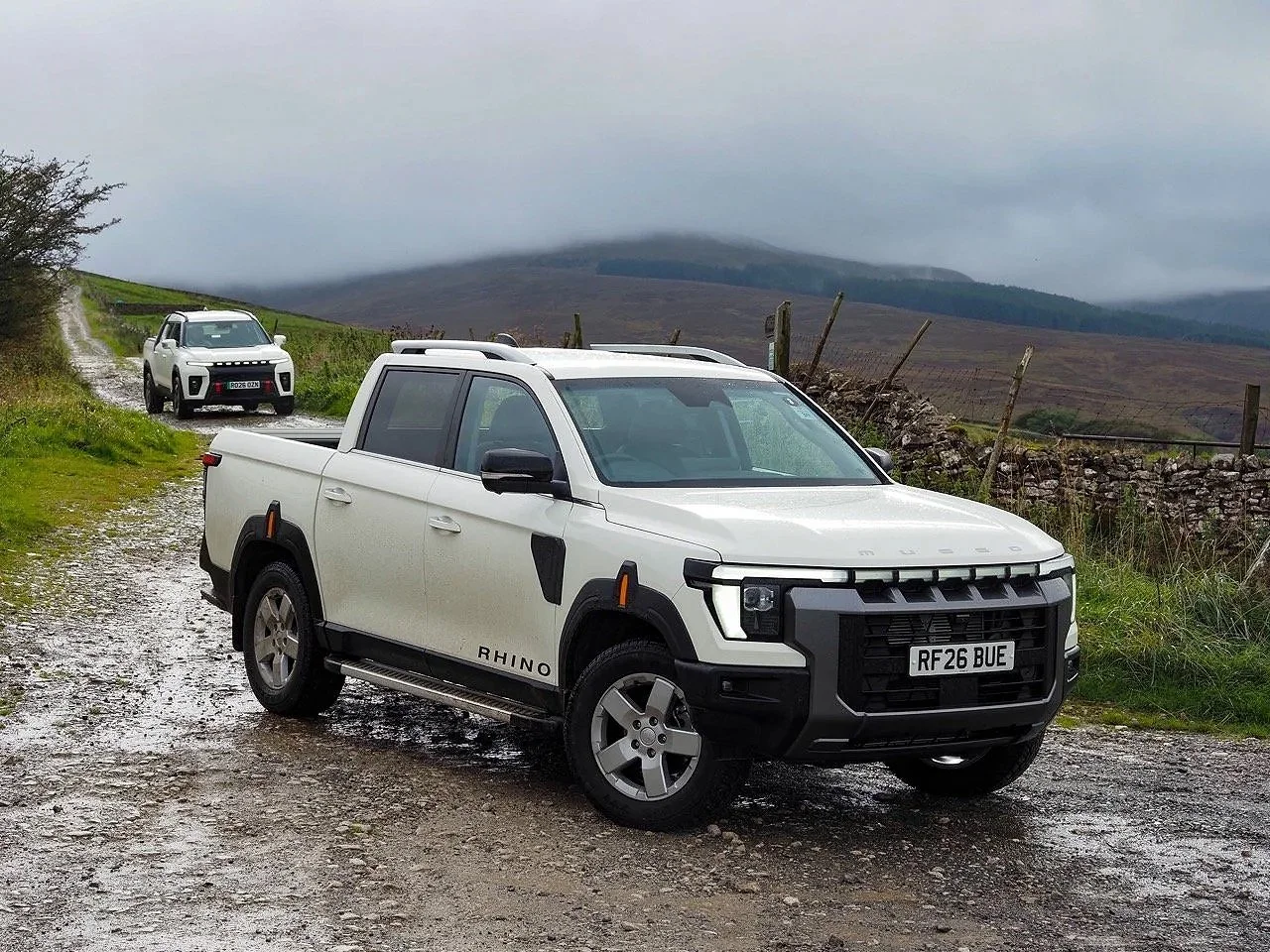
There was always going to be a bit of friendly rivalry when Andy and I set off across North Yorkshire in two very different KGM Mussos.
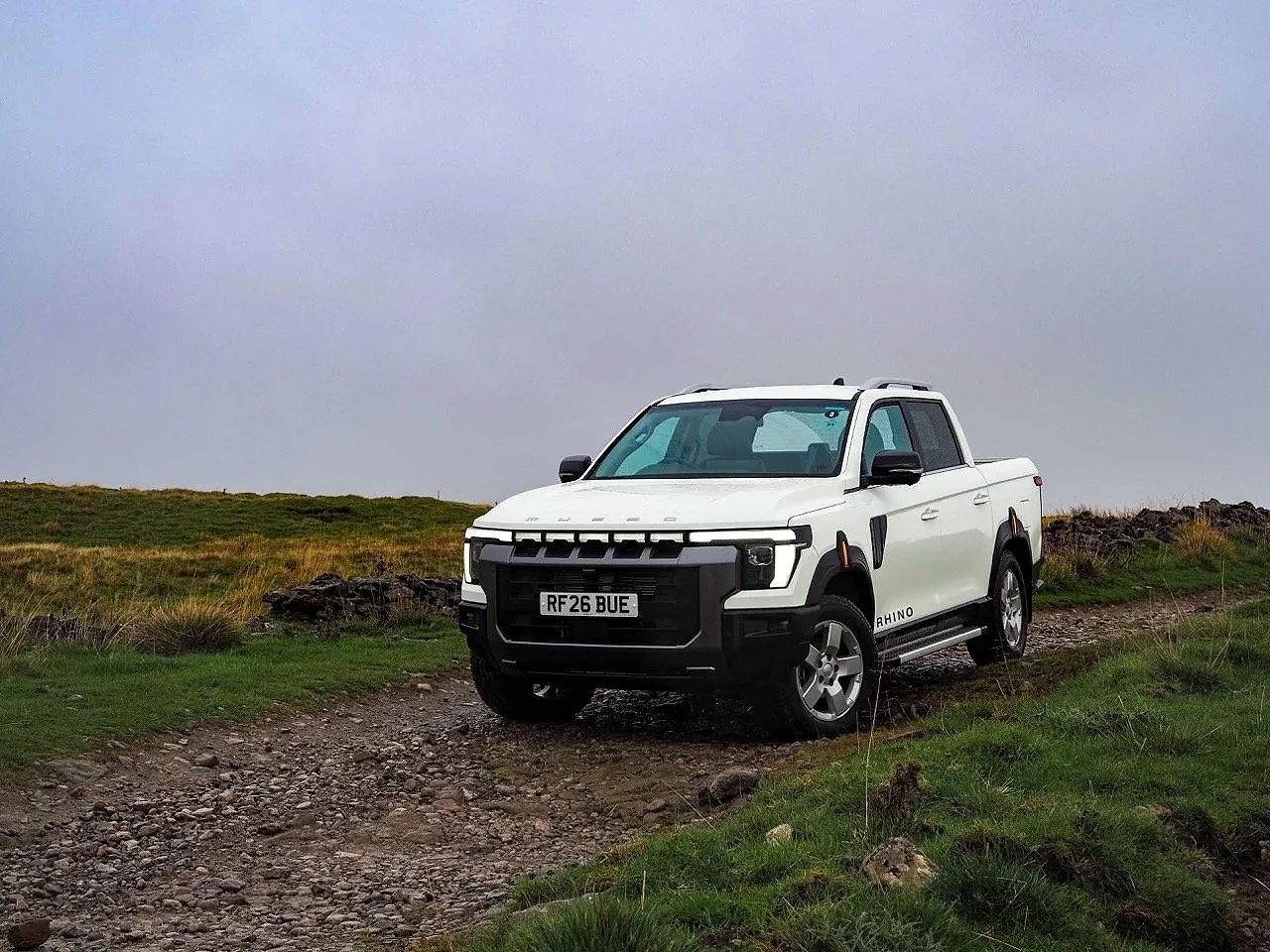
I had the Musso Rhino, complete with its 2.2-litre diesel engine, selectable four-wheel drive and the sort of chunky, old-school 4x4 credentials that make you feel quite at home on a green lane. Andy, meanwhile, had the Musso EV – a fully electric, dual-motor pickup with all-wheel drive, instant torque but considerably less ground clearance.
So, naturally, we decided to see what happened when we put them both to work.
From Settle we made our way to the Buck Inn at Buckden for our usual fish butty and a pint, before heading through Cray to our first lane: Gilbert Lane (SD9480-01), which leads onto High Lane (SD9383-03).
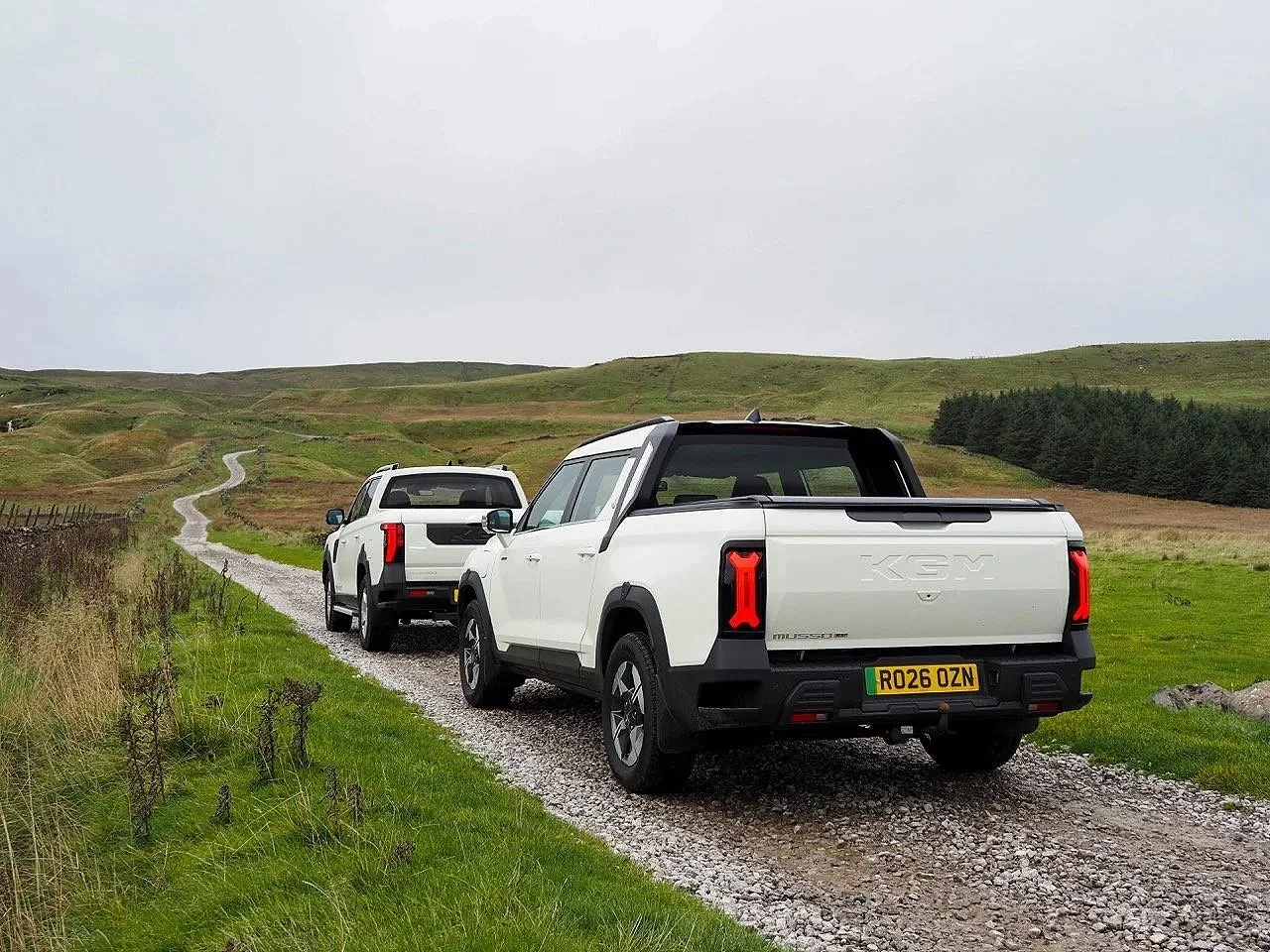
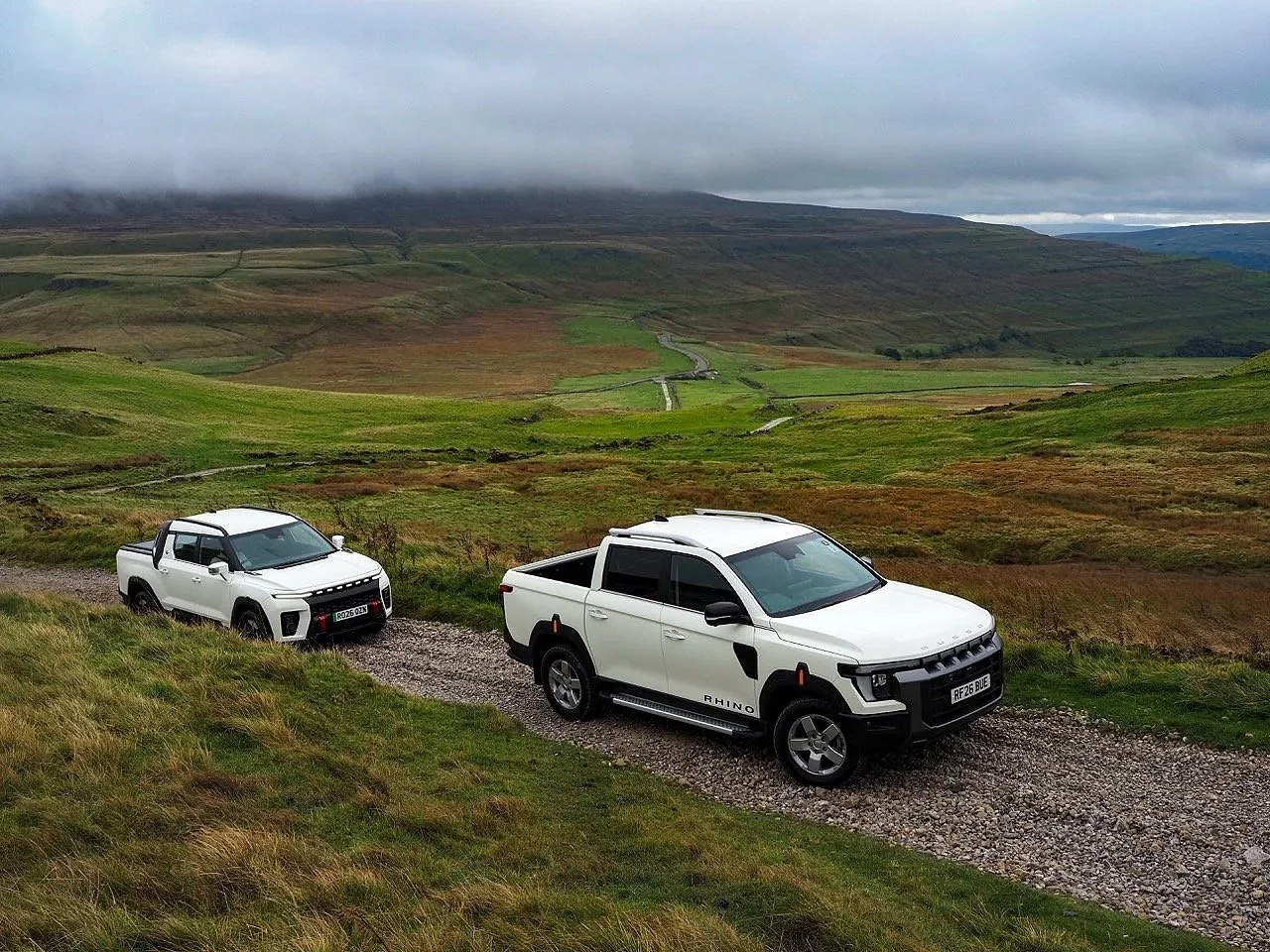
It was wet, very wet, and windy. There were large puddles to splash through, plenty of gates to open and close, and generally the sort of weather that makes green-laning considerably more… what’s the word - challenging!
The whole lane has a pretty solid base, although the downward section has some loose stone. Both Mussos coped admirably, although with around 181mm of ground clearance, the EV has considerably less underneath it than the Rhino. The Rhino has a quoted 245mm clearance, and that extra 64mm was noticeable when things got a little more awkward.
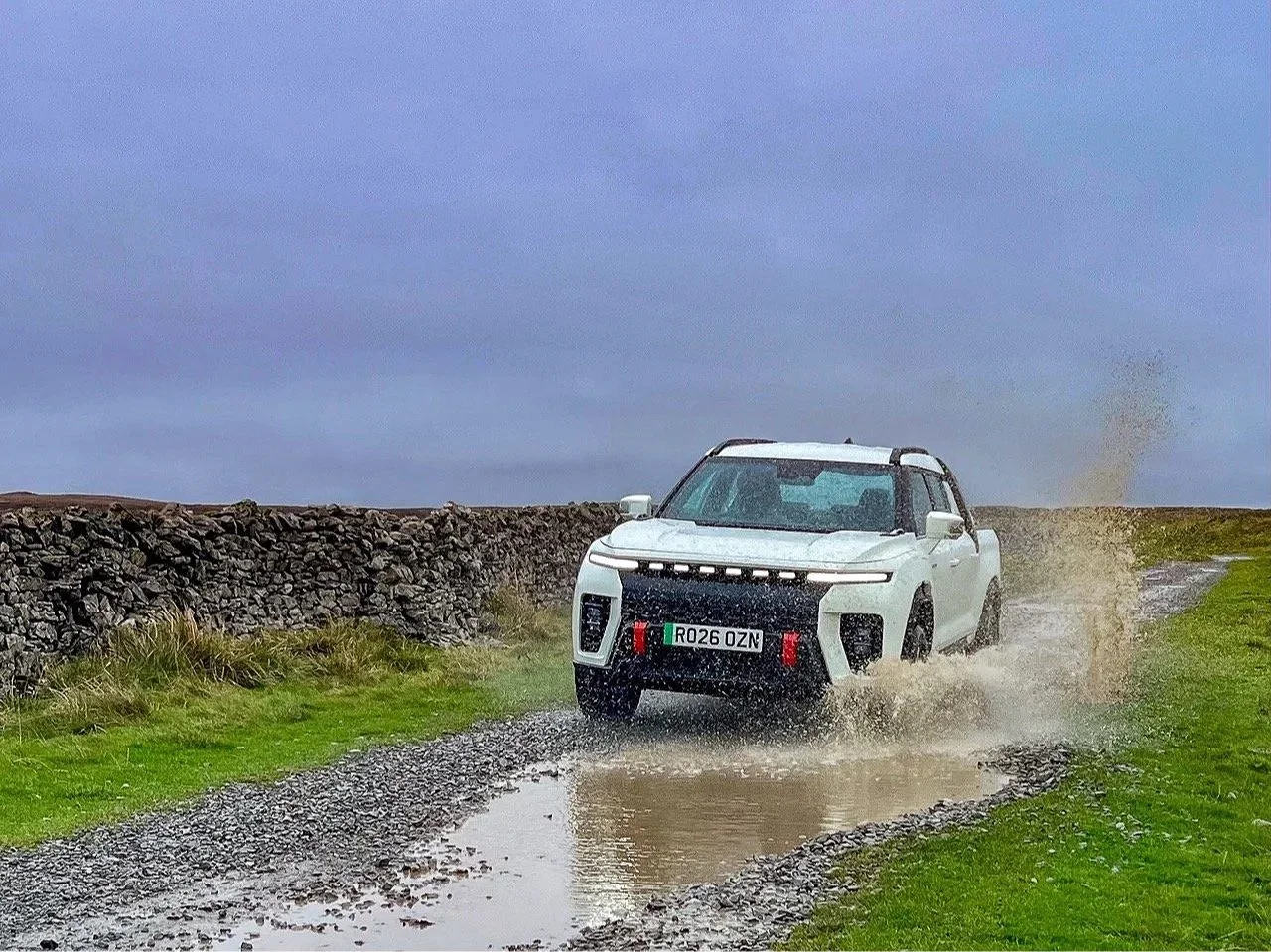
That isn't to say the EV is some sort of delicate urban pickup. Far from it. Its dual-motor AWD system constantly distributes torque between the axles, so rather than the driver selecting high or low ratio 4WD, the electronics are doing the thinking. There is no traditional low-range gearbox, but on wet grass, mud and slippery surfaces the instant response from the electric motors gives it an impressive ability to find traction.
The Rhino takes a much more traditional approach. Turn the dial and you have 2H, 4H or 4L, with hill descent control thrown in for good measure. It is proper, selectable four-wheel drive rather than clever electronics pretending to be one. When the going gets properly difficult, the Rhino's low ratio is a significant advantage. Though it must be mentioned that, as far as I’m aware, it’s also the only pickup on the UK market that doesn’t come with a rear locker.
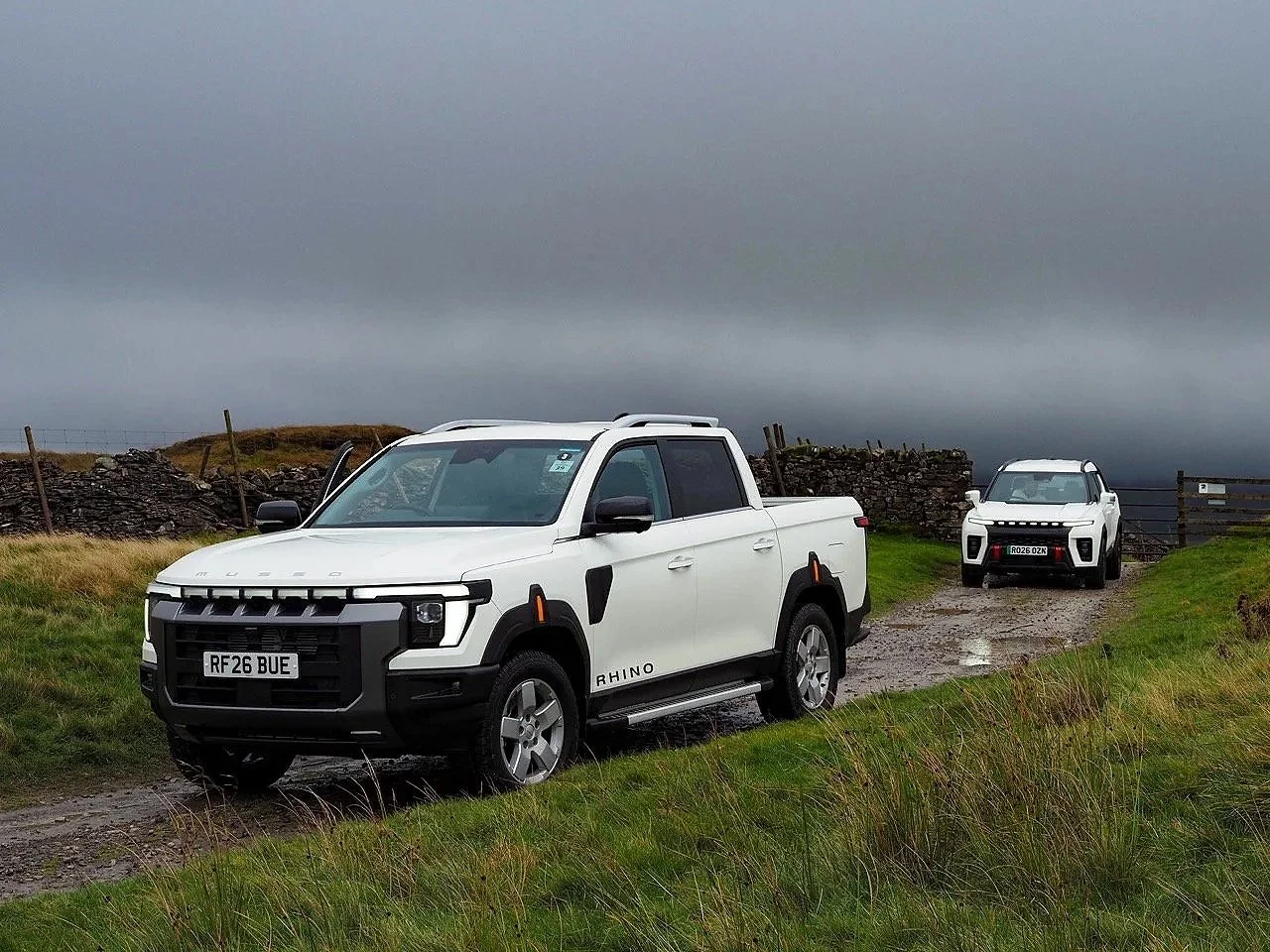
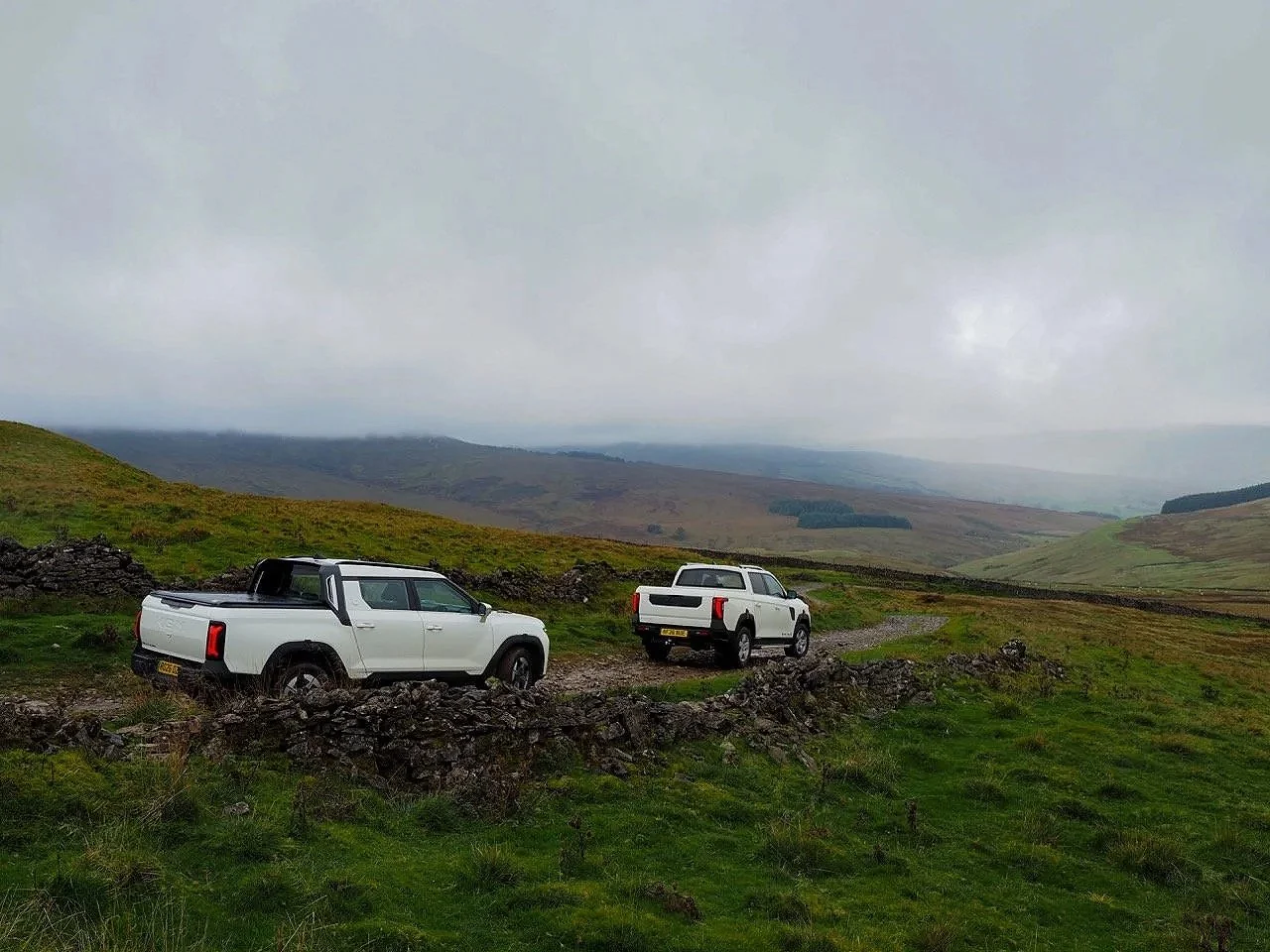
For the sort of lanes we were driving, though, neither truck was remotely out of its depth.
As mentioned, there were plenty of gates to open and close, which, given the weather, was actually quite good fun. Nothing says 'North Yorkshire adventure' quite like getting out of a pickup in horizontal rain, wrestling with a gate and then climbing back into a vehicle sodden to the bone.
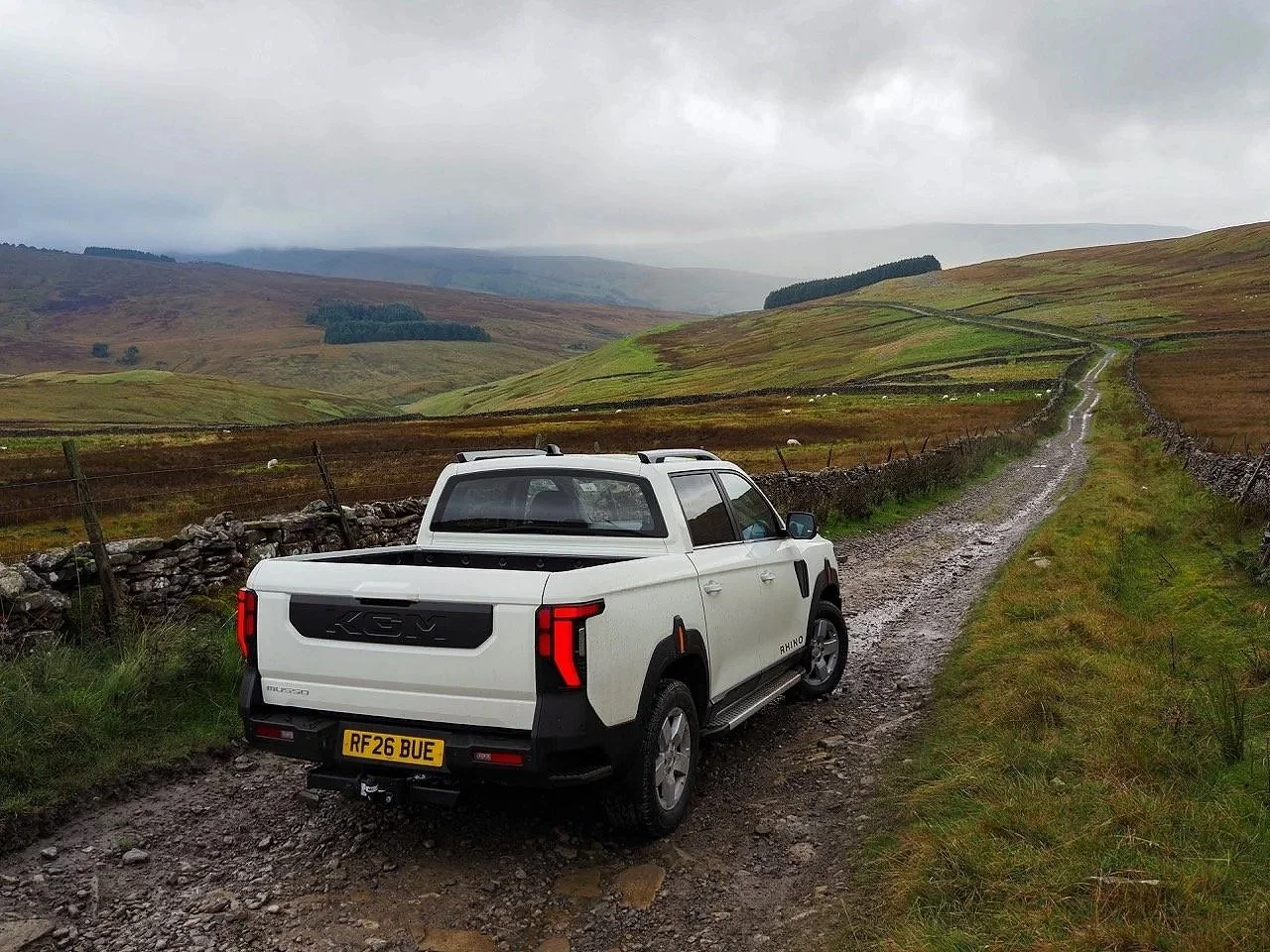
On a clear day the views from up here are stunning. Despite the angry-looking clouds, visibility wasn't actually too bad as we headed dow towards Semerwater, though the wind was still relentless.
Ties, Trucks and Semerwater
Next stop was the shoreline of Semerwater for some photographs. As I've mentioned before, driving to the shoreline and taking photos is a must, but don't forget to pay because the land is private.
We had a good chat with the farmer, covering everything from the influx of Chinese cars and their questionable reliability to Trump and transgender activists. Quite how we managed to get from KGM pickups to that particular combination of subjects I'm still not entirely sure.
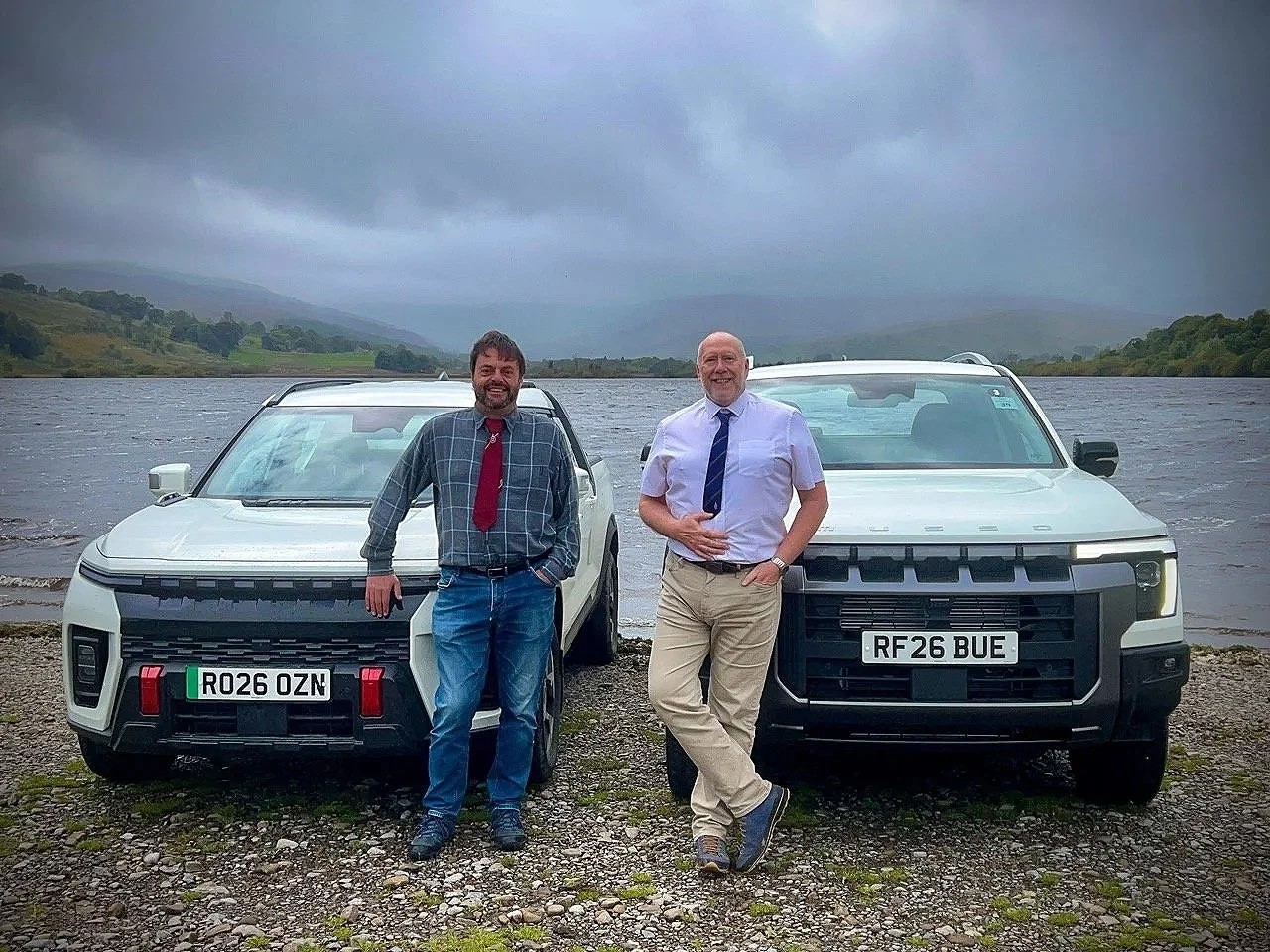
We had also come suitably dressed
Being Chair of the Northern Group of Motoring Writers, Andy had been given a box of old bits and pieces, among which were some old Northern Group ties. It would have been rude not to wear them.
Putting a tie on for the first time in about a decade, in strong wind and rain, proved considerably more challenging than it sounds. But it had to be done.
I’m the one on the right who looks like a coach driver!
Then Things Got Wetter
Cam High Road was next and, much like Gilbert Lane, it requires moderate ground clearance in places and rewards you with some cracking views – when you're not surrounded by cloud.
The surface is generally firm, with only a few deeper ruts and limestone steps for Andy and his EV to worry about. Nothing particularly serious if you're in a proper 4x4, like me in the Rhino.
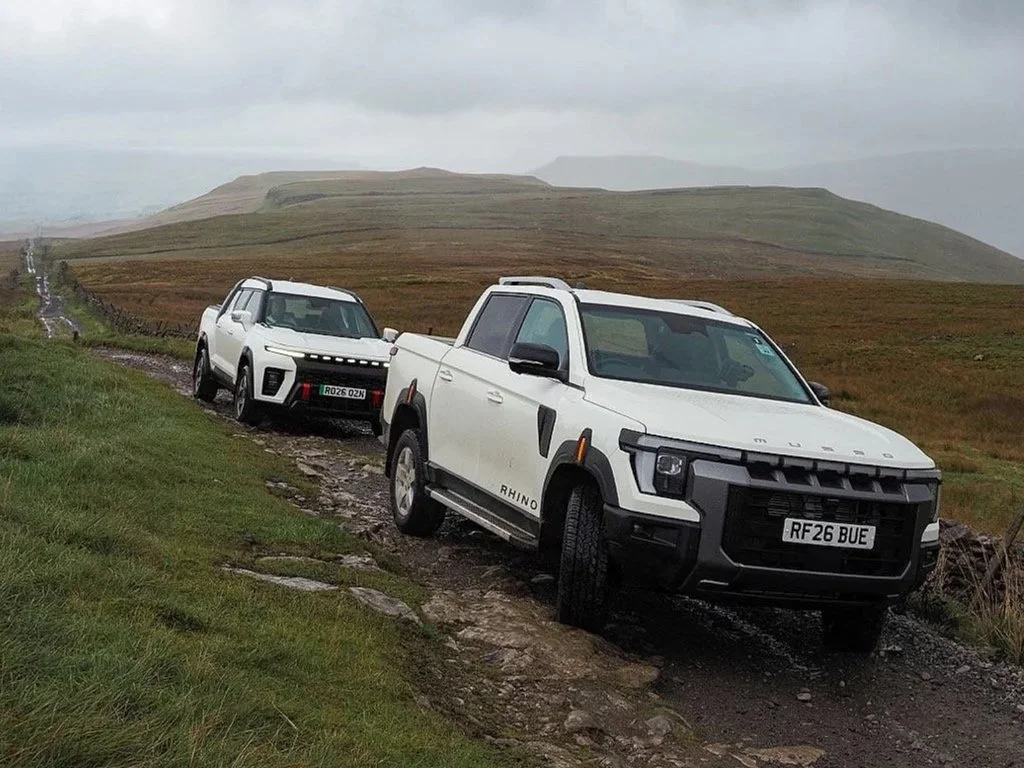
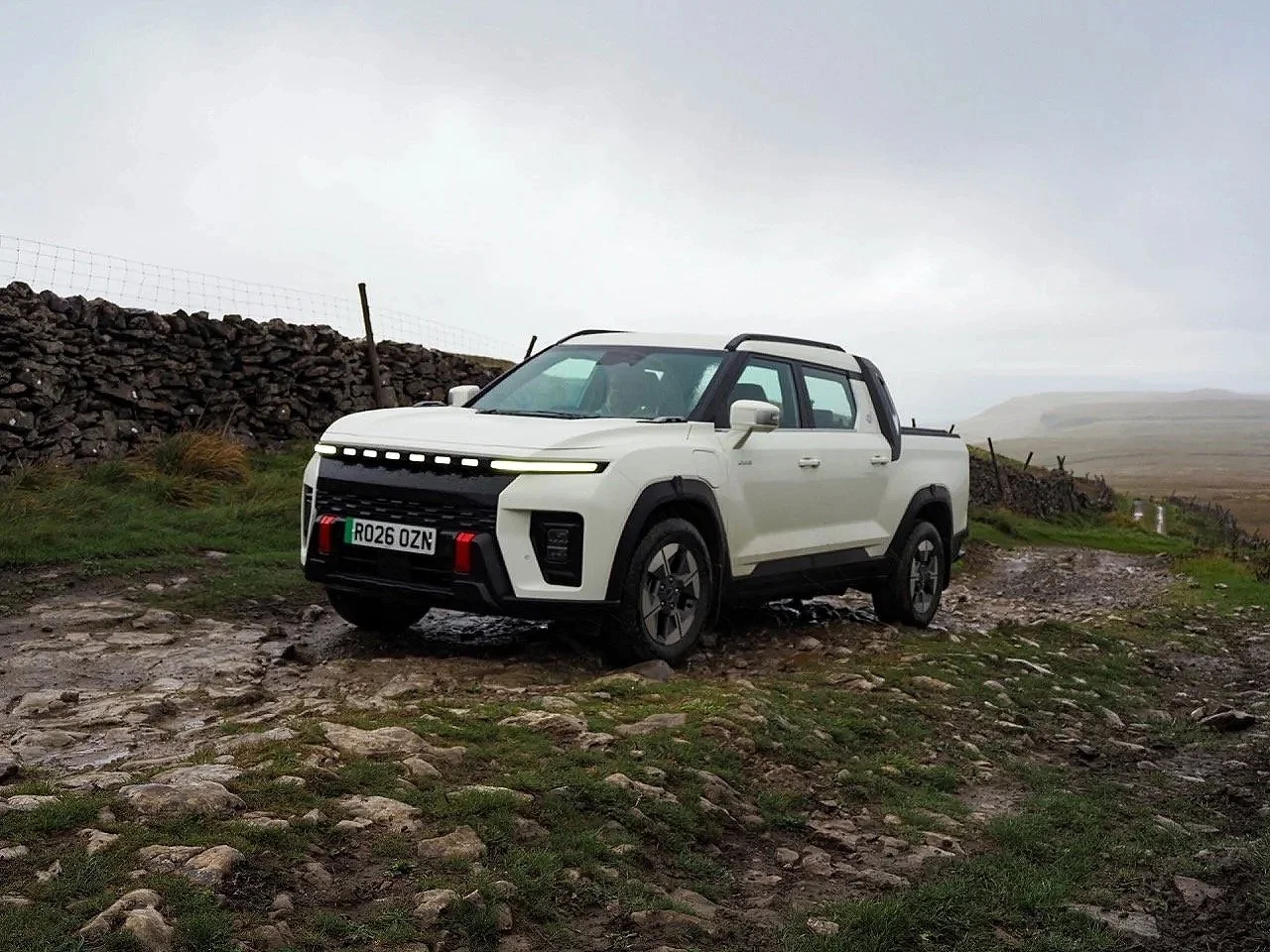
And this is where the two vehicles made an interesting comparison.
The Rhino feels like the traditional tool for the job. Its 2.2-litre diesel produces 202PS and 400Nm, with that torque available low down, while the selectable 4WD and low range give it the mechanical hardware you'd expect from a proper workhorse.
The EV, on the other hand, feels almost suspiciously effortless. There is no waiting for the diesel engine to build torque and no gearbox hunting for the right ratio. The dual motors can respond immediately, and in slippery conditions that makes the EV remarkably confidence-inspiring.
Then there's the road.
The Rhino is perfectly usable as everyday transport and, around town, its commanding driving position and decent steering make its size less intimidating than you'd expect. But it remains a traditional pickup underneath. The ride can be busy when unladen, and the rear suspension isn't particularly interested in pretending it's a luxury SUV.
The EV is a completely different animal. Its monocoque construction and independent suspension give it much more car-like road manners. It's quieter, smoother and considerably more settled, particularly over poor surfaces.
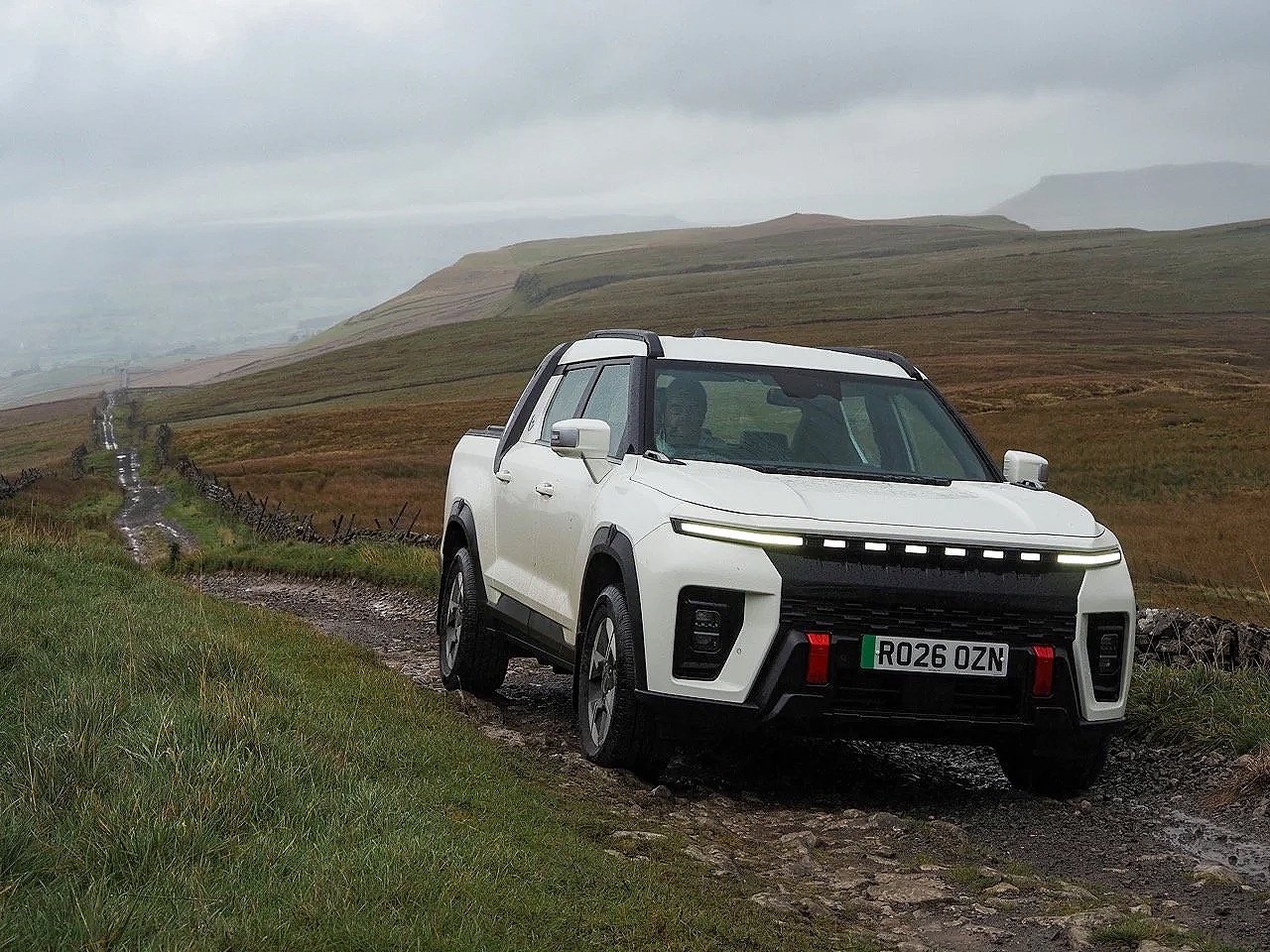
And then there's range.
KGM quotes up to around 235–240 miles WLTP for the Musso EV, although weather, speed, temperature and off-road driving will all eat into that. The Rhino's 75-litre tank and official combined consumption figures suggest something closer to 470–500 miles between fills in ideal conditions.
For a day green-laning in remote parts of Yorkshire, that's an important difference. The Rhino's range isn't something you really think about. With the EV, you inevitably keep one eye on the battery percentage, particularly when it's cold, wet and you're a long way from home, or a reliable charger.
And Then the Weather Won
Even in a heavy downpour, traction remained decent, but eventually the rain and mist became so bad that common sense prevailed. I had three more lanes planned, but neither of us fancied spending the afternoon driving around in what had effectively become a cloud.
Over the radio Andy suggested we head back to his for a much-welcomed brew.
After the rain and heavy mist eventually stopped play, we drove down through Hawes, followed the B6255 towards Ribblehead Viaduct, then took the B6479 back towards Harris Towers.
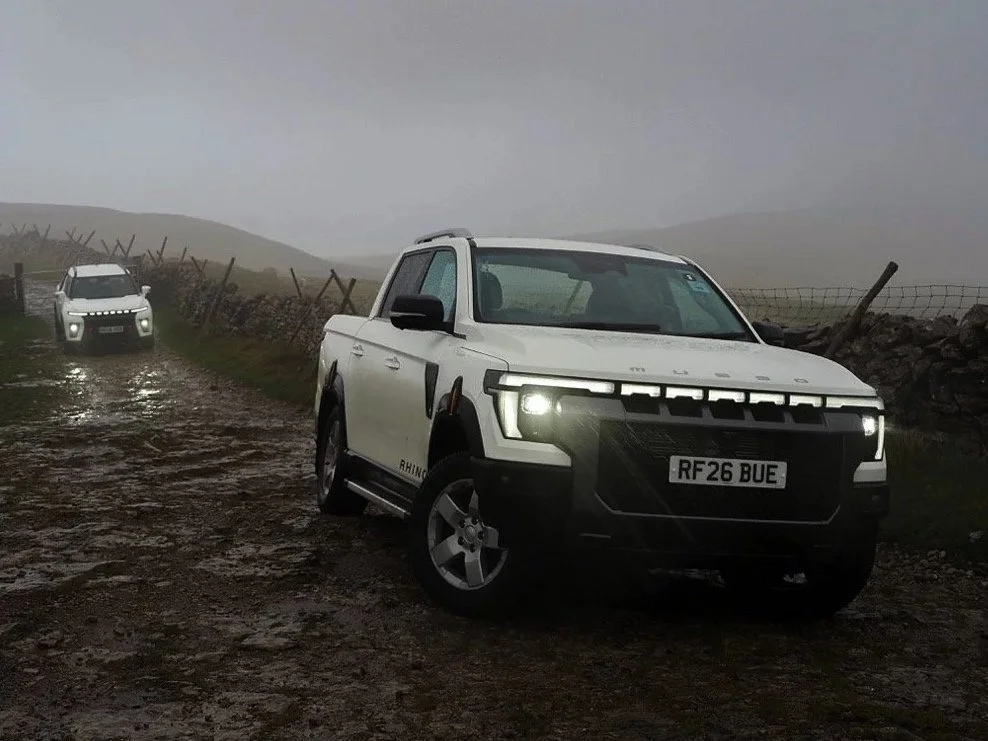
The weather was absolutely dreadful. And yet, interestingly, this was probably where Andy's EV made its strongest case.
On the wet, slippery roads, the Musso EV felt remarkably planted. Its automatic AWD system was quietly doing its thing, constantly managing the available grip, while the instant response of the electric motors made it feel very confident when accelerating out of wet bends.
I was in the Rhino, on winter all-terrain tyres and with an empty load bed, and, well, I’ll let you come to your own conclusion on that, just to say I decide to take my time.
The diesel Musso Rhino is undoubtedly the more serious off-roader and working vehicle. Its extra ground clearance, selectable 4WD and low-range gearing give it the advantage when a lane gets genuinely difficult.
But the Musso EV isn't some plastic-fantastic electric lifestyle pickup that falls apart as soon as the tarmac ends. For the sort of green lanes we tackled, it proved surprisingly capable – and considerably nicer to drive between them.
So, who won?
Well, I guess it’s only fair to call it a draw.
For more information on the KGM range, click here: KGM UK