
Premium Comfort, Sensible Hybrid Motoring… and a Rather Small Boot
There's a lot to be said for a car that doesn't need plugging in, doesn't shout about saving the planet and simply gets on with the business of taking you from A to B. Especially when it comes wrapped in a premium badge, a nicely finished interior and enough technology to keep most modern motorists happy.
Enter the 2026 Lexus UX 300h, a compact hybrid crossover promising a little luxury without the bulk of a larger family SUV. It's been around since 2018, and while the latest updates bring some welcome improvements, the question is whether this increasingly competitive corner of the market still has room for it.
And, more importantly for The Mud Life readers, can it accommodate the sort of kit we tend to throw in the back of a car?
Looks That Divide Opinion
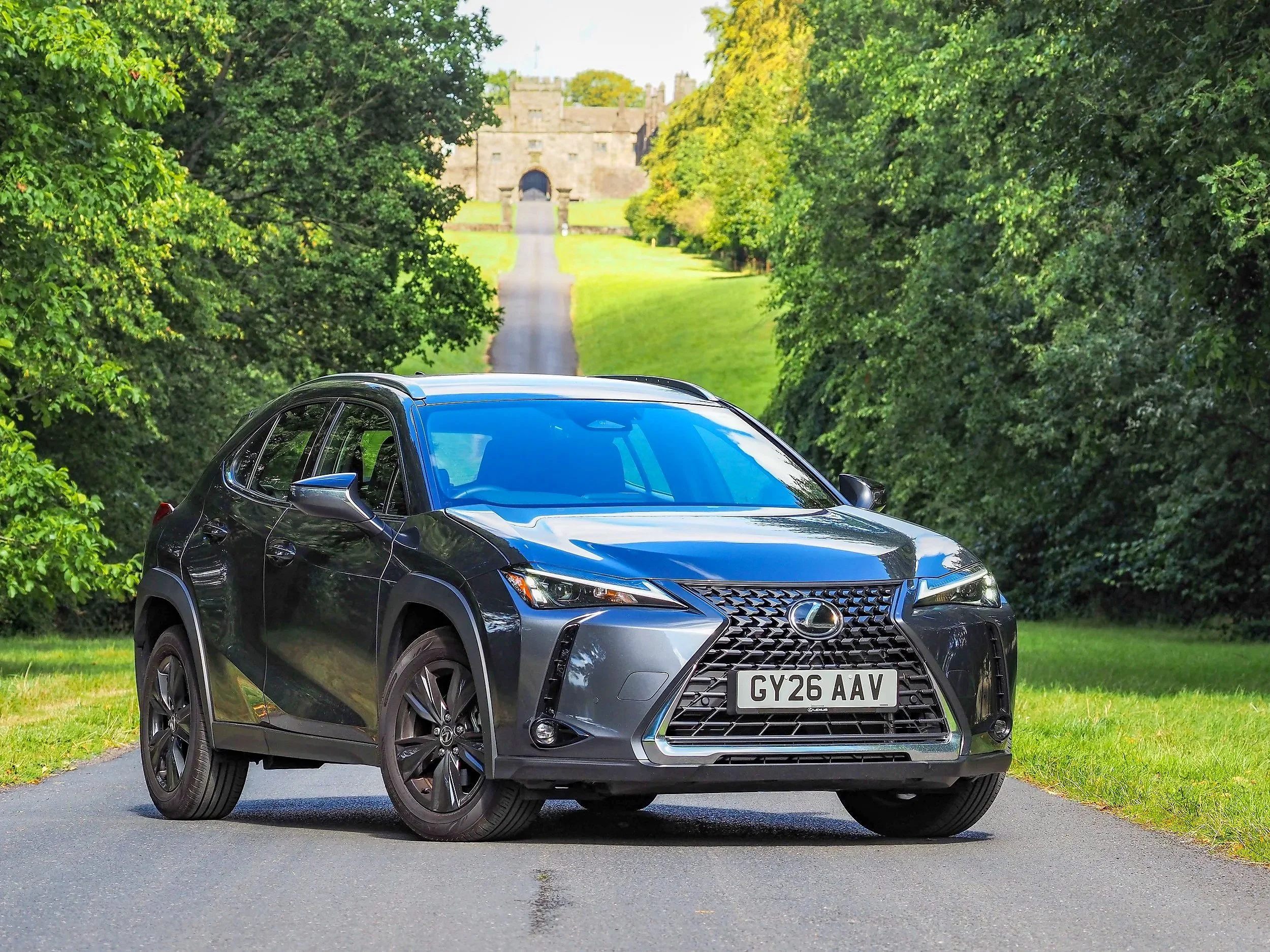
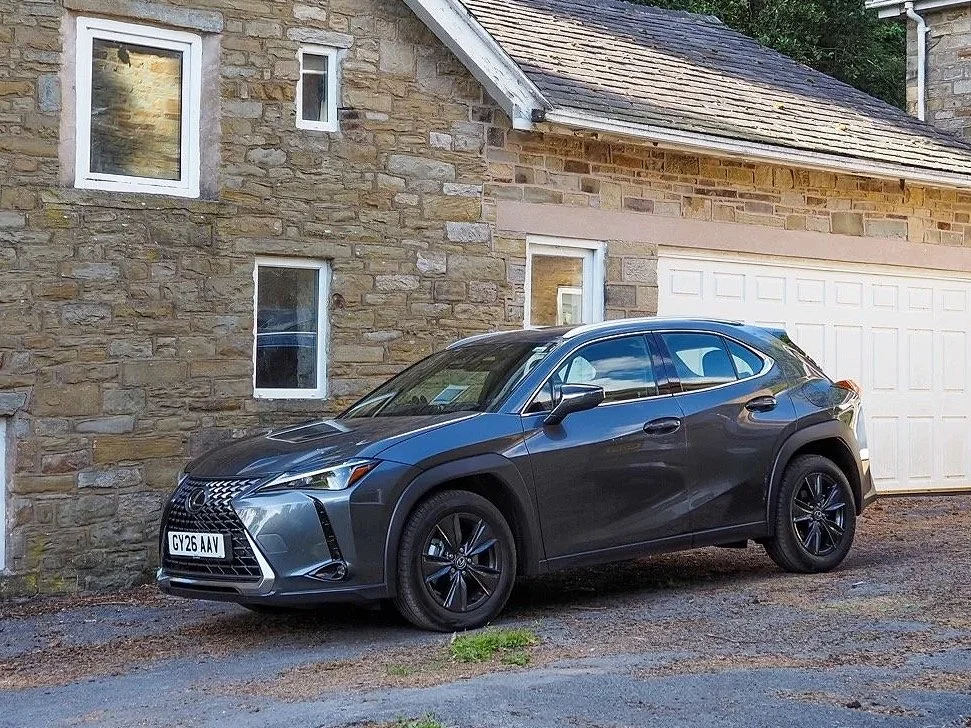
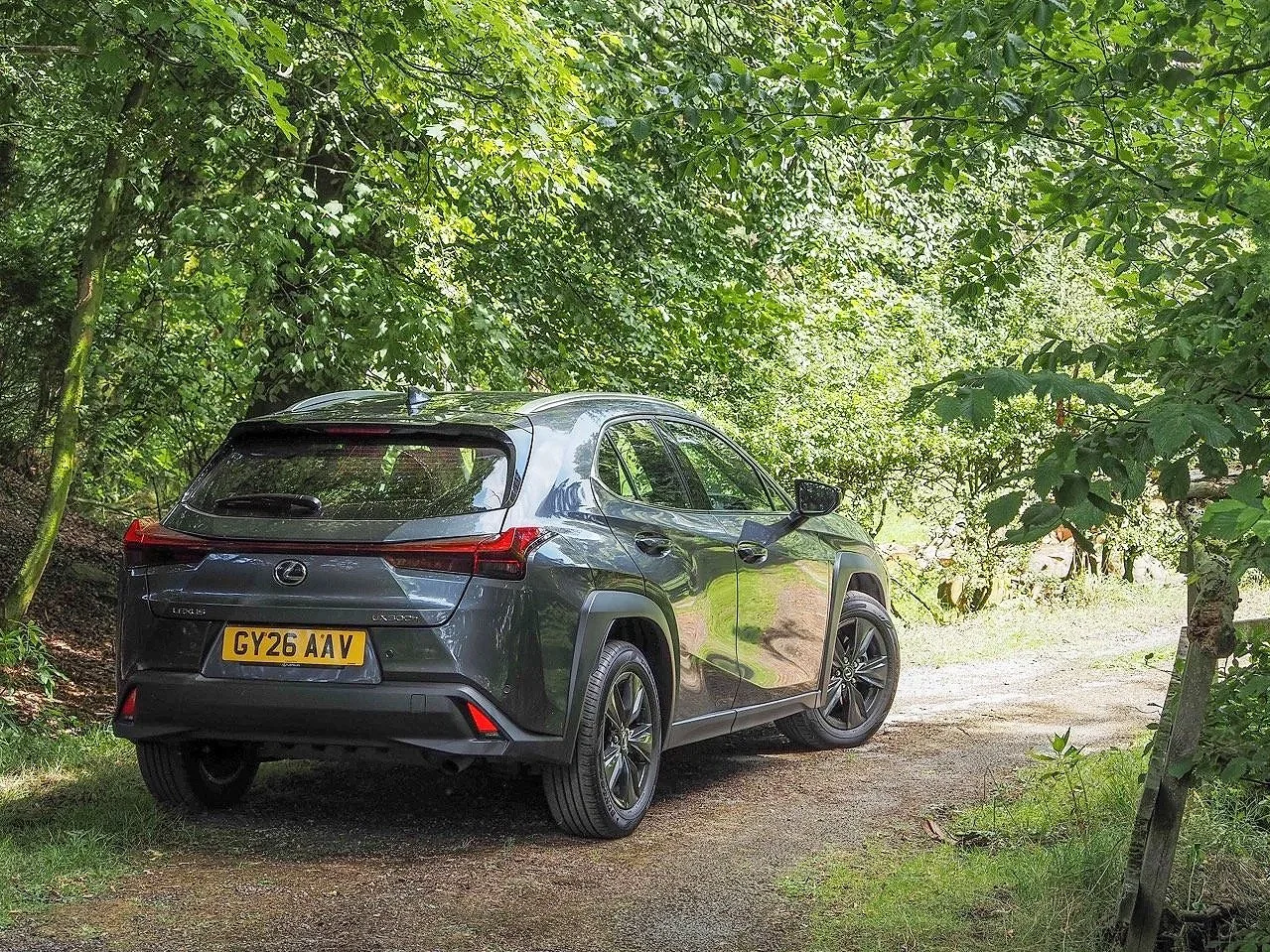
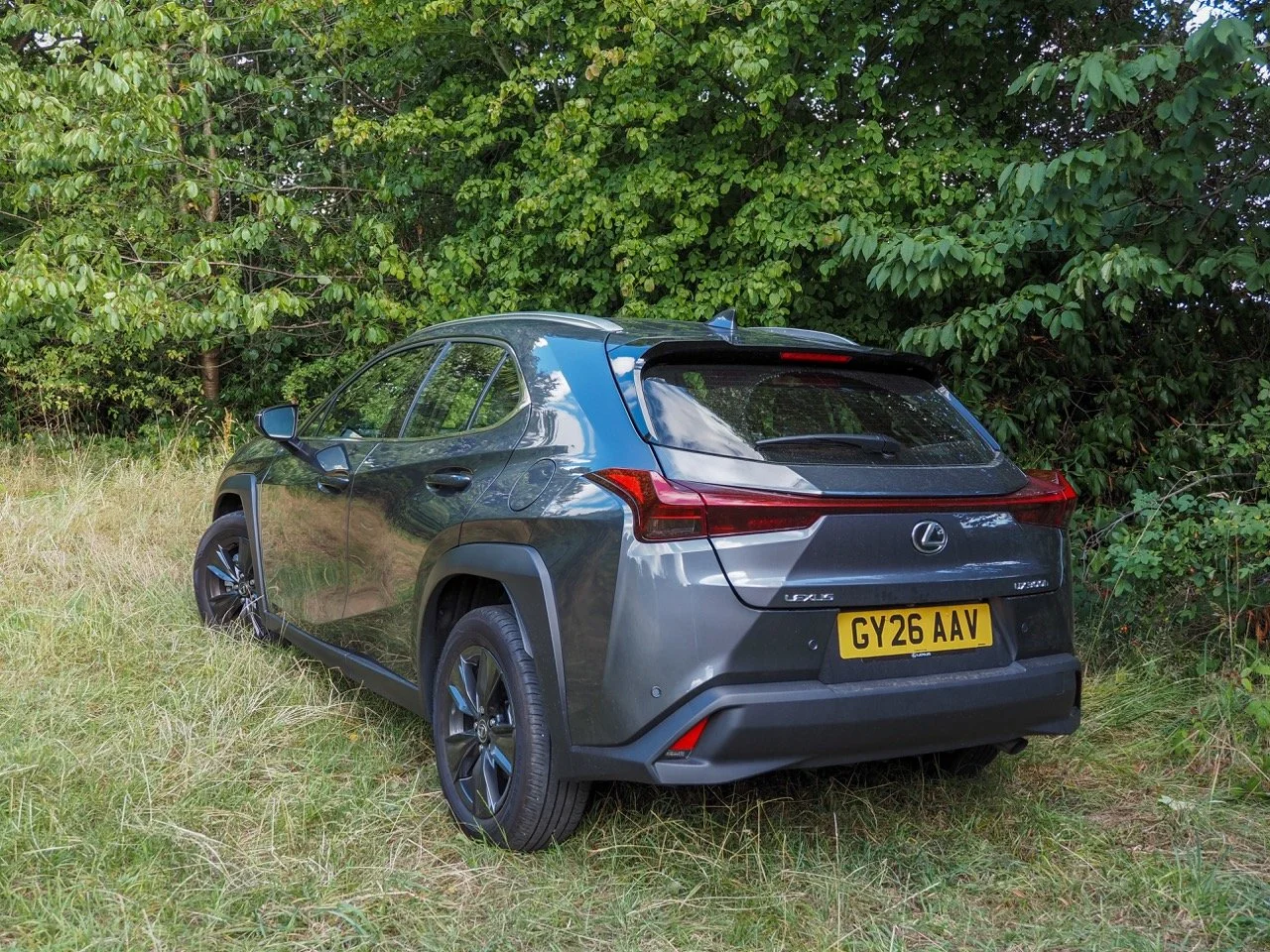
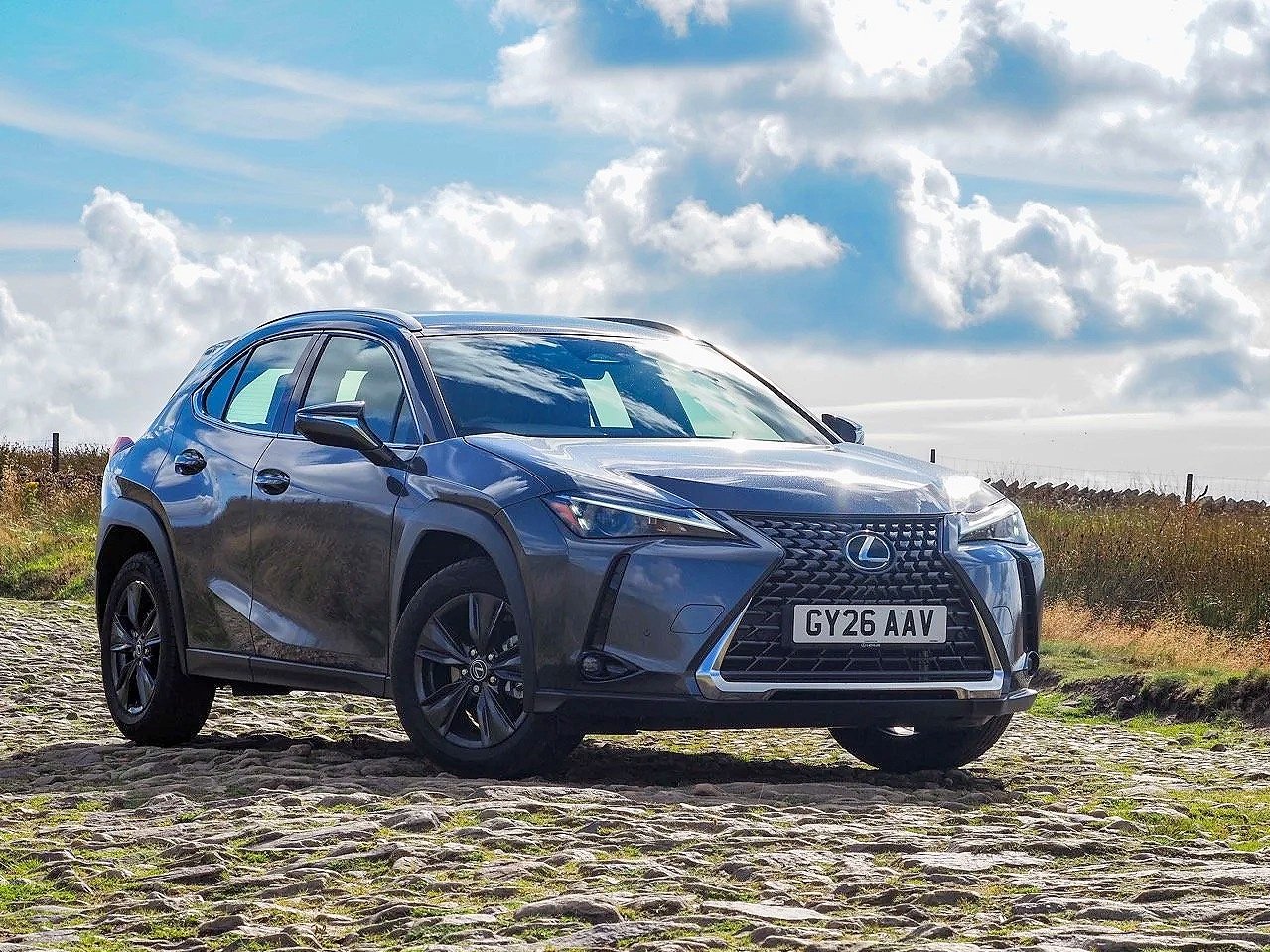
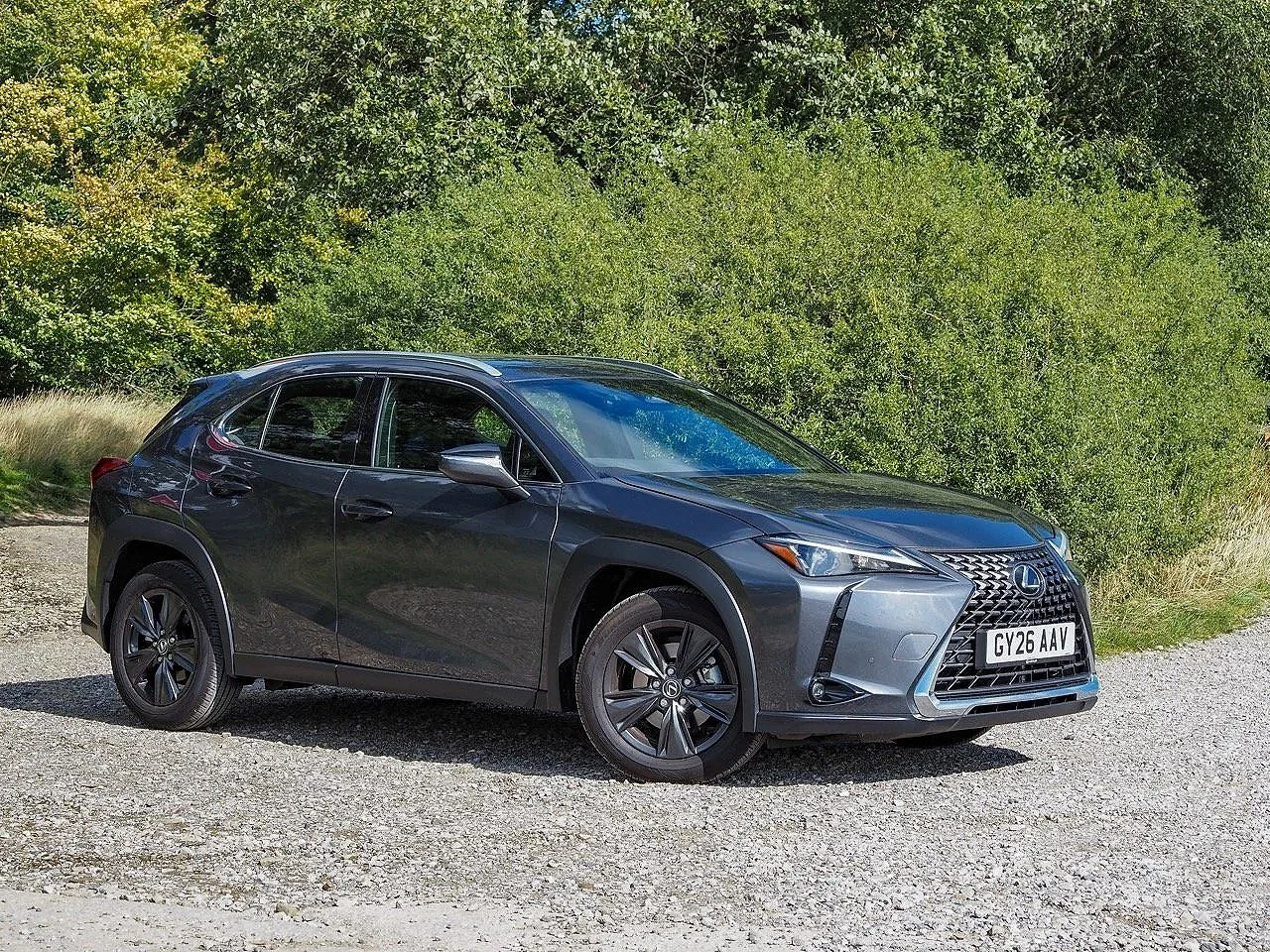
The UX has never been particularly shy about its styling. Up front, the familiar Lexus spindle grille dominates, flanked by sharp headlights and a bonnet that slopes towards a nose with plenty of visual attitude. Along the sides, pronounced creases and muscular wheel arches give it a more purposeful appearance than some of the softer, rounded alternatives.
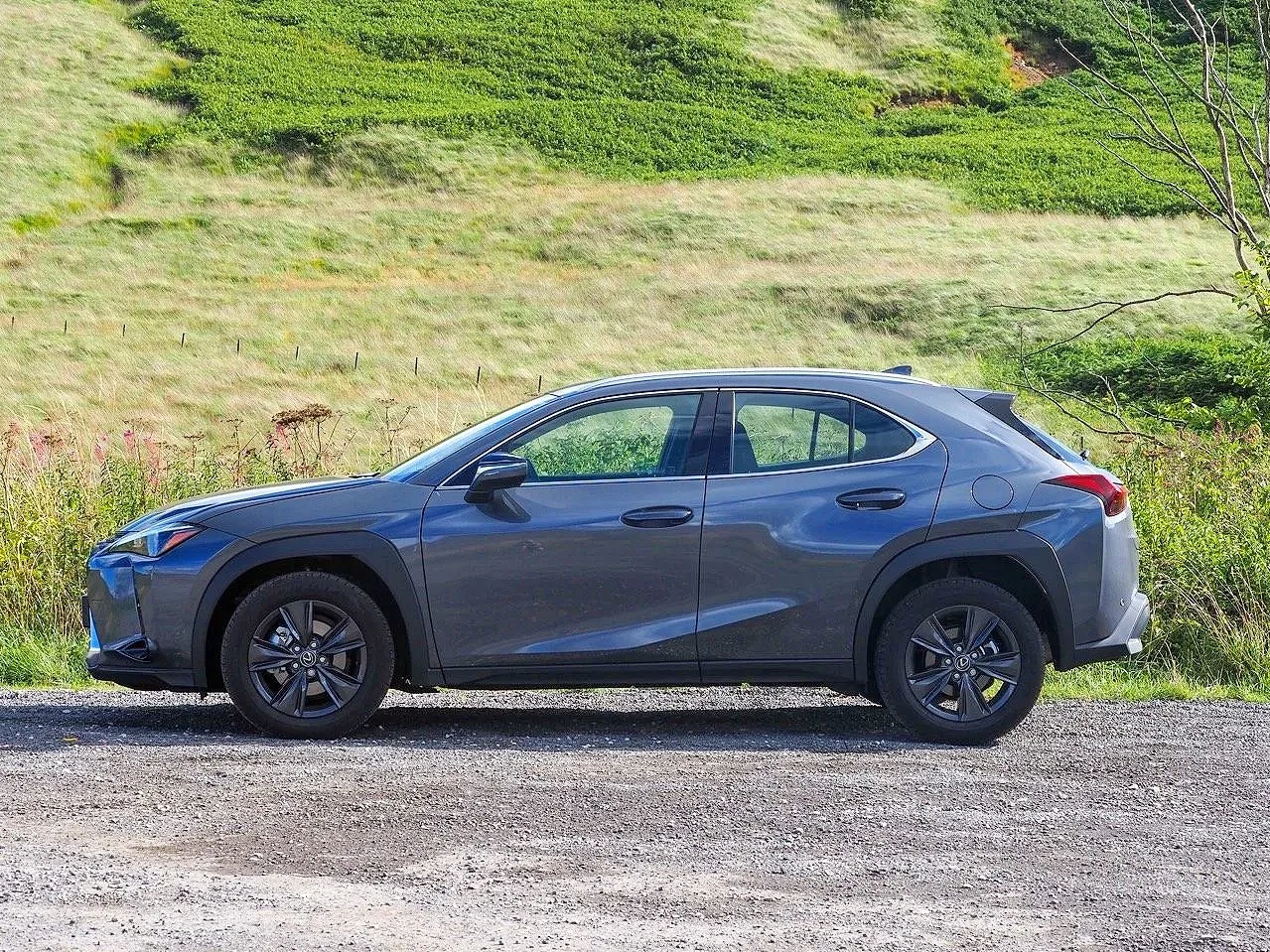
It's not a conventional-looking SUV, which is rather the point. The UX sits lower than many rivals, giving it more of a raised hatchback appearance than a traditional high-riding family wagon.
Some will appreciate its distinctive styling; others might prefer something a little less busy.
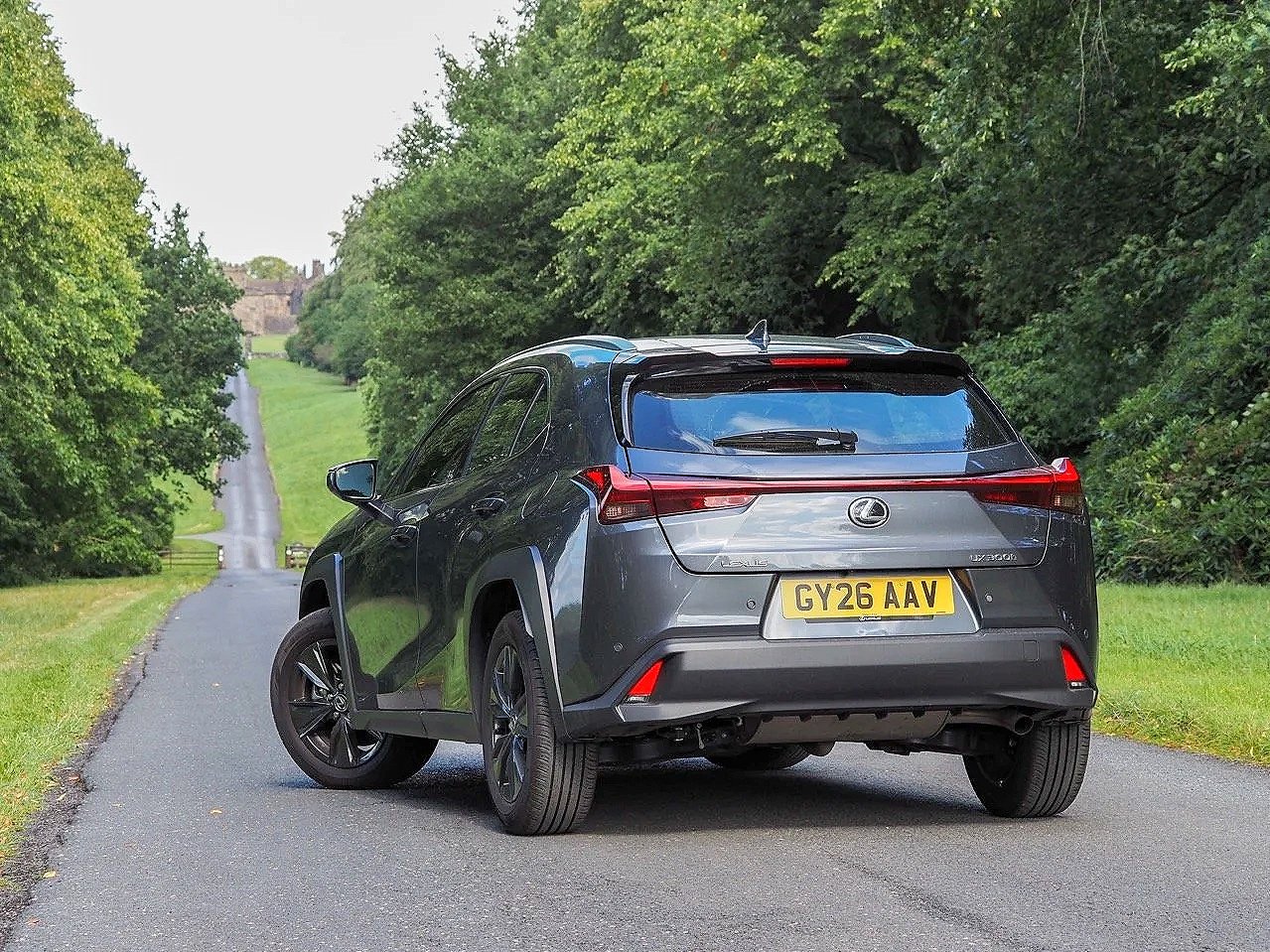
At 4,495mm long, it's compact enough to be manageable around town without looking particularly small. The rear light bar adds a modern finishing touch, while the different trim levels allow buyers to choose between a relatively restrained appearance and the sportier F Sport treatment.
It's certainly recognisable as a Lexus, although whether that's a good thing will depend on your taste.
Hybrid Power Without the Plug
Under the bonnet sits a 2.0-litre four-cylinder petrol engine working with an electric motor and Lexus's latest-generation hybrid system. Combined output is 196bhp, with power delivered through an electronically controlled continuously variable transmission, or e-CVT.
There's no need to plug the UX into a wall box or hunt around for a public charging point. The battery recharges through the petrol engine and regenerative braking, with the electric motor helping the car pull away, accelerate and travel at low speeds when conditions allow.
That's particularly useful in traffic and around town, where frequent slowing and stopping give the hybrid system opportunities to recover energy.
Performance is perfectly respectable, with 0–62mph taking a claimed 8.3 seconds. That's enough to make joining a motorway or overtaking slower traffic straightforward, without pretending the UX is a sports SUV.
The familiar compromise with this type of transmission is that hard acceleration can cause the engine revs to rise and remain there. Drive smoothly and the experience is generally refined, but those expecting a conventional automatic gearbox with clearly defined gear changes may find it a little unusual.
Lexus quotes official combined fuel economy of 53.2–56.4mpg, depending on specification. Real-world results will naturally depend on traffic, temperature, journey length and driving style, but the hybrid system makes particular sense for motorists whose driving includes plenty of urban miles.
For anyone who spends the week commuting and the occasional weekend heading into the countryside, it's a sensible arrangement. You get the benefits of electrification without having to plan your life around charging.
A Cabin That Feels the Money
Step inside and the UX makes a stronger case for itself.
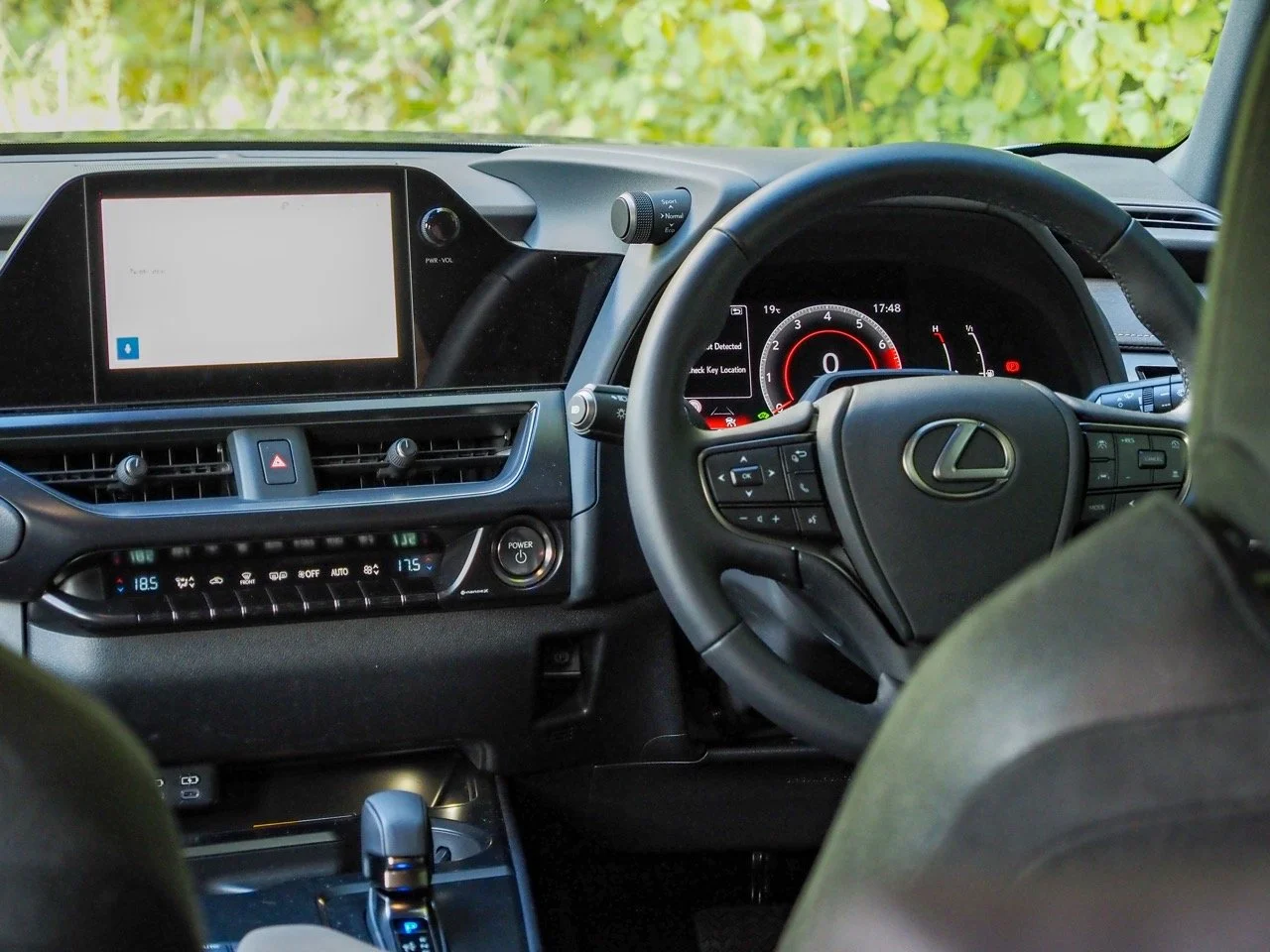
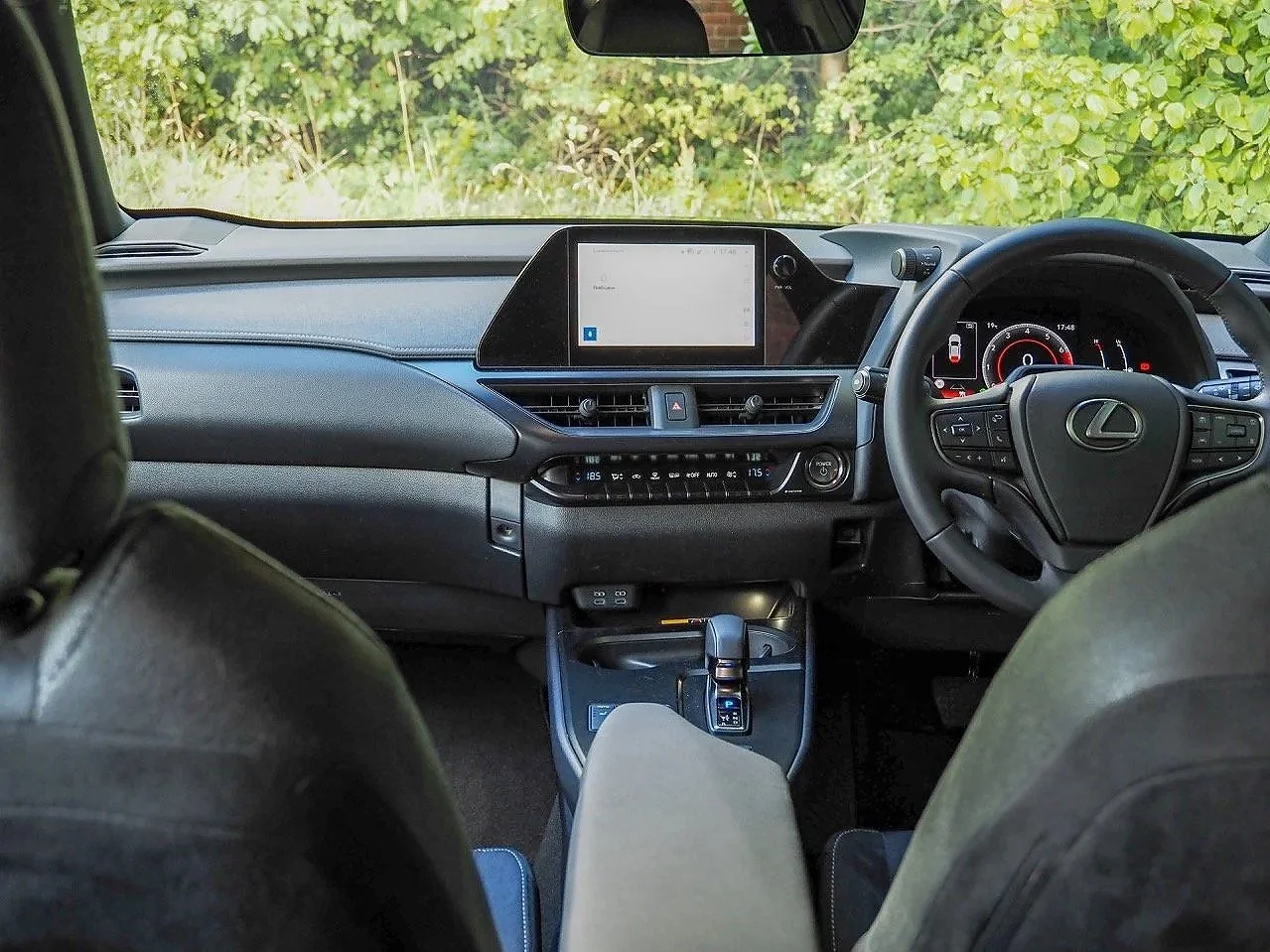
Lexus has always been good at producing cabins that feel carefully assembled and well thought out, and the UX is no exception. The materials, switchgear and overall finish give it a more upmarket atmosphere than you might expect from a compact crossover.
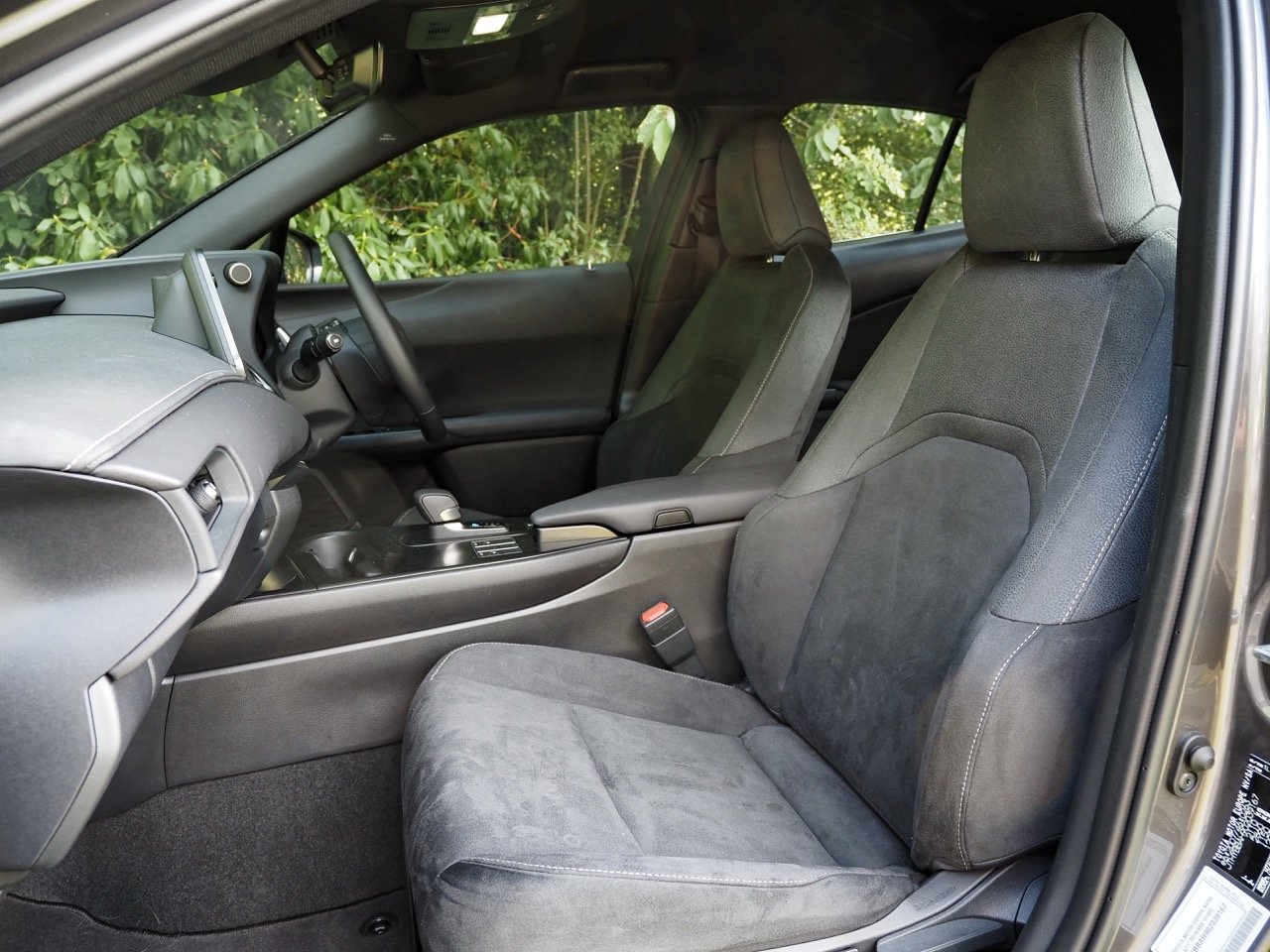
The driving position is lower than in many SUVs, which will suit anyone who prefers to feel connected to the road rather than perched above it. For me I like to be sat high, which is fine as the front seat offers plenty of adjustment, the steering wheel however does not - it doesn’t tilt high enough. The front seats offer a comfortable, supportive environment, while the dashboard has a distinctive design that avoids looking entirely like every other modern car interior.
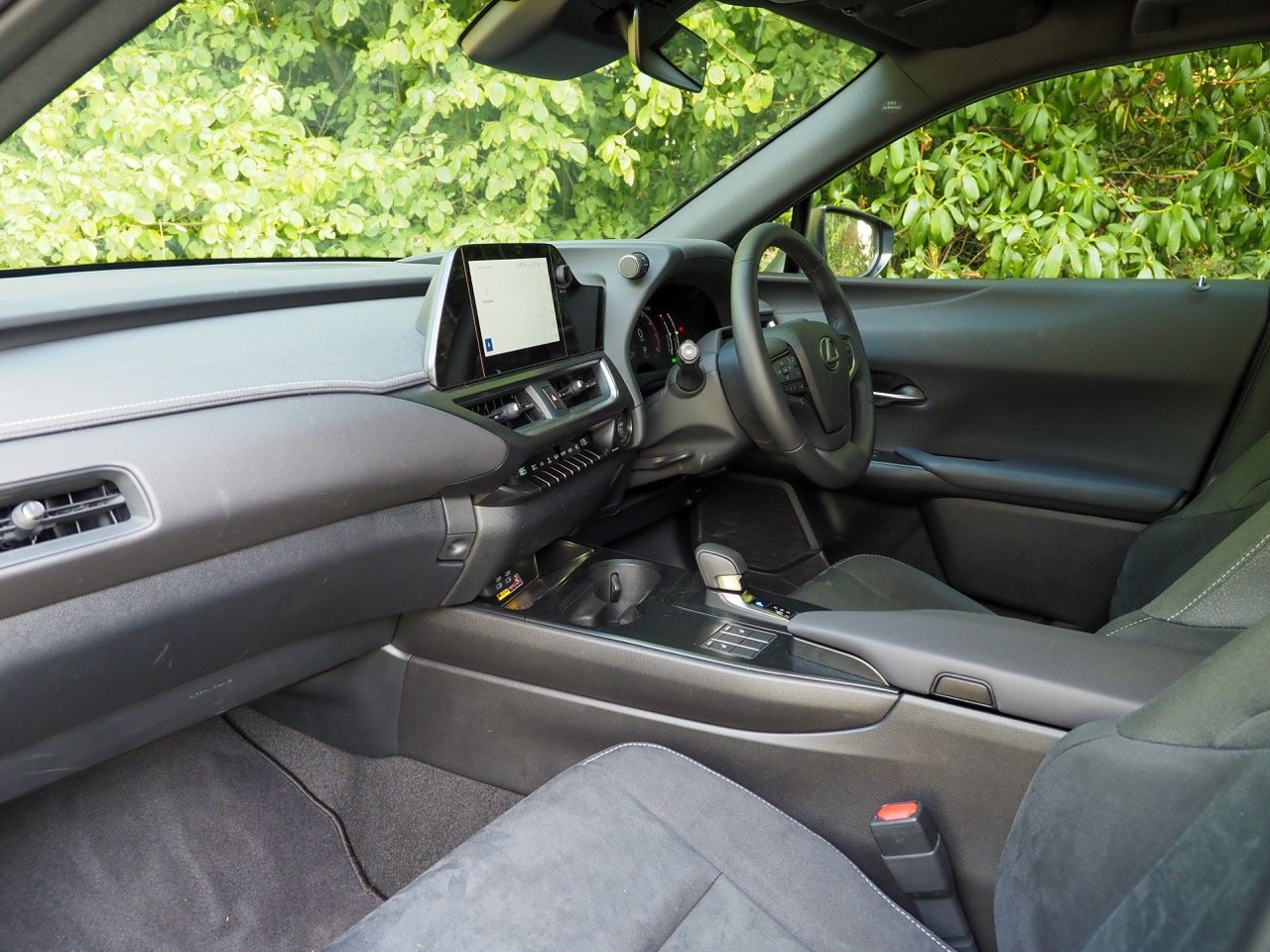
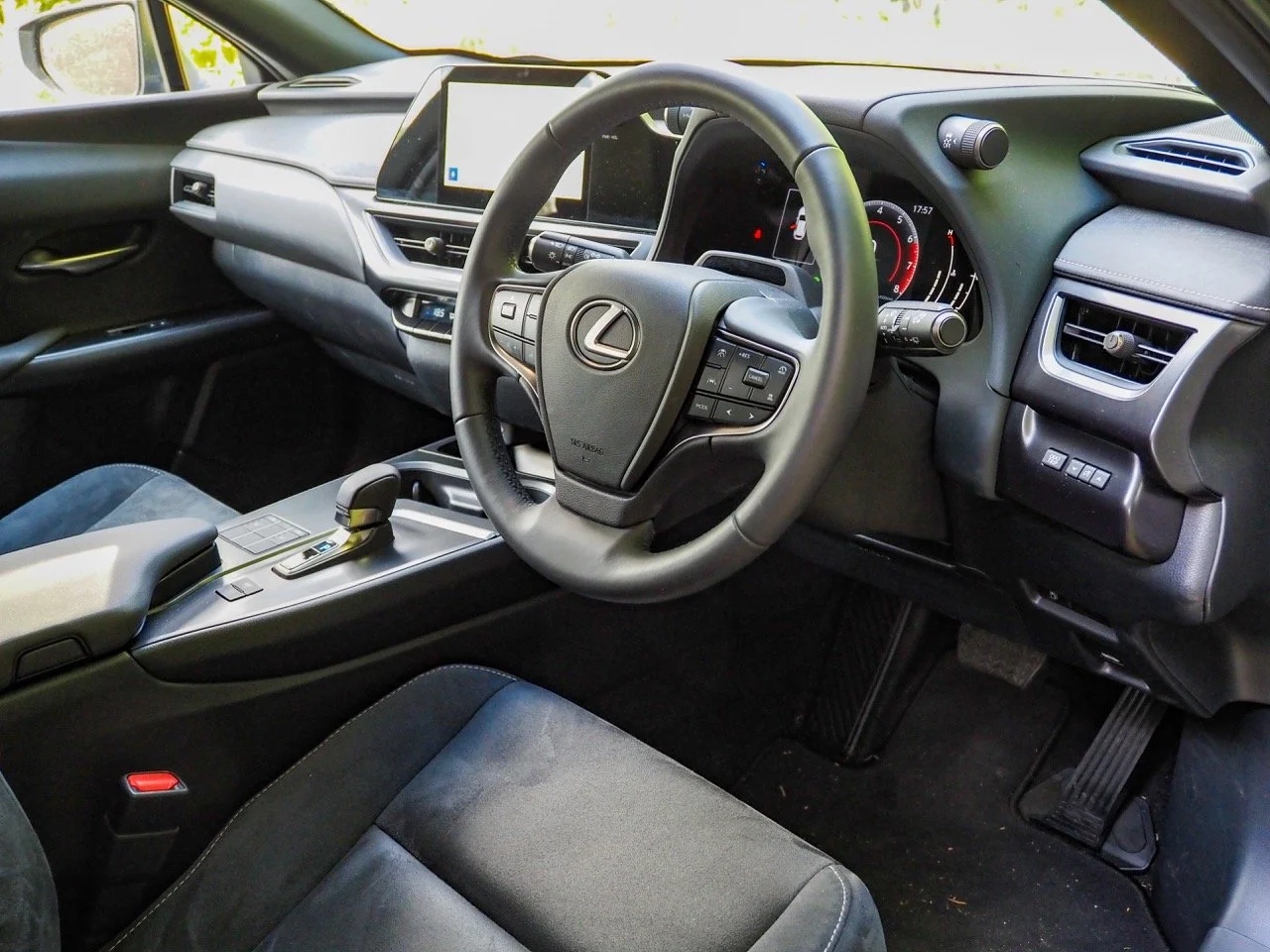
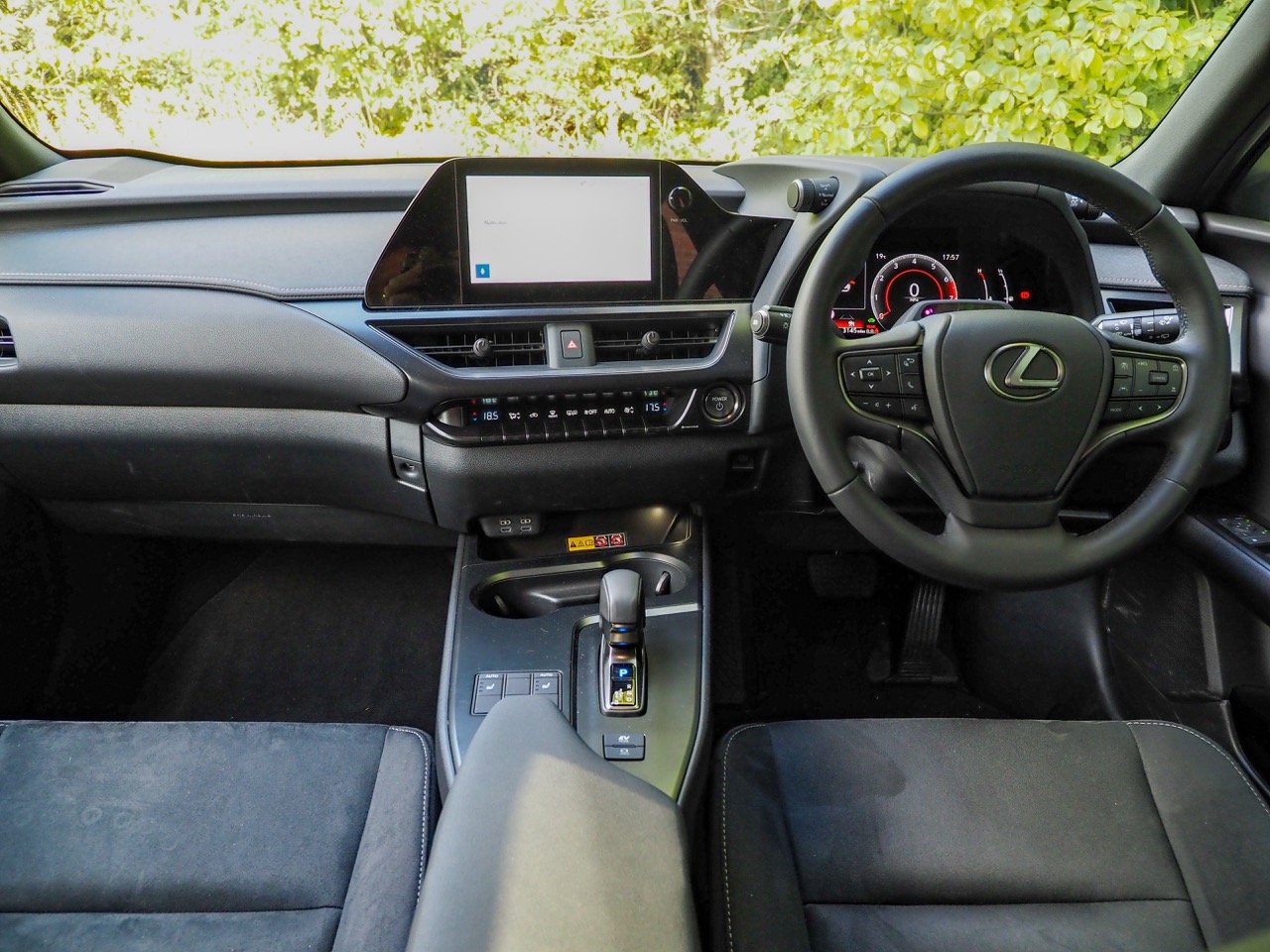
The 2026 UK range comprises Premium, F Sport Design, F Sport Design Tech, F Sport and Takumi models.
Even the entry-level Premium includes heated front seats, electrically adjustable and heated door mirrors with blind-spot monitoring, a wireless phone charger and a 9.8-inch touchscreen. Apple CarPlay and Android Auto are also available, making it straightforward to use your preferred navigation and music apps.
Move up the range and you can have a larger 12.3” infotainment screen, a matching digital instrument display, additional convenience features and, at the top of the range, heated and ventilated front seats, a head-up display and a 13-speaker Mark Levinson sound system.
The infotainment system doesn't feel as cutting-edge as some newer rivals, and navigating menus can take a little getting used to. Fortunately, Lexus hasn't decided that absolutely everything needs to be controlled through a touchscreen.
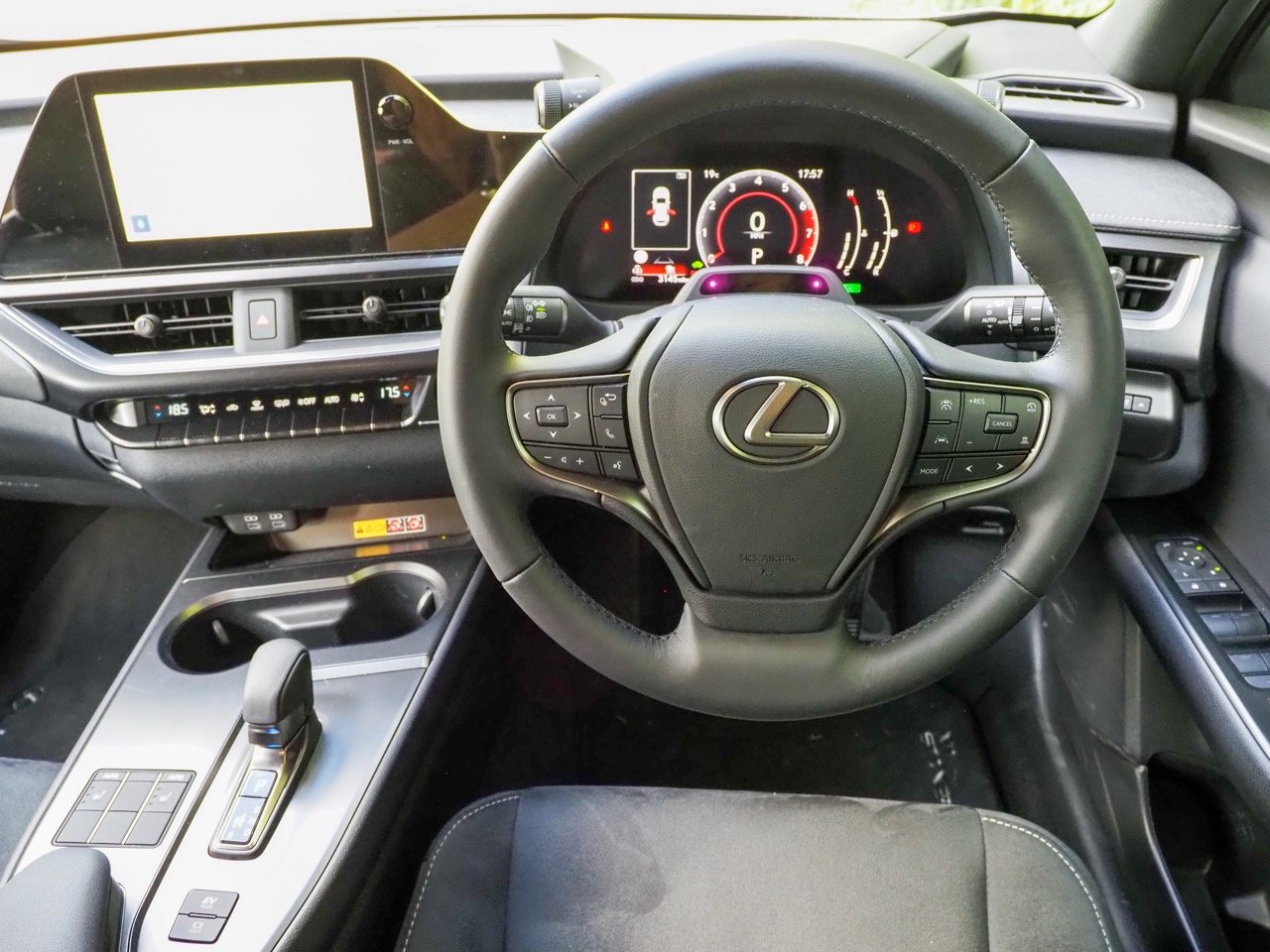
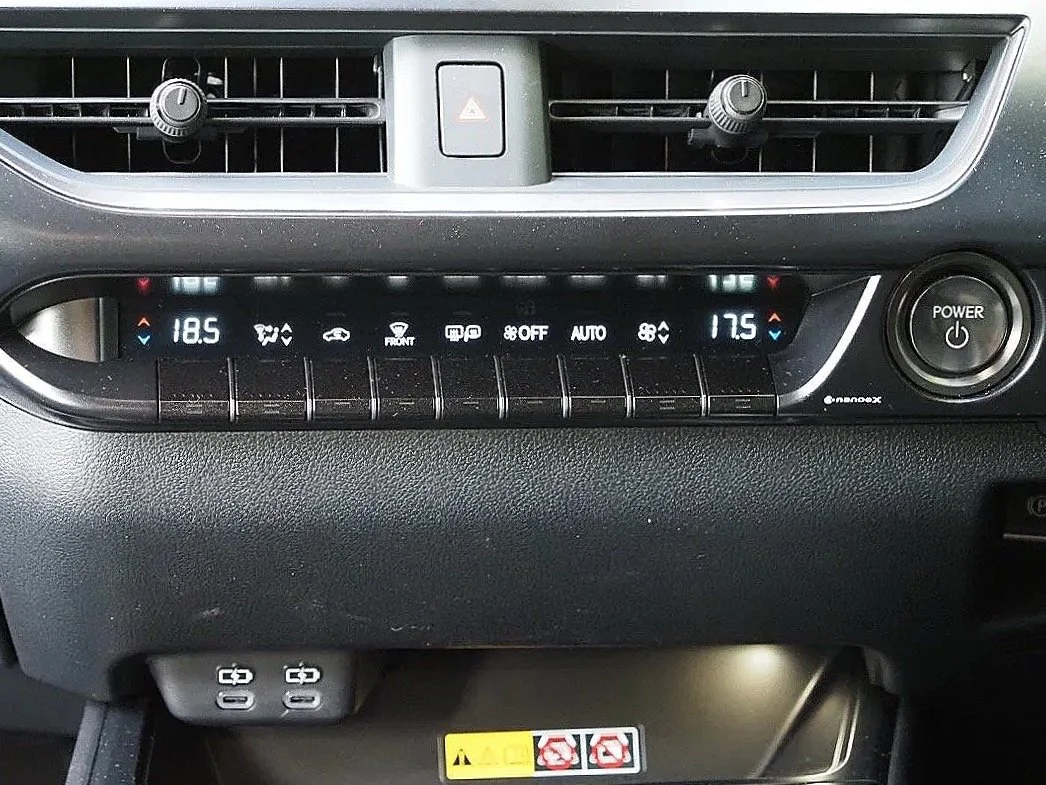
The heater controls deserve a thumbs-up. The main climate-control functions have physical buttons beneath the screen, making it easier to adjust the temperature or fan without having to disappear into a series of menus. It's a small detail, perhaps, but when you're driving along a wet country road and the windscreen starts misting up, straightforward controls are far more useful than another animated display.
It's a good example of technology working alongside conventional controls rather than replacing them unnecessarily.
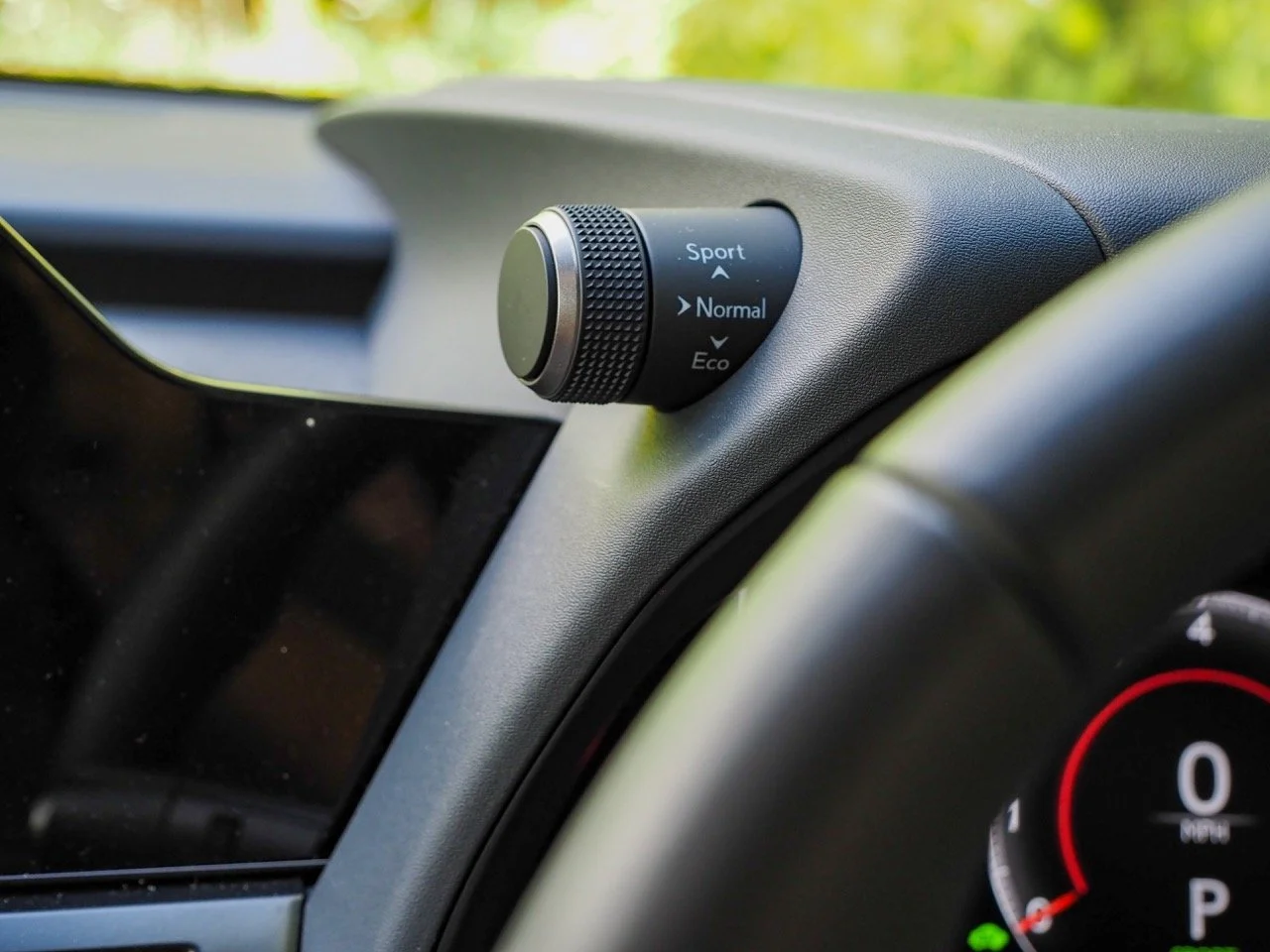
What About All Those Driver Aids?
Like most modern cars, the UX 300h comes with a collection of advanced driver-assistance systems, including lane assistance, adaptive cruise control, pre-collision assistance and driver monitoring.
These systems can be helpful, but not everyone enjoys the constant warnings, steering interventions and occasional beeps that accompany them. If you've ever driven a car that seems determined to tell you that you're doing something wrong, you'll understand.
The Lexus provides settings to adjust or disable certain assistance functions, including elements of its lane assistance and Proactive Driving Assist systems. However, the process isn't necessarily as straightforward as pressing one big button marked Leave Me Alone. As I’ve mentioned in other reviews, Skoda have got this part 100% right.
It's worth spending a few minutes getting familiar with the settings before heading off. You can tailor some of the assistance to suit your preferences, although not every safety feature can necessarily be switched off in the same way.
Naturally, these systems are there for a reason, and disabling them means giving up some of their potential safety benefits. The important thing is knowing what the car is doing and understanding which settings you've changed.
The Practicality Problem
Here's where the UX starts to lose ground.
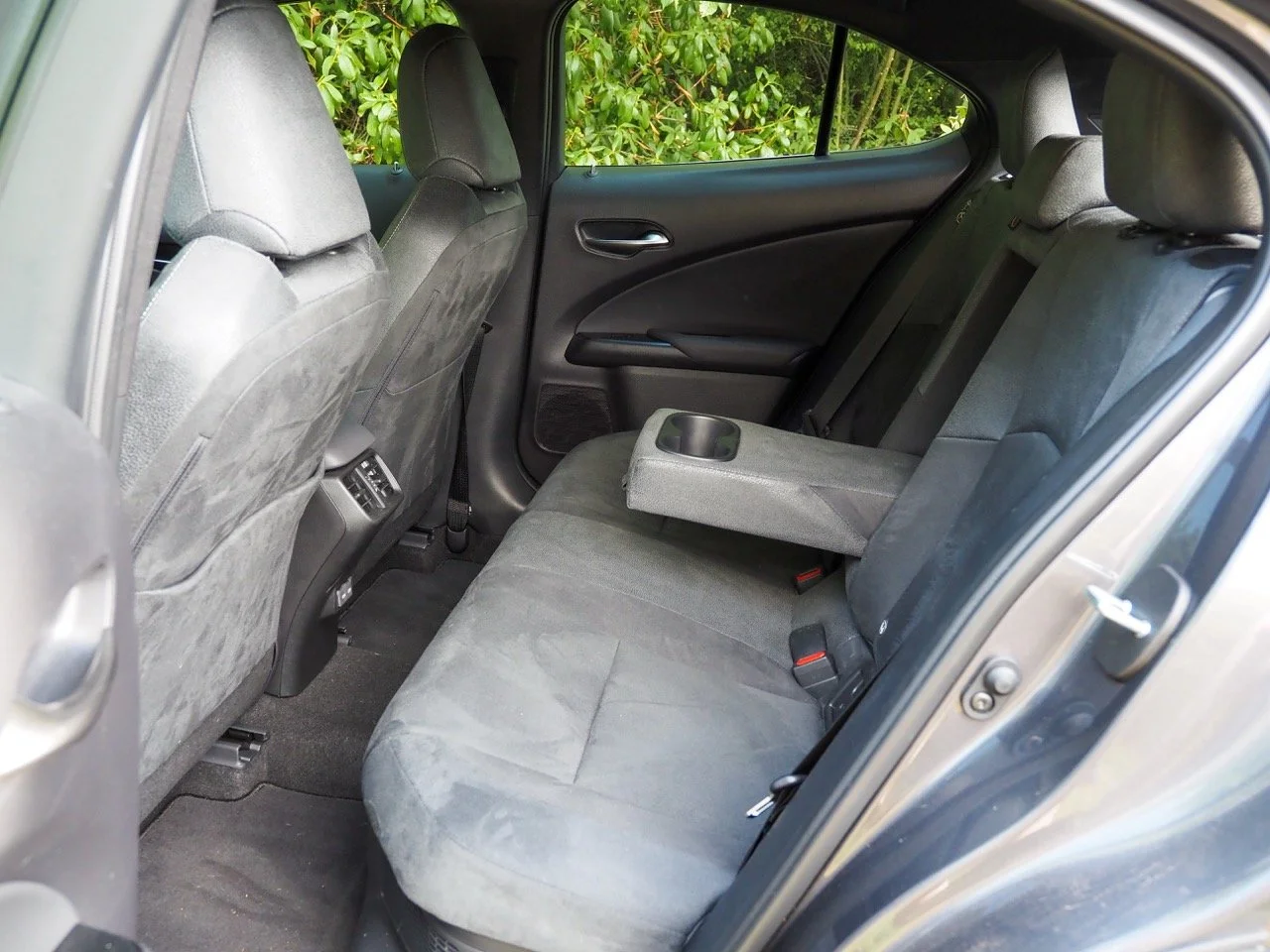
Although its exterior dimensions suggest a useful family car, the rear seats are relatively cramped compared with some competing compact SUVs. Adults can travel in the back, but taller passengers may find legroom and headroom restrictive. The rising window line also makes the rear feel less airy than you might expect, and fitting three people across isn't an especially appealing proposition.
Then there's the boot.
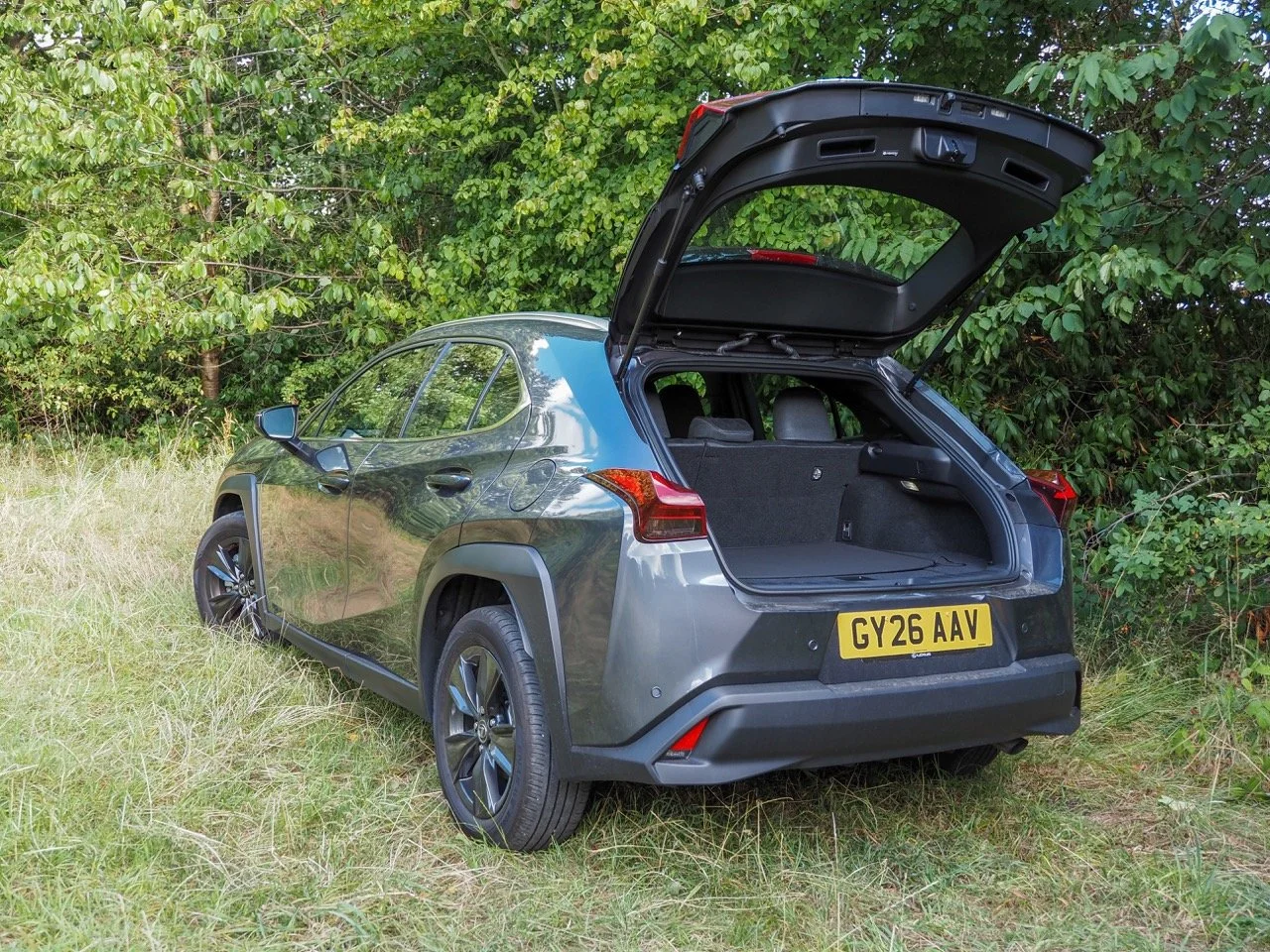
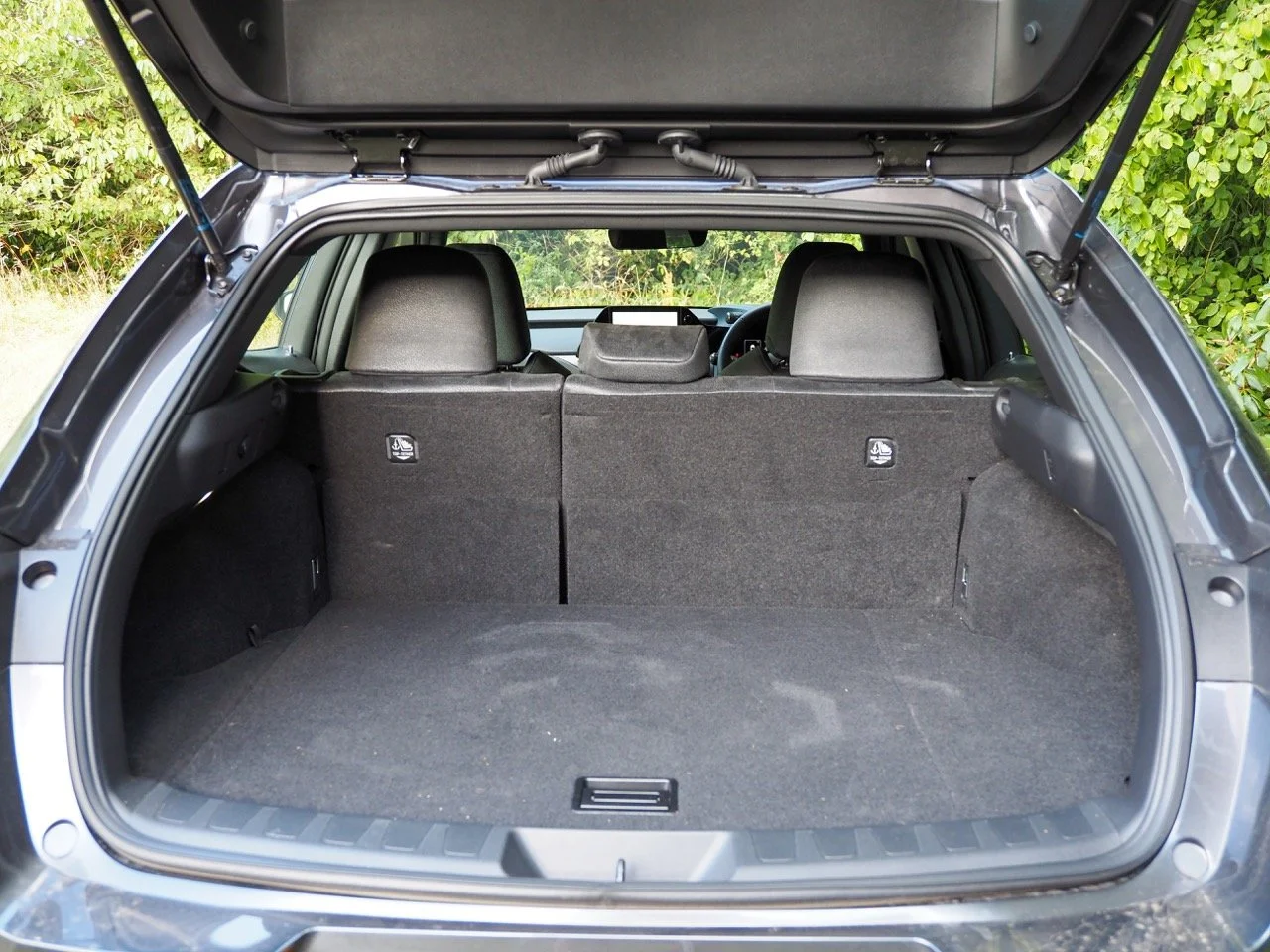
With the rear seats in place, luggage capacity is approximately 320 litres. That's small for a vehicle of this size, particularly when some rivals offer considerably more room.
It's enough for everyday shopping, a couple of overnight bags or a modest weekend away, but family holidays and bulky outdoor equipment could require a little more planning.
For The Mud Life readers, that deserves particular consideration. A couple heading away for the weekend with carefully packed bags should manage, but add walking boots, wet-weather gear, camping equipment and a dog, and the available space could become a deal-breaker.
How Much Room Is There With the Seats Folded?
Fortunately, the UX does offer a more useful arrangement when you don't need the rear seats.
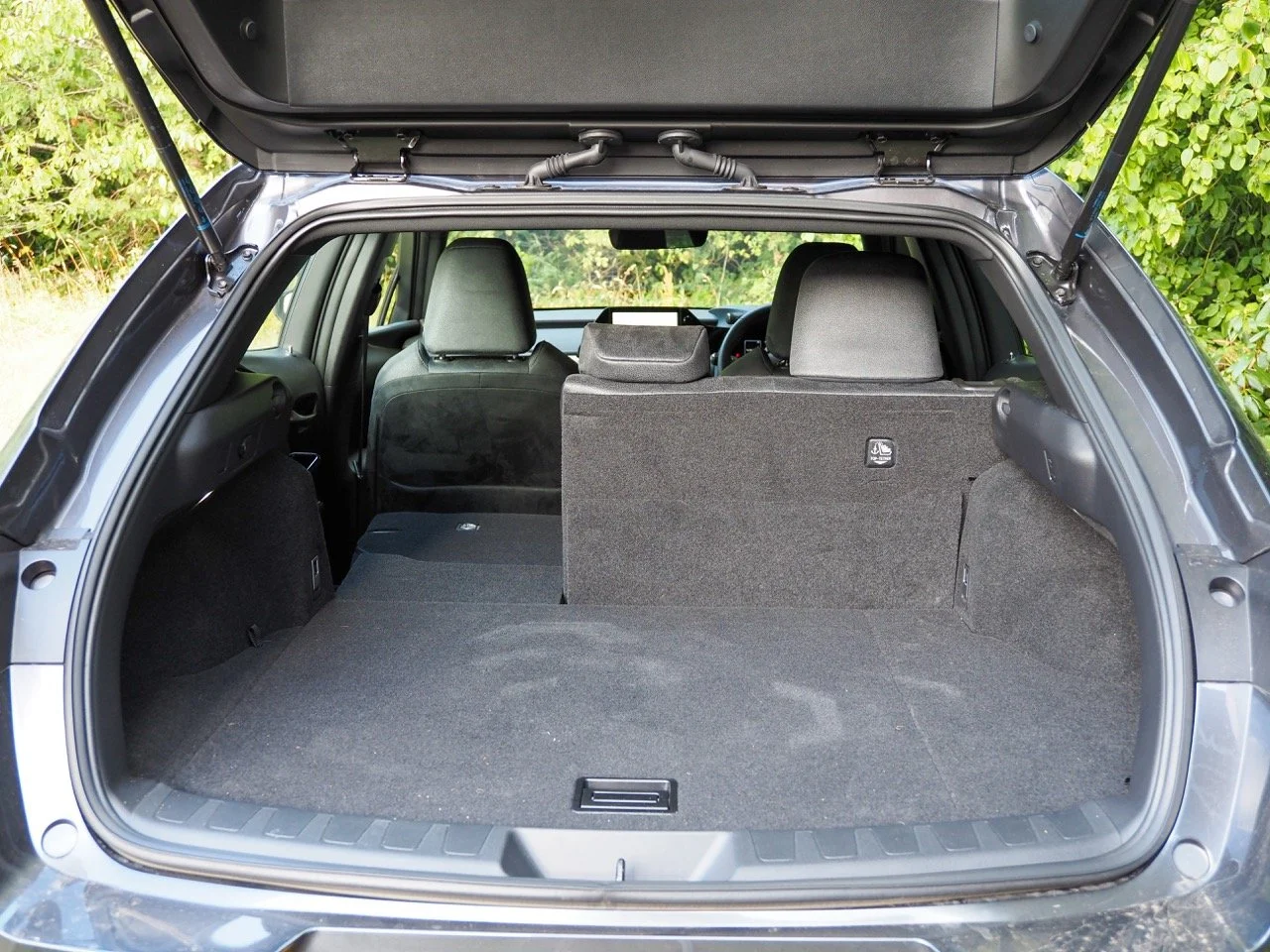
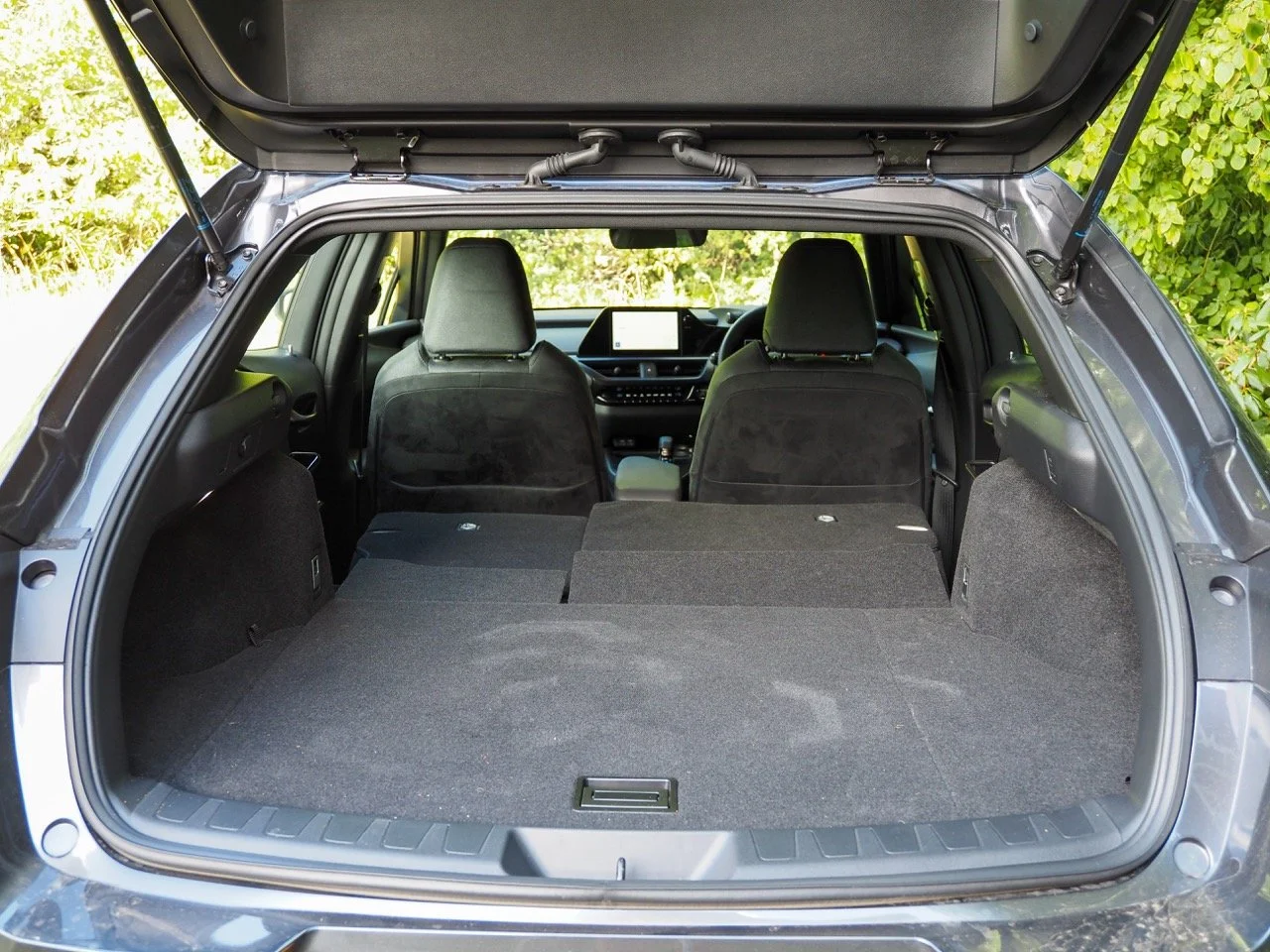
Fold the 60:40-split rear bench down and the claimed luggage capacity increases to approximately 1,231 litres. That's a substantial improvement over the standard boot, although it still doesn't turn the Lexus into a van.
The resulting load area is reasonably practical, with a flat floor and no substantial loading lip to negotiate. There's also a false floor with additional underfloor storage, providing somewhere to keep smaller items out of sight rather than having everything rolling around with the rest of your luggage.
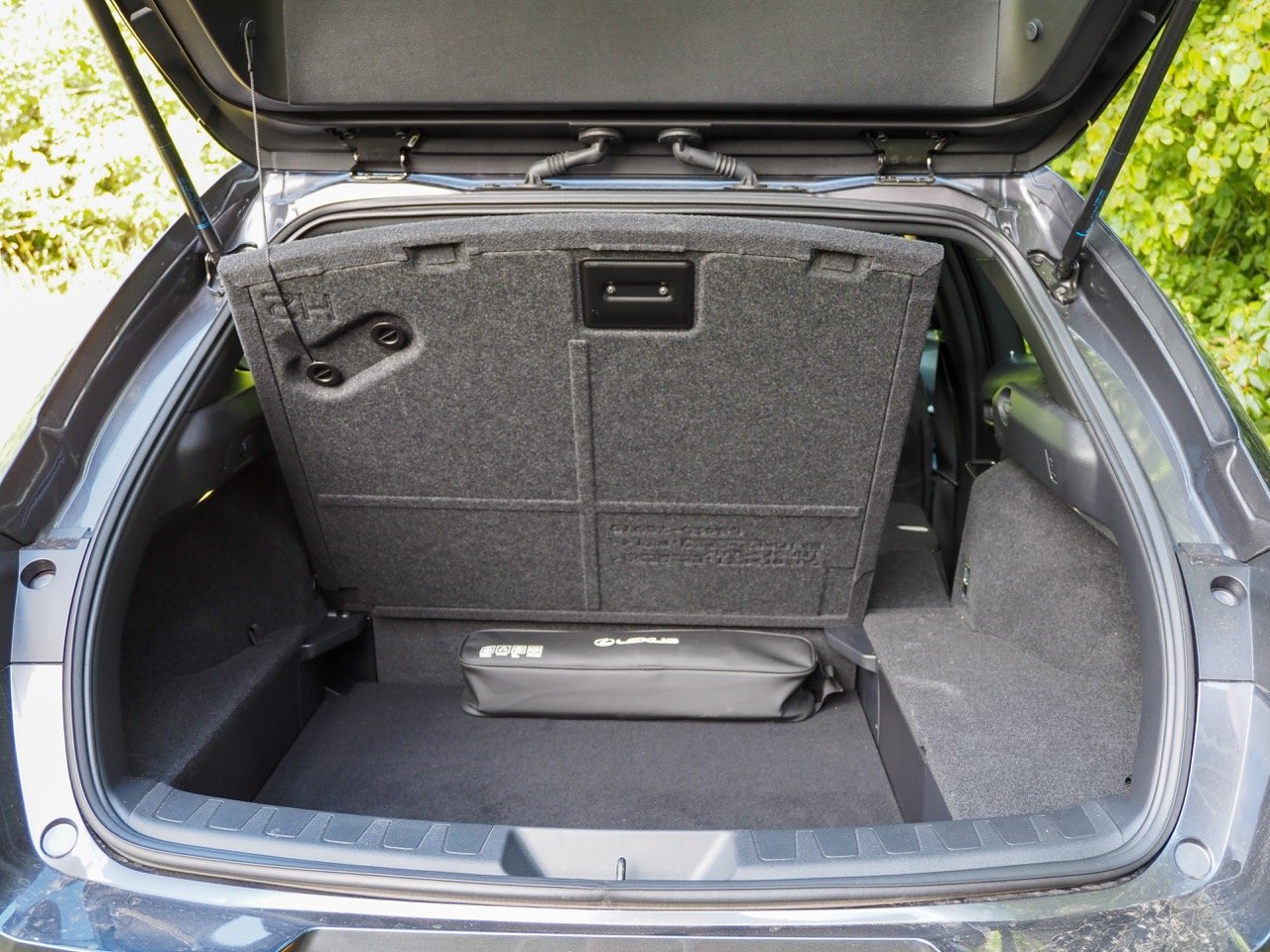
For the outdoor crowd, that could be useful for stowing smaller bits of equipment, keeping everyday essentials separate or making better use of the available space.
However, the overall shape and dimensions still matter. A large capacity figure doesn't necessarily mean you can fit every awkwardly shaped piece of equipment through the tailgate, so it's worth checking the actual measurements if you're regularly carrying bulky items.
As you can see below, an EcoFlow DELTA 2 Max and a Milwaukee M18 Hatchet almost fill the boot with the rear seats in use.
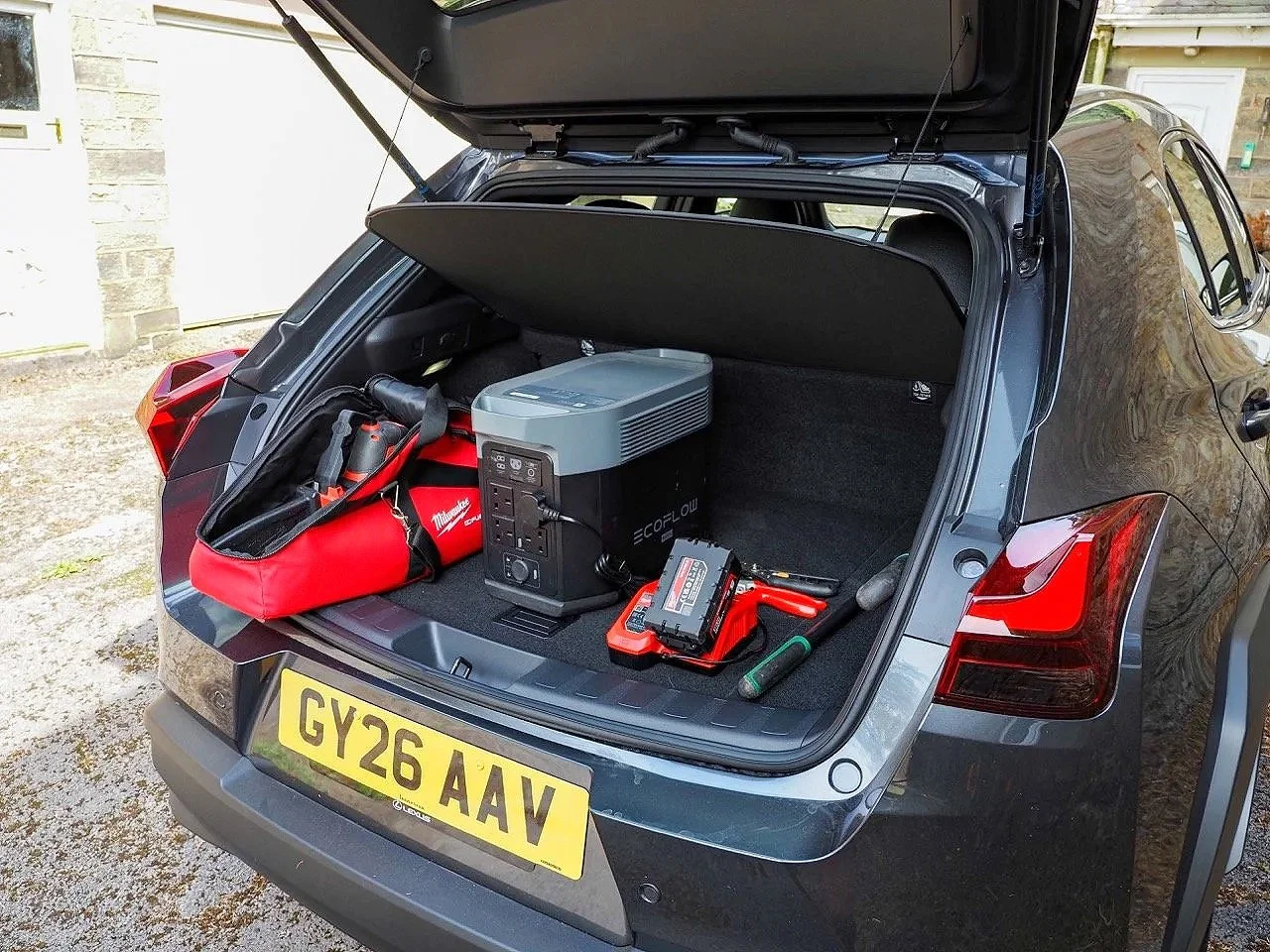
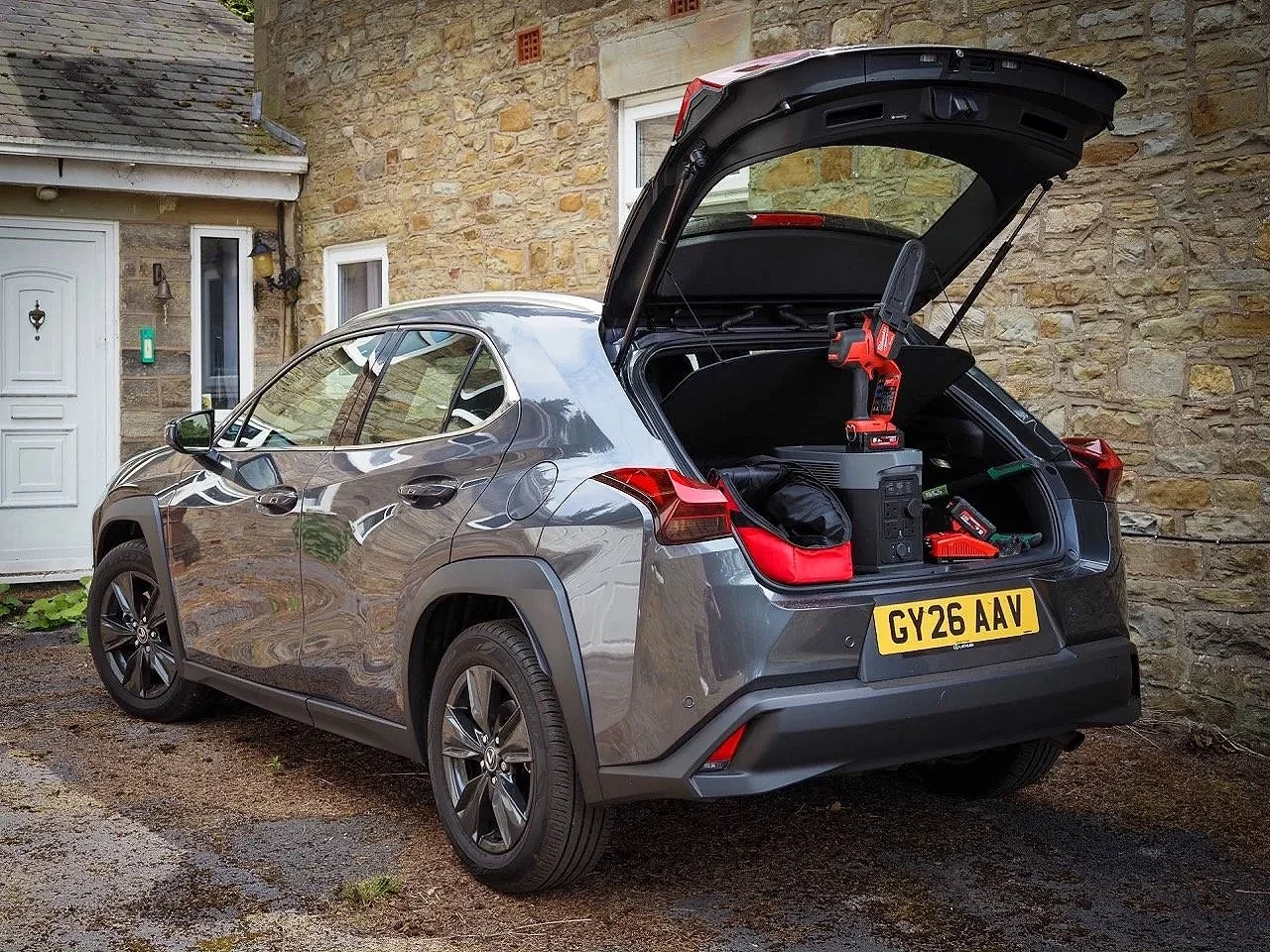
That rather neatly illustrates the problem. These aren't particularly unusual items for someone who spends time camping, working outdoors or reviewing equipment, yet they take up a considerable proportion of the available space.
Fold the rear seats and the situation improves considerably, but you'll obviously lose the ability to carry rear passengers at the same time.
The UX can carry outdoor equipment, but it rewards careful packing rather than a casual chuck-it-all-in approach.
Is It Really an SUV for Outdoor Adventures?
The UX is also not an off-road SUV in the traditional sense.
Its styling might suggest a little adventure, but its relatively low ride height, road-focused design and front-wheel-drive layout make it much better suited to tarmac than rough tracks.
There's nothing wrong with that. Not everyone needs a vehicle capable of crossing a muddy field, and plenty of outdoor enthusiasts spend most of their time travelling on ordinary roads to reach walking routes, campsites and other destinations.
But it's worth being clear about what you're buying. If your idea of a weekend away involves muddy lanes, substantial ground clearance or hauling a boot full of recovery equipment, there are more suitable options.
For getting to a campsite, visiting the countryside or travelling between outdoor destinations in comfort, the UX makes much more sense.
Which UX 300h Should You Buy?
As of October ‘26, the current UK range starts at approximately £38,145 for the Premium, rising to £38,645 for the F Sport Design, £40,245 for the F Sport Design Tech, £45,445 for the F Sport and £49,545 for the Takumi. These are indicative list prices, which can change and may exclude optional extras.
Lexus also has a strong reputation for reliability and customer care. Its UK warranty programme can provide cover for up to ten years or 100,000 miles, subject to the applicable servicing requirements and terms. That potential reassurance is part of the ownership proposition, rather than something you can measure from the specification sheet alone.
Verdict: A Premium Hybrid With Its Priorities Straight
The 2026 Lexus UX 300h is a premium compact crossover for people who value refinement, quality and straightforward hybrid motoring more than outright practicality.
Its self-charging hybrid system makes sense for everyday driving, the cabin has a pleasingly upmarket feel, and there's enough performance for normal British roads. The latest specification also brings useful equipment, even on the entry-level model.
The physical heater controls are a welcome reminder that not every function needs to be buried in a touchscreen, while the ability to adjust certain driver-assistance systems is useful for those who prefer a little less electronic interference.
Its styling suggests a car ready for a little adventure, but its real strengths lie in urban driving, commuting and comfortable journeys on proper roads.
For couples or smaller households who want a well-finished hybrid with a premium badge, it deserves a look. For families, dog owners and outdoor enthusiasts who routinely pack for a weekend away, the limited luggage space is harder to overlook.
The Mud Life verdict: A classy, economical and well-equipped hybrid that makes everyday motoring feel a little more special. It'll happily take you to the great outdoors, but if your adventures require lots of kit, check the boot before signing on the dotted line.